Light Fixture Installation Cost 2026: Electrician Prices
Light fixture installation costs about $400 on average in 2026, with most homeowners paying $100 to $650 per fixture installed. A simple swap on existing wiring runs $100 to $300 for labor, while a brand-new location with new wiring jumps to $300 to $700 or more. Figures below reflect 2026 national contractor pricing; your local quote may vary, so get 3 local quotes from licensed electricians before committing.
Of all the electrical jobs in a home, changing a light fixture is the one people put off the longest. The boob light from 1997 stays. The builder-grade flush mount in the dining room stays. And the truth is, most homeowners are shocked to learn how affordable a simple swap really is. A pro can knock out a fixture replacement in under an hour. Here is what it costs in 2026 and where the money goes.
How much does it cost to install a light fixture in 2026?
HomeGuide puts the national average at $400 installed, with the typical range running $100 to $650. The full spread is wide, from about $60 at the rock-bottom end to $6,500 for a heavy crystal chandelier on a vaulted ceiling. HomeAdvisor’s average, which includes the fixture itself, lands near $525.
Two facts explain almost every price difference you will see. First, the fixture type and its complexity. Second, whether wiring already exists at the location. A direct replacement on an existing box is a quick job. Running new wire, cutting a new box, and adding a switch is a different project entirely.
| Scenario | Typical cost (2026) |
|---|---|
| Simple swap on existing wiring (labor only) | $100 to $300 |
| Swap including a mid-range fixture | $250 to $600 |
| New location, new wiring and box | $300 to $700+ |
| National average, all scenarios | ~$400 |
Cost by fixture type
The fixture you choose sets the floor for labor. A basic ceiling light is a half-hour job. A chandelier over a two-story foyer is a half-day job with scaffolding. Here is what each type runs installed in 2026, based on HomeGuide, Angi, and lighting industry pricing.
| Fixture type | Installed cost (2026) |
|---|---|
| Ceiling / flush-mount light (swap) | $70 to $250 |
| Pendant light, per pendant (direct replacement) | $150 to $300 |
| Pendant light, per pendant (new location) | $300 to $650+ |
| Two or three pendants over a kitchen island | $500 to $1,200+ |
| Chandelier (small to mid-size) | $220 to $800 |
| Chandelier (large or crystal) | $800 to $3,400 |
| Recessed / can light, per light | $130 to $300 |
| Wall sconce (existing wiring) | $90 to $250 |
| Track lighting | $100 to $250 |
| Under-cabinet lighting | $230 to $300 |
Recessed lights: the per-fixture trap
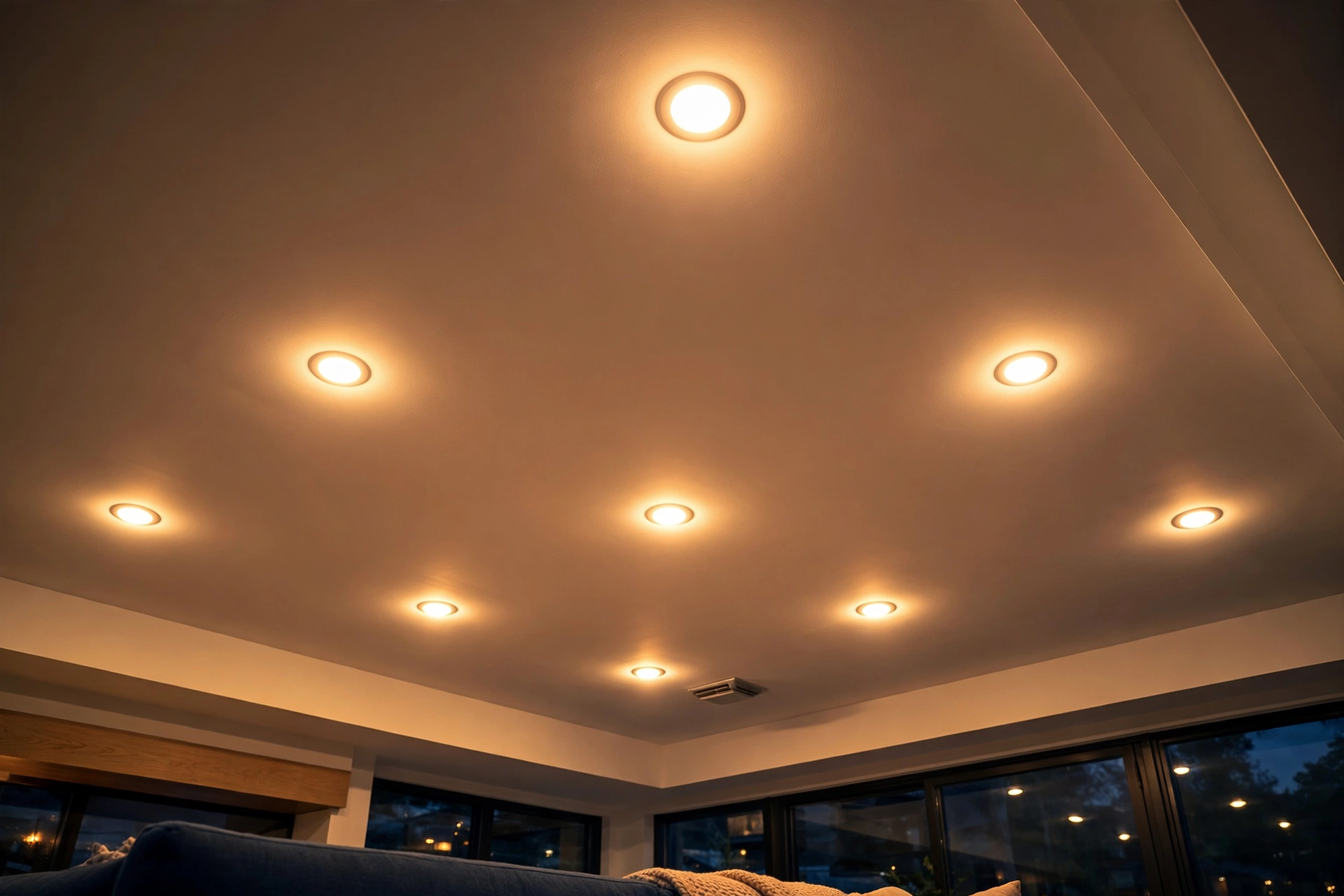
Recessed cans deserve a special callout because they are quoted per light and the numbers add up fast. Angi reports a $360 average total, with per-light installed costs of $130 to $300. Electricians commonly quote $200 to $250 per fixture. A run of four recessed lights typically lands between $400 and $1,200 installed.
The fixture itself is not the expensive part. Standard housings run $20 to $200, IC-rated housings (required when insulation touches the can) run $7 to $100, and canless LED retrofit housings run $20 to $160. What costs money is the fishing of wire through the ceiling, one hole per light, and the patching afterward. Each light is essentially its own mini project.
Simple swap vs new location: the big fork
If you remember one thing from this guide, make it this. Whether wiring exists at the location roughly doubles or triples the job.
| Job type | What is involved | Typical cost (2026) |
|---|---|---|
| Direct replacement | Remove old fixture, connect new one to existing box | $100 to $300 labor |
| Swap plus new dimmer switch | Replace fixture and swap the switch | $200 to $500 |
| New location, attic access | New box, new wire run, new switch | $300 to $700 |
| New location, no attic access | Wire fishing through finished ceilings and walls | $500 to $1,300 |
| New location plus a new circuit | Home run back to the panel | $800 to $2,200 |
A direct replacement typically takes a pro one to three hours, often under an hour for a basic fixture. New locations take longer because the electrician has to find a path for the wire, cut the ceiling, set a rated box, and patch the drywall. If the panel is full or the circuit is overloaded, the price jumps again, which is where electrical panel upgrade costs enter the picture.
Labor: how electricians price this work
Electricians quote light fixtures three ways: hourly, flat rate per fixture, or a minimum service call fee. Hourly rates run $50 to $150 nationally, with journeymen at $50 to $90 and master electricians at $100 to $200 or more. Service call fees run $75 to $200 just to show up. Emergency and after-hours rates often double, reaching $150 to $300 per hour.
The most common structure is a flat rate: $150 to $300 for a standard fixture swap, and $200 to $250 per recessed light. That flat rate exists because the electrician knows exactly how long a swap takes. It is worth asking whether the flat rate is per fixture, because installing four sconces in one visit usually costs far less per fixture than four separate visits. Batching is the single best way to control this bill.
Fixture purchase costs by type
Here is the unusual part of this job: it is one of the few electrical projects where the materials can cost more than the labor. A basic flush-mount fixture sells for $30 to $100 at retail. Simple pendants often come in under $100. Chandeliers run $120 to $1,400 for the fixture alone, and crystal types regularly top $1,000. Outdoor LED sconces start around $35 online.
Contractors typically mark up the fixtures they supply, so buying the fixture yourself almost always saves money. The catch is that some electricians will not warranty a fixture you supplied, which is a fair trade to discuss up front. Buy the fixture yourself when the model is straightforward, and let the pro source it when weight, rating, or compatibility is in question.
Common add-ons and extra costs
| Add-on | Typical cost (2026) |
|---|---|
| New light switch installed | $100 to $200 |
| Dimmer switch upgrade | $100 to $200 |
| Wall sconce or track light without existing wiring | Add $100 to $200 per location |
| High or vaulted ceiling surcharge | $100 to $300 |
| New wiring run (full project) | $600 to $2,200, average ~$1,300 |
| Drywall patching and touch-up | $100 to $400 |
| Fixture-rated brace box for heavy fixtures | $50 to $150 |
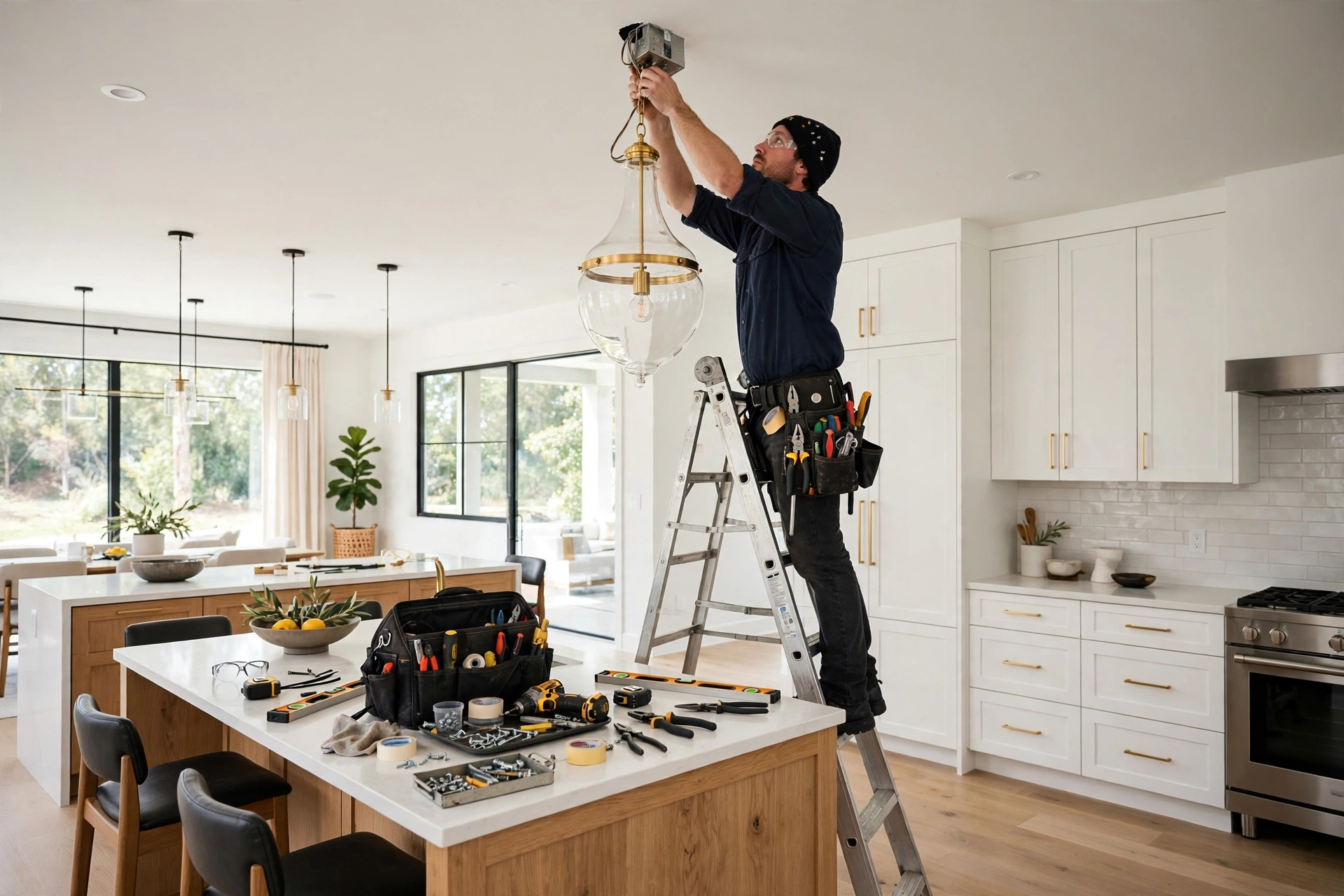
High ceilings are the silent budget killer. Anything above about 10 feet means ladders, scaffolding, or an extension lift, plus an extra pair of hands. Pendant over a kitchen island adds $100 to $300 on vaulted ceilings. Chandeliers in two-story entries are the classic $2,000-plus jobs because the fixture is heavy, the ceiling is far, and the box usually needs to be reinforced.
What affects light fixture installation cost?
- Fixture weight. A 5-pound flush mount hangs on the existing box. A 60-pound chandelier needs a fixture-rated brace box, and retrofitting one adds $50 to $150 in parts plus labor.
- Ceiling height. Standard 8-foot ceilings are cheapest. Vaulted and two-story heights add ladder or scaffold time and often a helper.
- Wiring condition. Old cloth-insulated or aluminum wiring complicates the connection and can trigger a broader repair. Related reads: ceiling fan installation costs and rewiring a house costs.
- Switch situation. Adding a new switch location or upgrading to a 3-way or dimmer adds $100 to $200 per switch.
- Number of fixtures. Per-fixture pricing drops when you batch several into one visit, since the $75 to $200 service call fee is paid once.
- Access. Attic access above the ceiling makes wire fishing fast. Finished rooms with no access mean more cutting and patching.
DIY vs hiring an electrician
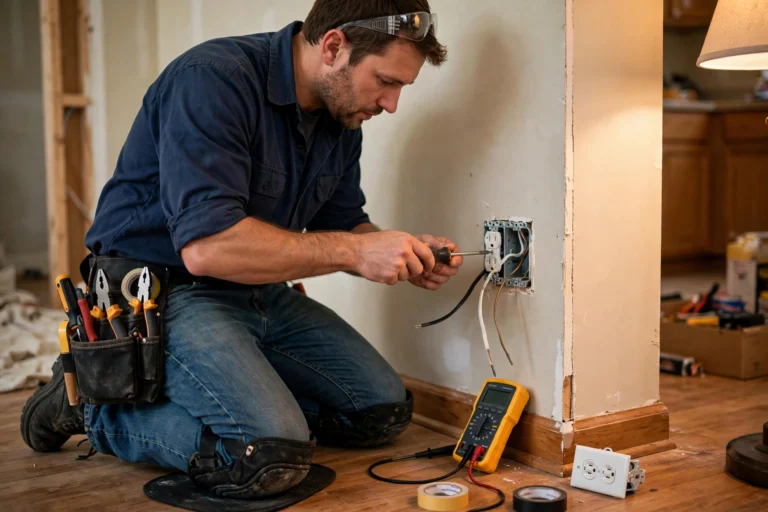
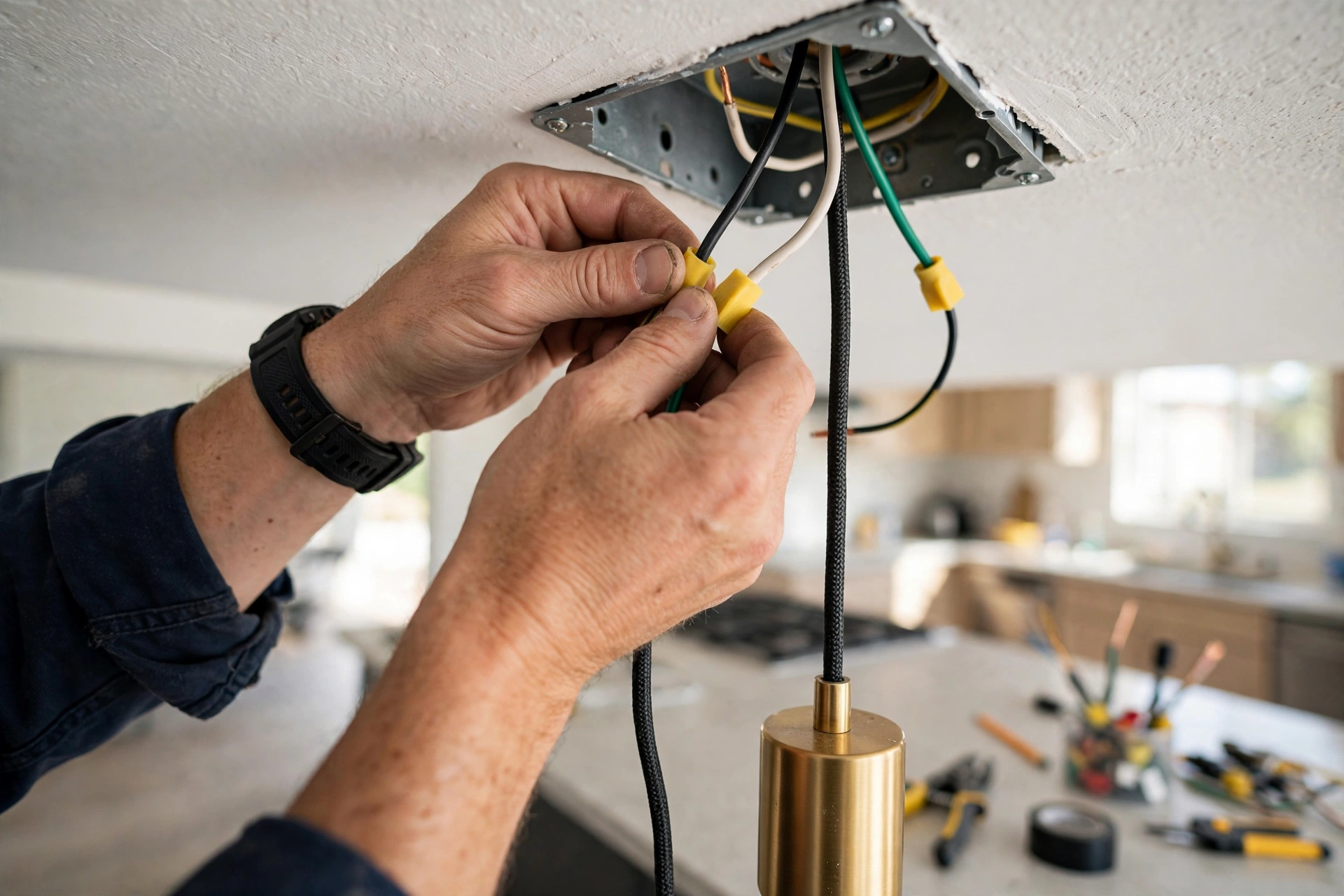
A direct swap on an existing box is one of the most DIY-friendly electrical tasks there is. It takes 30 to 60 minutes with a screwdriver, wire strippers, and a non-contact voltage tester. The golden rule: turn off the circuit BREAKER, not just the wall switch, and verify the wires are dead with the tester before you touch anything. Photograph the wiring before you disconnect anything so you can put it back exactly.
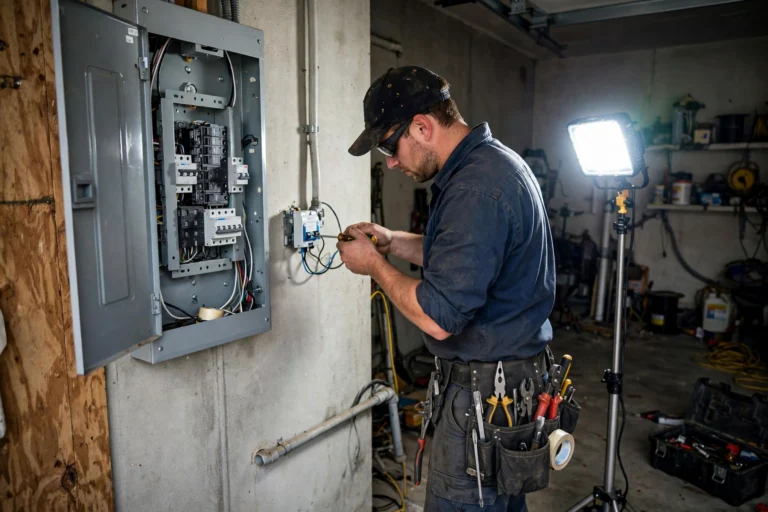
Hire a licensed electrician when there is no existing wiring, when the ceiling is high, when the fixture is heavy enough to need a rated box, or when you want a new switch or circuit. New wiring inside walls is pro territory, and some jurisdictions require a permit for new wiring runs. A dimmer swap sits in the middle: it is a 10-minute DIY job with the breaker off, but check that the dimmer and bulbs are compatible, since flicker almost always means a mismatch, and smart dimmers often need a neutral wire that older homes lack.
Money-saving tips
- Batch fixtures into one visit. The $75 to $200 service call fee is paid once no matter how many fixtures get done, so group several swaps into a single appointment.
- Buy the fixture yourself. Contractor markup on fixtures is real. Buy retail for straightforward models and let the pro supply only complex or heavy fixtures.
- Stay at standard ceiling height. Keeping fixtures where wiring already exists is the cheapest possible job. Every foot of height and every new wire run costs money.
- Skip the emergency call. After-hours rates can double. A fixture install that waits a week costs the same during business hours.
- Use flat-rate quotes. A $150 to $300 flat rate per swap protects you if the job takes longer than expected.
- Keep it simple on the fixture. Labor barely changes between a $60 pendant and a $400 pendant, so splurge on the fixture, not the install.
FAQs
Do I need an electrician to install a light fixture?
Not always. A direct replacement on an existing box is a safe DIY job for a careful homeowner: breaker off, voltage tester, photograph the wiring first. You need a licensed electrician for new wiring locations, heavy fixtures that require a rated box, new circuits, and high ceilings. Local code may require permits for new wiring.
How long does it take to install a light fixture?
A pro needs one to three hours for a simple replacement, often under an hour for a basic fixture. New locations with new wiring take three to six hours, and chandeliers or recessed runs can take a full day. Your own first DIY swap will take about an hour including the safety checks.
Does installation cost include the fixture?
Usually not. Quotes in the $100 to $300 range are labor only, and the fixture is quoted separately or supplied by you. All-in quotes around $400 to $525 exist, but always ask which number you are looking at before you compare quotes.
Why do chandeliers cost more to install?
Three reasons: weight, height, and assembly. Heavy chandeliers need a fixture-rated brace box that standard ceiling boxes cannot provide. They usually hang in entries or over dining tables at heights that need ladders or scaffolding. And crystal chandeliers arrive in pieces, so part of the labor is simply hanging and cleaning dozens of individual crystals.
Can I install a light fixture where no light exists?
Yes, and this is where the cost jumps from a $100 to $300 swap to $300 to $700 or more. The electrician has to run new wire, cut in a new box, and usually add a switch. With attic access it is a manageable job. Without attic access, wire fishing through finished ceilings raises the price toward $1,300.
Is it cheaper to install multiple fixtures at once?
Almost always. The service call fee of $75 to $200 is paid once per visit, so adding a second, third, or fourth fixture costs only the extra labor time. Electricians also commonly discount per-fixture rates on batch jobs, which is why a four-recessed-light run costs $400 to $1,200 total instead of four separate $300 visits.
Should I buy the fixture or let the electrician supply it?
Buy it yourself for straightforward fixtures, since contractor markup can be steep. Let the electrician supply heavy, smart, or dimmer-sensitive fixtures, where compatibility and warranty matter. Confirm the warranty situation before you buy: many pros will not warranty a customer-supplied fixture, which is a reasonable tradeoff for the savings.