Bathroom Fan Installation Cost 2026
Installing a bathroom fan costs $150 to $1,200 in 2026, depending on whether you are replacing an old fan or starting from scratch. A simple swap of an existing fan runs $150 to $550 installed, while a brand-new installation with ductwork and venting runs $400 to $1,200. Figures below reflect 2026 national contractor pricing; your local quote may vary, so get 3 local quotes before hiring.
A bathroom exhaust fan is one of the smallest line items in any bathroom project, but it quietly does some of the heaviest lifting. Every shower pumps a few pints of moisture into the air. Without a working fan, that moisture settles on paint, drywall, mirrors, and framing, where it feeds mold and peels coatings. A good fan pulls that air out of the house entirely, and it costs a fraction of what mold remediation does. Here is what a new bathroom fan costs in 2026, what moves the price, and where people overpay.
How much does it cost to install a bathroom fan in 2026?
The national average lands around $284 for a replacement and around $700 to $1,200 for a full new installation. The single biggest split in pricing is simple: if wiring and ductwork are already in place, you are buying a fan and a couple of hours of labor. If there is no fan at all, you are paying for electrical work, ductwork, an exterior vent, and drywall patching.
| Project type | Typical cost (2026) |
|---|---|
| Replace an existing fan (same size, wiring intact) | $150 to $550 |
| Replace with upgraded fan (different size or features) | $300 to $600 |
| Brand-new install with existing ductwork | $400 to $800 |
| Brand-new install, no ductwork, vent through wall | $400 to $950 |
| Brand-new install, no ductwork, vent through roof | $800 to $1,200+ |
Think of it this way. A replacement is a one-trip job. The installer kills the breaker, drops the old unit from the ceiling, wires and seals the new one, tests it, and leaves. A new install is a small construction project: cutting a hole in the ceiling, running cable to a switch, hanging and insulating duct, cutting through a wall or the roof, sealing the penetration, and patching drywall. That is why the prices diverge so much.
Bathroom fan prices by type
The fan unit itself is the smallest part of most jobs, but picking the right type matters more than most people expect. Cheap builder-grade fans are loud and weak, which is exactly why the last one got ignored. A good fan is quiet enough that people leave it running, which is the whole point.
| Fan type | Unit cost (2026) |
|---|---|
| Basic ceiling fan, builder grade | $20 to $80 |
| Quiet fan (under 1 sone) | $70 to $350+ |
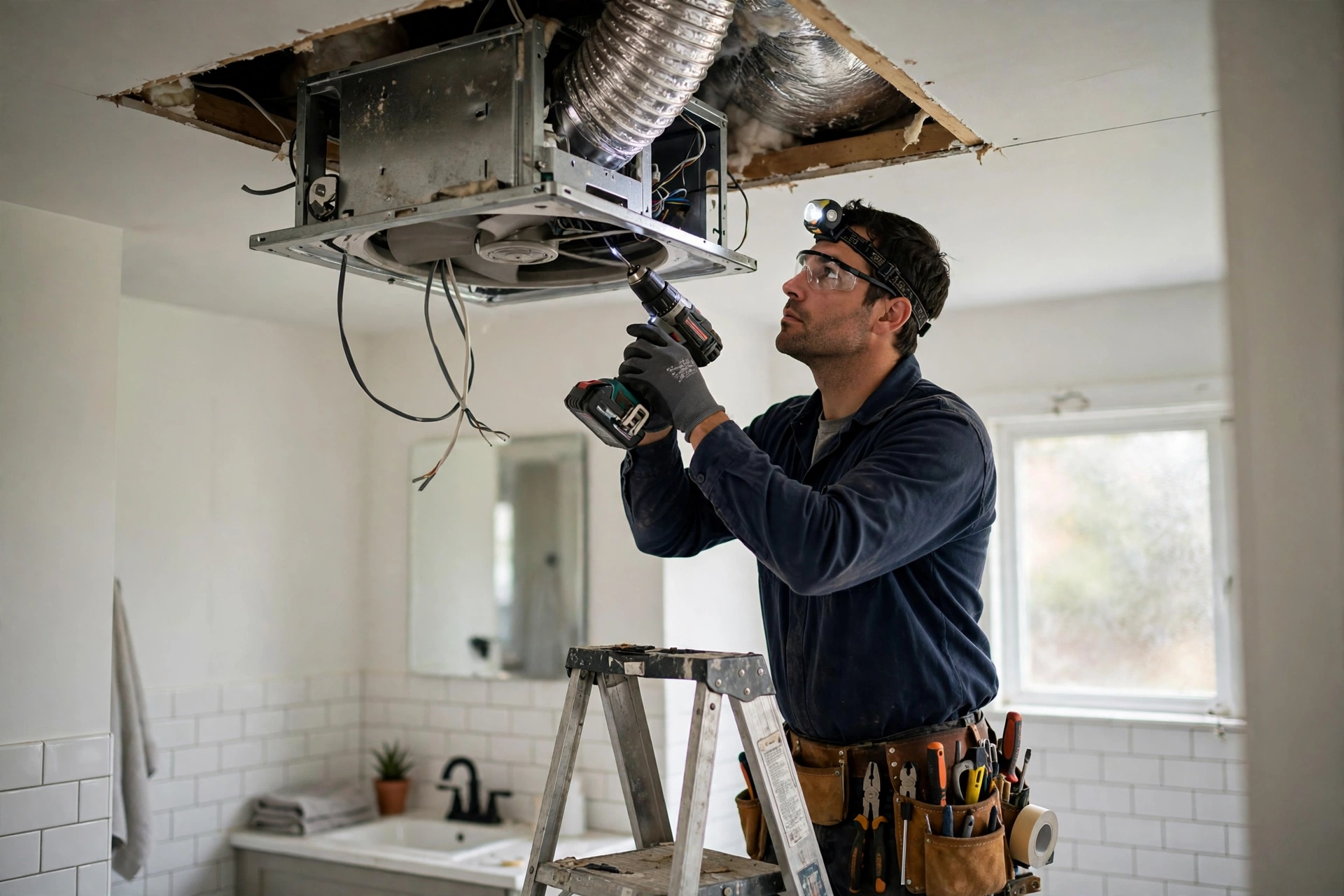
| Fan with light | $40 to $420 |
| Fan with heater | $90 to $425 |
| Fan with light and heater | $50 to $370 |
| Humidity-sensing fan | $100 to $400 |
| Fan with timer or motion sensor | $100 to $400 |
| Smart fan (app or voice control) | $75 to $190 |
| Inline fan (remote-mounted on ductwork) | $100 to $310 |
| Wall-mounted fan | $20 to $350 |
If you remember one shopping rule, make it this: buy the quietest fan that moves enough air. Sones measure loudness, and the price climbs fast as the number drops. A 4-sone builder fan costs $20 to $50 and sounds like a tiny airplane. A sub-1-sone fan costs $70 to $350 but is barely noticeable. Homeowners who buy the quiet one actually use it, and a fan that runs beats a fan that gets switched off in a week.
Choosing the right size: CFM and sones explained
Two numbers define every bathroom fan: CFM and sones. CFM (cubic feet per minute) is how much air the fan moves. Sones measure how loud it is. Get both right and the fan disappears into the background while doing its job.
The standard sizing rule is simple: 1 CFM per square foot of bathroom. Measure your bathroom floor, and that number is your minimum CFM target.
| Bathroom size | Minimum CFM |
|---|---|
| Under 50 sq ft (powder room) | 50 CFM |
| 50 to 75 sq ft | 75 CFM |
| 75 to 100 sq ft | 100 CFM |
| 100 to 150 sq ft | 150 CFM |
| Over 100 sq ft (large or master bath) | 50 CFM per fixture group (toilet, shower, jetted tub) |
For sones, use this scale. At 1 sone or below, the fan is whisper-quiet and people leave it running after showers, which is when the fan earns its keep. At 2 sones, it is a normal background hum. At 3 sones it is noticeable, and at 4 or more it is loud enough that someone will flip the switch off the moment the mirror clears, which defeats the purpose. The catch is that quiet costs more: the sub-1-sone units run $70 to $350 while the loud 4-sone models cost $20 to $50. Treat the extra cost as insurance that the fan will actually be used.
Labor costs and what the job involves
Installers charge $50 to $100 per hour in most markets, with some high-cost areas running higher. Timing depends entirely on the scenario.
| Scenario | Labor and time |
|---|---|
| Direct swap, same size, wiring and ducts intact | 1 to 3 hours, $100 to $300 in labor |
| Swap with a different size or new switch wiring | 2 to 4 hours, $200 to $500 in labor |
| New install with attic access | 3 to 5 hours, $300 to $600 in labor |
| New install with no attic access (from below) | 4 to 6 hours, $400 to $700 in labor |
A direct swap is genuinely quick: breaker off, drop the old housing or grille, disconnect and reconnect the wiring, secure and seal the new unit, test, and done. Some pros quote a flat $150 to $300 for this because it is predictable.
A new installation is a different animal. The installer cuts the ceiling hole, runs cable from a switch or the panel, hangs the housing, runs insulated duct to the outside, cuts through the wall or roof, flashes and seals the penetration, wires the switch, and patches the ceiling. From below with no attic access, it is slower and messier because everything happens through the ceiling opening. Related reads on bigger bathroom projects: full bathroom remodel costs, tub to shower conversion costs, and walk-in shower costs.
Extra costs that surprise people
The fan and the labor are the headline, but a handful of add-ons show up on real invoices:
- New ductwork: $150 to $500 if the old duct is undersized, crushed, or missing entirely.
- Venting a new fan: $250 to $800 through a sidewall, $400 to $950 through a roof, plus $200 to $500 for roof penetration repair and flashing if a roofer is needed.
- New switch or timer wiring: $100 to $400. Adding a humidity-sensing switch or a timer switch so the fan runs after showers is one of the best small upgrades you can buy.
- Dedicated circuit for heater models: $200 to $500 or more. Fans with built-in heaters draw real amperage and usually need their own circuit from the panel.
- Drywall patching: $50 to $200 after new installs from below.
- Permits: $50 to $150 where the local jurisdiction requires them.
The heater-circuit surprise is the classic one. A fan with a heater looks like a modest upgrade on the box, then the installer finds the existing circuit cannot handle it and a new dedicated run from the panel doubles the labor. If you want heat, get a quote that specifically covers the electrical side before the fan is ordered.
What affects bathroom fan installation cost?
- Replacement vs new install. This is the single biggest lever: $150 to $550 vs $400 to $1,200+.
- Attic access. Working from above through the attic is fast. Cutting in from below means everything happens overhead through a small hole, which costs more time.
- Venting path. A straight, short run to a sidewall is cheapest. Through the roof adds flashing, sealants, and a potential roofer visit.
- Fan features. Heaters need dedicated circuits. Humidity sensors, timers, and lights need extra wiring and switch work.
- Bathroom size. Bigger baths need higher CFM, and the quiet high-CFM units cost more.
- Second story or multi-story homes. Longer duct runs and harder access push the price up.
- Local labor rates. Electrician rates vary widely by metro; big coastal cities sit well above the national average.
DIY vs hiring a pro
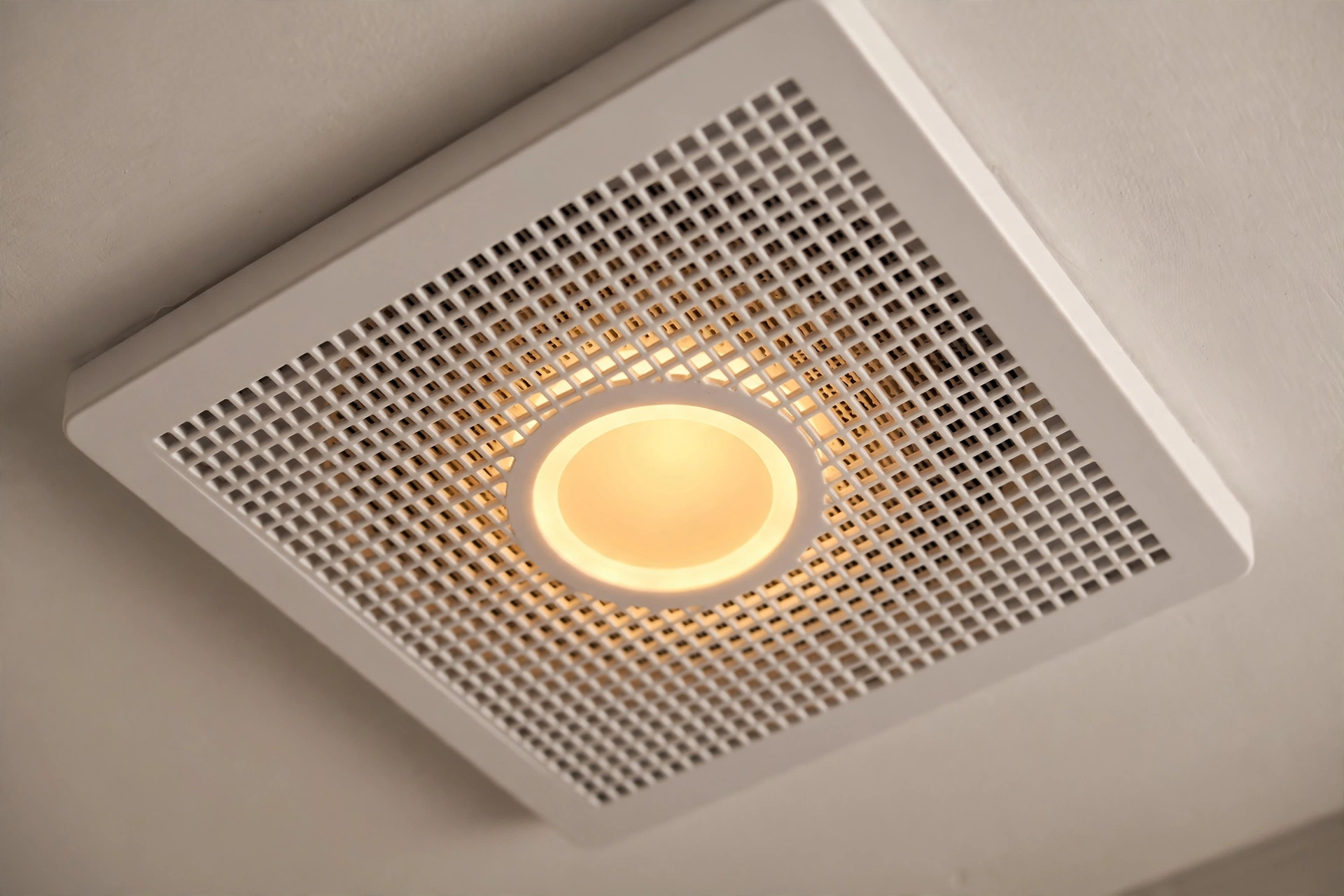
A direct swap of a same-size fan on intact wiring and ductwork is the most DIY-friendly electrical project a homeowner can take on, and plenty of people do it in an afternoon. You still kill the breaker, test that the circuit is dead, and make sure the new fan is the same size as the opening. Everything else belongs with a pro.
Call an electrician or a licensed installer when the job involves a new circuit from the panel, cutting a roof or exterior-wall penetration, or modifying ductwork through the building envelope. Some states require a licensed electrician for tying into existing wiring at all, and insurance claims get complicated when an unpermitted electrical job is involved.
The single most important rule, DIY or pro: the fan must vent to the outdoors, never into the attic, a crawlspace, or a ridge vent. This is the classic and destructive mistake. A fan dumping moist air into an attic does not fix the moisture problem; it moves it to the framing, where it quietly grows mold and rots wood. Building code requires outdoor termination. If you open a bathroom ceiling and find a fan venting into the attic, that is a defect to fix, not a quirk to keep.
One more pro tip from people who do this every day: do not wire the fan to the bathroom light switch. A fan tied to the light shuts off the moment someone leaves, which is usually five minutes before the moisture is gone. Run it 10 to 15 minutes after every shower. A timer switch or a humidity-sensing fan automates this for $30 to $150 in hardware, and it is the difference between a fan that protects the bathroom and one that just makes noise.
How to save money on a bathroom fan
- Replace, do not relocate. Using the existing opening, wiring, and duct keeps you in the $150 to $550 band instead of $400 to $1,200+.
- Buy the fan yourself from a home improvement store. Pros often mark up hardware; bringing your own $60 to $150 quiet fan to a swap job is standard practice.
- Bundle with other bathroom electrical work. If an electrician is already there for a light or switch, the marginal cost of the fan drops because the trip fee is already covered.
- Choose venting through a sidewall when possible. It is usually cheaper than a roof penetration and less leak-prone long term.
- Add a timer switch instead of a smart fan. A $30 timer gives you the same run-after-shower behavior as a $150 smart unit at a fraction of the installed cost.
- Get 3 quotes for new installs. Labor pricing for the same job varies more than for a simple swap, so comparison shopping pays.
Bathroom fan installation FAQs
How long does it take to install a bathroom fan?
A direct swap takes 1 to 3 hours. A brand-new installation takes 3 to 5 hours with attic access, and 4 to 6 hours when everything must be done from below through the ceiling. Adding new switch wiring or a dedicated circuit can add an hour or two.
Can I install a bathroom fan without attic access?
Yes. Installers work from below through the ceiling opening, running duct to the nearest exterior wall. It costs more than an attic-access install because it is slower, and you should budget for drywall patching around the opening.
Does a bathroom fan need its own circuit?
A standard exhaust fan can usually share an existing bathroom circuit. A fan with a built-in heater almost always needs a dedicated circuit from the panel, which is why heater models cost more to install.
How long do bathroom exhaust fans last?
Plan on replacing the fan about every 10 years. Warning signs include rising noise, weak airflow on a tissue test, and a fan that runs but the mirror still fogs. Motors wear out, and older fans were oversized for noise and undersized for airflow by modern standards.
Is it OK to vent a bathroom fan into the attic?
No. Building code requires the fan to vent to the outdoors. Venting into an attic traps moisture in the framing, which grows mold and rots wood. If your fan currently vents into the attic, run a proper duct to a sidewall or roof cap.
Do I need a permit to install a bathroom fan?
Usually not for a direct swap, but many jurisdictions require a permit for new electrical circuits or new roof penetrations. Permit fees run $50 to $150 where required. Your installer should know the local rules.
A bathroom fan is cheap insurance for the most moisture-abused room in the house. Buy the quietest fan that hits your CFM number, vent it properly to the outdoors, and let it run after every shower. Do that and the $150 to $1,200 you spend today saves you from a mold and drywall bill that runs ten times that tomorrow.