How Much Do Painters Charge Per Hour in 2026
Painters charge $20 to $50 per hour in 2026 for most residential work. High-cost metros push that to $65 to $120 per hour, and day rates typically run $200 to $500 for a single pro. Figures below reflect 2026 national contractor pricing; your local market sets the actual rate, so get 3 local quotes before you hire.
You asked for one number, but the number on the quote sheet is rarely the whole story. A painter’s hourly rate is the opening bid in a conversation about what is included, how the job is scoped, and whether hourly billing is even the right deal for your project. Most pros actually prefer to quote by the square foot or by the project. Hourly billing shows up for small jobs, touch-ups, and punch-list work. Here is how to read any hourly quote and know whether it is fair.
How much do painters charge per hour in 2026?
The national band for residential painters is $20 to $50 per hour per painter, according to HomeAdvisor. That is the range most homeowners land in. In expensive coastal metros and the Northeast, expect $65 to $120 per hour, with some markets reaching $75 to $100+ for experienced crews. Contractor rate sheets aimed at pros list $40 to $90 per hour as a working benchmark for 2026.
| Painter type | Typical hourly rate (2026) |
|---|---|
| Independent / solo painter | $20 to $40 per hour |
| Small painting crew (employee team) | $25 to $50 per hour |
| Full-service painting company | $35 to $60 per hour |
| High-cost metro markets | $65 to $120 per hour |
| Specialty finishes (murals, trompe l’oeil) | $40 to $80+ per hour |
Why such a wide spread? About 45% of painters are self-employed, and a solo painter with no shop, no crew, and low overhead can charge far less than a company that carries insurance, a foreman, and a reputation. Both can do good work. The difference shows up in what is wrapped into the rate.
What does the hourly rate actually cover?
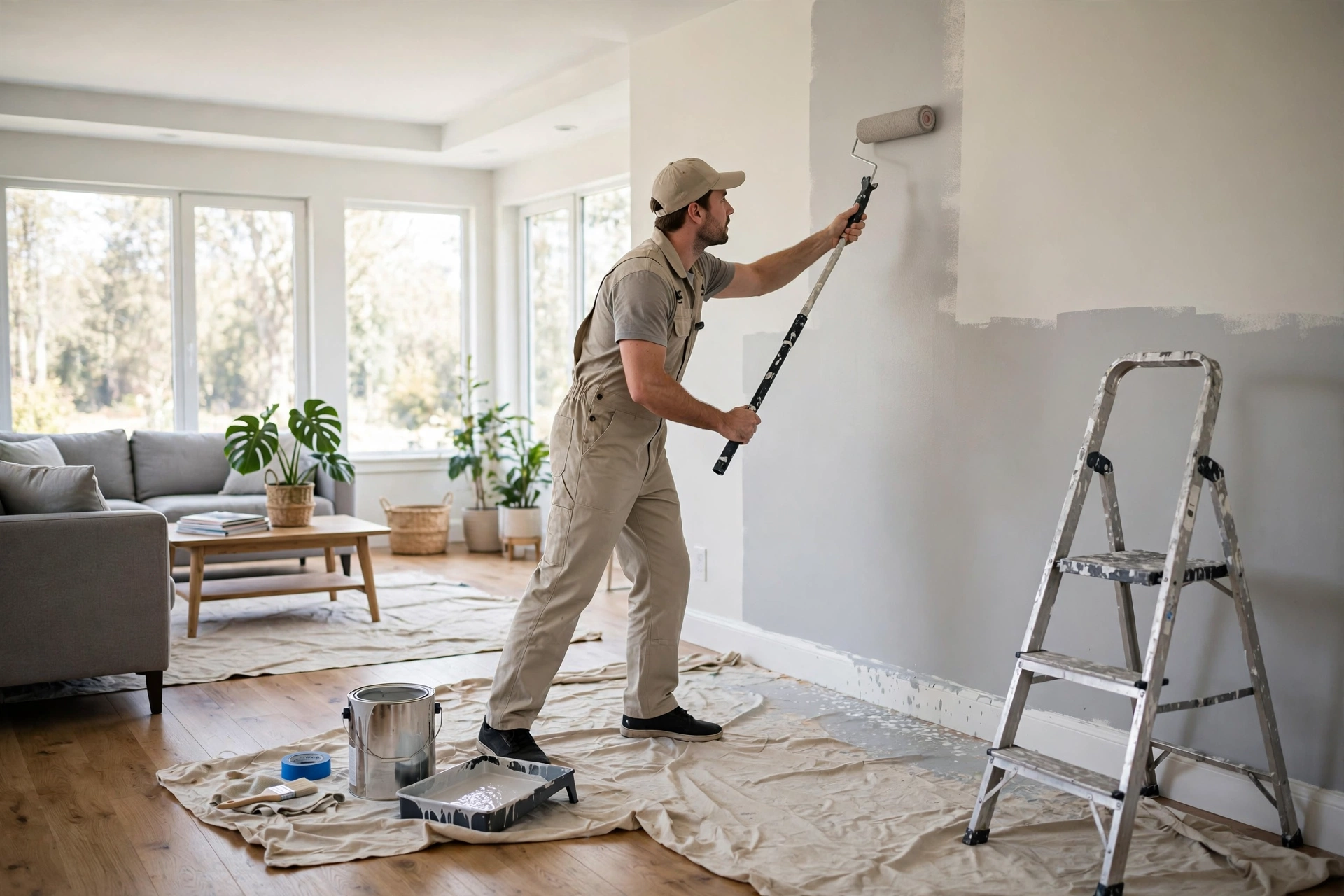
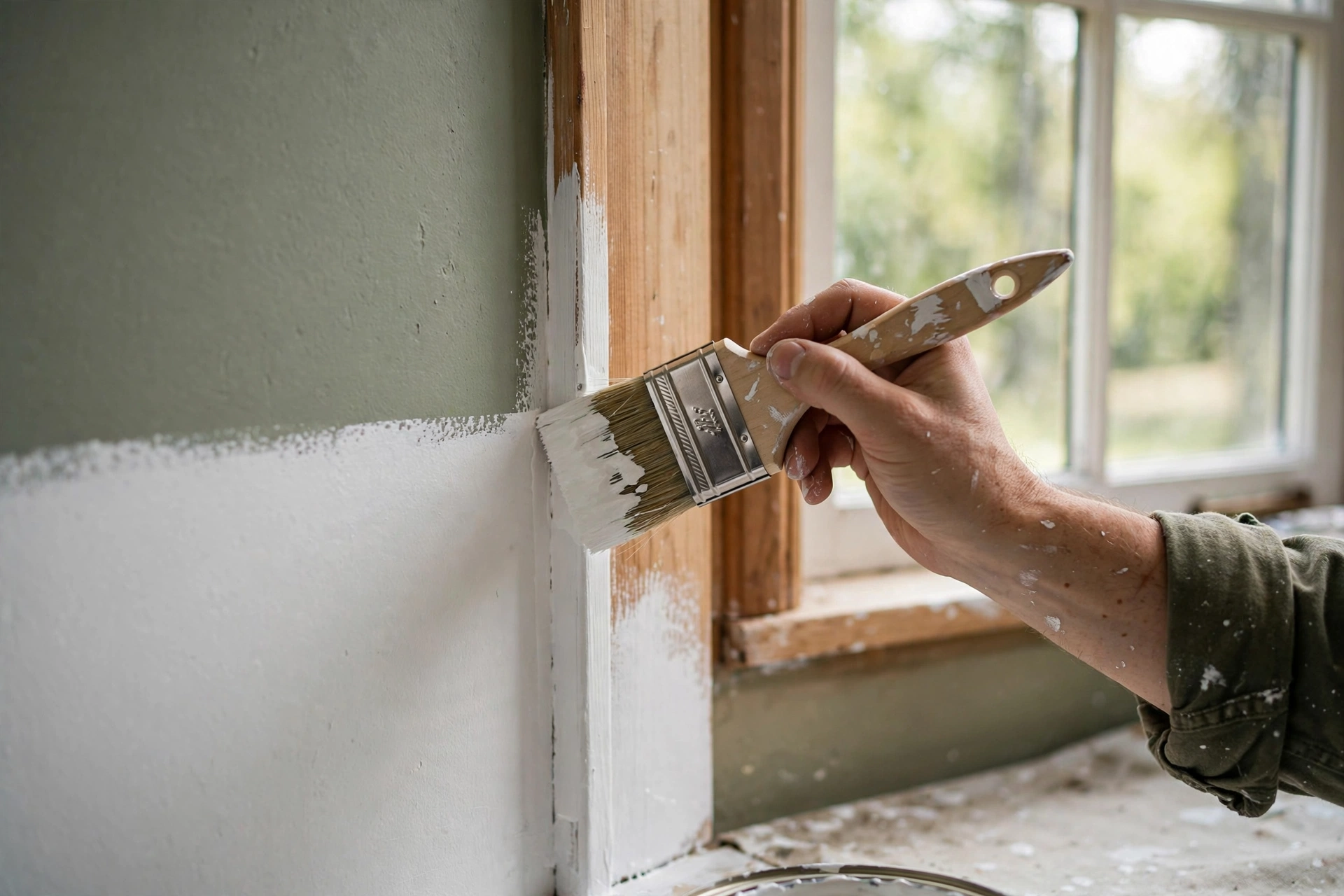
This is where most confusion lives. An hourly rate almost always covers labor only: the painter’s time, basic prep like minor patching and sanding, drop cloths and masking, and the tools on their truck. Paint and primer are usually EXTRA unless the contract says otherwise. That matters because pro-grade paint runs $40 to $100 per gallon in 2026, and a standard room can eat two to three gallons.
Labor is the dominant cost on any paint job. Across sources, labor makes up 75 to 90% of the total bill, with paint and supplies taking the remaining 10 to 25%. So when a painter quotes you $35 per hour plus materials, the materials are not the scary part of that quote. The hours are.
Ask every painter the same question before you compare: “Is paint included in this rate?” If one quote includes materials and another does not, you are not comparing quotes at all.
Day rates: the more common way pros quote
Many painters prefer day rates over hourly, especially for jobs that take a day or more. A single pro typically charges $200 to $500 per day, depending on market and experience. Dedicated painter-day services list $300 to $600 per day for one painter, $600 to $1,200 per day for a two-painter crew, and $900 to $1,800 per day for three painters.
Day rates protect both sides. The painter gets a predictable day of pay, and you are not watching the clock. For a standard 12×12 room, which takes a pro one to two days, expect $400 to $900 all-in for labor. That number is your best sanity check: if a painter’s hourly quote, multiplied by a realistic number of hours, lands far outside that band for one room, something in the quote needs a second look.
Hourly vs flat rate: which quote is better for you?
Most pros quote interior work by the square foot ($2 to $6 per square foot of paintable area) or by the whole project, not by the hour. There is a reason: flat quotes protect you from slow work, and they protect the painter from a job that keeps expanding.
| Billing style | Best for | Watch out for |
|---|---|---|
| Hourly | Small jobs, touch-ups, punch lists, repairs | Hours can drift; set a time cap in writing |
| Flat / project quote | Rooms, whole house, exteriors | Make sure scope is detailed so nothing is skipped |
| Per square foot | New construction, large surface areas | Confirm whether it covers one or two coats |
| Day rate | Multi-day jobs with uncertain scope | Clarify hours per day and overtime rules |
Hourly works well for small jobs if the painter is fast and you agree on a time cap up front. “We will work four hours max at $40 per hour, then we reassess” is a perfectly reasonable sentence to put in writing. For anything larger than a punch list, a detailed flat quote is usually the safer deal. Get 3 written quotes and compare scope line by line, not just the bottom number.
Painter rates by job type
Hourly rates move with the difficulty of the work. Ceilings cost more than walls because the painter is working overhead. Cabinets cost more than walls because the prep is brutal. Exterior work depends on stories and access.
| Job type | Typical rate or price (2026) |
|---|---|
| Interior walls (single room) | $400 to $900 labor per standard room |
| Ceilings | $1 to $3 per sq ft; slower overhead work |
| Trim, doors, windows | $1 to $3 per linear ft; detail work bills higher |
| Kitchen cabinets | $3,000 to $10,000 per set; spray finish labor is premium |
| Exterior (1 story) | $1.50 to $4 per sq ft |
| Exterior (2+ stories) | Rates rise with ladder, lift, or scaffolding time |
| Specialty finishes | $40 to $80+ per hour |
Cabinet painting is its own trade inside the trade. A proper cabinet job means degreasing, sanding, priming, and spraying multiple coats, often with the doors removed and finished off-site. That is why cabinet quotes land in the thousands and why hourly painters rarely do them by the hour. Related reads: interior house painting costs, exterior house painting costs, and cabinet painting costs.
Regional differences: where you live sets the rate
Geography is the single biggest lever on painter rates. Coastal metros and the Northeast routinely run 40 to 100% above national averages. The South and Midwest sit at or below the national band. To understand why, look at what painters actually earn: the Bureau of Labor Statistics lists a May 2025 median wage of $23.75 per hour for construction and maintenance painters. That is W-2 employee pay. A billed rate of $40 to $50 per hour in the Midwest makes sense once you add insurance, taxes, equipment, travel, and the days a painter is quoting jobs instead of painting them.
In a place like San Diego, where the cost of doing business is far higher, that same math lands at $75 to $100+ per hour. Neither number is a rip-off. They reflect different cost structures. The red flag is not a high rate in an expensive market. It is a quote that ignores the market entirely, either way.
What affects a painter’s hourly rate?
- Employment model. A solo painter with no overhead charges the least. A full-service company with insurance, a foreman, and warranty support charges the most per hour, but you are buying more than labor.
- Prep level. Patching, sanding, caulking, and masking can be half the job. Quotes that look cheap per hour often hide thin prep or skip it entirely.
- Height and access. Two-story exteriors, vaulted ceilings, and stairwells slow everything down and raise the rate.
- Paint quality specified. A pro-grade line at $60 to $100 per gallon covers better and lasts longer than a $25 contractor flat. Some painters adjust their rate for fussy designer paints that need extra coats.
- Minimum charges. Many crews require a $500 to $1,000 minimum even for a small space. A two-hour touch-up job at $40 per hour still costs $500 if that is the company minimum, and they will tell you up front if you ask.
- Season. Exterior painters book out in spring and summer. Late fall and winter can bring softer rates on interior work when schedules open up.
How to tell if an hourly quote is fair
Use three quick sanity checks before you sign anything. First, translate the hourly rate into a project number: estimated hours times rate, plus materials. A standard 12×12 bedroom should land around $400 to $900 in labor. If the math gives you $2,000 for one room, get another bid. Second, check the materials question again. A $30 per hour quote that makes you buy all the paint can easily cost more than a $45 per hour quote that includes it. Third, compare scope, not just price. A quote that includes two coats, full masking, and touch-up visits beats a cheaper quote that lists one coat and no prep, even if the hourly numbers look identical.
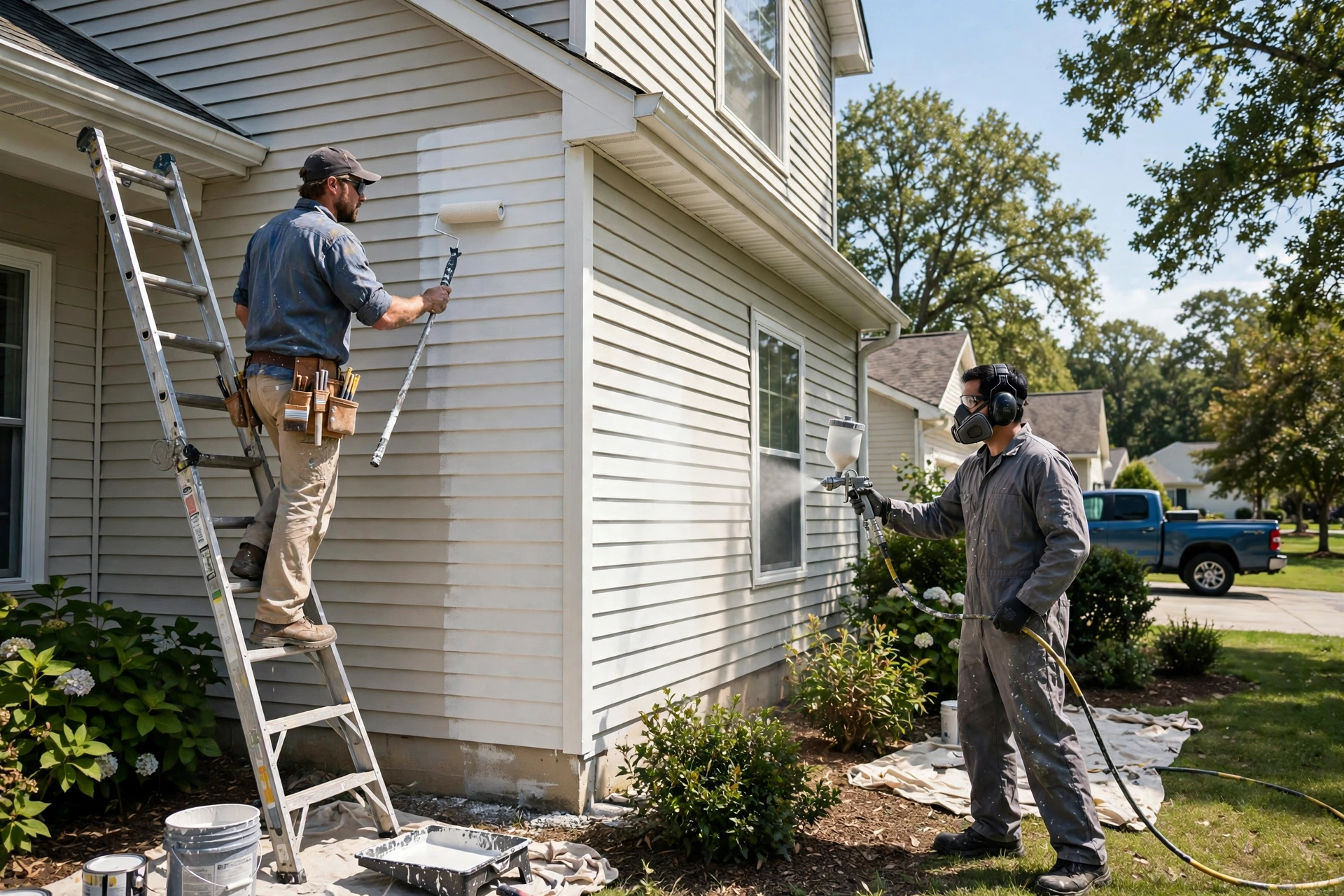
Red flags to watch for: quotes far below $20 per hour or suspiciously cheap flat bids usually mean skipped prep, thinned paint, or no insurance. Verify insurance and ask exactly what prep is included. A legitimate painter will describe their process without hesitation. A vague one will change the subject.
DIY vs hiring a painter
Painting is one of the most DIY-friendly trades. A standard 10×12 room costs $100 to $300 in materials to paint yourself, versus $400 to $900 to hire out including labor. If you have a free weekend and can tolerate the mess, DIY saves real money on interior walls.
Hire out when the job has what pros call “edges”: high ceilings, intricate trim, exterior work above one story, cabinets, or anything where a bad result is expensive to fix. Cabinets especially punish amateurs; a brush-marked cabinet finish costs more to strip and redo than hiring a sprayer would have in the first place. Also factor in your time honestly. A pro paints a room in one to two days. A first-timer often needs a full weekend plus a touch-up evening.
The middle path works well for many homeowners: do your own furniture moving, wall prep, and cleanup, and hire the painter for the painting itself. Some painters discount the rate when you handle the grunt work.
Money-saving tips
- Get 3 written quotes and compare scope line by line. The cheapest bid is rarely the best value.
- Negotiate flat rates on whole-house jobs. Homeowners report 10 to 15% savings by bundling rooms instead of paying piecemeal.
- Pick one paint color for the main living areas to cut masking and setup time.
- Schedule off-season. Late fall and winter interior work often prices softer than spring.
- Do your own prep. Move furniture, remove outlet covers, and do light patching yourself.
- Ask about the minimum. Batch small touch-ups into one visit so you are not paying a $500 minimum for a two-hour job.
- Buy paint when it is on sale at the big-box stores if your contract has you supplying materials.
FAQs
Is it better to pay a painter hourly or by the job?
For small jobs and touch-ups, hourly is fine if you set a time cap in writing. For rooms, exteriors, and whole-house work, a detailed flat quote is usually safer because it protects you from slow work and scope creep.
What is a fair hourly rate for a painter?
$20 to $50 per hour is the national norm for residential painters in 2026. In expensive metros, $65 to $120 per hour is standard. Anything far below $20 per hour deserves a hard look at insurance and prep.
Do painters charge for travel time?
Most do not line-item travel, but it is baked into the rate or the minimum charge. Painters who serve a wide rural area sometimes add a trip fee, especially for small jobs.
Are paint and materials included in the hourly rate?
Usually not. Hourly and day rates typically cover labor, basic prep, and tools only. Pro-grade paint runs $40 to $100 per gallon and is almost always extra. Always ask and get the answer in writing.
Should I tip my painter?
Tipping is not expected in the painting trade. About a quarter of homeowners tip anyway, usually $20 to $50 per painter on small jobs or $50 to $100 each on large ones. A glowing review, drinks, or lunch is always welcome. Tip crew members individually rather than handing a lump sum to the boss.
Why do some painters quote per square foot instead?
Per-square-foot pricing ($2 to $6 interior, $1.50 to $4 exterior) is the standard for new construction and large surface areas. It scales cleanly with the amount of surface being painted, so both sides can verify the math.
The bottom line: $20 to $50 per hour is normal, $65 to $120 is normal in expensive markets, and the number only means something once you know what is included. Three written quotes, scope compared line by line, and a clear answer on materials will tell you everything you need to hire with confidence.