Drywall Repair Cost 2026
The national average drywall repair cost is about $350, with most homeowners paying between $200 and $550 for a professional repair. A few nail holes and a dab of joint compound can cost as little as $75, while ceiling water damage with sagging sections can push the bill toward $1,000 or more. The final number depends on the size of the damage, whether it is on a wall or a ceiling, and whether texture matching and painting are included. All prices below reflect 2026 US contractor-market estimates; get 3 local quotes from licensed pros before committing.
Drywall takes a beating in everyday life: doorknobs punch holes, furniture gouges corners, and houses settle and crack the seams. This guide breaks down the drywall repair cost by damage size, location, and finish level so you know exactly what a fair quote looks like.
Drywall repair cost overview
Most homeowners spend between $200 and $550 when they hire a pro to fix drywall, and the national average lands right around $350. Labor makes up roughly half of the total, which is why the same patch can cost about 70 percent more in Brooklyn than in San Antonio.
Contractors price patches in flat tiers by size, because every repair needs multiple visits: one to cut and set the patch, then return trips for mud coats, sanding, and finishing. Typical local averages per patch run from about $232 in lower-cost markets to around $377 in expensive metros.
| Repair type | Typical drywall repair cost (2026) |
|---|---|
| Small hole (under 6 inches) | $125 to $300 |
| Medium hole (6 to 12 inches) | $300 to $600 |
| Large hole (12 to 24 inches) | $600 to $1,200 |
| Full panel replacement | $600 to $1,200 |
| Nail holes and minor dents | $75 to $105 |
| Crack repair | $50 to $400 |
Drywall repair cost by damage size
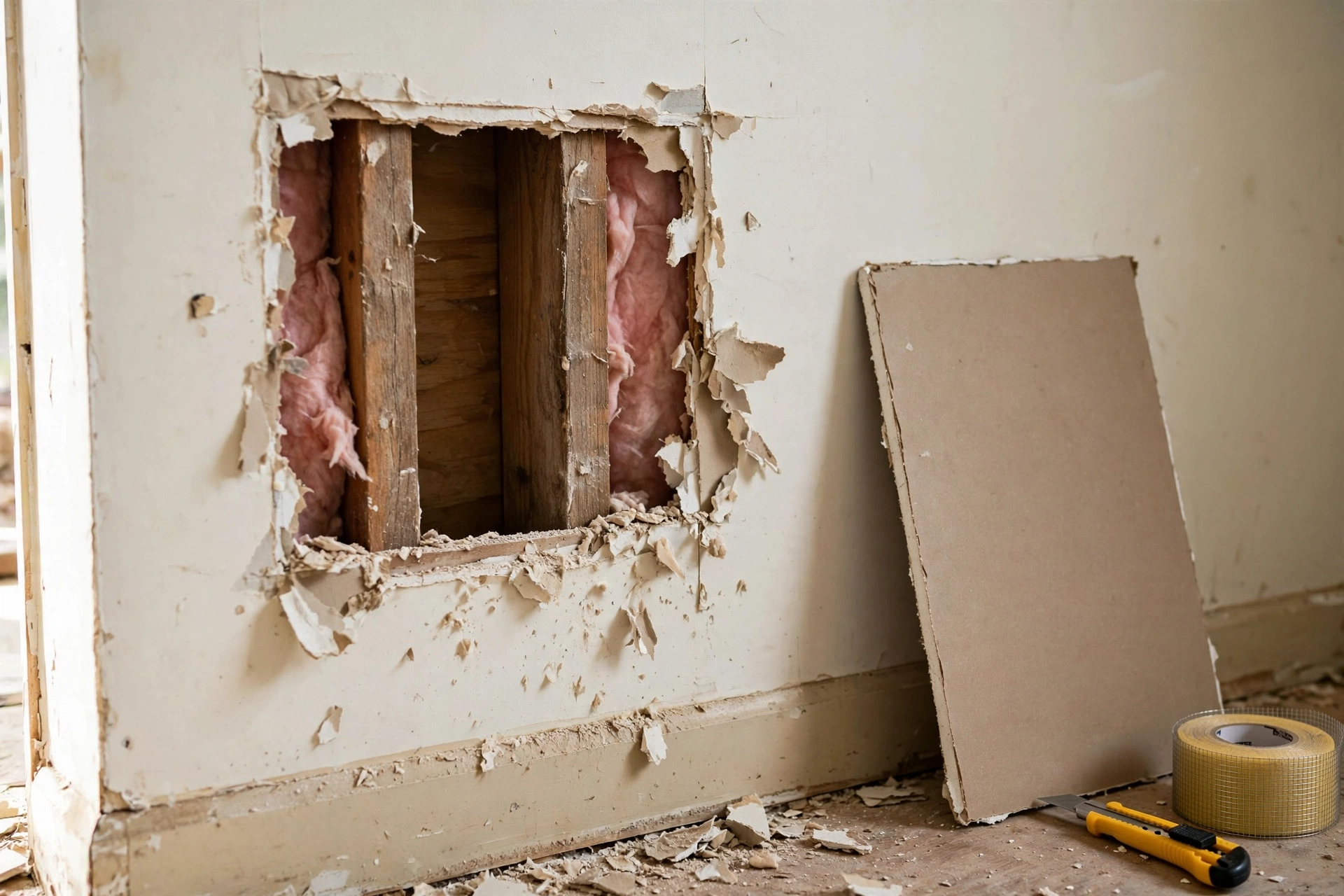
Size is the single biggest driver of the drywall repair cost. Contractors sort jobs into four clear tiers, with figures that cover patching, compound, sanding, and a primer-ready finish.
| Damage size | Example | Average pro price |
|---|---|---|
| Small patch (under 6 inches) | Nail pops, dents, anchor holes | About $143 |
| Medium patch (6 to 12 inches) | Classic doorknob hole | About $263 |
| Large patch (12 to 24 inches) | Fist hole, big drywall break | About $428 |
| Full panel replacement | Water-soaked or sagging section | About $638 |
Small jobs cost more per square foot because setup and travel time are fixed. Repairs confined to a single wall generally run $60 to $80 per square foot, but small repairs under 10 square feet can land at $75 to $100 per square foot. That is why bundling helps: several small patches done in one visit cost far less per patch than separate trips. Corner bead repair runs about $18.75 per linear foot and crack repair about $12.75 per linear foot, with materials per patch at roughly $24 to $26.
Ceiling drywall repair vs wall repair
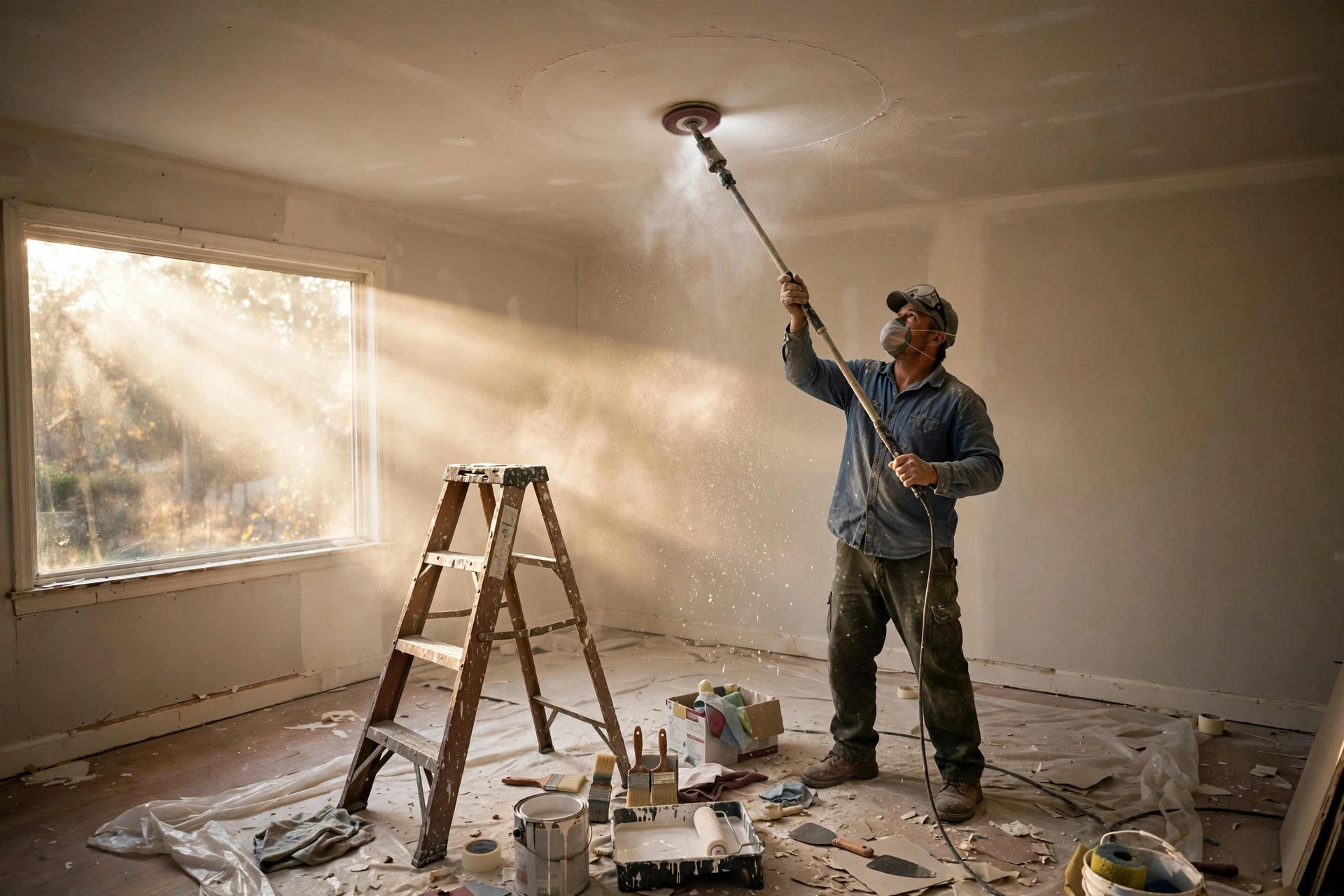
Ceilings cost more than walls, every time. The national average ceiling repair runs $250 to $850, with a small hole patch typically costing about $450. Minor ceiling repairs can fall in the $200 to $500 range, while severe leak damage can reach $2,000.
Working overhead is slower and harder. Joint compound sags against gravity instead of sitting flat, texture matching is more visible when you look straight up at it, and anything above a comfortable reach needs scaffolding or a two-person crew. High walls and stairwells carry the same penalty.
Water damage drywall repair costs
Water damage is the most expensive common drywall repair. Fixing water-damaged drywall typically costs $500 to $1,200, with some estimates reaching $1,600 depending on the area affected. The reason: wet drywall usually has to be cut out and replaced, not patched.
Fix the leak source first, always. A plumber, roofer, or HVAC tech needs to stop the water before the drywall crew starts, or the damage returns within weeks. That upstream repair is a separate line item.
Mold changes the picture dramatically. If the leak sat long enough to grow mold inside the wall cavity, the drywall repair cost can reach $1,000 to $2,000 or more once remediation is included. Mold remediation often needs a specialist, and contaminated insulation behind the drywall has to come out too, adding roughly $200 to $600. Bathrooms and basements carry the highest mold risk.
Texture matching and painting add-ons
A patch is only half the job. If the repair is supposed to disappear into the wall, you need texture matching, primer, and paint, and each layer adds to the bill. Orange peel is the cheapest and easiest texture to match, knockdown costs a bit more, and skip trowel costs the most because it is applied by hand. Here is what the finishing add-ons typically cost.
| Finish add-on | Typical cost (2026) |
|---|---|
| Orange peel texture (sprayed) | $0.80 to $1.50 per sq ft |
| Knockdown texture | Slightly more than orange peel |
| Skip trowel texture (hand-applied) | $1.50 to $2.00 per sq ft |
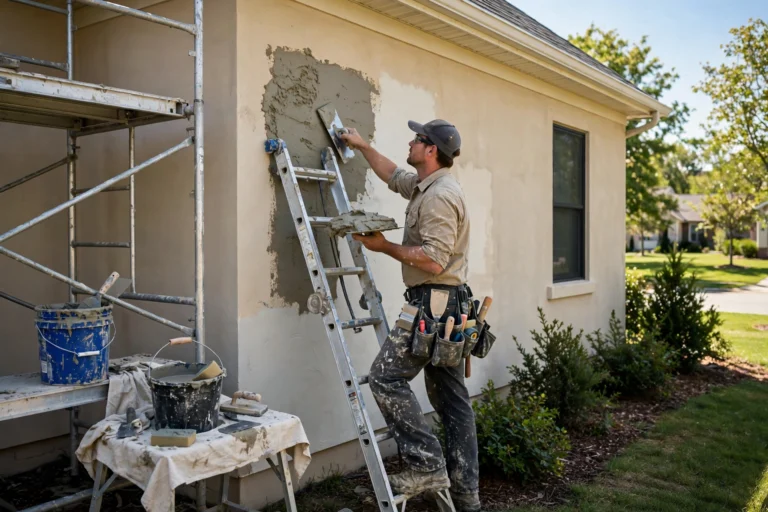
| Skim coat to remove or fix texture | $300 to $1,200 total ($1 to $3 per sq ft) |
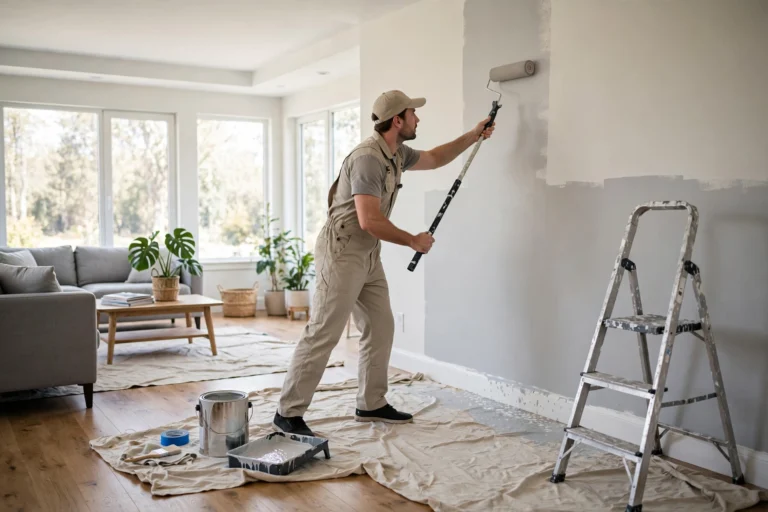
| Paint-matched finish (patch-only vs full) | $2.50 per sq ft patch-only; $3.50 per sq ft with paint |
| Pro touch-up painting after repair | $100 to $500 |
| Ceiling repaint to blend a patch | $50 to $400 per room |
| Popcorn ceiling with asbestos (testing plus abatement) | $75 to $90 per sq ft; testing $300 to $500 |
If the paint on your wall has aged, even a perfect patch can show because fresh paint is brighter than the faded wall around it. Pros often recommend repainting the full wall section rather than touching up one spot.
Popcorn ceilings deserve a warning. Homes built before the late 1970s may have asbestos in the texture, and disturbing it triggers strict removal and disposal rules. The drywall repair cost for a popcorn ceiling can jump to $75 to $90 per square foot when abatement is required, with testing alone at $300 to $500. Read up on popcorn ceiling removal costs before you let anyone scrape that texture.
Handyman vs drywall contractor
Small jobs and large jobs belong to different pros, and hiring the right one saves money. A handyman charges $50 to $100 per hour, or a flat $100 to $300 for a straightforward drywall patch that includes repainting. Handymen are the right call for nail holes, dents, and one or two small patches.
Medium to large holes, full panel replacements, ceiling work, and anything with water damage belong to a drywall contractor. Contractor per-patch prices average about $260 to $640 depending on size, and a specialist blends texture and finishes seams better than a generalist. Gather every damaged spot before you call, since multiple patches in one visit bundle cheaper.
One pricing quirk is worth knowing. Drywall pros rarely charge small jobs by the hour because a $50 patch loses money once return trips for mud coats are factored in, so they set minimum charges and flat per-patch prices. When you compare drywall repair services, ask whether the quote is flat or hourly, how many visits are included, and whether paint is part of the price. A drywall repair service that bundles primer and paint-matched finishing can be the better value than a patch-only quote. Check how much painters charge per hour if you are pricing that step separately.
What affects the drywall repair cost
Size and depth of the damage is the main driver, since pros price in flat tiers by hole size. Wall versus ceiling matters because overhead work is slower and harder to finish invisibly. Location in the home plays a role too: bathrooms and basements cost more because they need moisture-resistant board and carry mold risk, while garages cost less since a utility-grade finish is acceptable.
Texture matching is the hidden budget line. Smooth walls are cheap to finish, orange peel is easy, knockdown costs more, skip trowel costs the most, and popcorn can trigger asbestos testing. Finish level matters as well: a patch-only repair that skips primer and paint is much cheaper than a full paint-matched finish. Water or mold adds leak-source repair, remediation, and insulation replacement on top of the drywall itself. Finally, your market sets the baseline; labor is about half of every invoice, so metro areas run noticeably higher than small towns.
Repair or replace a section
Most damage should be patched. Nail holes, dents, doorknob holes, and holes up to about 24 inches across are patch jobs, and a good patch is invisible once finished and painted. Replacement is the right call for water damage, mold growth, sagging drywall, and damage larger than about 2 feet by 2 feet.
Use this rule of thumb: if the drywall repair cost exceeds 40 to 50 percent of what full replacement would cost, replace the section instead. A standard 8 foot by 12 foot wall costs $200 to $600 to replace entirely, often cheaper than cutting and blending several large patches across it.
DIY patch kits vs hiring a pro
Small drywall repair is one of the friendliest DIY projects in home maintenance. Self-adhesive patch kits cost $10 to $50 total at a hardware store, with a basic wall repair kit running $15 to $17 and spackling paste at $5 to $8. A drywall sheet runs $10 to $20, and with screws, mesh tape, primer, and paint the materials for a small repair rarely break $50.
DIY is realistic for small dents, nail pops, light scratches, and holes under about 6 inches. Stick on the mesh patch, feather joint compound over it in two or three thin coats, sand smooth, prime, and paint. Give each coat time to dry, or the compound shrinks and cracks.
Hire a pro for large holes, ceiling repairs, water damage, mold, and textured walls where an invisible blend matters. A bad DIY patch shows through paint as a visible hump or seam, and fixing a botched patch costs more than doing it right the first time. If you prefer hands-on work, a weekend and a $20 kit handles most small holes beautifully.
Money-saving tips
- Bundle every patch into one visit. Walk the house, mark every dent and hole with painter’s tape, and get them all fixed in a single appointment.
- Ask for a patch-only price. If you are repainting the room anyway or will paint it yourself, skipping the paint finish can cut $100 to $500 off the invoice.
- Repair before you paint, not after. Coordinating the patch with a full room repaint avoids paying for a touch-up now and a full paint job later.
- DIY the small stuff. A $10 to $30 patch kit handles nail holes and dents that a pro would charge $100 or more to fix. Save the pro for holes, ceilings, and water damage.
- Compare drywall repair services, not just prices. Two $300 quotes can mean very different things if one includes texture and paint. Ask each drywall repair service for a written estimate that states the exact finish.
- Consider full replacement for big damage. When several large patches would cost more than half of a new wall, replacing the whole section at $200 to $600 is often cheaper and cleaner.
- Keep the area dry. Bathroom and basement patches fail early in high humidity, so run a vent fan and fix leaks promptly.
FAQs
How much does drywall repair cost in 2026?
The national average drywall repair cost is about $350, with most jobs landing between $200 and $550. Small holes run $125 to $300, medium patches $300 to $600, and large damage $600 to $1,200 or more.
How much does it cost to repair a hole in drywall?
About $143 for a small patch under 6 inches, $263 for a medium 6 to 12 inch patch like a doorknob hole, and $428 for a large 12 to 24 inch patch. A full panel replacement averages about $638, finishing included.
Is ceiling drywall repair more expensive than wall repair?
Yes. Ceiling repairs average $250 to $850 compared with $200 to $550 for general wall work. Overhead labor is slower, compound sags against gravity, texture matching is harder, and scaffolding may be needed.
How much does water-damaged drywall repair cost?
Expect $500 to $1,200 for the drywall work itself, or up to $1,600 for larger areas. Wet drywall usually has to be replaced rather than patched, and the leak source must be fixed first. If mold remediation is needed, the total can reach $1,000 to $2,000 or more.
Can I repair drywall myself?
Yes for small jobs. Holes under 6 inches are easy DIY with a $10 to $30 patch kit. For large holes, ceiling repairs, water damage, or mold, hire a pro, because a bad DIY patch shows through paint and can peel.
Does drywall repair include painting?
Not always. Patch-only repairs skip primer and paint, while a paint-matched finish adds roughly $1 to $3 per square foot, or $100 to $500 for a touch-up repaint. Always ask for a written estimate that states whether painting is included.
Bottom line: a typical drywall repair cost lands at a few hundred dollars. Bundle patches, skip the paint when you will repaint anyway, and compare written estimates to pay a fair price for an invisible repair. For broader painting budgets, see our guides on interior house painting costs and popcorn ceiling removal costs.
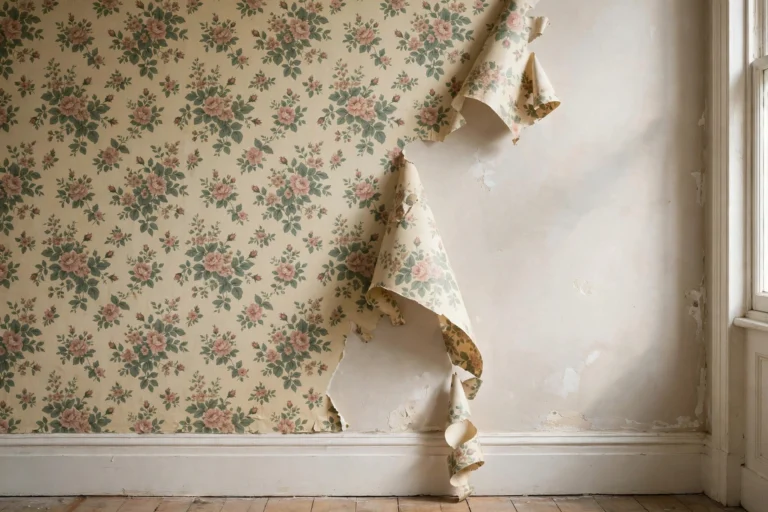
Removing old wallpaper before the repaint? Our wallpaper removal cost guide breaks down per square foot removal prices, steaming costs, and the skim coat repairs that often follow.