Wallpaper Removal Cost 2026
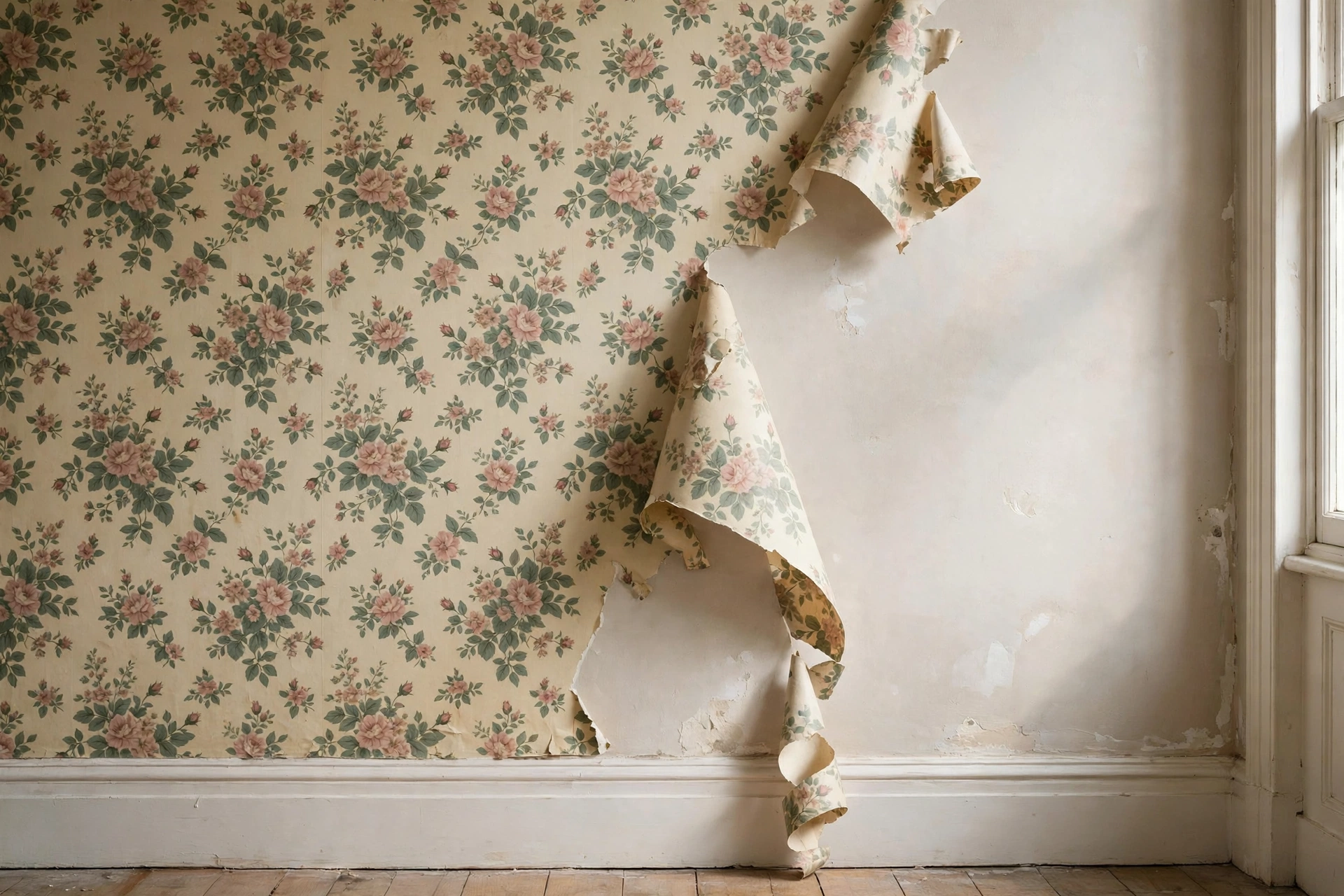
If you are staring at dated floral paper and wondering what it takes to get rid of it, the wallpaper removal cost is probably the first number you want. For most homeowners in 2026, professional removal runs $0.60 to $3 per square foot of wallpapered wall. A typical project lands between $423 and $1,193, with an average right around $793.
That range covers removal only. It does not include patching the wall, skim coating, priming, or repainting, and those follow-up costs are where many budgets go sideways. A simple single layer on a well-prepared wall is a cheap, fast job. Three layers of paper glued straight onto bare drywall is a different story, and the wallpaper removal cost climbs fast.
Found damaged drywall under the paper? Our drywall repair cost guide prices patches, cracks, and full panel replacement.
Before you call anyone, it helps to know what drives the number. The type of paper, the number of layers, and the condition of the wall underneath matter more than the size of the room. Read on for the per-square-foot math, the methods, and the full remove-and-repaint cost. Whatever you decide, get 3 local quotes before hiring, because prices for this work vary a lot from one contractor to the next. Comparing several quotes is the easiest way to keep the wallpaper removal cost in check.
Once the walls are bare and smooth, our interior house painting cost guide prices the repaint for the whole house.
How Much Does Wallpaper Removal Cost?
So, how much does it cost to remove wallpaper in a typical home? Pros price most jobs by the square foot of wall, but room-level numbers are easier to picture. The table below shows common professional removal prices by room, assuming one layer of ordinary paper and no wall damage.
| Room | Papered wall area | Typical removal cost |
|---|---|---|
| Small bathroom | About 50 sq ft | $30 to $150 |
| Bedroom | About 200 sq ft | $120 to $600 |
| Living room | About 400 sq ft | $240 to $1,200 |
| Whole house | 1,000 sq ft or more | $600 to $3,000 or more |
Small jobs rarely bill at the pure square-foot rate, because many contractors charge a minimum service fee just to show up. That is why a tiny powder room can cost more per foot than a big living room. Some pros quote an hourly rate, usually $40 to $80 per hour, which can work in your favor on a small, easy room. For larger rooms, per-foot pricing usually produces the lower wallpaper removal cost.
Keep in mind that disposal of the old paper and glue residue is sometimes billed separately, adding $50 to $150 to the final wallpaper removal cost. Ask every contractor whether cleanup and hauling are included before you compare quotes side by side.
Wallpaper Removal Cost Per Square Foot
The standard wallpaper removal cost per square foot sits between $0.60 and $3, measured on wall area rather than floor area. Where your job lands in that band depends on how the paper behaves once work starts. Easy, porous paper that releases cleanly sits at the bottom. Vinyl, foil, and multi-layer paper resist water and solvent, so they take longer and cost more.
Expect roughly $1 to $2 per square foot for uncoated paper or fabric, and $1.50 to $2.50 for nonporous vinyl or foil. Peel-and-stick paper is the cheapest at $0.75 to $1.50 per square foot, since it was designed to come down cleanly.
The number that surprises people is the difficult-job rate. Paper that is bonded tight and needs a long soak-and-scrape process can run $3 to $8 per square foot. Painted-over wallpaper often lands in that territory too, because the paint film seals the surface and nothing can reach the glue until the paper is scored. If your walls fall into this category, the wallpaper removal cost per square foot can be two or three times the standard quote.
High ceilings and stairwells also push the rate up, since crews work from scaffolding and everything moves slower. Confirm each quote is priced on the same wall square footage. A quote that hides the square footage hides the real wallpaper removal cost too.
Removal Methods and What They Cost
There are three main ways pros take paper down, and the method affects your wallpaper removal cost more than almost anything else.
Dry stripping is the cheapest route at about $0.60 to $1.50 per square foot. The crew peels the paper by hand and follows with a scraper for the backing. It only works when the wall was properly primed or sized before the paper went up. If it was not, the face paper of the drywall tears away with the wallpaper, and you have a repair bill coming. When it works, dry stripping delivers the lowest wallpaper removal cost of any method.
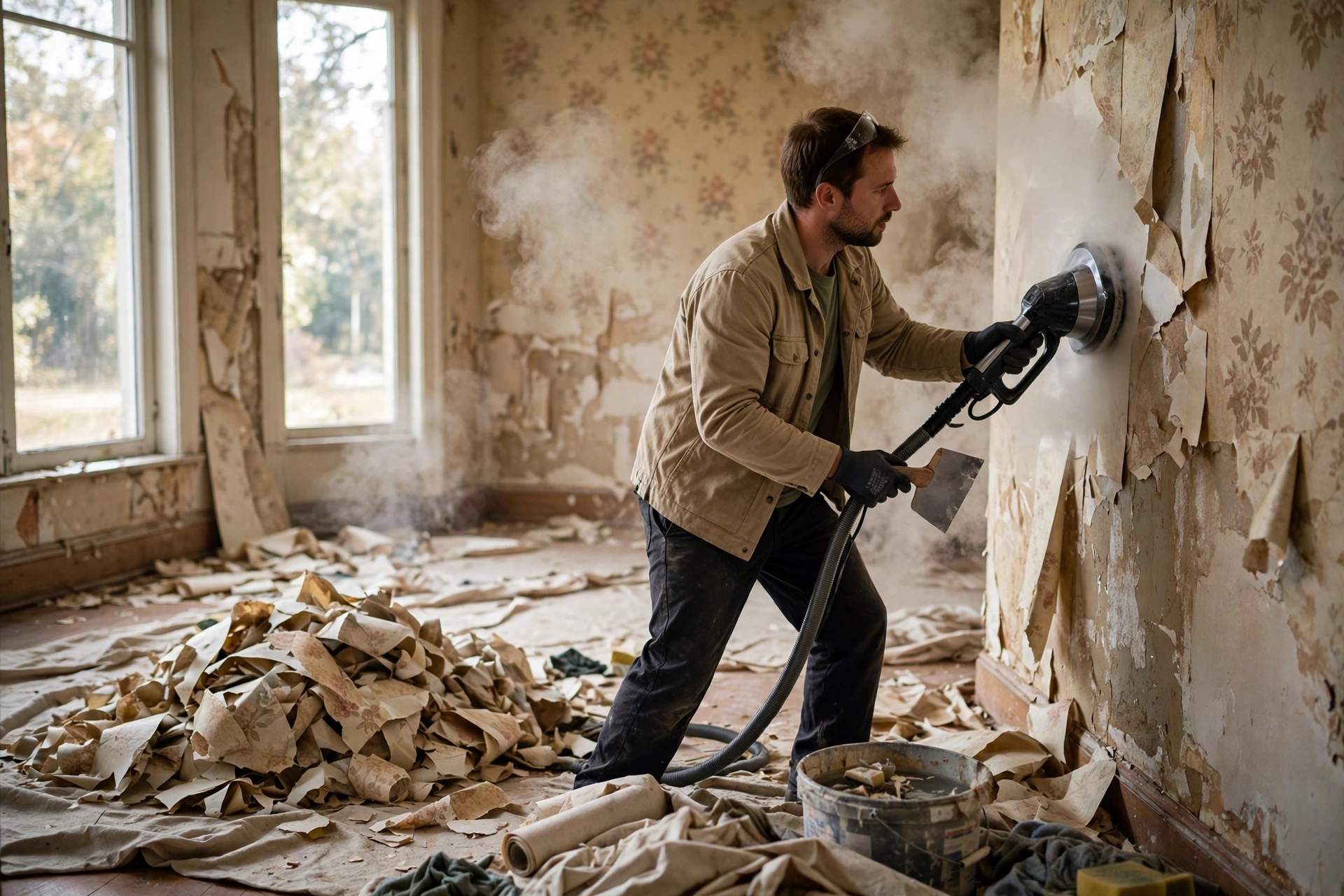
Steaming runs about $1 to $3 per square foot. A steamer softens the paste with heat and moisture so the paper releases in larger sheets. It is chemical-free and the go-to method for stubborn or multi-layer paper, though it should not be used over wood paneling. If you are doing the work yourself, the wallpaper steaming cost is modest: renting a steamer runs $30 to $40 per day, and buying a basic consumer unit costs around $50. For pros, the wallpaper steaming cost is simply bundled into that per-foot rate.
Scoring plus solvent is the soak-and-scrape method. The crew scores the surface with a tool that punches tiny holes, sprays on a stripper solution such as a DIF-type remover, lets it soak, and scrapes. Simple jobs price at $1 to $2 per square foot, but difficult bonded paper with this method reaches the $3 to $8 range.
In practice, many jobs mix methods: steam on the stubborn wall, dry stripping where the paper cooperates. A good contractor will test a small patch first and tell you which method your walls need before quoting the final wallpaper removal cost.
What Makes Removal Expensive
The biggest price driver is layers. Every extra layer of old paper needs its own soak and scrape pass, so a wall with three generations of wallpaper takes three times the labor of a single layer. Multi-layer jobs are often quoted at the higher soak-and-scrape rate from the start.
The true nightmare case is wallpaper hung directly on unprimed, unsealed drywall. The paper backing bonds straight to the drywall face paper, so removal tears the wall surface off in patches. The fix is a full skim coat over the damaged wall before paint, and that is how a modest $400 removal turns into a $1,500 room by the time the walls are smooth again.
Plaster walls are far more forgiving. Plaster is hard and durable, so paper usually releases without taking the wall with it, and skim coating is rarely needed afterward. On plaster, the wallpaper removal cost tends to stay near the bottom of the range. Drywall is the risky surface, especially in older homes where sizing was skipped.
Painted-over wallpaper is another budget killer. The paint seals the paper like a plastic film, so steam and solvent cannot reach the paste without aggressive scoring first. Pros price it like nonporous or multi-layer paper, and the removal cost per square foot climbs accordingly.
One more thing to watch for in homes built between the 1940s and the 1980s: some old papers and backings contain asbestos. Testing runs $250 to $850, and if it comes back positive, professional abatement adds $5 to $15 per square foot. Testing first is money well spent.
The Bill After the Paper Comes Off
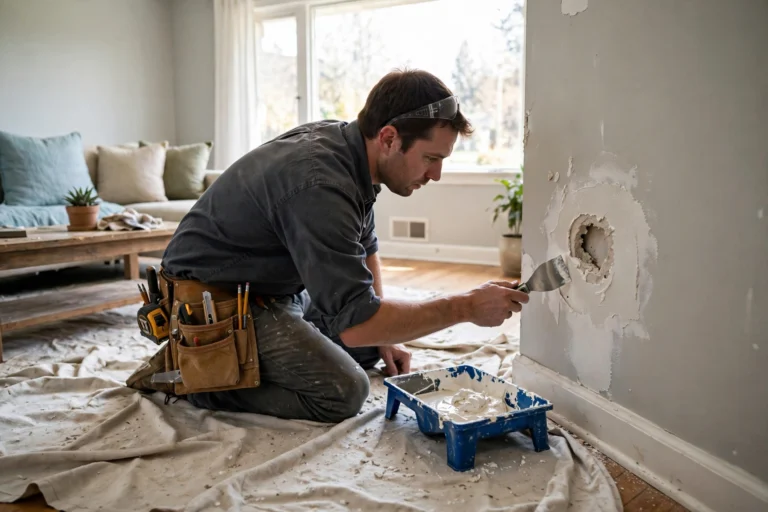
Removal is only the first invoice. Almost every wall needs some attention once the paper is down, and this second stage is what separates a realistic wallpaper removal cost estimate from a fantasy. Minor patching, sanding, and spot repairs typically run $100 to $500, and total wall repairs after removal range from $100 to $1,000, sometimes more if damage is extensive.
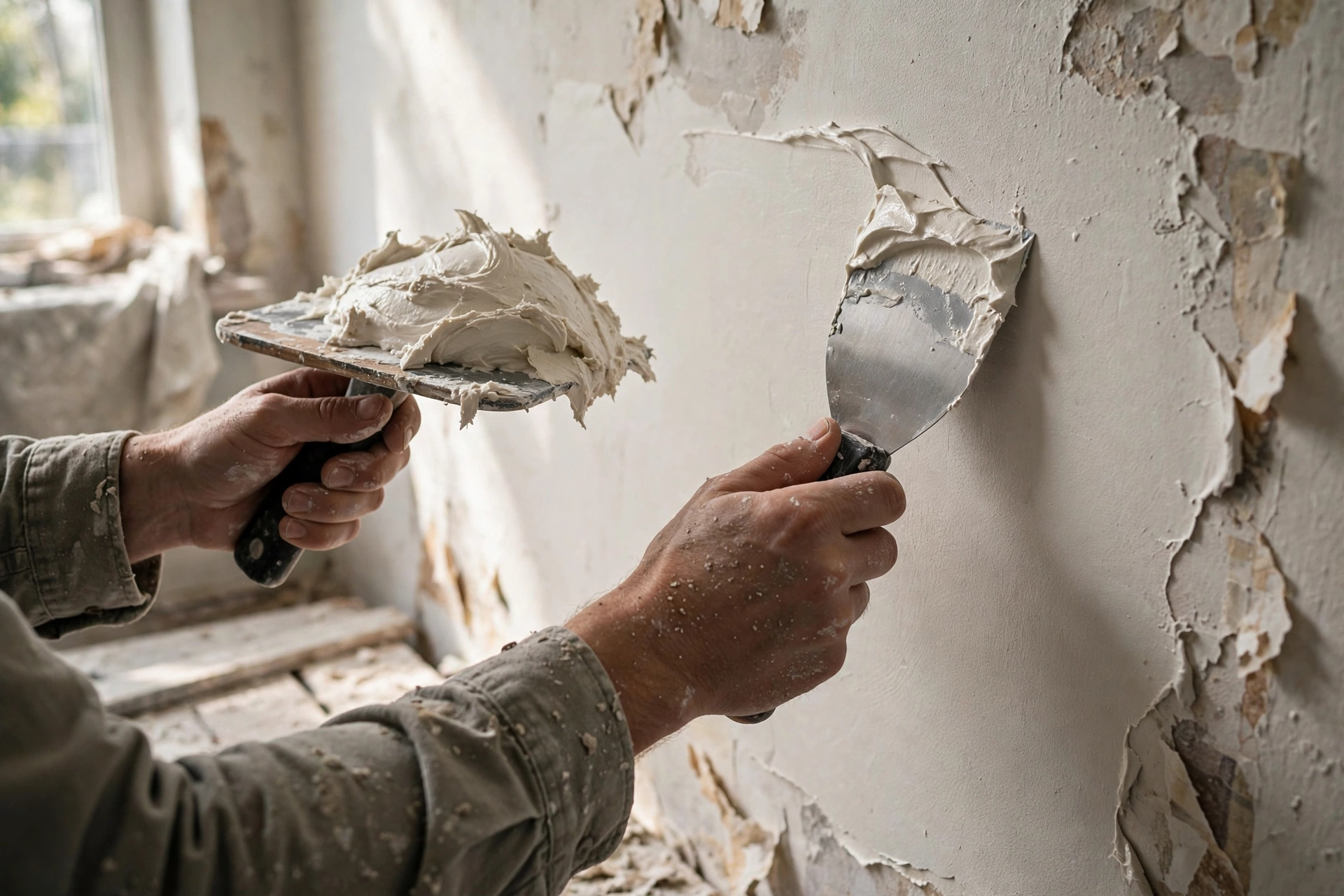
Skim coating is the big-ticket repair. A thin coat of joint compound over the whole wall runs $1.10 to $1.30 per square foot, which works out to about $400 to $800 for a standard 12×12 room. You need it when the drywall facing tore during removal, when gouges are widespread, or when you want a flawless finish under paint with a sheen. If the damage is beyond skimming, new drywall runs $1.50 to $3.50 per square foot installed.
There is also a safety check worth doing in older homes. Wallpaper in a pre-1978 house can hide old lead paint layers on the wall or trim underneath, and disturbing them during scraping creates hazardous dust. Review the EPA recommendations for lead-safe work practices before you start, and hire a certified lead-safe contractor if there is any chance of lead paint being present.
The smart way to budget is to ask each contractor for two numbers: removal alone, and removal plus wall repair. The gap between those quotes tells you how much wall damage each pro expects to find, and it keeps this part of the wallpaper removal cost from blindsiding you later.
Cost to Remove Wallpaper and Paint
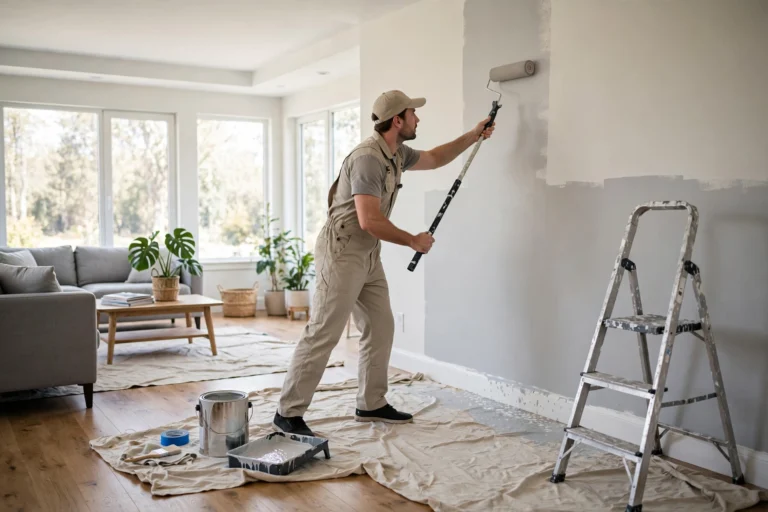
Most homeowners do not want bare walls. They want the paper gone and fresh paint up, so the real question is the combined cost to remove wallpaper and paint in one project. Bought together, removal plus priming plus two coats of paint typically runs $2.75 to $6.78 per square foot of wall. The painting step alone is usually $2 to $6 per square foot once you include primer.
Here is how that plays out in a standard 12×12 bedroom with roughly 350 to 384 square feet of wall. Removal runs about $420 to $1,200 depending on the paper. Minor repairs or a spot skim add $100 to $500. Prime and two coats of paint make up the rest. The painting share is usually larger than the wallpaper removal cost share. All in, a full remove-and-paint bedroom realistically lands around $1,000 to $2,600.
If the walls need a full skim coat, expect to land at the top of that range or a bit beyond it. If the paper strips cleanly and the walls are sound, you will be closer to the bottom. Hiring one contractor for both phases usually prices slightly better than booking removal and painting separately, and it avoids arguments about who damaged the wall.
When you request quotes for the combined job, ask for the removal, repair, and painting lines to be itemized. Itemized quotes make the wallpaper removal cost portion easy to compare, and they protect you if the wall turns out worse than expected once the paper is off.
DIY vs Pro and When to Cover Instead
Doing it yourself is genuinely cheap on supplies. A scoring tool runs $8 to $15, a scraper $5 to $10, stripper solution $10 to $20, and a rented steamer $30 to $40 per day. Most people spend under $100 total per room. The catch is time and risk: plan on 12 hours of work for one standard room, and remember that one bad gouge in the drywall face can trigger a $400 to $800 skim coat that wipes out the savings. Pros with hotter commercial steamers finish the same room two to four times faster.
Ventilation matters if you go the DIY route with chemical strippers. Open windows, run a fan, and take breaks from the fumes. The EPA overview of indoor air quality explains why fresh air exchange matters when you are working with solvents and cleaning products in an enclosed room.
Sometimes the honest answer is not to remove the paper at all. Painting over wallpaper can work when the paper is smooth, tight, and firmly bonded everywhere with seams you cannot feel. Even then, it needs an oil-based or shellac primer first, because water-based paint can reactivate the paste and lift the paper. Budget a normal prime-and-paint price and accept that the finish will not last as long as paint over a properly stripped wall.
Paneling over the paper with beadboard or shiplap is the other cover-up route. It skips the removal cost but adds material and installation expense, and it eats a little room depth. It makes the most sense on walls where removal would destroy the drywall anyway. If your paper is bubbling, peeling, or loose at the seams, though, neither shortcut is sound, and paying the wallpaper removal cost is the right call.
Frequently Asked Questions
How much does it cost to remove wallpaper in one room?
A bedroom with about 200 square feet of papered wall typically runs $120 to $600, and a small bathroom runs $30 to $150. Once contractor minimums and harder paper are factored in, many projects land between $423 and $1,193. Your actual wallpaper removal cost depends on the paper type, the layers, and the wall condition.
What is the average wallpaper removal cost per square foot?
The standard range is $0.60 to $3 per square foot of wallpapered wall. Easy strippable paper sits at the bottom of the range, while vinyl, multi-layer, and painted-over paper sit at the top. Truly difficult soak-and-scrape work can reach $3 to $8 per square foot.
Is it cheaper to remove wallpaper myself?
On supplies, yes. Tools, stripper, and a steamer rental come to under $100 for a typical room. But expect about 12 hours of labor per room, and weigh the risk: torn drywall facing can add a $400 to $800 skim coat, which can erase everything you saved.
Do I always need to skim coat after removal?
No. Sound walls usually need only patching and sanding, at $100 to $500. A full skim coat at $1.10 to $1.30 per square foot is for walls where the drywall facing tore, gouges are widespread, or you want a flawless finish under glossy paint. It is the repair most likely to raise your total wallpaper removal cost.
Can I just paint over wallpaper instead?
Sometimes, but most pros advise against it because seams telegraph through paint and the paper can bubble or lift later. If you go this route, the paper must be perfectly bonded and sealed with an oil-based or shellac primer first. Budget $2 to $6 per square foot for the prime-and-paint work, and compare that figure with the full wallpaper removal cost before you decide.
How long does wallpaper removal take?
A pro crew usually strips a standard single-layer room in under a day, while a DIYer should plan on about 12 hours per room. Multi-layer paper, painted-over paper, or heavy steaming can stretch either timeline, so ask your contractor to flag those conditions in writing before work begins.