Walk-In Shower Cost 2026
A walk-in shower installation costs $1,500 to $15,000 in 2026. A prefab shower kit with professional installation runs $1,500 to $4,000, while a fully custom tile shower with frameless glass typically lands between $6,000 and $15,000. The biggest price drivers are size, whether you move the plumbing, and your choice of glass enclosure. These are estimates based on national contractor pricing. Always get 3 local quotes before committing.
A walk-in shower is one of the most popular bathroom upgrades for 2026. It makes a small bathroom feel bigger, looks genuinely high end, and is far easier to step into than a tub, which matters a lot for aging homeowners. This guide walks you through every cost decision so there are no surprises when the quotes come in.
Prefab Shower Kit Costs
A prefab shower kit is the budget friendly way in. The kit arrives as a one piece or multi piece base plus matching wall panels, usually acrylic or fiberglass, and your contractor installs it in a day or two. Most homeowners spend between $1,500 and $4,000 installed. The kit itself typically costs $600 to $2,000 at a home improvement store, and labor runs $900 to $2,000 depending on your market.
| Prefab kit type | Kit price | Installed estimate |
|---|---|---|
| Basic fiberglass one piece | $600 to $900 | $1,500 to $2,200 |
| Mid range acrylic 3 piece | $900 to $1,500 | $2,200 to $3,200 |
| Premium acrylic with glass doors | $1,500 to $2,000 | $3,000 to $4,000 |
Prefab is fastest and cheapest, but you are limited to standard sizes and a handful of colors. If the shower is in your forever home, custom tile is worth the jump. If it is a rental or a secondary bath, a quality acrylic kit is genuinely good value.
Custom Tile Shower Costs
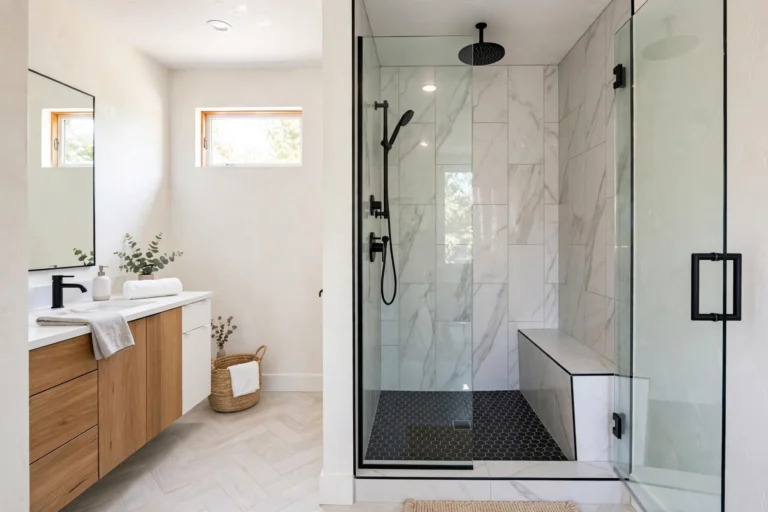
A custom tile shower is built from scratch on site: a mortared or pre sloped pan, waterproof membrane, hand set tile, and custom glass. Expect $6,000 to $15,000 installed in 2026. Tile work is labor intensive, and labor is the reason custom costs two to four times what prefab does.
Where the money goes in a custom tile shower
- Demo and prep ($500 to $1,500): ripping out the old tub or shower, fixing any rot behind the walls, and leveling the floor.
- Waterproofing and pan ($800 to $2,000): the liner or foam system plus the sloped mortar bed. Never cheap out here.
- Tile labor and materials ($2,500 to $7,000): depends on tile price and pattern complexity. Simple large format tile saves hours.
- Glass enclosure ($900 to $2,500): see the door options below.
- Fixtures and valves ($300 to $1,200): a quality thermostatic valve is money well spent.
Walk-In Shower Cost by Size
Bigger showers mean more tile, a bigger pan, and a bigger piece of glass, so the price climbs with size. Here are realistic installed estimates for a professionally built custom tile shower at common sizes.
| Shower size | Best for | Custom tile estimate |
|---|---|---|
| 32 x 32 inches | Compact powder baths and corners | $5,000 to $8,000 |
| 36 x 48 inches | The most common replacement size | $6,000 to $10,000 |
| 48 x 60 inches | Spacious primary baths | $8,000 to $13,000 |
| Curbless / roll in (any size) | ADA friendly and modern look | Add $500 to $1,500 to the size price |
Prefab kits follow the same logic at a lower price point, with most popular 32 x 60 kits landing in the $2,000 to $3,500 installed range. Curbless designs cost extra because the floor has to be regraded or recessed so water flows to the drain without a curb, which is more skilled work.
Tub-to-Shower Conversion Pricing
Swapping a standard 60 inch tub for a walk-in shower is the single most requested bathroom project in 2026. A full tub to shower conversion costs $3,000 to $8,000 installed. A clean swap onto the same drain with a prefab base can stay near $3,000, while a full custom tile rebuild lands closer to $8,000.
One hidden cost to ask about is the tub surround, which often does not quite match a shower footprint, so plan for a little wall and floor patching no matter which route you take.
Plumbing Move Costs
If your new shower uses the same drain location as the old tub or shower, plumbing stays simple. The moment the drain moves, the budget moves too. Relocating a shower drain and supply lines adds $1,000 to $3,000 to the project, because it means cutting into the floor or concrete slab, reworking the drain pitch, and reventing the line to code.
On a ground floor with a concrete slab, moving the drain means breaking concrete, which is the high end of that range. On a second floor, the plumber opens the ceiling below instead, which is usually cheaper. Keeping the plumbing in place is one of the easiest ways to control the final bill.
Glass Door Options and Costs
The enclosure is where a walk-in shower gets its look, and prices vary enormously by style.
| Door style | Installed estimate |
|---|---|
| Shower curtain and rod | $0 to $100 (DIY) |
| Framed sliding doors | $300 to $800 |
| Semi frameless doors | $500 to $1,200 |
| Frameless glass doors | $900 to $2,500 |
A simple curtain is nearly free and honestly fine for a rental or a tight budget. Framed sliders are the value pick for family baths. Semi frameless gives a clean look for a mid range budget, and frameless glass is the showpiece option that makes the whole bathroom feel bigger and brighter. Just budget for a squeegee, because frameless panels show every water spot.
Linear Drains and Curbless Premiums
A linear drain is the long, narrow slot you see in high end showers. It costs $500 to $1,500 extra for the drain hardware plus the more demanding floor work, but it unlocks two nice things: a curbless entry that is flush with the bathroom floor, and the ability to use large format floor tile without chopping it into tiny pieces for slope.
Curbless designs also meet ADA needs and aging in place goals, since there is nothing to step over. They only work well with a pro who understands waterproofing and slope, so this is not the place to hire the cheapest bidder.
Tile vs Acrylic vs Fiberglass
The wall surface sets both the look and the maintenance level of your shower.
Ceramic and porcelain tile
Tile is the premium choice: endless styles, adds resale value, and easy to repair one tile at a time. Expect material costs of $3 to $25 per square foot depending on the tile, plus the biggest labor bill. The tradeoff is grout, which needs sealing and periodic cleaning.
Acrylic
Acrylic is the workhorse of prefab kits and many replacement shower systems. It is warm to the touch, non porous, and very easy to clean. Sheets and panels look surprisingly good in 2026, and a quality acrylic wall runs $1,000 to $2,500 installed. It can scratch and dull over decades, but for the price it is hard to beat.
Fiberglass
Fiberglass is the cheapest option and the least durable. It is common in rental properties and budget renovations, with full one piece units under $1,000. Fiberglass fades and can flex underfoot in thin bases, which is why contractors recommend acrylic over fiberglass when the budget allows.
DIY vs Hiring a Pro
You can absolutely DIY a prefab kit if you are handy: set the base level, connect the drain, anchor the panels, and caulk. Many homeowners finish in a weekend and save $1,000 or more in labor.
Custom tile is a different animal. Waterproofing is the critical skill. A shower that looks beautiful but leaks behind the walls will rot your framing and grow mold for years before you notice. Sloping the pan, flood testing the liner, and sealing the wall membrane seams are jobs for someone who has done them dozens of times. My honest take: DIY the demo and the painting, hire a licensed pro for the waterproofing, pan, and tile.
How Long Does Installation Take?
A prefab shower kit installed by a pro usually takes 1 to 3 days, including demo. A custom tile shower takes 1 to 3 weeks, because tile setting, thinset curing, and grout all need their own time. Custom glass gets measured after the tile is done and takes another 1 to 2 weeks to fabricate, so plan a 2 to 4 week window for a full custom job.
How to Save Money on a Walk-In Shower
- Keep the drain where it is. Not moving plumbing saves $1,000 to $3,000 instantly.
- Choose a standard size. Standard kit sizes and standard glass panels cost far less than custom dimensions.
- Pick large format tile. Bigger tiles cover more area per hour of labor than mosaics, and there is less grout to maintain.
- Semi frameless instead of frameless. Similar look, often half the glass price.
- DIY the demo and haul away. A weekend of your labor can shave $300 to $800 off the bid.
- Schedule in the off season. Contractors are often more flexible on price in late fall and winter.
- Get 3 quotes minimum. Bids on the same scope routinely vary by 30 percent or more between contractors.
If the walk-in shower is part of a bigger project, our full bathroom remodel cost breakdown puts the shower line item in context with vanities, flooring, and everything else.
Walk-In Shower FAQs
Does a walk-in shower hurt resale value compared to a tub?
It depends on the house. If the home has at least one other full bath with a tub, converting a tub to a walk-in shower is usually neutral or positive, since most buyers prefer showers. Keep one tub somewhere and convert the rest freely.
What are the most common waterproofing failures?
The classic failures are a liner that was never flood tested, corners and niches sealed with caulk instead of membrane, and a pan with no slope so water sits instead of draining. All three are installer errors, which is why the waterproofing pro matters more than the tile brand.
How long does a walk-in shower installation take?
A prefab kit typically takes 1 to 3 days. A custom tile shower takes 1 to 3 weeks of active work, and custom frameless glass adds 1 to 2 more weeks for fabrication after the tile is finished. Budget a 2 to 4 week window end to end.
Can I DIY a prefab shower kit?
Yes, if you are comfortable with basic plumbing connections and careful leveling. The drain connection and getting the base perfectly level are the two steps that matter most.
How do you keep frameless glass clean?
Squeegee the glass after every shower, about 20 seconds of work, and clean with a non abrasive glass cleaner weekly. Consider a protective glass coating at installation, which makes water bead off. Hard water areas may need a vinegar based cleaner to prevent mineral buildup.
Can a walk-in shower fit in a small bathroom?
Yes, and it often makes a small bath feel bigger because the open glass removes visual barriers. A 32 x 48 inch footprint is a common minimum, and neo angle corner designs squeeze into tight layouts. Use a sliding door so the enclosure does not collide with the vanity or toilet.
Do rainfall showerheads need a bigger water heater?
Rainfall heads flow at about 2 to 2.5 gallons per minute, similar to a standard head, so most 40 to 50 gallon tanks handle them fine. The issue is body sprays: adding two or three can push demand to 5 to 7 gallons per minute, which drains a standard tank fast. If you are planning multiple outlets, check our water heater installation cost guide to see whether an upgrade fits your budget.
How much does it cost to convert a tub to a walk-in shower?
A tub to shower conversion runs $3,000 to $8,000 installed in 2026. Prefab kits on the existing drain sit at the low end, and full custom tile rebuilds land at the high end. Moving the drain adds another $1,000 to $3,000 on top.
Last updated: October 2026. Cost figures reflect 2026 national averages from contractor pricing data. Always get 3 local quotes before committing.
Swapping an existing shower instead of building new? Our shower replacement cost guide covers same footprint replacements, prefab vs tile prices, and door costs.
If soaking still matters to you, compare the other accessible option before you decide. Our walk-in tub cost guide covers installed prices by type, brand pricing, and the water heater cost most quotes leave out.