
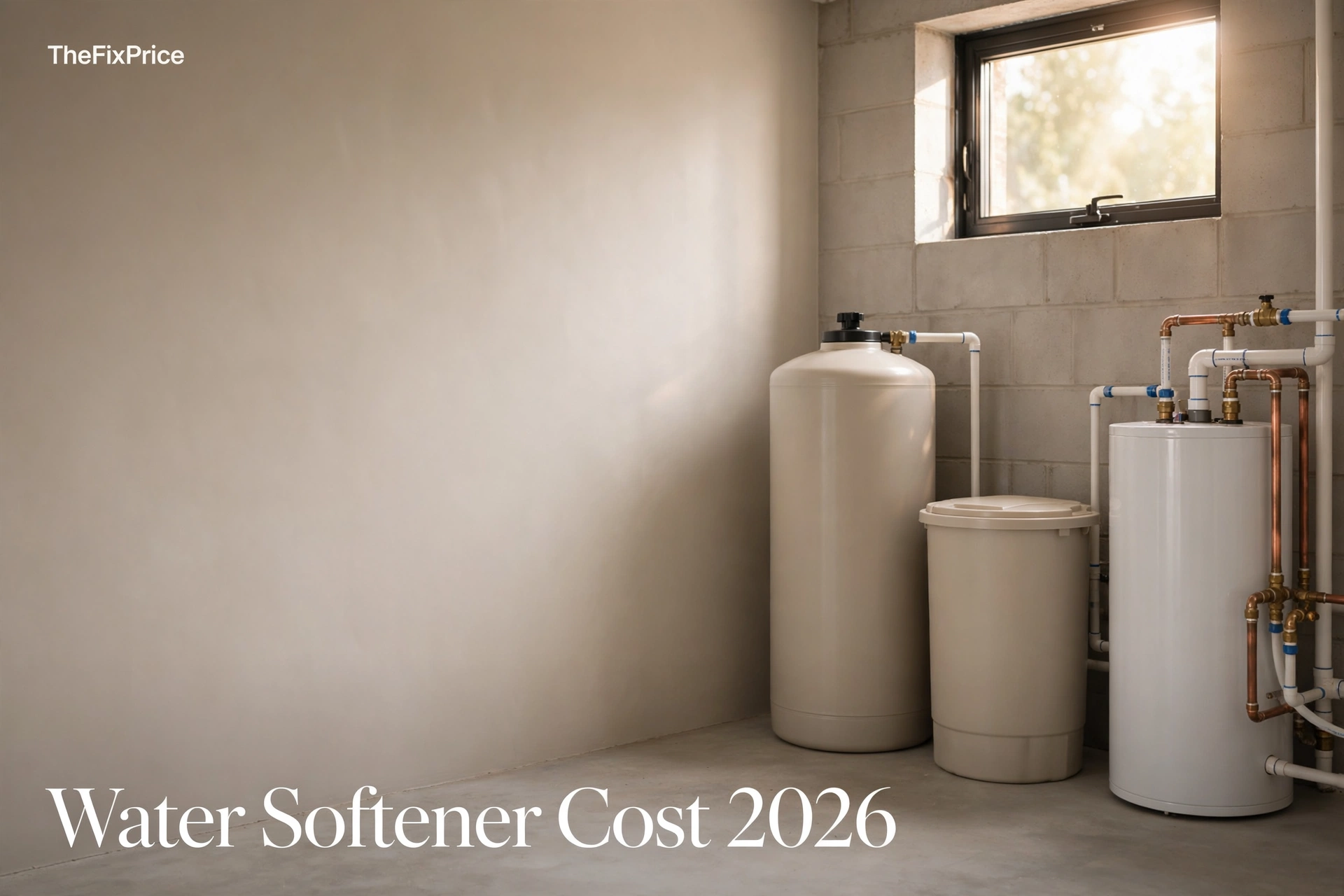
Water Softener Cost 2026
A whole-house water softener installed by a professional typically costs $1,000 to $3,000 in 2026. That estimate covers the unit plus professional installation for a standard single-tank salt-based system. Larger homes with very hard water can push toward $4,000, while a basic DIY install can come in under $800. Figures below reflect 2026 national averages from contractor pricing data; your local quote may vary, so get 3 local quotes before committing.
Spotty shower glass, soap that barely lathers, crusty white deposits on faucets: that is hard water. A water softener removes the calcium and magnesium behind it, and the difference shows up within days: better showers, cleaner dishes, longer-lasting appliances. Here is what the whole project costs.
How much does a water softener cost in 2026?
Most homeowners pay $1,000 to $3,000 all in. The unit itself is the biggest line item, and professional installation adds $300 to $800 on top.
| Project type | Typical cost (2026 estimate) |
|---|---|
| Entry-level system, DIY install | $500 to $1,000 |
| Standard system, professional install | $1,000 to $3,000 |
| Premium dual-tank system, professional install | $2,500 to $4,500 |
| Salt-free conditioner, professional install | $1,500 to $3,500 |
Water softener system types and prices
The biggest price decision is the system type. They are not all doing the same job, and the cheapest option is not always the best value.
Salt-based ion exchange ($800 to $2,500 for the unit)
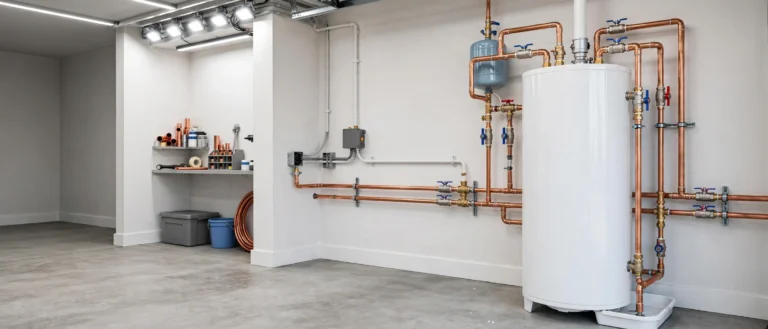
This is the real water softener and the standard for most homes. Water passes through a resin bed that swaps calcium and magnesium for sodium, with a brine tank holding the salt that recharges the resin. Units in the 32,000 to 48,000 grain range run $800 to $2,500; with installation, $1,100 to $3,000. If your water tests above 7 grains per gallon, this is the one to pick.
Salt-free water conditioners ($1,000 to $2,500 for the unit)
These do not remove hardness minerals. They condition the water so minerals are less likely to form scale: no salt to buy, no wastewater from regeneration. The catch is that you never get the easy-lathering feel of truly soft water, and they work best in moderately hard water. Installed cost runs $1,500 to $3,500. Reasonable for moderately hard city water; not the pick for very hard well water.
Dual-tank systems ($1,500 to $4,000 for the unit)
A dual-tank softener is two salt-based systems working in rotation: while one regenerates, the other serves soft water, so you never get hard water during recharge. Large households with heavy water use see the benefit. The price stings: $1,500 to $4,000 for the unit, $2,500 to $4,500 installed. Overkill for a couple; sensible for a family of five.
Magnetic and electronic descalers ($200 to $600)
These clamp onto your pipes and claim to restructure hardness minerals with magnets or electronic pulses. Honest note: no solid independent evidence exists that they actually soften water. Some homeowners swear their scale slowed down, but the research community is skeptical, and these devices remove zero minerals from your water. At $200 to $600 they tempt, but they are not a substitute for a true ion exchange softener.
| System type | Unit cost (2026 estimate) | Installed cost (2026 estimate) |
|---|---|---|
| Salt-based ion exchange | $800 to $2,500 | $1,100 to $3,000 |
| Salt-free conditioner | $1,000 to $2,500 | $1,500 to $3,500 |
| Dual-tank | $1,500 to $4,000 | $2,500 to $4,500 |
| Magnetic/electronic | $200 to $600 | $200 to $900 |
Sizing your water softener: grain capacity explained
Softeners are rated by grain capacity: the grains of hardness the resin traps before regenerating. The standard sizes are 32,000, 48,000, and 64,000 grains. Undersize it and the system regenerates constantly, wasting salt and water. Oversize it and you overpaid for capacity you will never use.
Rough math: multiply your hardness in grains per gallon by daily household water use (plan on 60 to 80 gallons per person per day), then by 7 for a week. That is the weekly grain load the system must handle.
| Household | Water hardness | Suggested capacity |
|---|---|---|
| 1 to 2 people | Moderate (3 to 10 grains per gallon) | 32,000 |
| 3 to 4 people | Hard (7 to 15 grains per gallon) | 48,000 |
| 5+ people, or very hard well water | Very hard (15+ grains per gallon) | 64,000 |
A 48,000-grain unit is the sweet spot for the average 3 to 4 person home and tends to offer the best value per grain of capacity. Ask each of your 3 quotes what size they recommend and how they calculated it. The ones who run the numbers are usually the ones worth hiring.
Professional installation cost breakdown
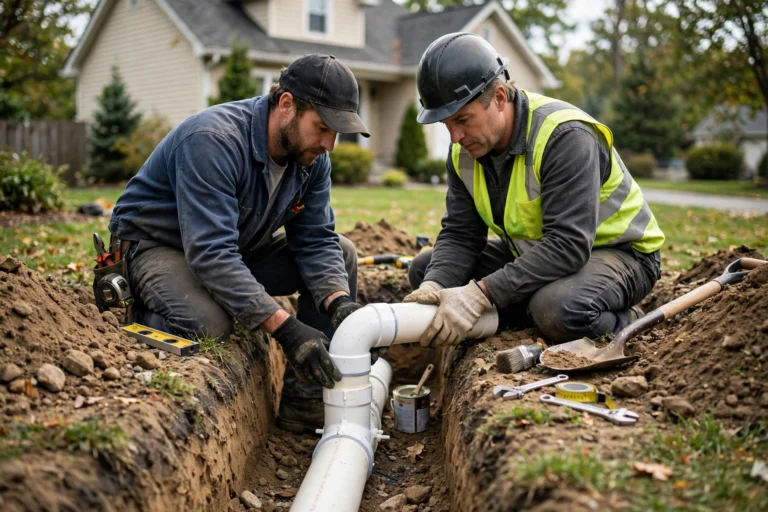
Installation typically runs $300 to $800 for a standard single-tank system. Here is what drives that number.
- Basic labor ($300 to $500): Cutting into the main water line, mounting the softener, connecting the brine tank, and testing. Assumes easy access with room to work.
- Drain line ($50 to $150 extra): The softener needs a drain for regeneration discharge. A nearby floor drain keeps it quick; running line across the room adds cost.
- Electrical outlet ($100 to $250 extra): The control valve needs a standard 120V outlet. Adding one costs extra.
- Permit ($50 to $150): Some municipalities require a plumbing permit for tying into the main water line.
- No pre-plumbed loop ($300 to $600 extra): Some newer homes have a softener loop pre-plumbed, which makes install trivial. Without one, rerouting the main line takes more time.
Get the installation priced separately from the equipment on each of your 3 quotes so you can compare like with like.
DIY vs. hiring a professional
When DIY makes sense
If your home already has a pre-plumbed softener loop with shutoff valves, swapping in a new unit is a half-day project: connect the fittings, run the drain line, plug it in, and set the hardness. You will save $300 to $800 in labor, and a basic 32,000-grain big-box system ($400 to $700) plus a Saturday afternoon keeps the whole project under $1,000.
When to hire a pro
Hire a pro if you must cut into the main water line, create a drain, add an outlet, or install a dual-tank system. Mistakes on the main line mean floods, and a badly connected backwash drain can siphon dirty water back into your plumbing, which is why air-gap rules exist in most codes. A pro install also includes a workmanship warranty.
The middle path: buy the system yourself, then pay a plumber $300 to $500 for the tie-in. You get pro plumbing where it matters and skip the contractor’s equipment markup.
Ongoing costs of owning a water softener
- Salt ($60 to $120 per year): Most households use 4 to 6 forty-pound bags a year at $5 to $10 per bag. Solar salt is cheapest; evaporated pellets cost more but keep the brine tank cleaner.
- Resin bed replacement ($300 to $700 every 10 to 15 years): The resin beads wear out over time, especially on chlorinated city water or iron-heavy well water. Far cheaper than a new system.
- Annual checkup ($0 to $150): Many owners do their own annual check: inspect the brine tank, clean the venturi, test the water. A pro visit runs up to $150 if you prefer hands-off maintenance.
Budget roughly $80 to $150 per year in consumables and minor upkeep for a salt-based system. Salt-free conditioners cost less to run (a cartridge swap every few years, typically $100 to $200) but remember they are not true softeners.
Test your water hardness first
Do not buy a softener on a hunch. A $10 to $25 home test kit from a hardware store reports your hardness in grains per gallon within minutes, and municipal utilities publish annual water quality reports with hardness figures.
Below 3 grains per gallon, skip the softener. Between 3 and 7 is moderate; a conditioner or entry-level softener may be worth it if scale bothers you. Above 7, a salt-based softener earns its keep. On well water, get a full lab test ($30 to $100), since wells can also carry iron or sulfur that change which equipment you need.
How to save money on a water softener
- Get 3 local quotes, always. Equipment markups vary wildly. Two plumbers can quote the same job $800 apart.
- Size it right the first time. An oversized system costs more upfront and wastes salt. A correctly sized 48,000-grain unit beats an oversized one you did not need.
- Buy the unit, hire the labor. Online retailers sell the same name-brand softeners plumbers install. Buying direct and paying for labor-only install routinely saves $300 to $600.
- Skip the extras you do not need. Pre-filters, smart Wi-Fi heads, and add-on conditioners have their place, but do not let a sales pitch bundle them in before the core job is priced.
- Time it with other plumbing work. If you are already having a water heater installed, adding the softener tie-in during the same visit cuts labor since the plumber is already cutting into your main line.
Frequently asked questions
Does softened water taste salty?
Barely, if at all. A salt-based softener adds only a tiny amount of sodium at typical hardness levels, and most people cannot taste it. On a strict low-sodium diet, the installer can run a separate unsoftened line to the kitchen drinking tap.
Is a water softener safe for septic systems?
Yes, for a normally functioning septic system. Studies have found that softener discharge does not harm septic tanks or drain fields in typical household volumes. If your septic system is old or struggling, mention the softener to your installer, but this is rarely a dealbreaker.
How often does a water softener need maintenance?
Very little. Keep the brine tank at least a quarter full of salt, check it every couple of months, and clear salt bridges (crusts above the water line) once or twice a year. A 15-minute annual check of the valve and a quick hardness test is plenty.
How long do water softeners last?
Fifteen to 20 years is typical for a quality salt-based system. The control valve usually fails first, and a $300 to $600 valve replacement can push the unit well past 15 years. The resin bed needs replacing once, around year 10 to 15.
Well water vs. city water: does it change the cost?
It can. Well water is often harder and may carry iron or sediment needing a pre-filter or specialized system, adding $200 to $600. City water usually just needs the softener, but chlorinated city water wears resin down faster, so plan on a resin replacement closer to the 10-year mark.
Should I rent or buy a water softener?
Buy, in almost every case. Rentals typically run $25 to $45 per month, so you have paid for the system twice over within 4 to 6 years and never own anything. Renting only makes sense as a short trial, or if you plan to move within a year or two.
Will a water softener help my bathroom fixtures last longer?
Yes. Hard water scale eats faucet cartridges, clogs showerheads, and leaves chalky rings on fixtures. Soft water dramatically reduces scale, which is why a softener pairs naturally with a bathroom remodel: it protects new fixtures from day one instead of letting hard water stain them within a year.
Can I water my plants with softened water?
Indoor plants do fine, but do not water a whole garden with softened water long term. The sodium adds up in soil and can harm plants. Most installers route an outdoor hose bib to bypass the softener. Ask for it if it is not in your quote.
The bottom line
A water softener is a rare upgrade that pays you back every day: cleaner fixtures, better showers, longer-lived appliances. For most homes, the realistic 2026 cost is $1,000 to $3,000 installed for a quality salt-based system. Test your water first, size the system honestly, and get 3 local quotes with equipment and labor priced separately. That habit saves more than any coupon ever will.
Last updated: October 2026. Cost figures reflect 2026 national averages from contractor pricing data. Always get 3 local quotes before committing.
One Comment