Electrical Outlet Installation Cost 2026
The national average electrical outlet installation cost is $300 per outlet in 2026, with most homeowners paying between $100 and $450 depending on the type of outlet and how much new wiring the job needs. A simple swap of an existing outlet can cost as little as $60, while a 240V outlet for an EV charger on a new dedicated circuit can run $750 to $2,500 or more. All prices below are 2026 US contractor-market estimates, so get 3 local quotes from licensed electricians before you book the job.
Outlets are one of the most common small electrical jobs, and the electrical outlet installation cost stays modest when a nearby circuit can be tapped. The bill climbs when walls have to be opened, new wire run from the panel, or the panel itself is full. This guide breaks down what you should expect to pay for every common outlet type in 2026, from a standard bedroom receptacle to a garage 240V circuit.
Electrical Outlet Installation Cost Overview
The typical electrical outlet installation cost covers the outlet device itself, labor, and any wiring or drywall work needed to get the job done. For a single new outlet tapped into an existing circuit, materials make up roughly 40 percent of the bill and labor the other 60 percent, according to contractor pricing data. That labor share is why the electrical outlet installation cost varies more by city than by outlet type.
Electricians charge $50 to $130 per hour nationally in 2026, with journeymen at the lower end and master electricians at the higher end. Almost every company also charges a minimum service call fee of $100 to $200 that covers the first hour, which is why one outlet rarely costs the bare minimum. The electrical outlet installation cost per outlet drops fast when you bundle several outlets into one visit, because the trip charge gets spread across the whole job.
Outlet Installation Cost by Type
When you compare quotes, make sure each one covers the same electrical outlet installation cost scope. The table below shows the 2026 outlet installation cost ranges by type. These are all-in installed prices, parts plus labor, based on national contractor data.
| Outlet type | Typical installed cost (2026) | Notes |
|---|---|---|
| New standard 120V outlet (existing circuit) | $150 to $350 | Tapping a nearby circuit, 1 to 2 hours labor |
| Simple replacement swap (standard) | $60 to $120 | Like-for-like device, 15 to 30 minutes labor |
| GFCI outlet, new or replacement | $130 to $300 | Required in kitchens, baths, outdoors |
| Standard outlet upgraded to GFCI | $90 to $200 | Device plus labor at one location |
| 240V outlet, dedicated circuit | $250 to $800 | Heavier wire, double-pole breaker, 2 to 4 hours |
| 240V EV charger circuit | $750 to $2,500 | Charger hardware extra |
| USB charging outlet | $100 to $200 | Device $15 to $40 |
| Smart (Wi-Fi) outlet | $170 to $350 | Needs a neutral wire in the box |
| Floor outlet | $175 to $700 | Popular for open living areas |
| Outdoor weatherproof outlet | $150 to $350 | Weatherproof box plus GFCI protection |
| Ceiling or TV outlet | $200 to $500 | Often tied to a fan or wall mount |
Those electrical outlet installation cost figures are national averages, so your city matters. New York homeowners average about $338 per outlet while Washington, D.C. averages around $200, according to Angi city data. Keep in mind that Angi lists bare outlet devices at $3 to $25, but that is parts only, not what you pay installed.
New Circuit vs Existing Circuit: Why It Changes the Price
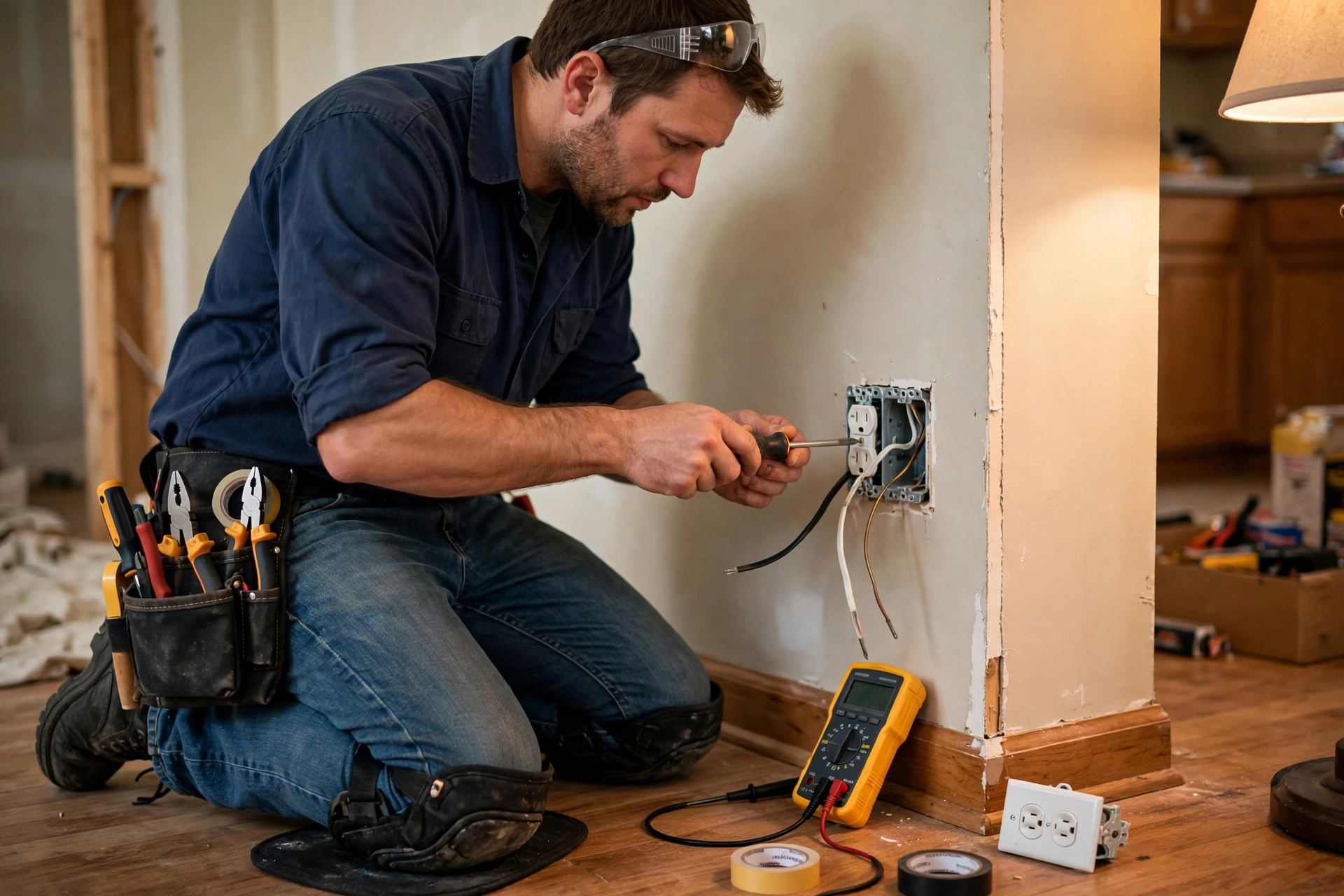
The single biggest question behind the cost to install electrical outlet is whether the electrician can tap an existing circuit or must run a brand new one from the panel. Tapping an existing circuit means cutting into drywall, running a few feet of cable, and adding a junction, and the job usually takes 1 to 2 hours.
Running a new dedicated circuit takes 2 to 4 hours and adds a new breaker at the panel, plus permits. When fresh wire has to cross finished walls and ceilings, the job lands at $400 to $800 total. Distance from the panel is the number one cost driver: a short run through an unfinished basement is cheap, while fishing wire through two stories of finished drywall is not.
If the panel is full or undersized, the electrical outlet installation cost conversation turns into a panel upgrade conversation, and that runs $2,000 to $5,000. An electrician should confirm panel capacity during the estimate; see our guide to electrical panel upgrade costs if yours is maxed out.
GFCI Outlet Installation Cost
The gfci outlet installation cost runs $130 to $300 for a new or replacement GFCI outlet, while upgrading a standard outlet to GFCI protection costs $90 to $200. A like-for-like GFCI swap in a kitchen or bathroom typically lands at $125 to $200.
GFCI protection is required by electrical code in kitchens, bathrooms, laundry rooms, garages, basements, crawl spaces, and every outdoor outlet. California code even extends it to outlets within 6 feet of a sink, and covers pools, hot tubs, and pergolas. When an electrician quotes the gfci outlet installation cost, the device itself is only $15 to $50; the rest is labor and the service call.
One cost-saving option is a GFCI breaker instead of individual GFCI outlets. A single GFCI or AFCI breaker protects the whole circuit from the panel, and the breaker part costs $20 to $60. Panel-side installation is quick, so the total often comes to $150 to $250 as a service call. A GFCI breaker can cut the electrical outlet installation cost for a whole kitchen versus protecting every outlet individually, and whole-home retrofits of 8 to 12 locations typically run $800 to $1,800.
240V Outlet Installation Cost
The 240v outlet installation cost averages $229 per outlet, with most jobs landing between $138 and $320, according to Angi 2026 data from tens of thousands of projects. Contractor quotes for a full dedicated 240V circuit usually run $250 to $800, because the job needs heavier gauge copper wire, a double-pole breaker, and 2 to 4 hours of labor.
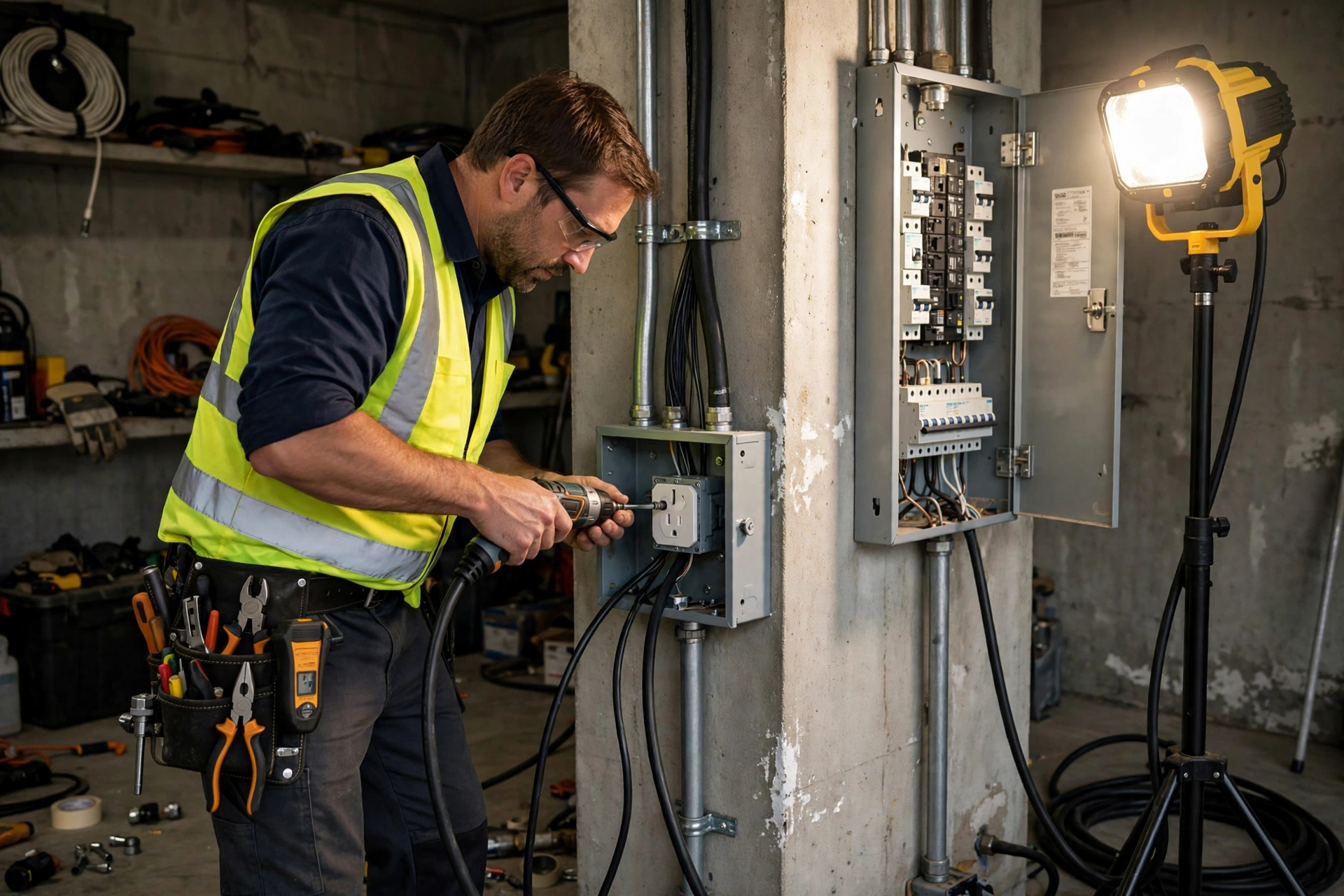
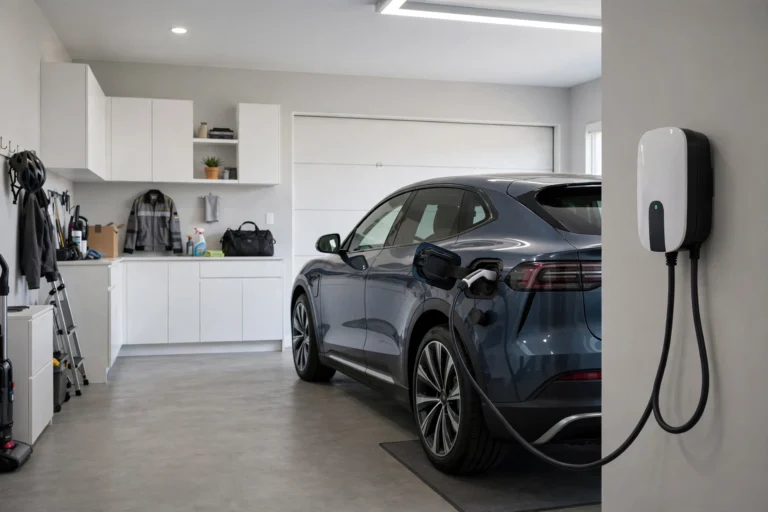
The heavy hitters push the electrical outlet installation cost higher. A new 240V circuit for an EV charger costs $750 to $2,500 installed, not counting the charger hardware, and complex runs with panel work can reach $3,500 or more. For hardware and install details, see our EV charger installation cost guide.
Distance from the panel and the route the wire takes matter as much as the distance itself. A 20 to 30 foot run through an unfinished garage wall is a half-day job; the same run trenched underground or fished through finished walls doubles the labor. If your panel lacks the spare capacity, the 240v outlet installation cost has to include a panel or service upgrade, which adds $2,000 to $5,000.
What Affects the Price
Beyond outlet type, these factors move the electrical outlet installation cost up or down:
- Wall material. Drywall opens easily and patches cheaply. Brick, concrete, plaster, and tile take more time and cost more to cut and repair.
- Access. An open attic or unfinished basement keeps wire runs cheap. Finished walls that require fishing add $50 to $200 per outlet.
- Distance from the panel. More feet of heavier copper wire means more material and labor, especially for 240V circuits.
- Panel capacity. A full or undersized panel turns a simple outlet job into a $2,000 to $5,000 upgrade.
- Wiring condition. Aluminum wiring, knob-and-tube, or scorched connections expand the scope and the bill.
- Region. NYC electricians run $110 to $210 per hour, well above national rates, so city quotes land higher.
- Bundling. Multiple outlets on one service call beat minimum-fee math every time.
Permits and Code Requirements
New circuits, wiring extensions, and box relocations almost always require an electrical permit, which typically costs $50 to $200 for minor work, or $150 to $800 when bundled with circuit work. A simple like-for-like outlet replacement is usually permit-exempt, but the rules vary by city, so check your local code. Permit fees are a small part of the total electrical outlet installation cost, and skipping a required permit can cause problems at resale or with your insurer.
One more timing note: permit approval can add a few days to the schedule, so plan ahead if the new outlet is tied to an appliance delivery or a remodel. Electricians in busy markets sometimes quote longer lead times for permitted jobs, but the permit itself protects you by putting the work on record with the city.
DIY vs Hiring a Licensed Electrician
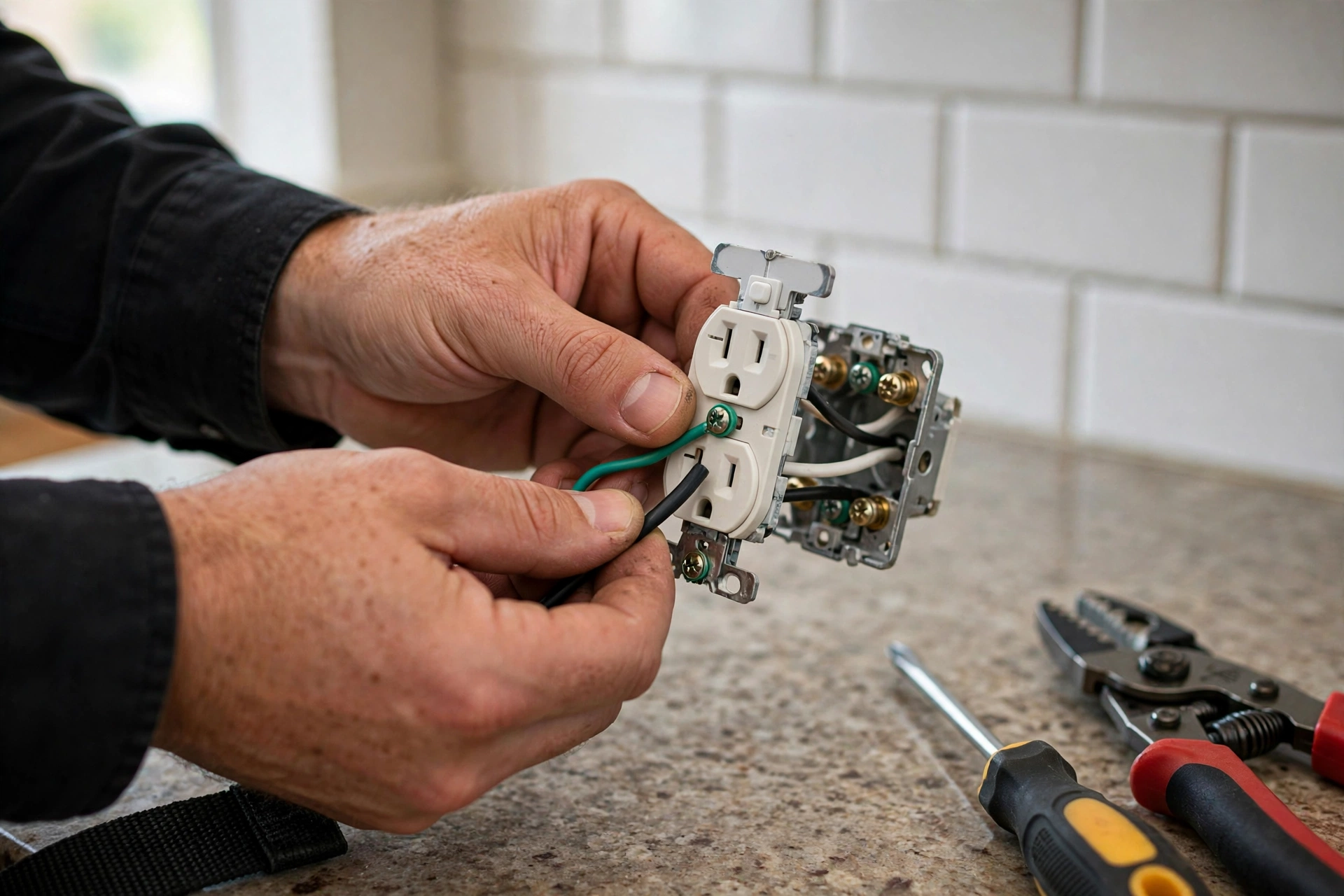
Swapping a standard outlet for an identical new one is legal DIY in most areas for a homeowner who is comfortable with wiring: turn off the breaker, verify the circuit is dead with a voltage tester, and match the connections exactly. DIY brings the outlet installation cost down to the price of parts, which can be under $25 for a standard receptacle.
Call a licensed electrician for anything beyond a simple swap: new circuits, 240V outlets, aluminum wiring, knob-and-tube, burn damage, or anything that needs a permit. For new work, the electrical outlet installation cost is mostly labor, and a pro also warranties it. Electrical mistakes start fires and can injure or kill, so when in doubt, hire it out. For simple projects like a fan on an existing box, the same rules apply; see our ceiling fan installation cost guide for those numbers.
Money-Saving Tips
A few moves can cut the total electrical outlet installation cost without cutting corners:
- Bundle outlets into one visit. Splitting the $100 to $200 service call across several outlets lowers the price per outlet fast.
- Choose standard outlets where code allows. Save GFCI devices and breakers for the locations that actually require them.
- Pick an accessible route. Discuss placement with the electrician and favor runs through basements, attics, or closets.
- Ask about a GFCI breaker. One breaker can protect a whole kitchen circuit for less than individual GFCI outlets.
- Get 3 written quotes. Ask whether each price includes drywall cutting and patching, so you compare like with like.
- DIY only the simple swaps. Replace like-for-like devices yourself if you are experienced, and save the pro for new circuits.
FAQs
How much does it cost to install an electrical outlet?
The national average cost to install electrical outlet is $300 per outlet, with a typical range of $100 to $450. A simple replacement swap costs $60 to $120, while a new 240V circuit for an EV charger runs $750 to $2,500.
How much does it cost to replace an existing outlet?
Expect $60 to $120 for a standard 120V swap, or $125 to $200 for a like-for-like GFCI swap. The device itself costs just a few dollars, so minimum service call fees usually set the floor.
Do I need a permit to install an outlet?
Usually yes for new circuits and new wiring runs, where permits cost $50 to $200 or more. Like-for-like replacements are typically permit-exempt, but requirements vary by city, so confirm with your local building department.
Where are GFCI outlets required?
Electrical code requires GFCI protection in kitchens, bathrooms, laundry rooms, garages, basements, crawl spaces, and all outdoor outlets. California also requires it within 6 feet of sinks and around pools and hot tubs.
What does a 240V outlet cost installed?
The 240v outlet installation cost averages $229, with most jobs between $138 and $320. Full dedicated circuits for dryers, ranges, or welders run $250 to $800, and EV charger circuits run $750 to $2,500.
Can I install an outlet myself?
A like-for-like replacement is fine if you are experienced and careful. New circuits, 240V outlets, and panel work should be left to a licensed electrician and usually require a permit.
Knowing the electrical outlet installation cost before you call means you can spot a fair quote and skip the inflated ones. Bundle your outlets, ask about GFCI breakers as an alternative, and get 3 local quotes so the final electrical outlet installation cost reflects your home, not a guess.