Furnace Tune-Up Cost 2026
For most homeowners in 2026, the furnace tune-up cost for a single visit runs between $80 and $250. Where you land depends on your fuel type, the age of the system, and how thorough the visit actually is. A basic check on a healthy gas furnace sits near the bottom. A deep service on an older oil unit, with parts replaced and soot cleaned out, sits near the top. That spread is why it pays to know what a fair furnace tune-up cost looks like before you book.
One thing surprises many people: two companies can quote very different prices for what sounds like the same job. That is because there is no industry standard for what a tune-up includes. One company’s visit might be a 20 minute once-over, while another’s is a full hour of cleaning, testing, and adjusting. A quoted furnace tune-up cost means very little until you see the task list behind it. Before you compare quotes, ask each company for its checklist and total price in writing, so you compare the work, not just the number.
If the tune-up finds a cracked heat exchanger or a system at the end of its life, our furnace replacement cost guide prices a new system installed.
This guide breaks down what a visit costs by fuel type, what a proper tune-up should include, how maintenance plans compare with paying per visit, and how to tell a genuine problem from a sales pitch.
Not sure a repair is worth it on an older unit? Our furnace repair vs replace guide walks through the age and cost math.
How Much Does a Furnace Tune-Up Cost?
The headline range of $80 to $250 covers most single visits, and national averages cluster near the middle of it. Angi puts the average furnace inspection at about $100, with full tune-ups commonly running $130 to $200. Some sources land higher: HomeServe cites $150 to $300, and Fixr puts a single tune-up closer to $275. Treat those as the spread between a quick inspection and a comprehensive service. Your own furnace tune-up cost will depend on which end of that spectrum you are buying.
Fuel type is the single biggest driver of the furnace tune-up cost, because it changes how much cleaning, testing, and parts work is required.
| Fuel Type | Typical Tune-Up Cost |
|---|---|
| Gas or propane | $80 to $170 |
| Oil | $100 to $200 |
| Electric | $70 to $130 |
Service depth matters too. A basic visit, usually $80 to $120, covers a filter check, a visual inspection, a thermostat test, and a burner check. A standard visit at $120 to $175 usually adds flame sensor cleaning, safety component testing, and lubrication. A comprehensive visit at $150 to $300 adds combustion analysis, a deeper burner and heat exchanger inspection, and a written condition report. If your furnace is older or has skipped a few years of service, expect to be quoted in that top tier, since a neglected system takes longer to clean and check.
Timing and location nudge the price as well. Fall is peak season, and booking in late summer or early fall means better availability and occasional seasonal specials. High cost areas and cold regions with higher labor rates charge more than the South and Midwest. None of that changes the work itself, but it explains most of the gap in furnace tune-up cost between two identical furnaces on different streets. And if the technician finds a problem, a separate diagnostic fee of $75 to $150 often applies, though many companies credit it toward the repair.
What Does a Furnace Tune-Up Include?
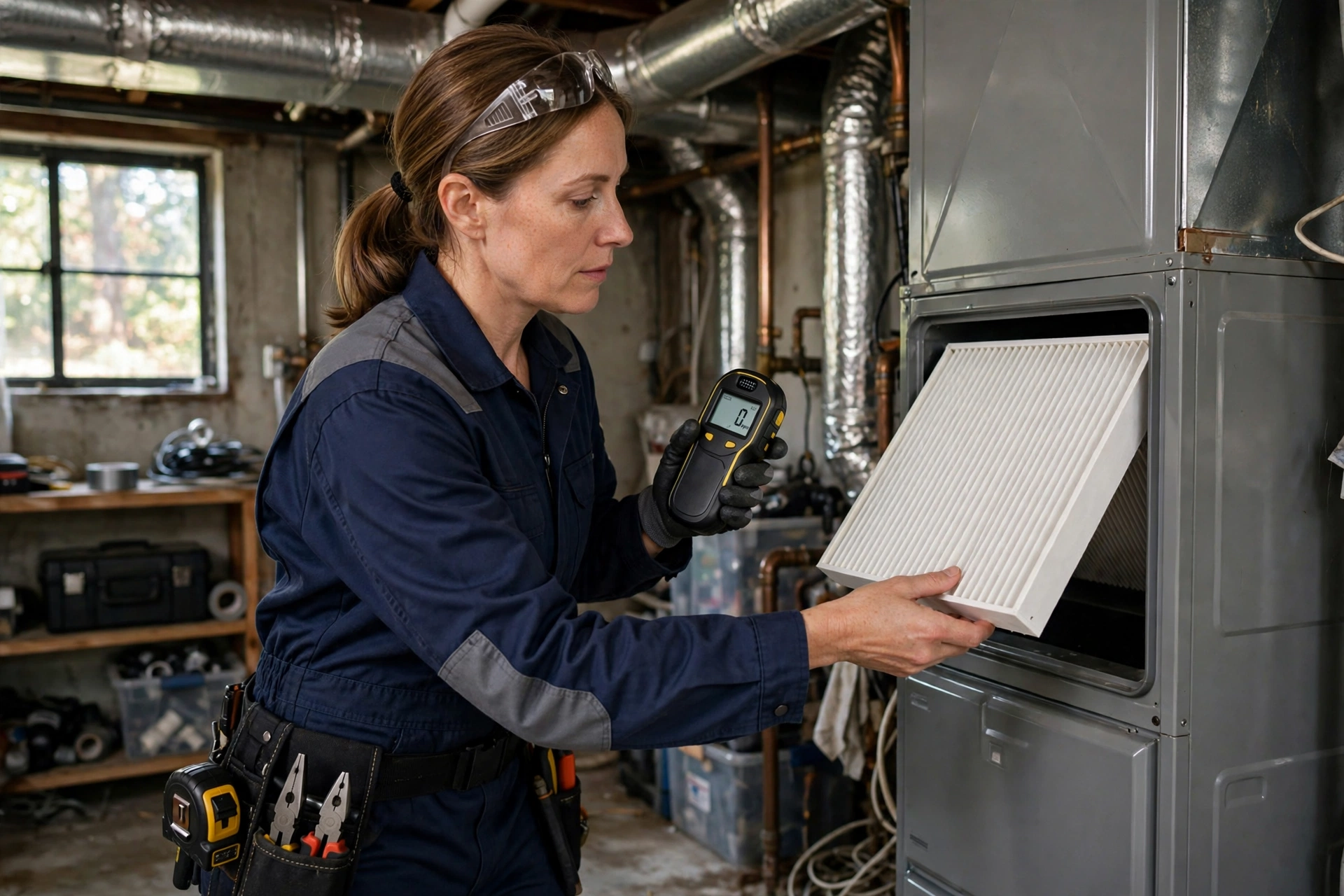
A thorough visit takes about an hour. Whatever the furnace tune-up cost, a proper visit covers most of the following:
- Thermostat check and calibration so the furnace starts, runs, and shuts off at the right temperatures
- Burner inspection and cleaning, with the flame checked and adjusted as needed
- Heat exchanger inspection for cracks or rust, because a cracked heat exchanger can leak carbon monoxide into your air supply
- Carbon monoxide testing around the unit and in the airstream
- Ignition system test, covering the igniter or pilot light, plus cleaning the flame sensor
- Gas connections, gas pressure, and leak check on fuel burning equipment
- Combustion analysis on gas and oil systems, measuring efficiency and exhaust gases
- Blower assembly cleaning and inspection, including the blower wheel, motor draw, and belts on older units
- Air filter inspection, with the filter replaced or cleaned
- Lubrication of motors and moving parts where the design calls for it
- Electrical connections tightened, with voltage and current measured on the motors
- Flue and venting inspection for blockages, corrosion, and proper draft
- Safety controls test, covering limit switches and shutoffs
- Condensate drain check on high efficiency condensing furnaces
- A written condition report noting anything that needs attention soon
Read that list again before you book the cheapest visit in town. A bargain tune-up that skips the heat exchanger inspection and the carbon monoxide test has skipped the two items that protect your family. Ask for the checklist in writing, and confirm those two are on it. If a company will not put its checklist and price in writing, that tells you plenty about the furnace tune-up cost it quoted, however low it sounded.
Annual Maintenance Plans: The Other Way to Pay
Instead of paying per visit, many HVAC companies sell annual maintenance plans. For most homeowners, that puts the yearly furnace maintenance cost at about $150 to $400, and contractor surveys show most plans priced at $200 or $300. A typical plan includes two visits a year, a heating tune-up in the fall and a cooling tune-up in the spring, so one agreement covers both systems. Compare that with paying a one-off furnace tune-up cost every fall and a separate cooling visit every spring.
Plans usually bundle extras on top of the visits:
- A discount of 10% to 20% on repairs while the plan is active
- Priority scheduling, so you move up the list during a cold snap or heat wave
- Waived or reduced diagnostic fees, which normally run $75 to $165 per call
- Filters included on some plans, while others simply install the filters you supply
So how does the plan furnace maintenance cost compare with paying as you go? Two standalone tune-ups at $150 to $275 each add up to $300 to $550 a year, more than most plans charge before you count a single discount. Industry estimates suggest plans save about $150 to $300 a year through waived fees and repair discounts once a system is past five years old. One emergency repair with a 20% member discount can make a basic plan pay for itself in a single season.
The exception is a brand new furnace under full manufacturer warranty. Breakdowns are unlikely, repairs are covered, and paying the furnace tune-up cost visit by visit is often the cheaper route for the first few years. Once the system ages, the plan math usually flips.
Add-Ons You May Be Offered at the Visit
Here is the part of the furnace tune-up cost nobody quotes on the phone: the tune-up price covers inspection and cleaning only. Anything the technician finds worn or failing is a separate charge, and some findings are legitimate while others are dressed up to look urgent.
The most common add-ons are small parts. A hot surface igniter replacement typically runs $150 to $350 installed, even though the part itself is cheap, because most of the bill is labor and diagnosis. A flame sensor replacement runs $100 to $300, and simply cleaning the sensor runs about $75 to $150 if it is not already included in your tier. Filters are minor at $1 to $35 each, though specialty sizes cost more. Bigger findings get serious fast: a control board can run $400 to $800, a gas valve $300 to $600, and a blower motor $450 to $900, or $700 to $1,500 for a variable speed ECM motor.
The classic upsell is duct cleaning, usually pitched at $275 to $500. Duct cleaning is reasonable every 3 to 5 years if your ducts are genuinely dirty, but it is rarely urgent, and it barely affects how your furnace runs today. Be equally cautious with fall specials advertised at $79 to $99. Those prices are often loss leaders designed to get a technician through your door, and the scope is often trimmed, sometimes skipping the heat exchanger inspection entirely. A cheap visit that skips the safety checks is not a bargain at any price. Keep that in mind when a low furnace tune-up cost suddenly doubles at your kitchen table.
To sort real findings from salesmanship, ask two questions. First, can the technician show you the worn part or the failed test reading? Second, what happens if the repair waits a month? A cracked heat exchanger is a genuine stop everything issue. A slightly dirty flame sensor usually is not.
Oil and Electric Furnaces Cost a Little Differently
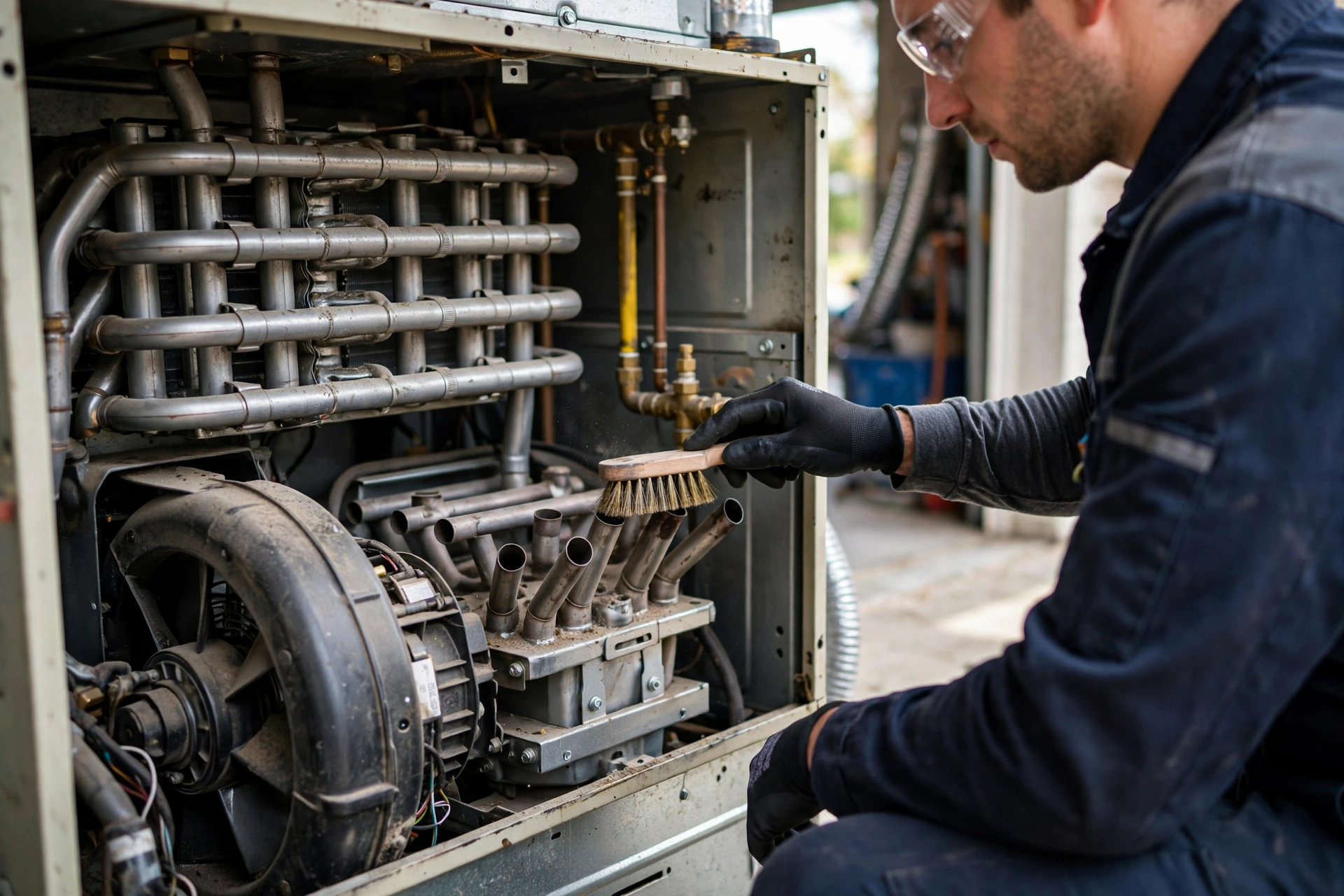
If you heat with oil, expect a higher furnace tune-up cost, roughly $100 to $200 and up to $150 to $300 in some markets. The reason is that an oil tune-up is not just an inspection. Oil combustion lays down soot through the combustion chamber, the heat exchanger, and the flue passages, and even a thin layer of soot acts like insulation, blocking heat transfer and wasting fuel. Removing it is the labor heavy part of the visit.
An oil service also includes real parts replacement. The burner nozzle is replaced every year, not merely cleaned, and it has to match the original spray size, angle, and pattern. The oil filter and pump strainer get swapped along with their gaskets. He cleans and adjusts the electrodes, inspects the chimney and flue pipe for blockages and proper draft, runs a combustion and smoke test, and checks the oil tank and lines for rust, leaks, or sludge. Skip a year with oil and the deposits build up in a way they simply do not with gas.
Electric furnaces are the simple end of the scale. There is no burner, no fuel line, and no exhaust to test, so the visit concentrates on the heating elements, blower, electrical connections, thermostat, and filter. That shorter list is why the electric furnace tune-up cost runs $70 to $130, the lowest of the three.
Is a Furnace Tune-Up Worth It?
Start with the repair bill you are trying to avoid. The average furnace repair costs about $315, common repairs cluster between $150 and $300, and a mid winter no-heat call often comes with emergency labor at $150 to $215 per hour before parts are even added. Set those numbers next to a furnace tune-up cost of $80 to $250 and the visit looks less like an expense and more like cheap insurance.
The efficiency case is real but modest. A well maintained furnace tends to run about 5% to 10% more efficiently than a neglected one, and the Department of Energy Energy Saver resources note that proper maintenance and clean filters can cut heating energy use by 5% to 15%. Skip service and the losses compound, at roughly 5% of efficiency for every year maintenance is skipped, as filters clog, burners foul, and settings drift. That is one reason the ENERGY STAR guidance for homeowners recommends an annual professional maintenance visit for heating and cooling equipment.
The strongest argument, though, is warranty protection. Most manufacturers require documented annual professional maintenance to keep the parts warranty valid. Skip the visits and a failed control board or blower motor that should have been covered becomes your bill in full. Maintenance is also credited with adding 3 to 5 years to a furnace’s life, on equipment that typically lasts 15 to 20 years, by catching worn igniters and dirty sensors before the first hard freeze.
Two money details are worth stating plainly. First, no federal tax credit applies to a tune-up. It is a service, not equipment, so it was never an eligible expense, and the old equipment credit has ended for 2026 installs anyway. Do not let anyone sell you a visit with a tax credit pitch. Second, check your local utility before you book, because some utilities offer tune-up rebates of $50 to $75, usually requiring a participating licensed contractor and subject to limited funding.
So, is a furnace tune-up worth it? For most homes, yes. The furnace tune-up cost is one modest bill a year that protects your warranty, trims your fuel use, and moves the likely breakdown from a January night to a scheduled October appointment. That trade favors the homeowner almost every time.
Frequently Asked Questions
How much does a furnace tune-up cost in 2026?
Most homeowners pay $80 to $250 for a single visit, and the average furnace tune-up cost sits near the middle of that band for a standard gas system. By fuel type, expect $80 to $170 for gas, $100 to $200 for oil, and $70 to $130 for electric. Comprehensive visits on older systems can reach $300.
How often should a furnace be tuned up?
Once a year, ideally in late summer or early fall before the heating season starts. Annual documented service is also what most manufacturers require to keep the parts warranty valid.
What does a furnace tune-up include?
Burner and heat exchanger inspection and cleaning, ignition and flame sensor service, a filter change, blower cleaning, lubrication, thermostat calibration, gas pressure and carbon monoxide testing, electrical checks, and safety control tests. Scope varies by company, so get the checklist in writing before you book, and confirm the quoted furnace tune-up cost actually covers the safety items.
Is a maintenance plan better than paying per visit?
Usually, once a system is more than about five years old. Plans run $150 to $400 a year, bundle two seasonal visits, and add repair discounts plus waived diagnostic fees. For a new furnace under full warranty, paying the furnace tune-up cost per visit is often cheaper.
Why does an oil furnace tune-up cost more than a gas one?
Oil service includes annual parts replacement, including the nozzle, oil filter, and pump strainer, plus heavy soot removal from the combustion chamber, heat exchanger, and flue. Gas furnaces need the inspection and safety testing but not that parts and cleaning workload, so the visit is shorter and cheaper.
Can I skip a year if my furnace seems fine?
You can, but it is a false economy. Systems lose roughly 5% of their efficiency per skipped year, small problems grow into mid winter emergency repairs at premium rates, and undocumented maintenance can void your warranty. Still, the furnace tune-up cost is far easier to swallow than an emergency repair bill.