
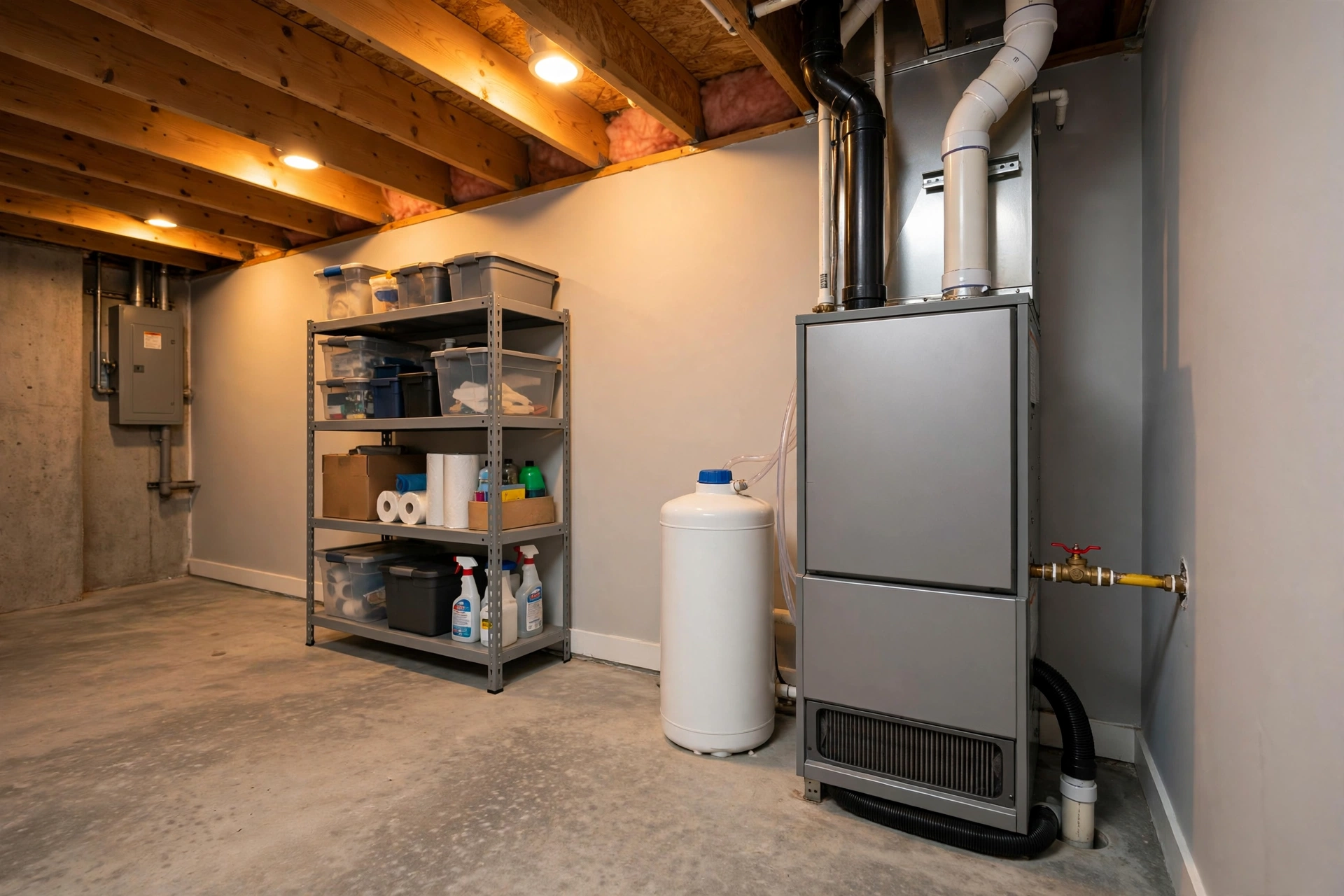
Furnace Replacement Cost 2026
Quick answer: Replacing a gas furnace costs $3,000 to $7,000 installed in 2026, averaging around $5,000. High-efficiency condensing models run $5,500 to $8,500+, while electric and oil furnaces land in their own ranges. One big change this year: the federal 25C tax credit expired on December 31, 2025, so equipment installed in 2026 gets no federal credit. Utility rebates still exist in many areas, and this guide covers exactly where to look.
A furnace usually quits on the coldest night of the year. That is when most homeowners get their first and only quote, in a panic, and agree to whatever number the technician writes down. Furnace pricing is not complicated once you see the real breakdown: the box itself, the labor to put it in, the venting changes a modern high-efficiency unit demands, and the permits. This guide walks through each piece so you can tell a fair quote from an inflated one, even when you are shivering.
Average Furnace Replacement Cost in 2026
| Furnace type | Average installed cost | Typical range |
|---|---|---|
| Gas furnace, standard 80% AFUE | $4,000 | $3,000 – $5,500 |
| Gas furnace, high efficiency 90-96% AFUE | $6,000 | $4,500 – $7,500 |
| Gas furnace, modulating 97-98% AFUE | $7,000 | $5,500 – $8,500+ |
| Electric furnace | $3,000 | $2,000 – $7,000 |
| Oil furnace | $5,500 | $4,000 – $7,000 |
| Furnace + AC full system | $10,000 | $8,000 – $13,000 |
The national average for a gas furnace replacement sits near $5,000 installed, with most homeowners landing between $3,200 and $7,800 depending on efficiency, home size, and local labor rates. Gas furnaces are the most common replacement because they balance upfront cost and running cost better than anything else for homes on a gas line.
If your AC is the same age as your furnace, price both jobs together. Bundling furnace and AC replacement typically saves $1,500 to $3,000 on combined labor because the crew pulls one permit and sets up once. See our full HVAC replacement cost breakdown for what complete systems run in 2026.
Furnace Cost by Efficiency Rating (AFUE)
AFUE (Annual Fuel Utilization Efficiency) tells you how much of the gas becomes heat. An 80% AFUE furnace wastes 20 cents of every dollar of gas out the flue; a 96% AFUE unit wastes only 4 cents. That efficiency gap is where most of the price difference lives.
| Efficiency tier | Equipment cost | Installed cost |
|---|---|---|
| Single stage, 80% AFUE | $1,200 – $2,000 | $3,000 – $5,500 |
| Two stage, 90-95% AFUE | $1,800 – $2,500 | $4,500 – $7,500 |
| Modulating, 96-98% AFUE | $2,500 – $3,500 | $6,000 – $10,000+ |
Is the efficiency jump worth it? In cold climates where the furnace runs 150+ days a year, moving from 80% to 96% AFUE can cut heating bills by 15 to 20 percent, with a typical payback of 6 to 8 years. In mild climates with short heating seasons, the payback stretches much longer, and a basic 80% unit is often the smarter buy. Be honest about how long you plan to stay in the house before paying a premium for top efficiency.
What Drives Your Furnace Price
1. Furnace size (BTUs)
Furnace capacity is measured in BTUs, usually 40,000 to 120,000 for homes. A rough rule is 30 to 60 BTUs per square foot, so a 2,000 sq ft home needs roughly 60,000 to 120,000 BTUs depending on climate and insulation. Oversizing is the classic mistake: an oversized furnace short-cycles, wearing out parts early while leaving rooms unevenly heated. Insist on a proper load calculation rather than a contractor who matches your old unit’s size.
2. Venting changes for high-efficiency models
This is the surprise line item most quotes bury. Standard 80% furnaces vent hot exhaust through a metal flue. Condensing models (90%+ AFUE) cool the exhaust so much it needs PVC venting plus a condensate drain, which can add $300 to $900 if your setup is not ready. When you get an 80% quote and a 96% quote, make sure both include the venting work, or you are not comparing real prices.
3. Labor and installation complexity
Labor runs roughly $1,500 to $3,000, about a third of the total job. A straight like-for-like swap in an open basement takes a day. The price climbs when the unit is squeezed into an attic or crawlspace, when gas lines need rerouting, or when new electrical circuits or a smart thermostat are part of the job. Equipment itself is usually about 40 percent of the total, which is why the brand matters less than the installer.
4. Ductwork condition
A new furnace feeding leaky, undersized, or collapsing ducts cannot deliver the efficiency you paid for. Full duct replacement adds $2,000 to $6,000, and partial repairs run less. Ask your contractor to inspect the ductwork and quote any fixes separately so you see exactly what you are paying for.
5. Permits and inspections
Permits typically run $150 to $500 depending on the municipality. Any quote without a permit line is a red flag: unpermitted work can void your manufacturer warranty and create problems at resale.
The Federal Tax Credit Expired: What Furnace Incentives Remain in 2026
This is the section most ranking guides get wrong, so read it carefully. The federal Energy Efficient Home Improvement Credit (Section 25C), which paid 30% of qualifying furnace costs up to $1,200 a year, expired on December 31, 2025. Furnaces placed in service in 2026 do not qualify, even if they meet the old efficiency standards. The Residential Clean Energy Credit (25D) ended on the same date. If a contractor or a blog promises you a federal furnace credit in 2026, they are working from outdated information.
Here is what is actually still available:
- Utility rebates. This is now the main savings path. Many gas utilities offer $100 to $225 or more for furnaces rated 95%+ AFUE. For example, Chicago-area homeowners can check programs through Peoples Gas and Nicor Gas, and Pennsylvania’s UGI customers have rebates on high-efficiency furnaces. Check your own gas utility’s rebate page before you buy, and confirm the rebate is approved before installation.
- State and local programs. Some states run income-qualified weatherization or efficiency programs that cover part of a furnace replacement. These vary widely, so search your state energy office site rather than assuming nothing exists.
- Manufacturer promotions. Carrier, Trane, Lennox, and Goodman periodically run seasonal rebates. Ask your contractor what is active this month.
- Financing. Most HVAC contractors offer financing, which spreads a $6,000 furnace into manageable monthly payments. Compare the financing APR against a home equity option before signing.
Bottom line: in 2026, assume no federal money for a furnace. The math has to work on the equipment price, the efficiency savings, and whatever your utility offers. Honest articles should say this plainly, and now you have seen one that does.
Repair vs Replace: When a New Furnace Makes Sense
Use the simple rule HVAC pros lean on: multiply the repair quote by the furnace’s age in years. If the result crosses $5,000, replacement usually wins.
- Repair it if the furnace is under 12 years old, the fix is under $1,000 (igniter, flame sensor, blower motor capacitor, thermostat), and the heat exchanger is intact.
- Replace it if the furnace is 15+ years old, the heat exchanger is cracked (a safety issue, full stop), repairs keep repeating, or your gas bills have been climbing year over year. A 20 year old furnace running at 70% AFUE is burning money every winter.
A cracked heat exchanger deserves a special note: it can leak carbon monoxide into your home. If a technician finds one, replace the furnace rather than patching it, and make sure your CO detectors are working. We cover the full decision framework in our furnace repair vs replace guide.
How to Avoid Overpaying
- Get 3 itemized quotes. Equipment model number, labor, venting changes, permits, and thermostat should each be listed. Homeowners routinely see $2,000+ spreads for the same equipment, and the line items reveal why.
- Compare venting apples to apples. A cheap 80% quote and an expensive 96% quote are not comparable until both include venting and condensate work. Make the contractor spell it out.
- Do not buy on the first visit. Mid-winter emergency calls invite pressure tactics. A few days with space heaters is far cheaper than a rushed $8,000 decision you regret for 20 years.
- Check the labor warranty, not just the equipment warranty. Equipment warranties run 5 to 10 years, but the installer’s labor warranty (typically 1 to 2 years, up to 10 from the best shops) is what covers most early failures.
- Register the warranty within 60 days. Several manufacturers cut the extended warranty in half if you never register online. Keep your invoice, the model number, and a photo of the data plate.
- Claim your utility rebate before the deadline. Most rebate programs require the application within a set window after installation. Put it on the calendar the day the furnace goes in.
Estimate Your Project
Our free cost calculators give instant estimates with no sign up. The HVAC calculator is coming next, and the roof cost calculator is live now.
Frequently Asked Questions
How much does furnace replacement cost in 2026?
$3,000 to $7,000 installed for a standard gas furnace, averaging around $5,000. High-efficiency condensing models run $5,500 to $8,500+, electric furnaces $2,000 to $7,000, and oil furnaces $4,000 to $7,000.
How long does a furnace last?
15 to 20 years for a gas furnace with annual maintenance. Units past 18 years are usually cheaper to replace than to keep repairing, since efficiency drops and parts get scarce.
Is there a federal tax credit for furnaces in 2026?
No. The 25C Energy Efficient Home Improvement Credit expired on December 31, 2025, and furnaces installed in 2026 do not qualify. Utility rebates from your gas company are the main incentive left, typically $100 to $225+ for 95%+ AFUE models.
Should I replace my furnace and AC at the same time?
If both are over 12 to 15 years old, yes. Bundling saves $1,500 to $3,000 in shared labor, and matched equipment performs better together. A full furnace plus AC system runs $8,000 to $13,000 installed.
What size furnace do I need for a 2,000 sq ft house?
Roughly 60,000 to 120,000 BTUs depending on climate and insulation, but this is a wide band. Insist on a Manual J load calculation from your contractor rather than a rule of thumb.
Can I install a furnace myself to save money?
Do not. Gas line work, venting, and electrical connections require licensed professionals in nearly every jurisdiction. DIY installation voids the manufacturer warranty, fails inspections, and risks carbon monoxide exposure. The labor portion is not worth the risk.
Last updated: October 2026. Cost figures reflect 2026 national averages from contractor pricing data. Always get local quotes before committing.
Want to stretch the life of your current system first? Our furnace tune-up cost guide covers visit prices, maintenance plans, and the checklist a proper tune-up should include.
3 Comments