Snow Removal Cost 2026
Snow removal cost is one of those prices you only think about when the forecast turns ugly. For most homeowners in 2026, driveway service runs $45 to $160 per visit, while the roof snow removal cost comes in at $190 to $735 per visit. The average driveway visit lands near $105, and most roof jobs total around $350.
The two jobs get quoted very differently, and mixing them up leads to sticker shock. A plow driver clearing your driveway works fast and cheap. A roof crew works slowly, at height, on a slippery surface, and the pricing reflects that risk. This guide breaks down both services, explains what drives the snow removal cost up or down, and helps you budget before the first storm hits.
Getting the whole house ready before the snow flies? Our cost to winterize a house guide covers pipes, windows, and heating prep.
One rule before the numbers: book early. If you want set pricing and priority service, sign a seasonal contract in late summer or early fall, before the first storm. Contractors fill their routes fast, and calling during a blizzard means emergency pricing and a spot at the end of the line. Booking ahead also locks in your snow removal cost for the whole season, whatever the weather does.
Already dealing with ice at the eaves? Our ice dam removal cost guide covers steam removal prices and prevention.
How Much Does Snow Removal Cost?
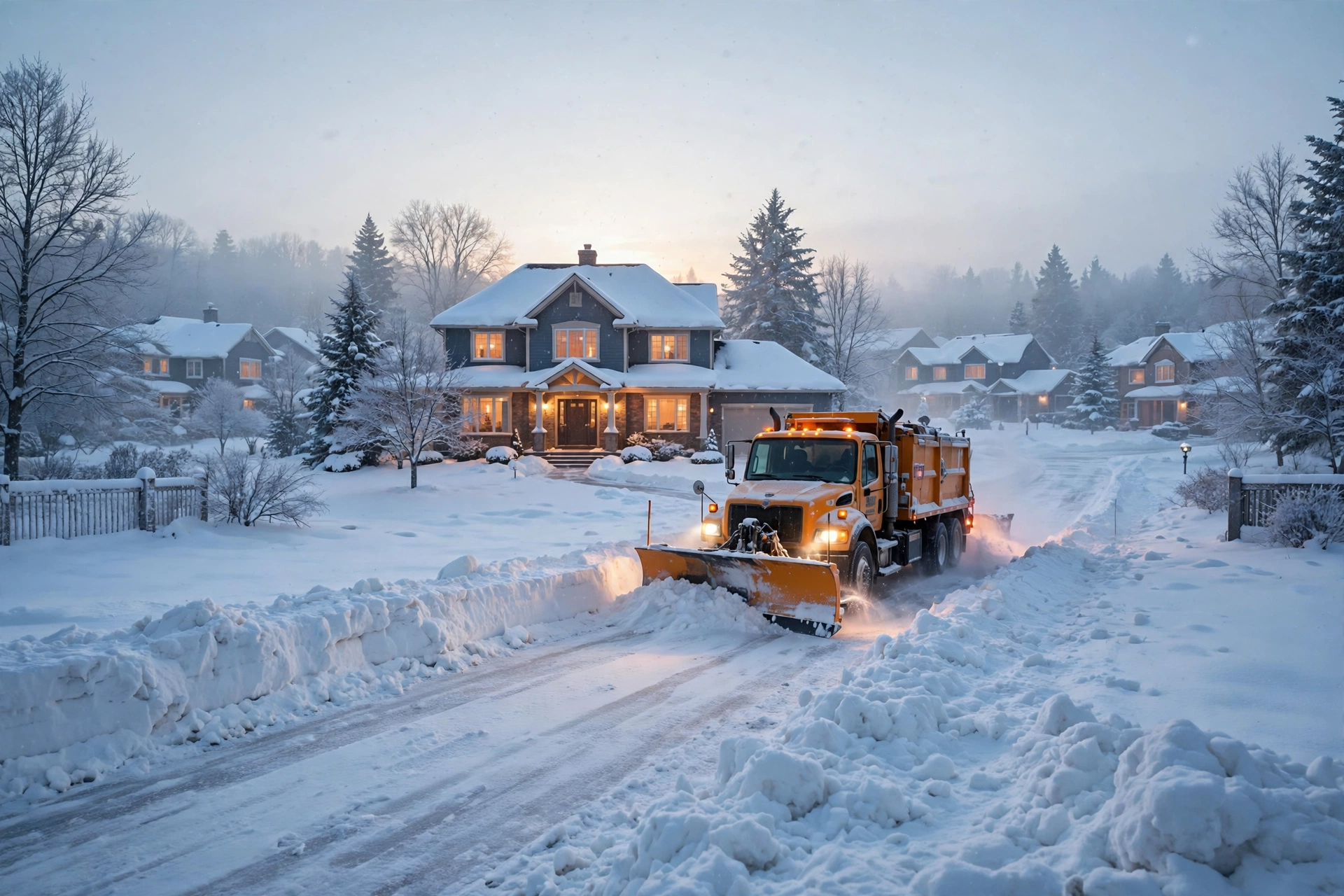
So how much does snow removal cost for a standard visit? Most services charge $45 to $160 per visit for the driveway, the front walkway, and your front steps. Plowing alone, with no walkway work, runs $30 to $70 per visit. Rural routes and light snow areas can dip to $25 per visit, while clearing a full property after a major storm can reach $75 to $200.
Depth changes the math fast. Many contractors price per push in depth bands: a light 1 to 3 inch snowfall is the base rate, 3 to 6 inches costs about 1.5 times more, 6 to 9 inches roughly doubles it, and a 9 to 12 inch storm can bill 2.5 to 3 times the base price. Past 12 inches, most switch to hourly billing. That is why two neighbors on the same street can pay very different amounts for the same storm.
| Driveway size | Per visit | Per season |
|---|---|---|
| Small (single-car) | $40 to $75 | $300 to $400 |
| Medium (two-car) | $75 to $125 | $400 to $600 |
| Large (four-car) | $125 to $250 | $600 to $1,000 |
Long and rural driveways are priced by length and time instead of a flat visit rate. Expect to add $40 to $80 for each additional 100 feet of driveway. Gravel driveways cost more too, often $50 to $100 or more per visit, because the blade has to ride on shoes or the crew switches to a blower so your gravel stays in the driveway instead of landing on the lawn. Steep driveways get the blower treatment for the same reason, and their snow removal cost reflects the extra time on site.
Method matters as well. A plow truck is the cheapest way to clear a standard paved driveway, a blower service costs a bit more but throws snow clear instead of banking it against your garage, and hand shoveling is the slowest option, priced by the hour. Matching the method to your property keeps the snow removal cost honest instead of padded.
Salting is usually a separate line item on top of all three: a salt or de-icer application adds $20 to $65 per visit. Ask for salting and any extra walkway work in writing before you sign, because those are the two most common surprise charges on a snow removal bill.
Per Visit vs Seasonal Contracts
If you pay per visit, your snow removal cost per season depends entirely on the weather. A seasonal contract flips that risk to the contractor. Contracts run $300 to $1,000 for the winter, averaging about $700, and they typically cover a November to April season billed in three to five monthly installments, whether it snows or not.
Most contracts start service automatically at a trigger depth, usually 2 inches of accumulation. You do not call anyone; the crew just shows up. Read the fine print for visit caps, though. Many contracts include around 12 pushes, and each extra push is billed at the standard per-push rate. A record winter clause can add surcharges beyond a set number of storms, which quietly raises your snow removal cost in exactly the winters you bought the contract for.
Here is the honest math on a two-car driveway at $55 per push. Twelve pushes cost $660, right in line with a mid-range contract price. A mild 8-storm winter costs just $440 on per-visit billing, so the contract buyer overpaid. A heavy 16-storm winter costs $880 per visit, so the contract buyer saved real money. Seasonal contracts favor snow belt homes with 10 or more storms a season, snowbirds and absent owners, seniors, and commuters who need the driveway clear before work. Per-visit billing favors mild regions that see only two to four storms a year.
Guaranteed timing costs extra: a cleared by 6:30 AM promise typically adds 15 to 25 percent. Hand crews are the other pricing model worth knowing. The snow removal cost per hour for shoveling and blower crews runs $25 to $75 per worker, with minimum charges of $25 to $100 on hourly work. Hourly billing suits steps, tight walkways, decks, and the spots around parked cars that a plow cannot reach.
Roof Snow Removal Cost
The roof snow removal cost is a different animal: $190 to $735 per visit for most homes, averaging about $350. Small roofs up to 1,500 square feet usually run $250 to $500 per visit. Mid-size roofs land at $350 to $600. Large roofs over 3,000 square feet, steep pitches, and multi-story homes climb to $1,000 to $2,000, and the steepest, most complex jobs can reach $3,000. Crews that bill hourly instead charge $50 to $100 per hour.
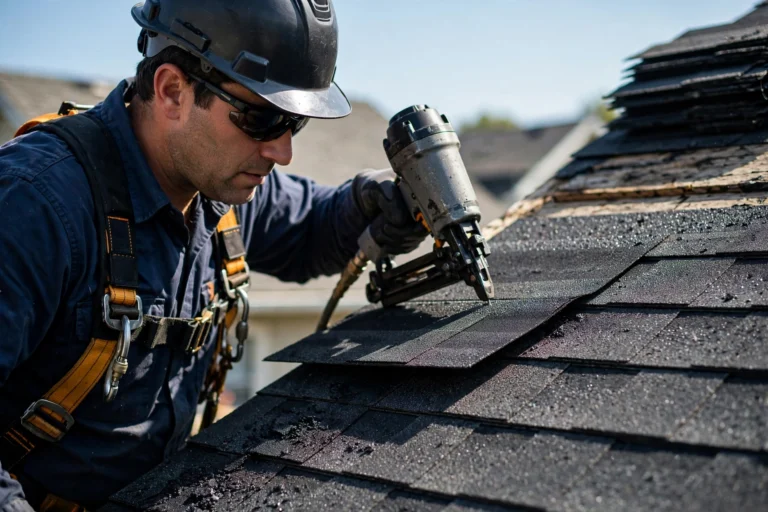
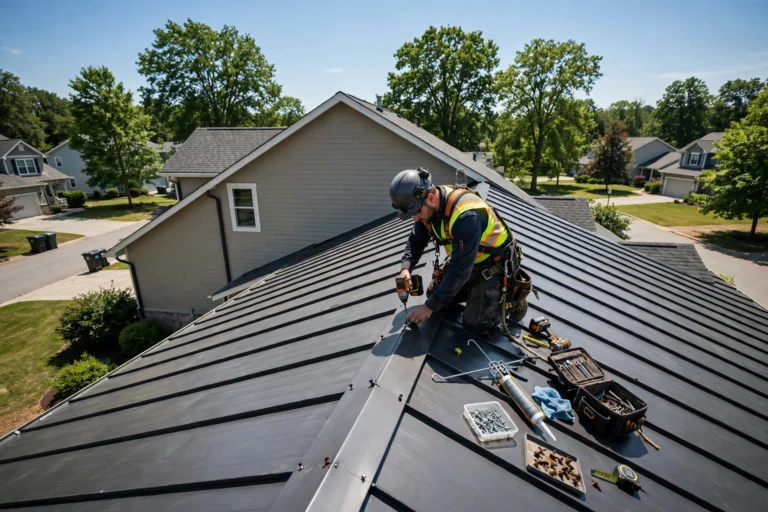
Why so much more than a driveway? Everything about the job is slower and riskier. Crews work at height on an icy surface wearing fall-arrest gear, and snow has to come off in controlled sections so the roof load stays balanced and the shingles stay intact. Valleys, dormers, and fragile older roofing all slow the work further, and there is no fast machine option up there. That combination of labor, gear, and insurance is what pushes a roof visit to three to five times the driveway price.
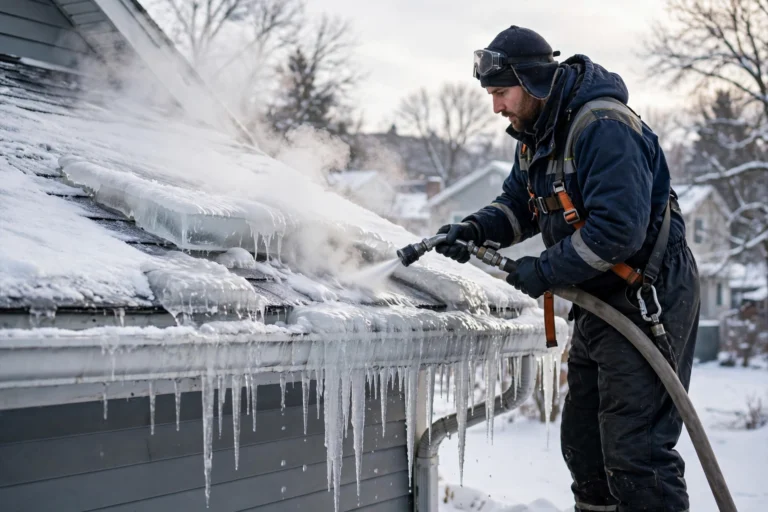
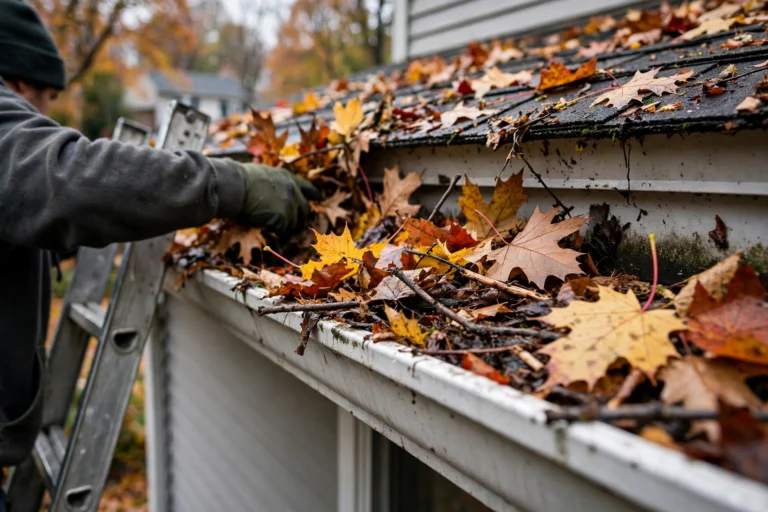
Ice dams are where roof work gets truly expensive. A dam forms when heat escaping your attic melts roof snow, the water refreezes at the cold eaves, and meltwater gets trapped behind the ice and leaks into the house. Clearing snow from the lower 3 to 4 feet of the roof starves the dam of meltwater, which is why eave clearing is the standard prevention step.
If a dam has already formed, professional steam removal runs $300 to $600 per hour for a two-person crew, with most jobs totaling $800 to $2,400. Never let anyone chip ice off with an axe or chisel; it destroys shingles and flashing and can void your roof warranty. Prevention is always the cheaper side of the snow removal cost equation.
When Roof Snow Has to Come Off
Snow weighs far more than it looks. A cubic foot of fresh snow weighs about 5 pounds, old packed snow weighs roughly double that per foot of depth, wet snow runs 15 to 20 pounds per cubic foot, and solid ice hits about 57 pounds. The rule of thumb pros use: 4 feet of fresh snow, 2 feet of packed snow, or snow plus an inch of ice adds up to about 20 pounds per square foot of load on the roof.
Most residential roofs are designed to carry at least 20 psf of snow load, so treat that number as your action line and start getting quotes before you cross it. Waiting until every crew in town is booked solid raises your snow removal cost and your stress level at the same time. Flat and low-slope roofs deserve the closest watch, because snow does not shed off them and drifts pile up in corners and anywhere a tall wall meets a lower roof. Steep pitched roofs shed on their own and may never need the service at all.
Call a professional right away if you notice any of these:
- Creaking, popping, or groaning sounds from the roof or attic framing
- A sagging or drooping roofline, or a ceiling that has started to sag
- New cracks in drywall or plaster, especially around door frames and ceiling joints
- Doors or windows that suddenly stick or will not open and close properly
- Fresh leaks or water stains on ceilings and walls after heavy snow
Those signs mean the structure is already straining, and this is not DIY territory. Working on a snow-covered roof without training and fall-arrest equipment is how homeowners get seriously hurt every winter, which is exactly why the OSHA fall protection guidance exists and why insured roof crews charge what they do. If you clear anything yourself, work from the ground with a roof rake and leave the climbing to the pros.
Regional Pricing: Snow Belt vs Occasional Snow
Where you live shapes your snow removal cost as much as your property does. In the Northeast and Midwest, dense contractor routes and real competition keep seasonal contracts around $300 to $600, and big-city contracts in places like Chicago and Minneapolis sit at the top of the national band. Per-visit pricing stays reasonable there because the equipment earns its keep all winter long.
Occasional-snow markets work the opposite way. Contractors are scarce, routes are thin, and no company can spread its equipment costs over a long season. Emergency callouts in the Pacific Northwest run $150 to $250 per visit, and even cities that rarely see snow, like Raleigh, see $80 to $100 per visit when a storm does land. The same storm simply costs more where it is rare, and the snow removal cost gap between regions can be two or three times for identical work.
Urgency stacks on top of region. Same-day or mid-storm service carries emergency surcharges almost everywhere, guaranteed-time clearing adds 15 to 25 percent, and emergency ice or roof work adds 20 to 50 percent. Every one of those premiums is avoidable: a contract signed in September costs less than the same work begged for in January, and it keeps your snow removal cost predictable.
DIY: Blowers, Rakes, and Salt
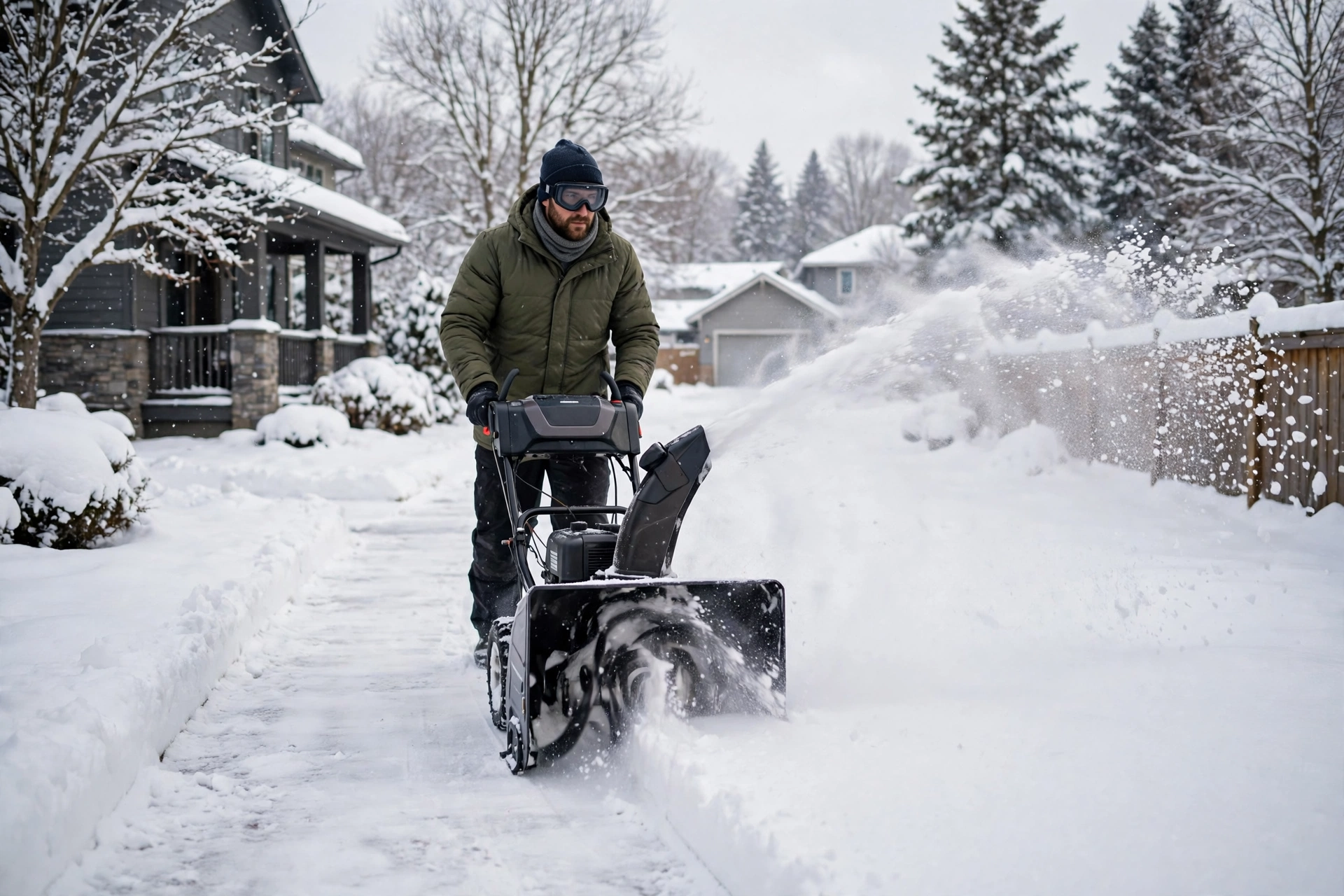
Doing it yourself changes the snow removal cost picture completely, because you trade money for time and a cold back. An electric snow blower runs $100 to $250 and handles small, level driveways in light snow regions. A gas blower runs $400 to $1,200, with two-stage models at the top of that range built for long driveways and heavy, wet snow. Renting a blower for a single storm costs about $75 per day.
Compare that with one season of service at $300 to $1,000. A $500 gas blower pays for itself in one to two seasons if your storms are frequent, and it is sitting in your garage at 5 AM when the plow route is running late. The honest tradeoff is your labor in every storm, plus fuel, storage, and the occasional repair bill. For a healthy homeowner with a small driveway, DIY usually wins. For a long driveway, a bad back, or a house you are away from all winter, service wins.
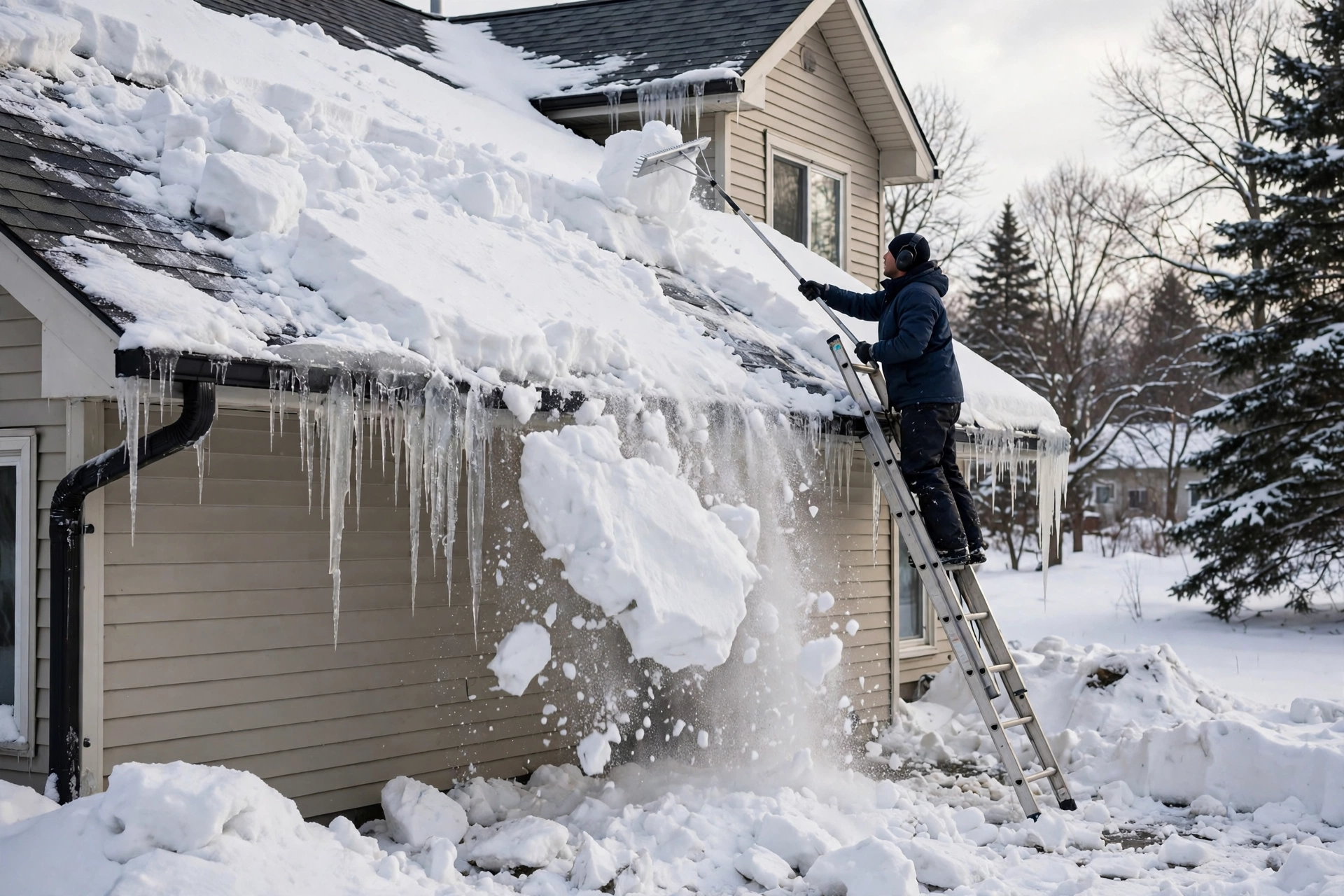
For the roof, a roof rake costs $25 to $80 and lets you pull snow off the eaves while standing on the ground, which safely handles the ice dam prevention job. Salt and ice melt run $10 to $30 per bag, and a typical homeowner goes through two to four bags a season, roughly $20 to $120 total. A decent snow shovel adds just $15 to $40.
The deeper fix for ice dams sits above the ceiling, not on the roof. Sealing attic air leaks and adding insulation keeps roof snow frozen instead of melting it into dams in the first place, and the ENERGY STAR guidance on attic sealing and insulation walks through how it works. It costs more than a rake, but it cuts the root cause and lowers your heating bills at the same time.
Frequently Asked Questions
How much does snow removal cost per visit?
Most homeowners pay $45 to $160 per visit for driveway and walkway clearing, averaging about $105. A plow-only visit runs $30 to $70, walkways and front steps are usually bundled in, and salting adds $20 to $65 per application.
Is a seasonal snow removal contract worth it?
If your area sees 10 or more storms a season, usually yes. Contracts run $300 to $1,000, averaging about $700, and they break even around 8 to 12 pushes at typical per-visit rates. In mild regions with only two to four storms a year, per-visit billing almost always costs less, and your snow removal cost stays tied to the snow that actually falls.
What is a trigger depth?
The amount of snowfall, usually 2 inches, at which your contractor clears your property automatically, with no phone call from you. Premium and commercial plans use a 1 inch trigger. The depth itself starts the service and justifies the charge. A lower trigger means more visits across the winter and a higher snow removal cost by spring.
How much does roof snow removal cost?
Most homes pay $190 to $735 per visit, averaging about $350, or $50 to $100 per hour for a roof crew. Large, steep, or multi-story roofs run $1,000 to $3,000 because of the fall risk, the safety gear, and the slower manual work.
How much snow is too much for a roof?
Act when the load approaches 20 pounds per square foot, roughly 4 feet of fresh snow, 2 feet of packed snow, or snow topped with an inch of ice. Creaking, sagging, new cracks, sticking doors, or fresh leaks mean you should call a professional immediately, not after the next storm adds more weight.
When should I book snow removal service?
Late summer or early fall for seasonal contracts, when rates are lowest and priority route spots are still open. Booking during or after a storm means emergency premiums, typically 15 to 25 percent more for guaranteed-time service and 20 to 50 percent more for emergency roof or ice work.