AC Unit Cost 2026
A new ac unit cost averages about $5,500 installed in 2026, with most homeowners paying $3,500 to $7,500 for a standard central air replacement on existing ductwork. The typical new ac unit cost lands between $5,800 and $6,500 on a straightforward job, but the bill can pass $9,000 for larger homes, high efficiency equipment, or new ductwork. When comparing the central ac unit cost across contractors, get at least 3 quotes from licensed HVAC companies, because bids for the same job can vary by thousands of dollars.
AC Unit Cost Overview
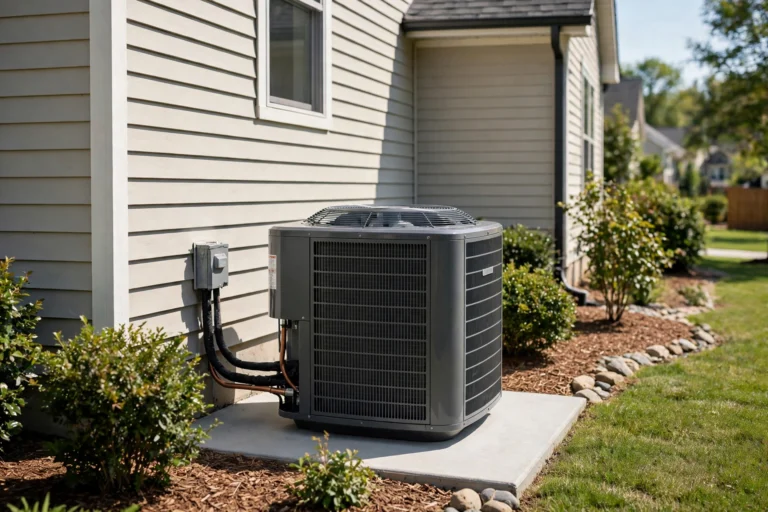
The national price range runs from $3,500 to $15,000 or more installed, depending on your home’s size, the efficiency rating you choose, and how much surrounding work is needed. The median sits right around $5,500 for a like for like replacement: the old condenser and indoor coil come out, new equipment goes in, and the existing ductwork, electrical, and lines are reused.
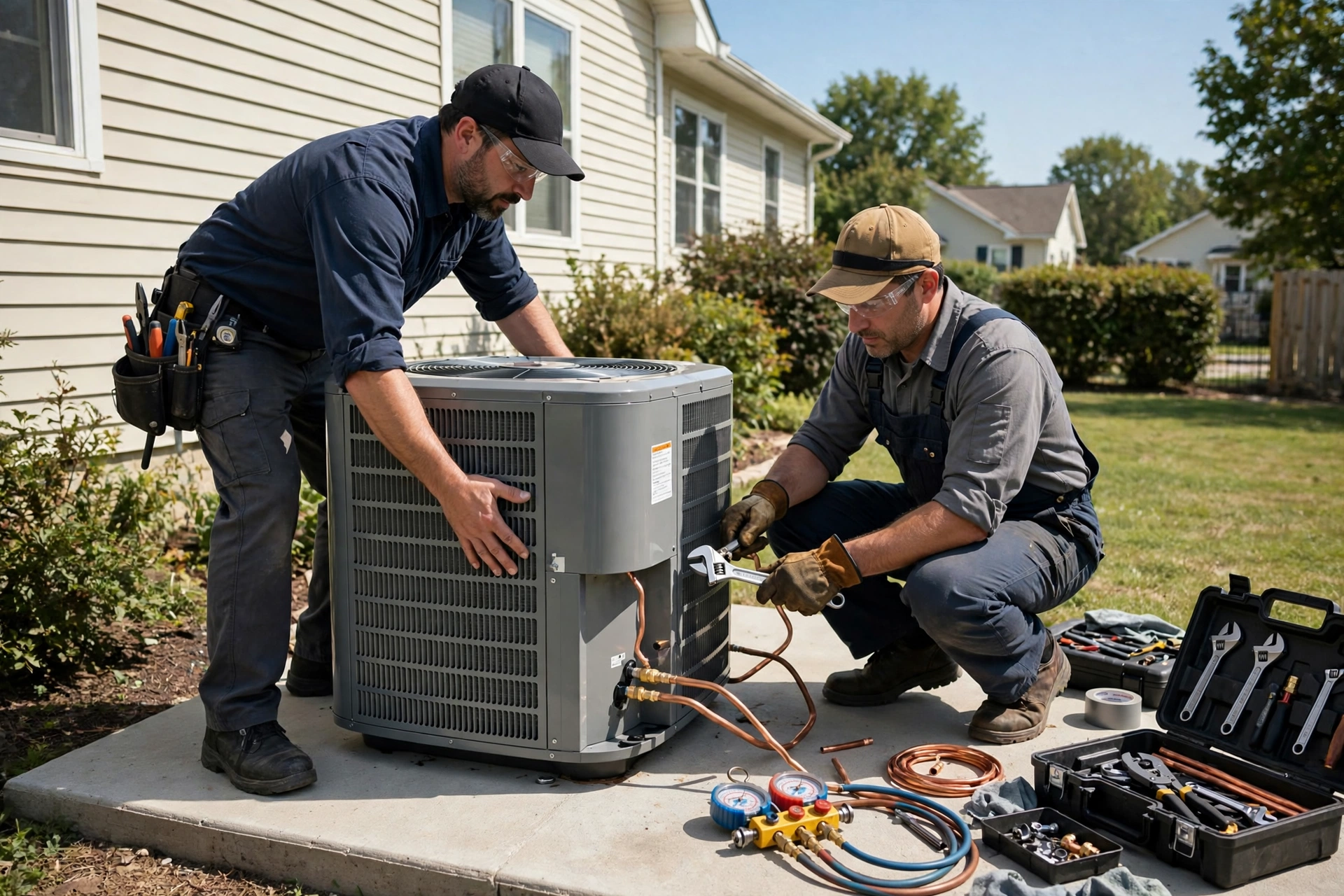
How do equipment and labor combine into the final number? The hardware itself (outdoor condenser, indoor evaporator coil, plus basic refrigerant and fittings) accounts for $2,500 to $8,000 of the total, while installation labor runs $1,500 to $3,500 for a crew working 6 to 10 hours. The rest goes to refrigerant, line sets, permits, and disposal. Complexity drives the top of the range: attics needing new duct connections, panels needing upgrades, and rooftop units needing a crane all push the price higher.
Cost by Tonnage
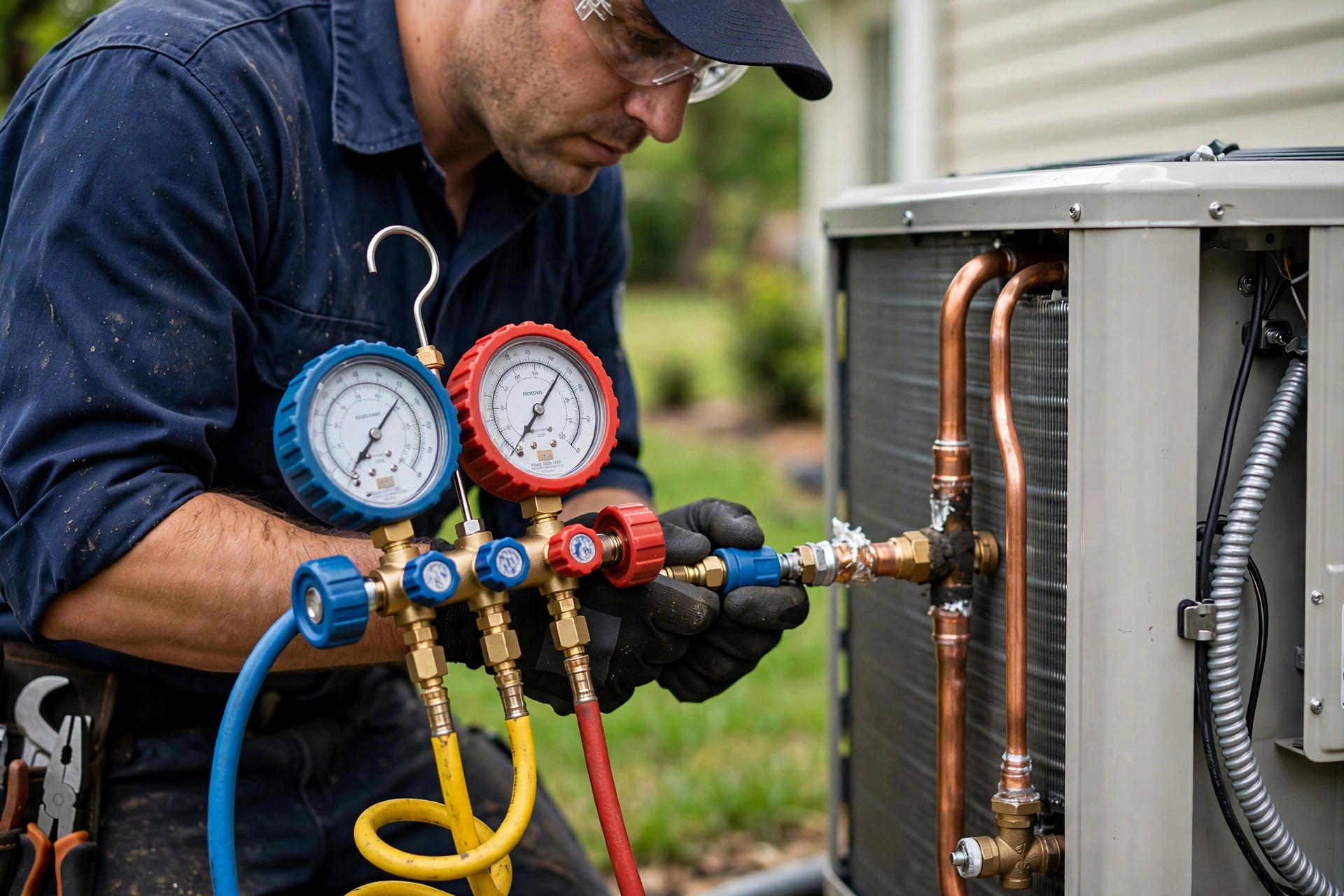
Sizing drives the ac unit cost more than almost anything else. A ton of cooling equals 12,000 BTU per hour, and the rule of thumb is about 1 ton for every 500 to 600 square feet of living space. A contractor should run a Manual J load calculation to size your system correctly, because an oversized unit short cycles, dehumidifies poorly, and dies young, while an undersized unit runs constantly without keeping up.
| Tonnage | Typical home size | Installed cost (2026) |
|---|---|---|
| 1.5 ton | 600 to 1,000 sq ft | $3,500 to $5,000 |
| 2 ton | 1,000 to 1,300 sq ft | $3,800 to $5,500 |
| 2.5 ton | 1,300 to 1,600 sq ft | $4,200 to $6,000 |
| 3 ton | 1,600 to 1,900 sq ft | $4,500 to $6,800 |
| 4 ton | 1,900 to 2,400 sq ft | $5,200 to $8,000 |
| 5 ton | 2,400 to 3,000+ sq ft | $6,000 to $9,500 |
As a quick sanity check, base tier equipment runs roughly $1,900 to $2,600 per ton installed, while high efficiency variable speed systems run $2,600 to $3,400 per ton. The ac unit cost for a 3 ton system lands around $5,500 to $6,800 installed at standard efficiency, which is the sweet spot for most American homes.
Cost by SEER2 Efficiency Rating
Stepping up in efficiency raises the price, but it also cuts your electric bills every summer. The federal minimum is 13.4 to 14.3 SEER2 depending on your region, and higher rated systems can cut cooling costs by 20 to 40 percent compared to that baseline.
| SEER2 tier (3-ton example) | Installed cost (2026) | Best for |
|---|---|---|
| 13.4 to 14.3 (federal minimum) | $4,500 to $5,800 | Mild climates, short ownership |
| 15 to 16 (mid efficiency) | $5,300 to $7,000 | The value sweet spot for most homes |
| 17 to 18+ (high efficiency, variable speed) | $6,500 to $9,500 | Hot climates, long ownership |
A 16 SEER2 unit typically adds about $700 to $1,200 to the ac unit cost compared to a 14 SEER2 unit of similar capacity. That upgrade often pays for itself in 5 to 9 years in hot climates where the AC runs hard for months. Jumping to 18 SEER2 or higher can stretch the payback to 12 years or more, so it fits best in places with long cooling seasons. If ductwork is a problem in your home, compare central AC vs ductless mini-split costs to see whether going ductless beats replacing everything.
Brand Price Tiers
Brand choice moves the price up or down, and in 2026 the tiers are fairly stable. Goodman sits at the budget end with solid basic equipment, Carrier and Rheem occupy the mid tier with better efficiency options and longer parts warranties, and Trane and Lennox command premium prices with top durability reputations.
| Brand | Tier | 3-ton installed cost (2026) |
|---|---|---|
| Goodman | Budget | $4,400 to $8,200 |
| Rheem | Mid | $4,800 to $8,500 |
| Carrier | Mid | $5,400 to $9,400 |
| Trane | Premium | $4,580 to $7,160 (standard efficiency) |
| Lennox | Premium | $6,000 to $10,000+ (varies by line) |
For most homes, comparing prices between a budget brand and a premium brand matters less than comparing the installer. A properly installed mid tier unit will outlast a sloppily installed premium one every time. Look for 10 year parts warranties, common on Carrier, Lennox, Trane, and York when registered, and weigh the contractor’s reviews and load calculation more than the logo on the box.
Equipment vs Installation Labor
Roughly half of the ac unit cost is the equipment itself and the other half is everything it takes to get that equipment running safely in your home. For a typical 3 ton replacement, the unit alone runs $2,200 to $5,000, and installation labor runs $3,000 to $7,000 depending on the market and the complexity of the job.
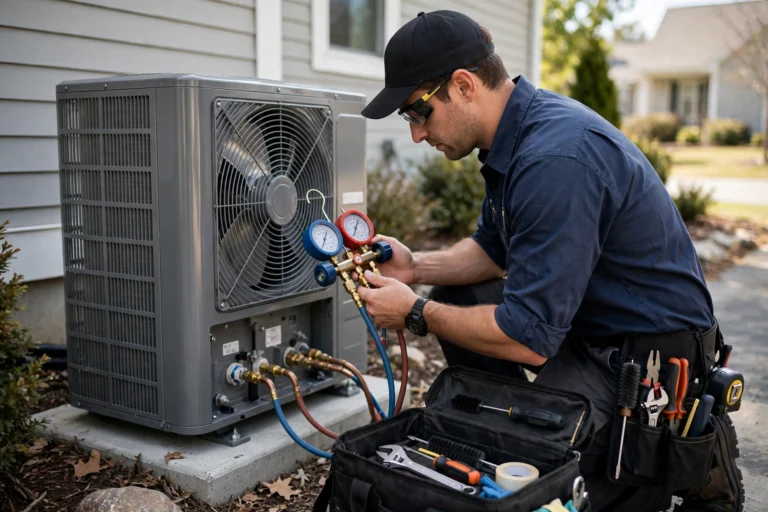
Labor makes up the rest of the bill because this is not a drop in replacement. The crew recovers the old refrigerant legally, removes the old condenser and coil, sets the new equipment, brazes copper refrigerant lines, pressure tests and vacuums the system, charges it with the correct refrigerant weight, and commissions it. Cheap quotes that seem too good to be true usually skip steps: no permit, no pressure test, reused line sets. Those shortcuts show up as leaks and failures within a couple of summers.
AC Only vs Full HVAC System
Compare the ac unit cost of a cooling only replacement against replacing the whole heating and cooling system at once. An AC plus gas furnace combo runs $7,000 to $13,000 installed at standard efficiency, and $13,000 to $18,000 for high efficiency equipment. Replacing both pieces together saves roughly $1,600 in labor compared to doing two separate jobs, because the crew pulls one permit, makes one set of duct connections, and visits once.
If your furnace is over 15 years old, it usually makes sense to replace it alongside the AC so the equipment is matched. The full new hvac system cost is higher upfront, but the labor savings plus the matched efficiency often make it the better value. If your furnace still has plenty of life, a cooling only replacement is the smarter spend. For heating side numbers, see our furnace replacement cost guide and our full HVAC replacement cost breakdown.
Extra Costs Beyond the Unit
Several add ons sit outside the quoted price and show up as line items on a detailed estimate. Ask every contractor to itemize these so you can compare bids apples to apples.
| Extra | Typical cost (2026) |
|---|---|
| Smart thermostat upgrade | $150 to $450 |
| Refrigerant line set replacement | $300 to $800 |
| Concrete pad or platform for outdoor unit | $150 to $400 |
| Dedicated 240V circuit | $500 to $2,000 |
| Electrical panel upgrade | $1,500 to $4,000 |
| Permits | $150 to $500 |
| Old unit removal and disposal | $200 to $600 |
| Crane service (rooftop or tight access) | $400 to $1,200 |
New ductwork is the biggest potential add on. If your home has no ducts, or the existing ones are undersized or leaky, expect $3,000 to $8,000 for new ductwork on top of the unit price. Attic or crawl space equipment locations can add $400 to $1,200, so get the ducts inspected before you finalize the equipment choice.
The 2026 Refrigerant Change: R-454B
Starting January 1, 2026, new ducted air conditioners sold in the US must use lower global warming potential refrigerants under the federal AIM Act. Most brands, including Carrier, Lennox, Trane, Goodman, and Rheem, are now shipping systems charged with R-454B, which replaces the R-410A used for the past two decades.
The new equipment adds roughly 5 to 15 percent to the ac unit cost versus equivalent older models, though pricing is settling as production scales. R-454B is mildly flammable (classified A2L), but it only ignites under conditions that essentially never occur in properly installed systems, and new equipment ships with built in leak detection sensors. The practical takeaway: you cannot mix R-454B into an R-410A system, so make sure your installer is current on A2L tools and training.
One note on incentives. Some sources mention a federal tax credit of up to $600 for high efficiency central AC under the Inflation Reduction Act, but at least one contractor source reports the federal credit does not apply to installs completed in 2026. Treat any 2026 credit as uncertain: check the current IRS guidance and your utility’s rebate programs rather than counting on a tax break that may not exist.
Repair or Replace: The $5,000 Rule
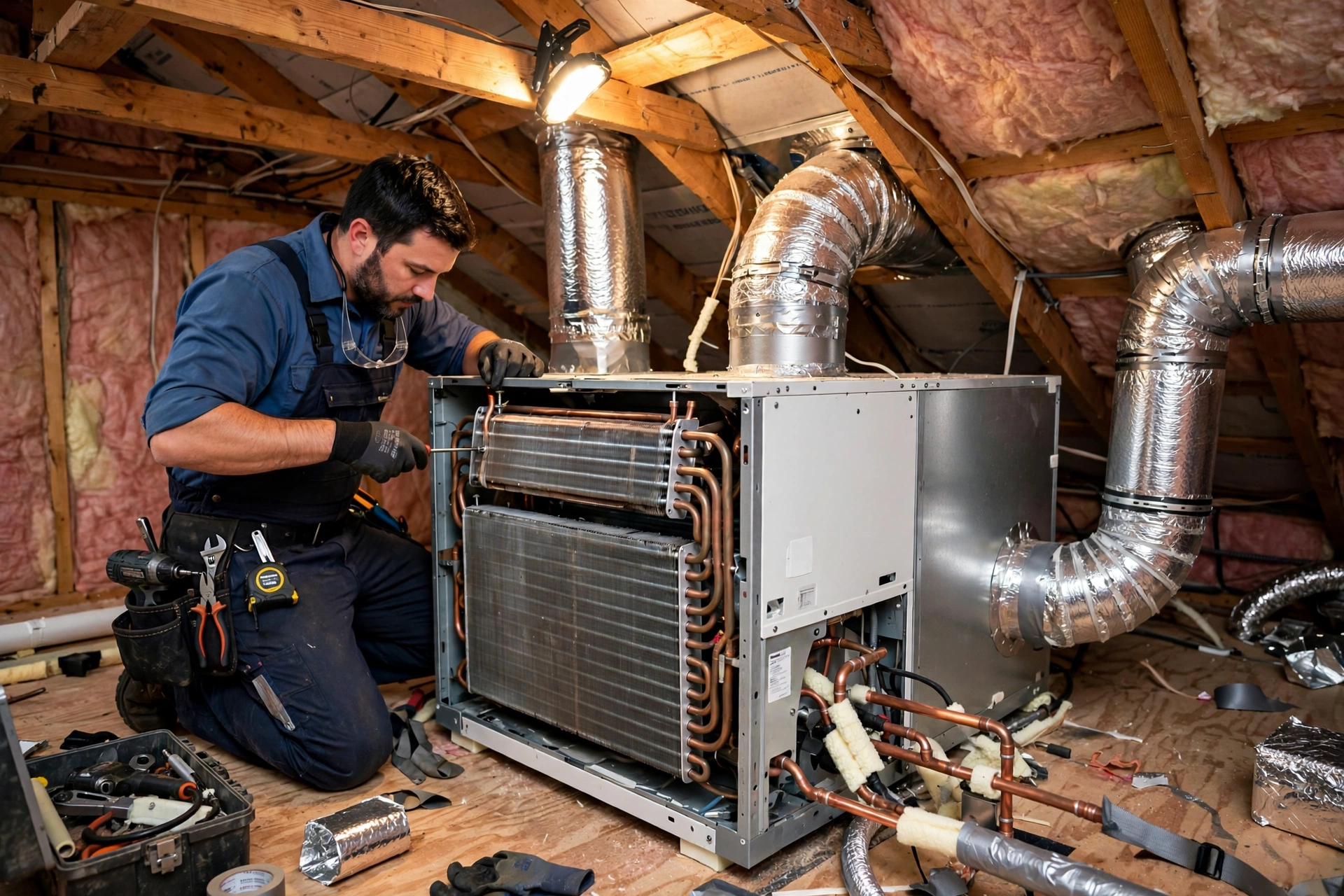
When the old unit starts failing, the cost of the repair is only half the equation. HVAC pros use the $5,000 rule: multiply the age of the unit by the repair cost. If the number is over $5,000, replace it; if it is under, repair it. A 12 year old AC with a $500 repair gives you $6,000, so replace. A 10 year old AC with a $400 repair gives you $4,000, so repair.
The 50 percent rule is the other standard: any single repair costing more than half the price of a new system means you should replace. Other strong replace signals include a system that is 15 years or older, one that still runs on R-22 refrigerant (not manufactured or imported since 2020, and expensive to recharge), three or more service calls in two years, climbing energy bills, and compressor or coil failure on an old unit.
Money-Saving Tips
- Time it for the shoulder seasons. Contractors are slammed in the first heat wave of summer. Booking in spring or fall often means faster scheduling and sometimes better pricing.
- Get 3 to 5 itemized bids. The spread between quotes for identical equipment can be several thousand dollars. Itemized bids let you compare the ac unit cost line by line and reveal who is padding and who is thorough.
- Do not oversize. A properly sized system costs less to buy, costs less to run, and lasts longer. Insist on a Manual J load calculation, not a square footage guess.
- Replace the furnace together if it is old. The roughly $1,600 labor savings plus matched equipment efficiency make a combo replacement the better value when the furnace is past 15 years.
- Fix ducts before upgrading efficiency. Leaky or undersized ducts waste the money you spend on a high SEER2 unit. Duct sealing or replacement first is cheaper than upsizing equipment.
- Ask about rebates. Utilities and some states still offer rebates for high efficiency equipment and heat pumps, even where the federal credit is uncertain. Check before you buy.
FAQs
How much is a new ac unit in 2026?
A new central AC unit costs $3,500 to $7,500 installed for most homes, averaging about $5,500. That covers the equipment plus standard installation labor on existing ductwork.
How much does a 3-ton AC unit cost installed?
The average central ac unit cost for a 3-ton system is $4,500 to $6,800 installed at standard efficiency, with a national average around $8,000 once regional labor differences are included. High efficiency 3-ton systems run $6,500 to $9,500 or more.
How much more does a high-efficiency AC cost?
A 16 SEER2 unit costs about $700 to $1,200 more than a 14 SEER2 unit of the same size. Stepping up to 17 to 18 SEER2 variable speed equipment adds more, with installed prices of $6,500 to $9,500 for a 3-ton system.
What size AC unit do I need for my home?
As a rough guide, plan on 1 ton of cooling for every 500 to 600 square feet, so a 2,000 square foot home usually needs a 3-ton system. The correct method is a Manual J load calculation by your contractor, which accounts for insulation, windows, and climate, not just square footage.
Is the new R-454B refrigerant safe?
Yes for residential use. R-454B is classified A2L, meaning mildly flammable, but it only ignites under conditions that essentially never happen in a properly installed home system. New equipment includes built in leak detection sensors.
Should I repair or replace my AC?
Use the $5,000 rule: multiply the unit’s age by the repair cost, and replace if the result tops $5,000. Also lean toward replacement if the system is 15 years or older, uses R-22 refrigerant, needs a compressor replacement, or has needed 3 or more repairs in the last 2 years.
A new ac unit cost is one of the bigger checks most homeowners will ever write, but it is also one of the best returns on comfort you can buy. Size it with a Manual J calculation, compare itemized bids from at least 3 licensed contractors, weigh efficiency against your climate and how long you plan to stay, and confirm the quote includes permits, refrigerant, and disposal. Do that, and the ac unit cost you pay will be a fair one for equipment that keeps you cool for the next 15 to 20 years.