Sump Pump Installation & Replacement Cost 2026
Sump pump installation costs $800 to $1,500 in 2026, with most homeowners paying an average of $1,100 to $1,200 for a complete new install. Replacing an existing pump where the pit and discharge line are already in place runs $400 to $1,200, averaging about $530. Given that a single basement flood claim averages $10,000 to $25,000, a sump pump is one of the cheapest insurance policies a homeowner can buy.
How Much Does Sump Pump Installation Cost in 2026?
The national average cost to install a new sump pump in 2026 is $1,100 to $1,200, with a typical range of $800 to $1,500. A straightforward replacement of a failed pump averages about $530, with most replacements falling between $400 and $1,200. Complex installs that need a brand new pit jackhammered through a concrete slab run $1,200 to $3,500.
| Project type | Average cost |
|---|---|
| New install, existing pit | $800 to $1,500 |
| New install, new pit in concrete | $1,200 to $3,500 |
| Pump replacement only | $400 to $1,200 |
| Pedestal pump installed | $400 to $900 |
| Submersible pump installed | $600 to $1,800 |
| Battery backup system installed | $600 to $2,000+ |
| Combination AC/DC system installed | $800 to $3,000 |
Sump Pump Cost by Type and Size
- Pedestal pump ($400 to $900 installed): The motor sits above the pit, making it easy to service and cheaper to buy. Louder and less powerful, but fine for light water intrusion.
- Submersible pump ($600 to $1,800 installed): Sits inside the pit, runs quieter, and handles heavier water flow. The most common choice for finished basements.
- 1/3 HP ($800 to $1,200 installed): Enough for most homes with occasional seepage. The standard size for average basements.
- 1/2 HP ($1,000 to $1,600 installed): Moves more water faster. A good pick for homes with regular water issues or larger pits.
- 3/4 HP ($1,600 to $2,500 installed): Heavy duty capacity for high water tables or commercial style needs. Needs a larger discharge line to perform.
Sump Pump Cost Breakdown
- Pump unit: $150 to $500 for the pump itself, depending on type and horsepower.
- Pit and basin: $50 to $200 if a new basin is needed.
- Pit excavation: $300 to $800 extra to break through concrete and dig a new pit.
- Labor: $45 to $200 per hour for a plumber, with most installs taking 3 to 6 hours.
- Discharge line: $200 to $600 to run or extend the line outside, away from the foundation.
- Electrical outlet: $150 to $300 if a dedicated GFCI outlet is needed near the pit.
- Permit: $50 to $150 where required by the local authority.
What Affects the Cost: Key Factors
- Existing pit or not: The single biggest factor. Dropping a pump into an existing pit is a half day job. Breaking concrete for a new pit adds $300 to $800.
- Pump type and horsepower: Submersible and higher HP pumps cost more but handle more water.
- Backup system: A battery backup installed adds $600 to $2,000 or more, but keeps the pump running during power outages when storms hit hardest.
- Discharge line length: Longer runs and difficult routing add materials and labor.
- Basement finish level: Finished basements need more careful work and protection, adding time.
- Local labor rates: Plumber rates vary widely by market.
Sump Pump Installation Timeline and Process
A standard install takes one day, usually 3 to 6 hours:
- Pit preparation: If needed, the plumber breaks the concrete, digs the pit, and sets the basin in gravel.
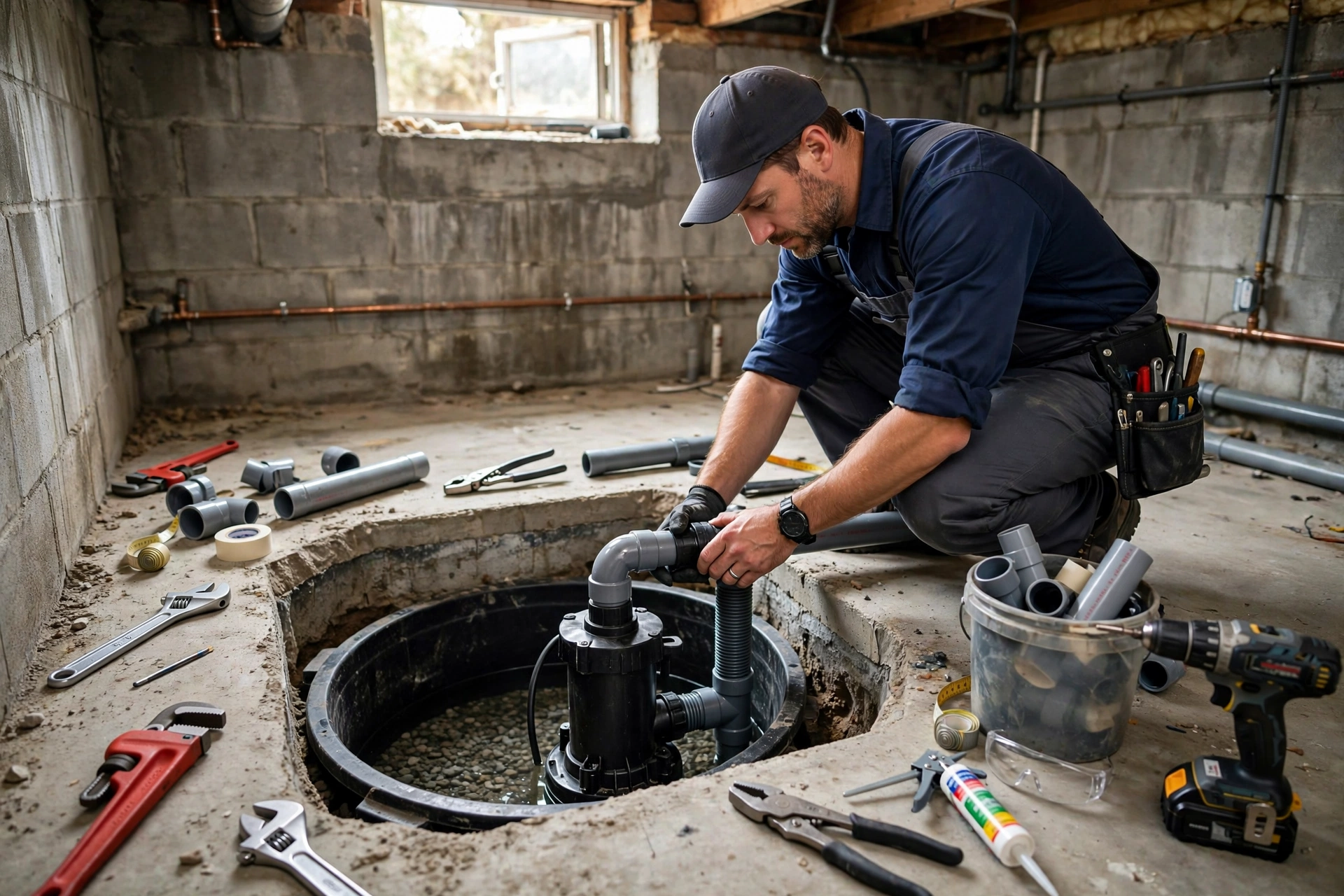
- Pump placement: The pump is set in the basin, leveled, and connected to the discharge pipe.
- Discharge routing: The line is run through the rim joist or wall to the outside, at least 10 feet from the foundation.
- Electrical: The pump is plugged into a dedicated GFCI outlet.
- Testing: The pit is filled with water to confirm the float switch triggers and the pump discharges properly.
DIY vs Hiring a Plumber
Replacing an existing sump pump is a very doable DIY project. With the pit, basin, and discharge line already in place, you just swap the pump and reconnect the fittings. DIY replacement materials run $300 to $600, saving several hundred in labor.
Hire a plumber for any new installation, especially one that needs a pit dug through concrete. Breaking slab, setting the basin at the right depth, and routing discharge correctly all benefit from experience. A poorly installed pump that fails during a storm is a $10,000 to $25,000 flood claim waiting to happen.
How to Save Money on Sump Pump Installation
- Replace before it fails: A planned replacement at $400 to $1,200 beats an emergency call plus water damage.
- Right size the pump: Do not pay for 3/4 HP when 1/3 HP handles your water table. A plumber can advise.
- Keep the existing pit: Reusing the pit and discharge line avoids the $300 to $800 excavation charge.
- Buy the pump yourself: Shop sales on quality brands and pay for labor only.
- Get two or three quotes: Sump pump quotes vary a lot. Compare the pump model and warranty, not just the price.
- Maintain it yearly: Test the float, clean the pit, and check the discharge line each spring to extend pump life.
Frequently Asked Questions
How long do sump pumps last?
Most sump pumps last 7 to 10 years. Pumps that run frequently wear out faster, so heavy use areas may need replacement closer to 5 years.
Do I need a battery backup for my sump pump?
It is strongly recommended. Storms that flood basements often knock out power at the same time. A battery backup installed at $600 to $2,000 or more keeps the pump running for hours during an outage.
How much does it cost to replace a sump pump?
Replacement averages about $530, with most jobs between $400 and $1,200 when the pit and discharge line already exist.
What size sump pump do I need?
A 1/3 HP pump suits most homes with occasional seepage. Choose 1/2 HP for regular water issues, and 3/4 HP for high water tables. Match the discharge pipe size to the pump.
Where should the discharge line go?
At least 10 feet from the foundation, downhill if possible. Never tie it into a septic system, and check local codes before connecting to storm sewers.
Dealing with bigger water problems? See sewer line replacement costs for 2026, or check septic tank pumping pricing to keep your whole system flowing.