Plumbing Repair Cost 2026
When a pipe starts leaking or a toilet keeps running, the first question is always what the repair will run you. Most household plumbing repairs in 2026 land between $150 and $500, with a typical job costing about $300. That range covers the everyday fixes a plumber handles daily, from faucet repairs and toilet parts to simple clogs, plus the labor to get them done right.
The final bill depends on the job itself, the parts involved, and how easy the problem is to reach. A visible pipe in a basement takes an hour, while the same pipe behind a tiled shower wall turns into demolition, repair, and patching. This guide breaks down the average plumbing repair cost across every common job, the hourly rates plumbers charge, and the extra fees that surprise homeowners. Once you see how the pricing works, every quote gets easier to judge.
For slow drains that keep coming back, our hydro jetting cost guide explains when jetting beats another round of snaking.
One rule applies to every number below: these are national estimates, and rates swing with your region and the plumber you call. Coastal metros run 30 to 50 percent above the national average, while rural areas in the Midwest and South sit at the low end. Always get 3 local quotes before approving a repair, because the second price often beats the first by a wide margin, and a clear understanding of plumbing repair cost helps you spot the fair bid.
If your home runs on a septic system, our septic tank pumping cost guide covers the service intervals and prices that keep repairs away.
How Much Does a Plumber Cost?
Standard plumber labor runs $60 to $130 per hour in 2026, with journeyman plumbers in most metros charging $85 to $110. Broader surveys put the full range at $40 to $200 per hour, with master plumbers and high cost cities at the top end. The plumbing repair cost on your invoice is mostly labor, not parts, since most fixtures and fittings are inexpensive compared to the time it takes to install them.
Expect a service call or trip fee of $75 to $150 on top of the labor. This covers the plumber’s time to show up and diagnose the problem. Many plumbers credit the fee toward the repair if you approve the work on the spot, so ask before they start. Some markets charge $95 to $180 for the visit alone, especially in dense urban areas.
Billing usually comes in two forms. Flat rate pricing is standard for common defined jobs like a faucet install, a disposal swap, or a toilet rebuild, so the plumber repair cost you are quoted is the price you pay, confirmed before work starts. Hourly billing fits exploratory work like leak hunting, where the scope is unknown until the wall is open. Most plumbers also charge a minimum labor fee, often one full hour, even for a fifteen minute fix, and knowing which model your plumber uses keeps the final plumbing repair cost predictable instead of a surprise.
Plumbing Repair Costs by Job
Use this table as your cost baseline for every common job during business hours with reasonable access. Night, weekend, and emergency work costs 1.5 to 3 times more, which is covered in detail below.
| Repair | Average Cost | Notes |
|---|---|---|
| Toilet flapper or fill valve | $60 to $150 | Parts under $20; a running toilet wastes up to 200 gallons a day |
| Faucet repair or cartridge swap | $100 to $330 | Cartridge swap vs full faucet replacement drives it |
| Toilet rebuild or repair | $150 to $400 | Flapper is cheap; flange work is not |
| Clogged toilet | $75 to $550 | Paper clogs are cheap; root intrusion is expensive |
| Drain clog clearing | $100 to $500 | Fixture drain vs main line |
| Leaking pipe repair | $150 to $700 | Access is the driver: open wall vs behind tile |
| Pipe leak detection | $125 to $400 | Charged before any repair work begins |
| Garbage disposal repair | $100 to $400 | Reset or jam vs replacing the unit |
| Water heater repair | $150 to $650 | Elements and valves; a leaking tank means replace |
| Sump pump repair | $250 to $700 | Switch fix vs a new pump |
| Burst pipe repair (emergency) | $350 to $1,200 | Before water damage restoration |
| Shut-off valve replacement | $150 to $350 | Part is cheap; labor and access dominate |
The cheapest common repairs are small part swaps like flappers and cartridges, often under $150. The most expensive everyday plumbing repair cost jumps come from anything behind walls, under floors, or in the ground, where the work multiplies. When you are budgeting the cost to fix plumbing, ask your plumber to itemize detection, access, and restoration as separate line items, because those are the charges that surprise homeowners most.
One option some homeowners consider is a home warranty plan. Systems plans run $30 to $55 per month, combination plans $60 to $90, and comprehensive plans $90 to $140 or more, with a $75 to $125 service call fee per claim. Warranty caps typically run $1,500 to $5,000 per term, and exclusions for poor maintenance, pre-existing issues, and code upgrades deny many plumbing claims. Honestly, a warranty is usually a net loss in an ordinary year, but it can cap a big plumbing repair cost within coverage limits if something major fails.
Cost to Fix a Leaky Pipe
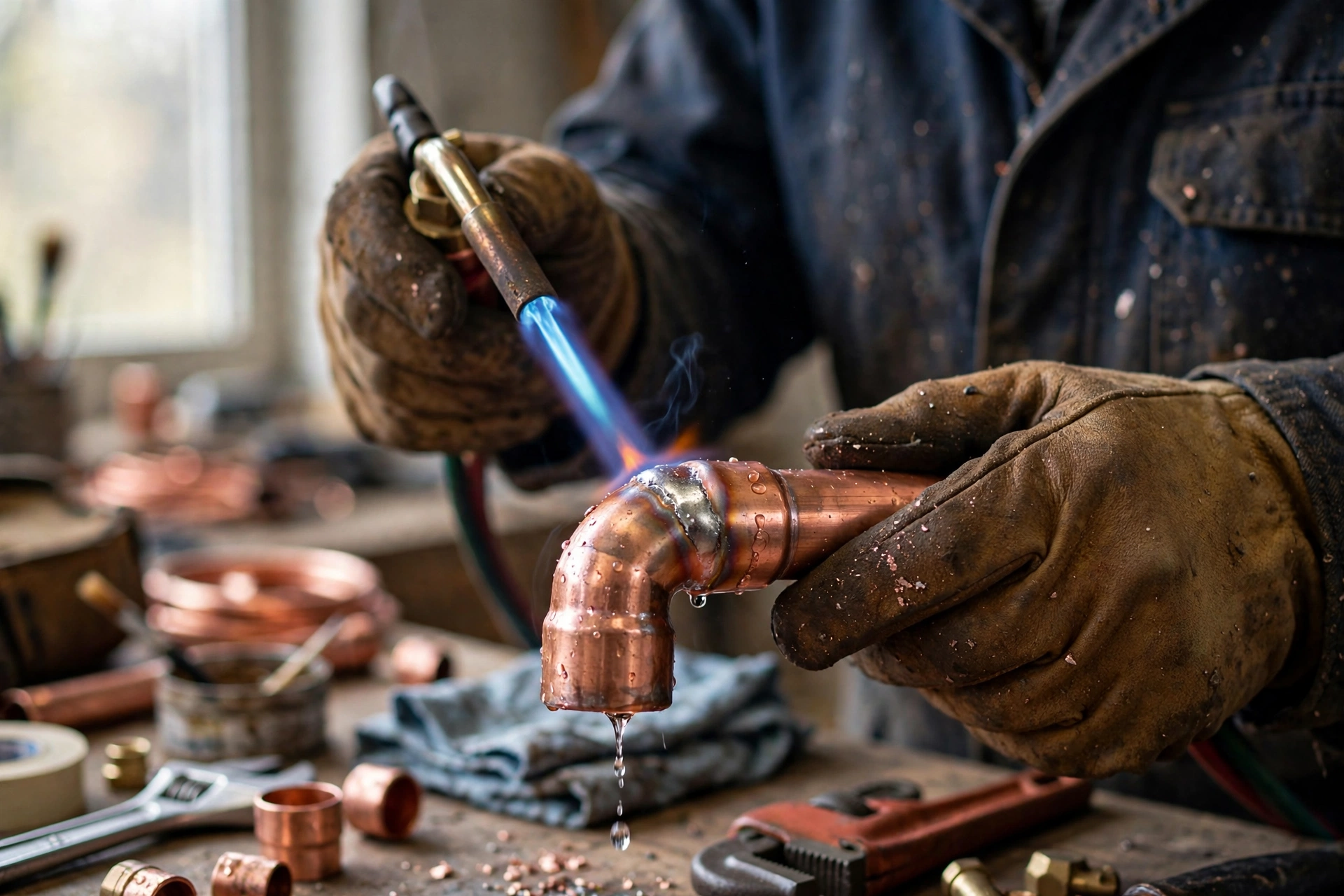
The cost to fix a leaky pipe runs $150 to $700 for the pipe itself, and access decides where you land in that range. An exposed copper pinhole in a basement ceiling is the best case: a short repair with a soldered or push-fit coupling lands around $150 to $300, and the material is cheap at $5 to $15 per linear foot for copper. The overall plumbing repair cost stays low when the plumber can see and reach the problem.
PEX repairs are even quicker and cheaper. PEX material costs $0.50 to $3 per linear foot, and push-fit fittings make exposed PEX splices one of the fastest jobs a plumber does. If your home uses PEX, the plumbing repair cost for a leak usually sits near the bottom of the range.
In-wall leaks are a different story. The pipe repair still runs $150 to $700, but you also need drywall restoration on top of it. Opening a wall and installing new drywall costs about $2,100 in a bathroom context, so budget for both the plumbing and the patch, because plumbers often do not do the finish work. This is where the total plumbing repair cost surprises homeowners who only priced the pipe.
Under-slab leaks average $500 to $800 and can reach $1,000 to $5,000, because concrete cutting and jack-hammering is what pushes the price up. A permanent alternative is to abandon the slab lines and reroute the plumbing overhead, which stops the cycle of breaking concrete for every new leak.
Emergency Plumbing Repair Costs
Timing is the biggest price mover in plumbing. The same fix after hours or on a weekend runs 1.5 to 3 times the standard rate. A repair that costs $300 during business hours costs $450 to $600 at night or on weekends. If you can shut off the water and contain the damage, waiting until morning saves hundreds, and that patience is one of the simplest ways to keep plumbing repair cost under control.
Hourly bands for 2026 show evening rates of $60 to $300 per hour, weekend rates of $80 to $400, and holiday rates of $120 to $600. Service call fees climb with timing too: $125 to $200 after hours, $175 to $300 late night, $150 to $250 on weekends, and $200 to $400 on holidays. Weekend and holiday visits stack the higher call fee on top of premium labor, so a Sunday burst pipe is the single most expensive version of any plumbing repair cost.
When is the emergency worth it? Burst pipes, sewage backups, gas line smells, and water heater leaks that are actively flooding all justify the premium. When is it not? A dripping faucet, a slow drain, or a running toilet can all wait until morning. Know your main water shutoff location before you ever need it, because shutting off the water turns many emergencies into ordinary morning calls, and matching the response to the problem keeps the plumbing repair cost fair.
What Affects the Price
Two homes can need the exact same repair and get very different quotes. Here is what pushes your plumbing repair cost up or down, and what you can control.
- Timing. Nights, weekends, and holidays multiply rates, as covered above.
- Access. An exposed basement pipe takes an hour. The same pipe behind a tiled shower wall means demolition, repair, and patching, which is three trades worth of billing.
- Diagnosis time. Leak hunting is billed hourly, and tracing a slow leak inside a wall can take an hour or more before the repair even starts. Detection alone can add $125 to $400 to the plumbing repair cost.
- Pipe material. PVC and PEX are cheapest to fix, copper is moderate, and cast iron or galvanized steel cost the most.
- Age of the system. Homes past 40 years often have galvanized supply lines or old drain stacks, so budget a contingency. One visit can turn into a “while we are here” conversation.
- Parts tier. Builder grade vs premium fittings differ materially. A premium faucet can cost $400 more than a builder grade model with the same labor charge.
- Region. Coastal metros and high cost cities run 30 to 50 percent above national averages. Rural and suburban areas in the Midwest and South sit at the low end.
- Permits. Small repairs usually need no permit, but a whole-house repipe requires one at $500 to $1,500.

Why Small Leaks Get Expensive
A dripping faucet feels harmless, but leaks are quietly expensive in two ways: wasted water and water damage. According to EPA WaterSense leak facts, the average household’s leaks waste more than 9,300 gallons of water per year. A faucet dripping once per second wastes more than 3,000 gallons a year, and a running toilet can waste up to 200 gallons a day. Fixing easily corrected leaks saves about 10 percent on your water bill, which means the plumbing repair cost of a $5 flapper pays for itself many times over.
The bigger risk is water damage. Repairing water damage costs $1,350 to $6,100, many times the price of fixing the leak early. Water that sits behind walls grows mold, rots framing, and ruins flooring. A $200 repair today beats a $5,000 restoration next year, which is why plumbers tell homeowners to treat every leak as urgent. The gap between an early fix and a full restoration is the biggest swing in cost a homeowner will ever see.
Nine percent of homes have leaks wasting 50 or more gallons per day, and nationwide household leaks waste nearly 1 trillion gallons a year. If your water bill jumps for no clear reason, a silent leak is the first suspect, and a leak detection visit can find it before the damage spreads.
Repair or Replace?
Some fixtures are worth fixing forever, and some are worth replacing the moment they break. When you are hiring, look for a licensed, insured contractor, and if a fixture is being replaced, choose a model labeled under the EPA WaterSense program so the new unit uses less water than a standard one. A fair plumbing repair cost quote comes from a company that explains repair vs replace honestly instead of pushing the expensive option.
Repair these: toilet flappers and fill valves at $60 to $150 installed, faucet cartridges and O-rings when the body and finish are sound, garbage disposal jams and resets, and single pipe leaks in an otherwise healthy system.
Replace these: faucets that are 10 to 15 years old with corroded finishes, toilets with cracked tanks or rotten flanges, water heaters past 10 to 12 years or with leaking tanks, and disposals with burned-out motors or leaking housings. A faucet repair runs $100 to $330, which is similar money to a new mid-range faucet plus install, so replacement often wins. When a repair quote approaches the price of a new unit, ask your plumber for both numbers before deciding, because an honest plumbing repair cost breakdown makes the choice obvious.
For pipes, spot-repair a single leak but repipe the system when leaks keep recurring, especially pinhole leaks in copper or homes with polybutylene or galvanized steel pipe. A whole-house repipe costs $4,500 to $15,000 nationally. Get 3 local quotes on a repipe, since prices vary widely on big jobs and the spread between bids can reach thousands.
Frequently Asked Questions
How much does plumbing repair cost?
Most plumbing repair cost quotes fall between $150 and $500, with the typical job landing around $300. Expect $75 to $150 just for the plumber to show up and diagnose the problem.
How much does a plumber charge per hour?
Standard rates are $60 to $130 per hour, with journeyman plumbers in most metros at $85 to $110. Broader surveys cite $40 to $200 per hour across all markets and license levels. Nights, weekends, and holidays run 1.5 to 3 times the standard rate, so scheduling smart is the easiest way to lower any plumbing bill.
What is the cheapest and most expensive common repair?
A toilet flapper or faucet drip fix can be under $150. A burst or in-wall pipe repair runs $150 to $700, and burst-pipe emergencies with water damage restoration can reach $1,500 to $5,000.
How much does it cost to fix a leaky pipe?
The cost to fix a leaky pipe runs $150 to $700 for the pipe work itself, depending on access. Add $125 to $400 if you need leak detection to find it, and budget drywall restoration separately for in-wall leaks, since the total plumbing repair cost often doubles once the wall is opened and patched.
Is it worth calling a plumber for a running toilet?
Yes, if you cannot fix it in 15 minutes. A running toilet wastes up to 200 gallons a day, which shows up fast on your water bill. Professional flapper or fill valve replacement runs $60 to $150 installed. But the flapper itself is a $5 to $10 part and a classic safe DIY job, so try it yourself first if you are handy.
When should I repipe instead of repairing?
Repipe when leaks recur, especially pinhole leaks in copper, or the home has polybutylene or galvanized steel piping. Watch for brown water, falling water pressure, and repair bills that keep climbing year after year. A whole-house repipe runs $4,500 to $15,000, which is steep but ends the cycle of patch repairs.