
Solar Panel Installation Cost 2026
Quick answer: Solar panel installation costs $15,000 to $25,000 before incentives in 2026 for a typical American home, or about $2.50 to $3.50 per watt installed. Most homes install a 6 to 10 kilowatt system. Adding battery storage adds $8,000 to $16,000. Federal and state incentives can cut the net cost substantially, but the rules change often, so verify current programs before you sign anything. All prices below are estimates. Get 3 local quotes before committing.
Solar panels have dropped in price for a decade straight, installers are everywhere, and most systems now pay for themselves well within their 25 year warranty life. The catch is that quotes vary wildly, sometimes by $5,000 or more for the exact same roof, and the financing options are designed to confuse you. This guide puts real 2026 numbers on every part of a solar project so you can tell a good deal from a sales pitch.
Solar Panel Installation Cost in 2026
| System size | Typical installed cost | Good for |
|---|---|---|
| 4 kW | $10,000 – $14,000 | Small homes, low electricity use |
| 6 kW | $15,000 – $21,000 | Average homes, moderate use |
| 8 kW | $20,000 – $28,000 | Larger homes, high use or EV charging |
| 10 kW | $25,000 – $35,000 | Large homes, two EVs, or all-electric setups |
| Per watt (any size) | $2.50 – $3.50 | The number to compare quotes with |
The per-watt number is how the industry actually prices. A 6 kW system at $3.00 per watt costs $18,000. When you compare quotes, divide the total by the system size in watts. Anything under $3.00 per watt is competitive in 2026; anything over $3.50 deserves a hard look at what is inflating it.
Equipment vs Labor: Where the Money Goes
About 60 percent of a solar quote is equipment and 40 percent is labor, permitting, and company overhead. Knowing the split helps you spot padded quotes.
- Solar panels: $5,000 to $10,000 ($0.70 to $1.20 per watt). Premium brands cost more than value brands and deliver a bit more power per square foot.
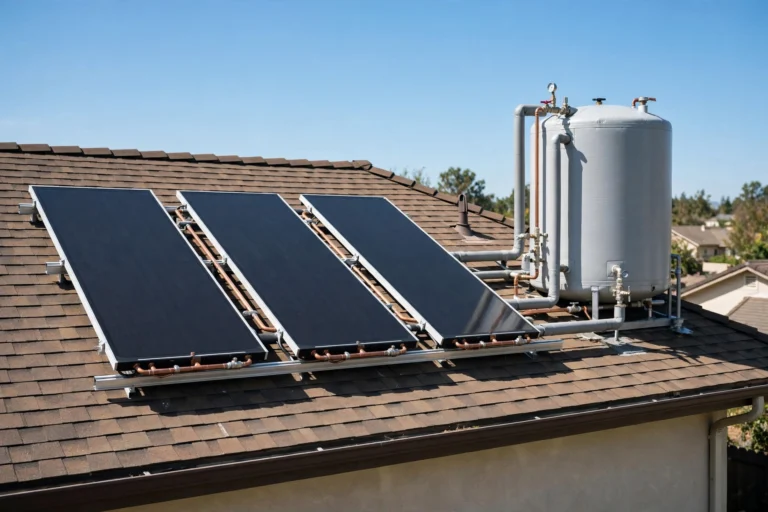
- Inverter: $1,500 to $3,000. Converts panel DC power to the AC your home uses. String inverters are cheaper; microinverters cost more but handle shade better.
- Racking and mounting: $1,000 to $2,000. Tile and metal roofs need specialized hardware that costs more than standard shingle mounts.
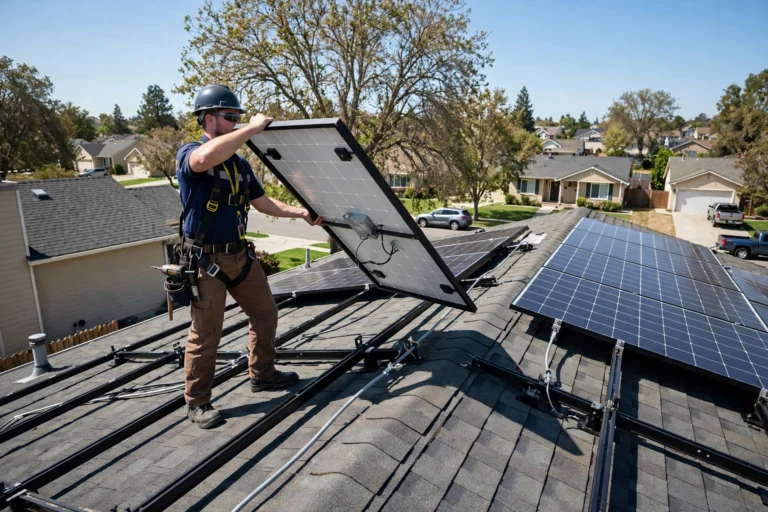
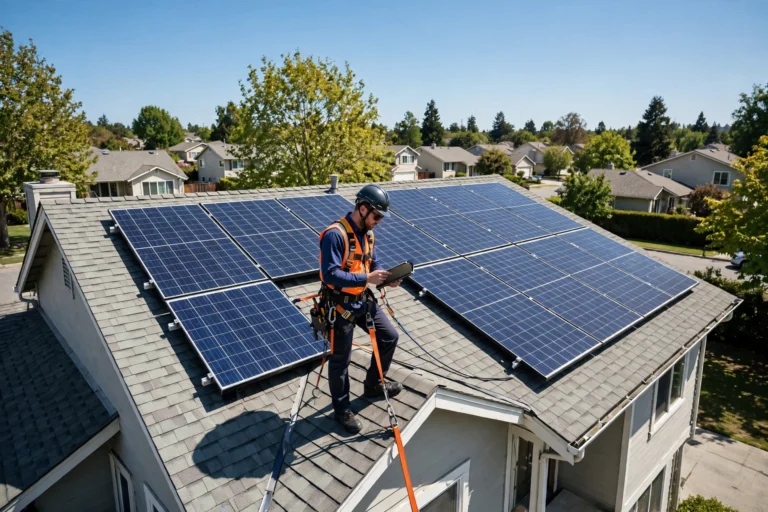
- Labor: $5,000 to $9,000. Crew, electrician, system design, permitting, inspections, and utility paperwork. Most installs take 1 to 3 days on the roof, plus weeks of paperwork around it.
- Permits and fees: $500 to $1,500. Varies hugely by city.
Battery Storage Add-On Pricing
A battery lets you store daytime power for the evening and ride through outages. It is the single most common add-on to a solar quote, and the most commonly overpriced one.
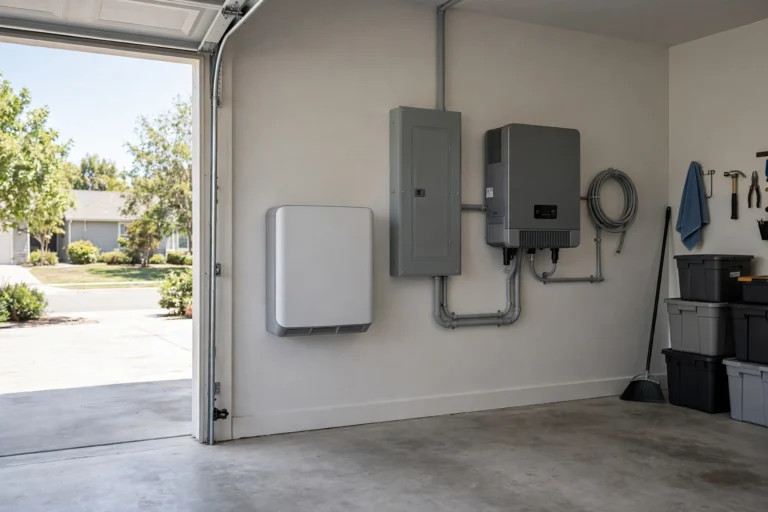
- One battery (10 to 13.5 kWh): $8,000 to $13,000 installed. Covers essential loads like the fridge, lights, WiFi, and phone charging through an outage.
- Two batteries: $14,000 to $22,000 installed. Gets you closer to whole-home backup, though rarely full whole-home for larger houses.
- Popular units: Tesla Powerwall 3, Enphase IQ batteries, and FranklinWH systems dominate residential installs.
Batteries add 40 to 60 percent to the project cost, and they rarely pay for themselves on bill savings alone. Buy one for backup power and time-of-use rate arbitrage, not as an investment. If your utility credits you fairly for exported power, the financial case for a battery is weaker.
What Drives Your Solar Price
1. Roof condition and type
The number one hidden cost is roof condition. If your roof has less than 10 years of life left, every honest installer will tell you to replace it first, because removing and reinstalling panels for a re-roof later costs $3,000 to $8,000. Asphalt shingle is the cheapest roof to work on; tile, slate, and metal standing seam add 10 to 20 percent. Steep or multi-level roofs add labor too. If your roof is aging, see our new roof cost breakdown and consider bundling the projects.
2. Panel type and efficiency
Monocrystalline panels are the standard, at 19 to 23 percent efficiency. Higher efficiency means fewer panels for the same power, which matters on small roofs. Premium panels add $1,000 to $3,000 to a typical system. For most homes the value tier performs nearly identically over 25 years.
3. Inverter type
String inverters are the budget option: one box, $1,000 to $2,000. Microinverters cost $2,000 to $3,500 but shine on roofs with partial shade, multiple roof faces, or future expansion plans. They also last longer and make troubleshooting easier. If your roof is partially shaded by trees, microinverters usually earn their premium.
4. Electrical panel capacity
Solar needs room in your electrical panel and sometimes a panel upgrade. If your panel is full, old, or undersized, the electrician’s work adds $500 to $2,000, and a full 200 amp upgrade runs $1,500 to $4,000. Our electrical panel upgrade cost guide covers this in detail. Planning an EV charger too? Do both projects at once and size the panel once, since our EV charger installation cost guide covers the same capacity question.
5. Local labor and permits
Installation labor is the most variable line item in the country. Competitive markets with many installers run close to $2.50 per watt; markets with few installers or heavy permitting can push past $3.50.
Federal and State Incentives
Incentives are the part of solar pricing that moves the most, so read this section as a checklist, not a promise.
- Federal tax credit: A federal investment tax credit for residential solar has existed for years, but the percentage, eligibility rules, and deadlines have changed repeatedly. Verify the current credit and its rules with a tax professional before you sign anything, because installers have a habit of quoting outdated numbers.
- State and local incentives: Some states add their own tax credits, rebates, or performance payments. A few utilities pay you for the power you produce on top of net metering. These can be worth thousands but vary completely by zip code.
- Net metering: This is the policy that decides what your utility pays you for excess power you send to the grid. Generous net metering makes solar far more valuable; weak net metering pushes you toward a battery. Ask your installer to model your savings under your utility’s current rules, not last year’s.
- Property and sales tax exemptions: Many states exempt solar from property tax increases and sales tax. These are quiet savings that rarely show up in quotes.
One rule of thumb: if an installer pressures you to sign because an incentive “expires next month,” slow down. Real deadlines exist, but high-pressure tactics around them are a classic sales trick. Verify every claim yourself.
Payback Period: The Honest Math
Most residential systems pay for themselves in 6 to 12 years, then generate essentially free electricity for the remaining 13 to 19 years of panel life. Here is how to estimate yours.
| Monthly electric bill | Typical system | Net cost after incentives | Estimated payback |
|---|---|---|---|
| $100 | 5 – 6 kW | $11,000 – $15,000 | 9 – 13 years |
| $150 | 7 – 8 kW | $14,000 – $20,000 | 7 – 10 years |
| $200 | 8 – 10 kW | $17,000 – $25,000 | 6 – 9 years |
| $300+ | 10 – 12 kW | $22,000 – $32,000 | 5 – 8 years |
Three things move payback more than anything else: your electricity rate (higher rates mean faster payback), how much sun your roof gets, and net metering quality. A $300 bill in California with great sun pays back twice as fast as a $100 bill in a cloudy, cheap-power state. Ask each bidder for a 25 year savings projection and check that they used your actual utility rate, not a national average.
Buying vs Leasing vs PPA
Buying (cash or loan) is the best financial deal for most homeowners. You own the system, you claim the incentives, and you keep all the savings. Solar loans typically run 5 to 7 percent interest over 10 to 20 years, with monthly payments often close to your old electric bill.
Leasing means a company owns the panels on your roof and you pay a fixed monthly amount, usually 10 to 30 percent below your old bill. Zero upfront cost, but you give up the incentives and most of the long term savings, and it can complicate a home sale since the buyer must take over the lease.
Power purchase agreements (PPAs) are similar to leases: you buy the power the panels produce at a set rate per kWh, usually with an annual escalator of 2 to 3 percent. Watch the escalator carefully; a 3 percent annual increase compounds and can erase your savings against a utility rate that stays flat.
The honest summary: buying builds equity and saves the most. Leasing and PPAs are fine if you cannot use the tax incentives or do not want the hassle, but read the 20 to 25 year contract like the major financial commitment it is.
Maintenance Costs
Solar is one of the lowest maintenance home systems you can own. There are no moving parts.
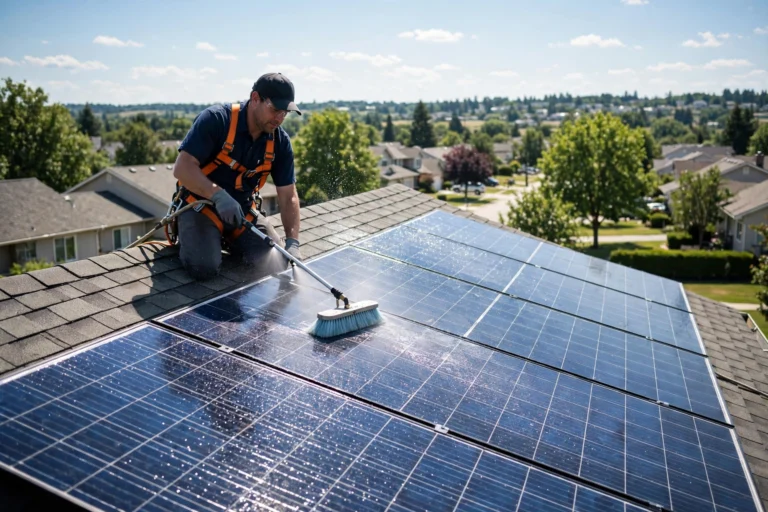
- Cleaning: $150 to $350 per professional cleaning, needed once or twice a year in dusty areas and rarely elsewhere. Rain handles most of it.
- Inverter replacement: String inverters last 10 to 15 years and cost $1,500 to $2,500 to replace. Microinverters usually carry 25 year warranties.
- Monitoring: Free through the manufacturer’s app. Check production monthly; a sudden drop usually means a tripped breaker or a failed inverter.
- Warranty work: Panels carry 25 year performance warranties. Keep your installer’s contact info and warranty documents.
Budget roughly $200 to $400 per year for maintenance and you will be covered. Panels degrade slowly, about 0.5 percent per year, so a 25 year old system still produces around 87 percent of its original output.
How to Save on Solar Installation
- Get 3 quotes and compare per-watt pricing. This single habit saves more money than any other tip. Quotes for identical systems routinely differ by $3,000 to $6,000.
- Time it with a roof replacement. If the roof is due anyway, bundling saves on labor and lets you coordinate warranties.
- Skip the premium panels unless you need them. Value-tier panels from established manufacturers perform nearly as well for thousands less.
- Right-size the system. Bigger is not better if you cannot use the power. Size to your actual usage, with a little headroom for an EV or heat pump you plan to add.
- Check group buying programs. Some cities and co-ops run bulk purchase programs that cut 10 to 20 percent off standard pricing.
- Negotiate. Solar has real margins. Asking for a better price, free panel upgrade, or included monitoring routinely works.
- Verify every incentive claim yourself. Get incentive details in writing and confirm them with your utility and a tax professional before signing.
Frequently Asked Questions
How much do solar panels cost in 2026?
$15,000 to $25,000 before incentives for a typical 6 to 8 kW residential system, or $2.50 to $3.50 per watt installed. Incentives can reduce the net cost substantially. These are estimates, so get 3 local quotes.
How many solar panels do I need for my house?
Most homes need 15 to 25 panels. Check your last 12 months of electric bills: your annual kWh usage divided by about 1,200 to 1,500 gives a rough system size in kW for average US sun conditions.
Is solar worth it in 2026?
For most homeowners with good sun exposure and bills over $100 a month, yes. Payback typically runs 6 to 12 years, and panels last 25+ years. It is least attractive with heavy shade, very cheap electricity, or a roof that needs replacement soon.
Do solar panels work on cloudy days and in winter?
Yes, at reduced output. Panels produce 25 to 40 percent of their rated power on overcast days and less in winter due to shorter days and lower sun angle. Snow usually slides off tilted panels, and cold weather actually improves panel efficiency slightly.
What happens to solar panels during a power outage?
Standard grid-tied systems shut off during outages for utility worker safety. If you want power during blackouts, you need a battery plus an islanding setup, which adds $8,000 to $16,000. Panels alone do not keep your lights on.
How long do solar panels last?
25 to 30 years or more. Performance warranties guarantee about 85 to 90 percent of original output at year 25. Inverters are the shorter-lived part: string inverters typically need replacement once during the system’s life.
Will solar panels damage my roof?
No, when installed correctly. Mounting hardware is flashed and sealed like any roof penetration. Problems come from bad installers, not the panels, which is why installer reputation matters more than panel brand. If your roof is near the end of its life, replace it first.
Should I buy, lease, or sign a PPA?
Buying saves the most money over 25 years and builds home equity. Leasing and PPAs cost nothing upfront but give up the incentives and much of the savings, and the long contracts can complicate selling your home. Buy if you can use the tax incentives; lease only if you cannot.
Do solar panels increase home value?
Owned systems generally do. Studies have found owned solar adds roughly 3 to 4 percent to home value on average, and solar homes often sell faster. Leased systems are neutral at best and can complicate a sale, since buyers must take over the lease.
Last updated: October 2026. Cost figures reflect 2026 national averages from contractor pricing data. Always get 3 local quotes before committing.
One Comment