Solar Shingles Cost 2026
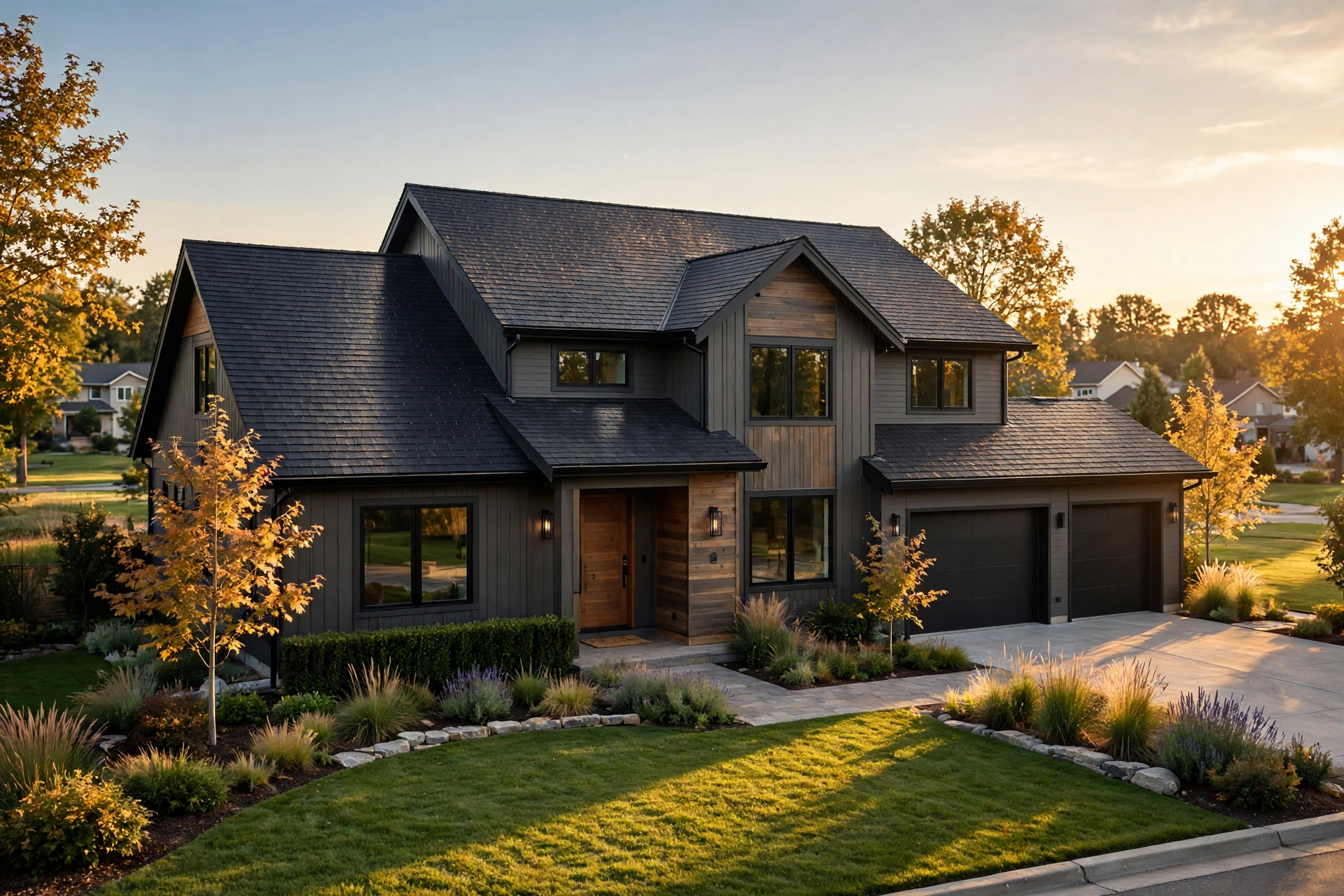
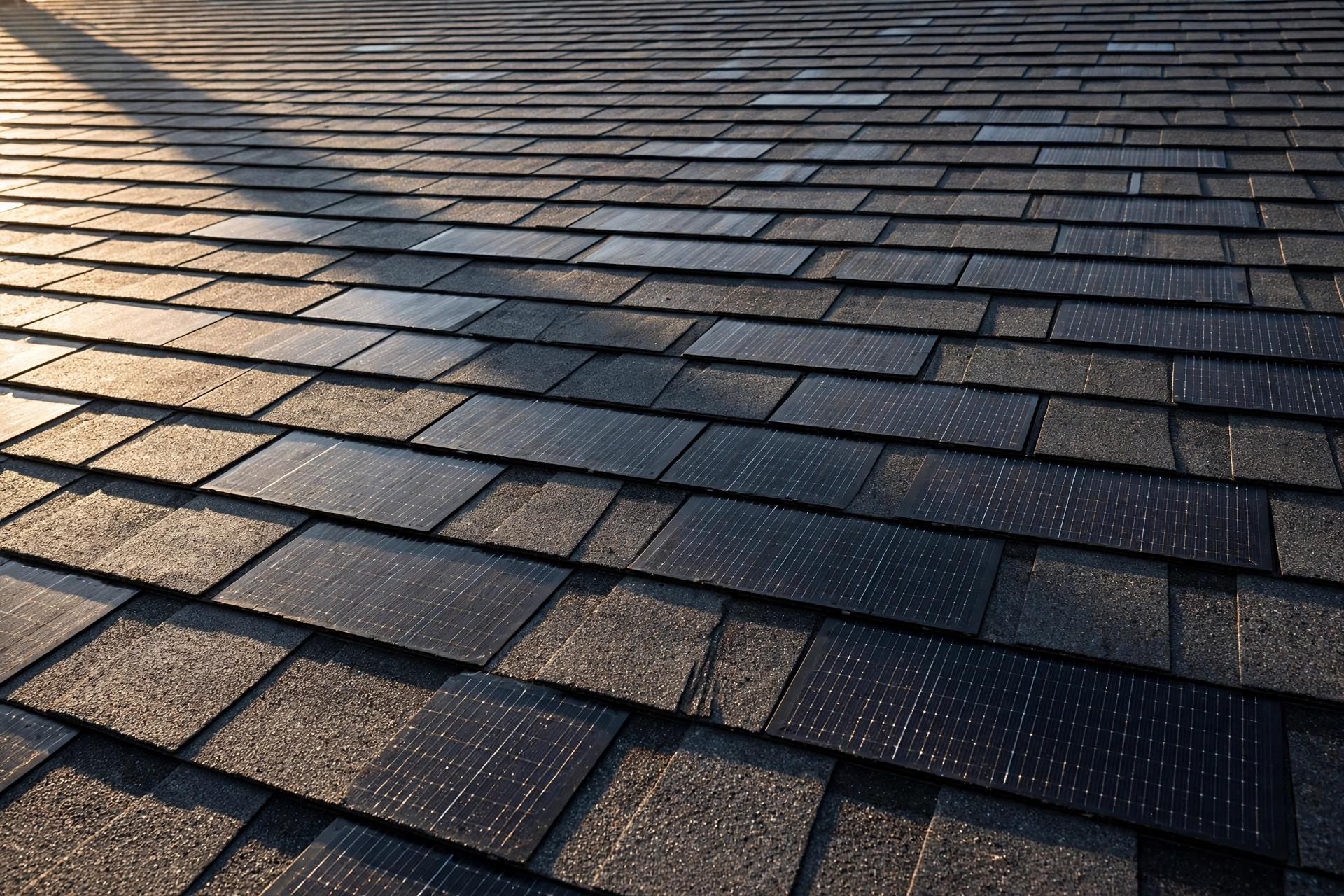
If you have ever wished your solar system would just look like a normal roof, solar shingles were built for you. But the solar shingles cost is the first thing you have to reckon with: the average installed system runs about $35,000 in 2026, with most homeowners paying between $21,000 and $50,000. That is roughly double the per-watt price of traditional panels, and it is why shingles are a niche product even after years on the market.
Still weighing panels instead? Our solar panel installation cost guide breaks down the standard route and what it costs per watt.
Here is the honest framing that makes the solar shingles cost easier to think about. You are not just buying solar equipment. You are buying a roof that also makes electricity. When your old roof is already due for replacement, that changes the math dramatically, and in that scenario solar shingles can land surprisingly close to the cost of a new roof plus panels. When your roof still has a decade of life left, though, the solar shingles cost is a premium you will feel.
Whichever system you choose, our solar panel maintenance cost guide covers the yearly upkeep budget that comes with it.
This guide lays out the real numbers: what shingles run per square foot and per watt, what each brand charges, how they stack up against conventional panels, and which 2026 incentives are actually still alive. Every figure is a realistic 2026 US market estimate. As with any big roofing decision, get 3 local quotes for the exact same system size before you sign anything.
How Much Do Solar Shingles Cost?
For planning purposes, budget around $35,000 installed for a typical residential system. That is the national average from Angi’s 2026 data, which puts the full solar shingles cost range at $21,000 to $50,000. The range is wide because shingle pricing depends heavily on how much of your roof actually generates power, which varies a lot from house to house.
| Cost metric | Typical figure |
|---|---|
| Installed cost per square foot | $21 to $25 |
| Broader market per square foot | $21 to $30 |
| Installed cost per watt | $5 to $7 |
| 1,000 sq ft covered | $21,000 to $25,000 |
| 2,000 sq ft covered | $42,000 to $50,000 |
| National average total | About $35,000 |
One distinction matters more than anything else in the table: these prices cover the active solar square footage, not necessarily your whole roof. Only about 30 to 60 percent of a typical roof ends up as power-generating shingles. The rest is companion shingles that match the look without the power. So when you see a solar shingles cost quote, always ask exactly how many square feet of active solar it includes, not just the roof size.
At the extremes, a small partial-coverage job can start near $4,200 for about 200 square feet, while full-coverage roofs on large homes can push past $75,000. For context on what roofing normally runs, a standard asphalt shingle roof on the same house costs $8,000 to $14,000, and standing seam metal runs $20,000 to $32,000. That comparison is the real sticker shock behind the solar shingles cost: the premium is what you pay for electricity, not for a roof. That premium is the heart of the solar shingles cost debate.
Solar Shingles by Brand
Three names dominate the solar shingles cost conversation, but only two of them are still selling in 2026.
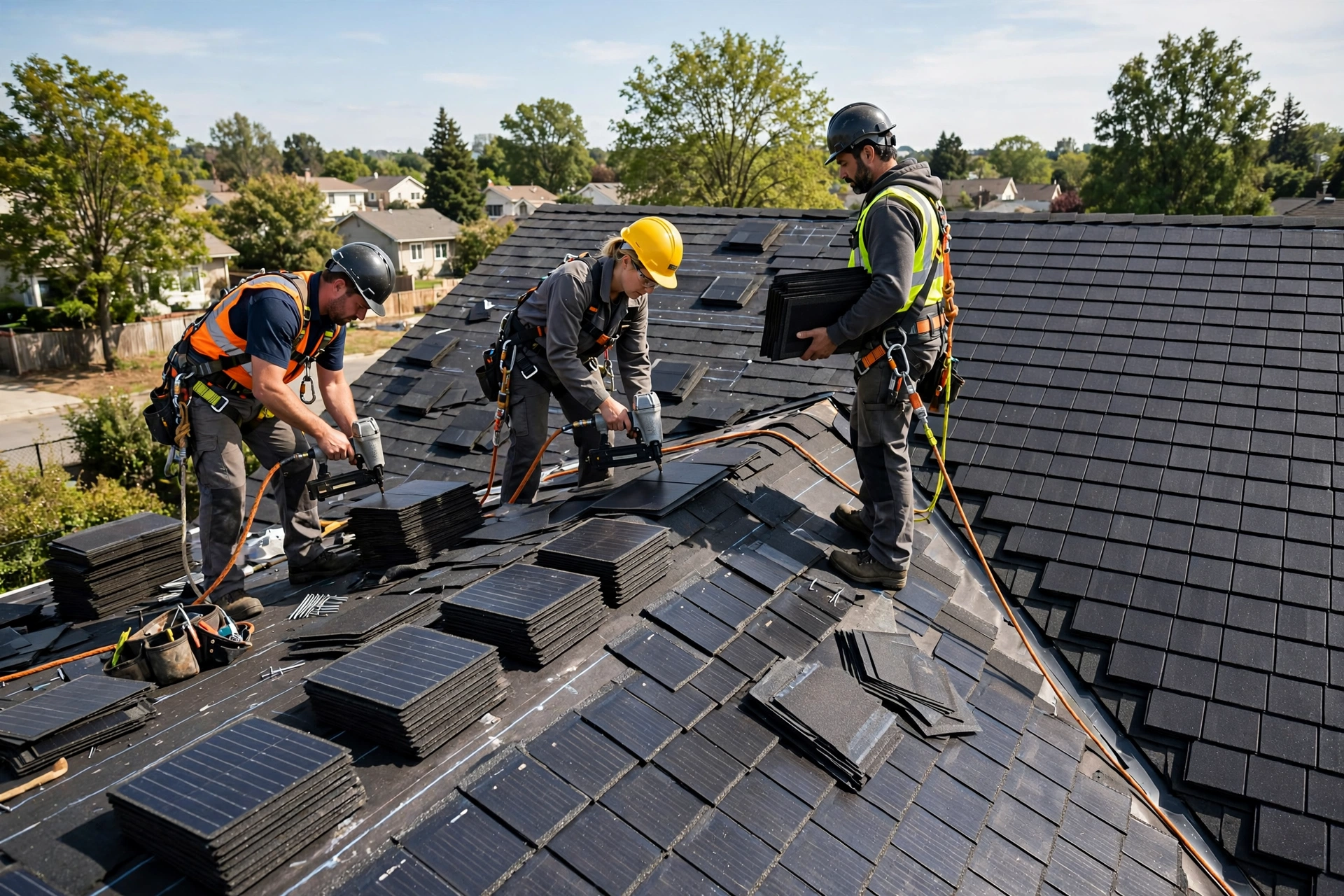
GAF Timberline Solar (ES 2) is the mainstream choice and the one most quotes you see are built around. Installed cost runs about $21 to $24 per square foot, or roughly $4.50 to $6 per watt by brand-level analysis. Each energy shingle produces 57 watts, a 23 percent jump over the first generation. About 30 shingles make a roofing square, which works out to roughly 1.7 kilowatts per square of active coverage. GAF backs the system with a 25-year product warranty and a 25-year power warranty, guarantees 84.8 percent output after 25 years, and rates the shingles to 130 mph winds. The product installs with a standard nail gun like ordinary shingles, so any GAF-certified roofer can do it, and that keeps labor costs closer to a normal roofing crew rate. Total system prices land between $40,000 and $100,000 depending on roof size. The catch: GAF requires a full roof replacement or new construction. It cannot be retrofitted over your existing roof.
CertainTeed Apollo II is the second major option, running about $22 to $26 per square foot installed with 63 watts per module. It carries 25-year product and power warranties as well, and unlike GAF, it can mount over existing asphalt shingles in some installations or integrate into a new CertainTeed roofing system. Its active roof share typically runs 30 to 50 percent.
Tesla Solar Roof needs a plain warning: it was discontinued in 2026. Tesla removed the product page and stopped taking orders in August 2026 after roughly 3,000 US installations. Real-world installed prices had ballooned to around $62 per square foot, about $16 per watt, with average systems near $106,000 and some exceeding $200,000. You will still see old Tesla solar shingles cost figures floating around online, but the product is legacy context now, not something you can buy. If a quote mentions Tesla tiles, treat it with suspicion.
Smaller players fill out the value tier: SunTegra shingles run about $16 to $19 per square foot, and LUMA Solar is also in production. Brand choice affects the solar shingles cost by 20 to 40 percent, so it is worth quoting at least two brands.
Solar Shingles vs Solar Panels Cost
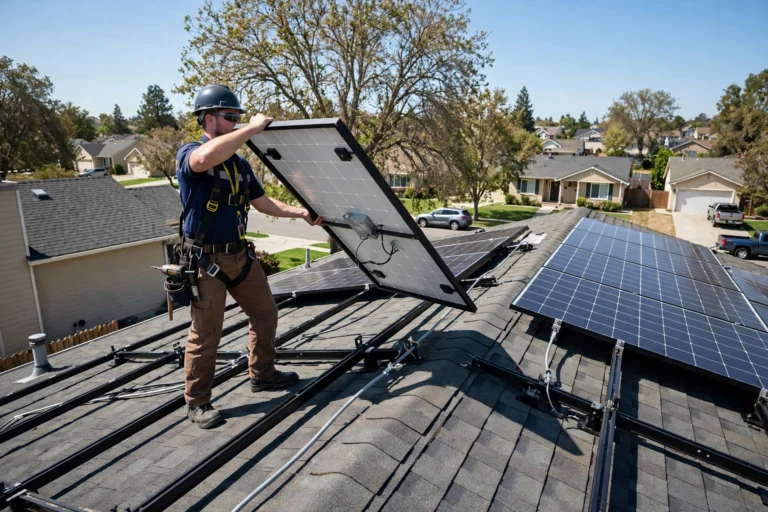
This is the comparison most shoppers actually need, and per watt it is not close. Traditional solar panels install for about $2.50 to $3.50 per watt. Solar shingles run $5 to $7 per watt. Shingles also produce less power per square foot, roughly 10 to 14 watts per square foot versus 15 to 20 for panels, and they sit flat with no airflow gap underneath, which means they run hotter and slightly less efficiently than tilted panels. You need about 30 percent more roof surface with shingles to match the same output, and payback runs 12 to 16 years versus 7 to 10 for panels.
But the one scenario that changes everything is the roof that is due for replacement anyway. Compare the real options for an 8 kW system: panels on your existing roof run $22,000 to $32,000. Panels plus a new asphalt roof underneath run $33,000 to $55,000. A GAF Timberline Solar system, full GAF roof included, runs $40,000 to $60,000. That is only about 20 to 30 percent more than buying a roof and panels separately, and it is one project instead of two. In that scenario, the solar shingles cost stops looking crazy and starts looking like a fair aesthetic premium.
Panels still win on raw economics, installation speed (one to three days versus five to seven for shingles), serviceability, and small or complex roofs. Shingles win on looks, one-project simplicity, and HOA compliance where panels face restrictions. Know which battle you are fighting before you compare the solar shingles cost to panel quotes.
What Drives the Price
Coverage area is the biggest lever, and it is also the most misunderstood part of a solar shingles cost quote. Only 30 to 60 percent of your roof will be active solar; the rest is companion roofing that looks the same from the street. A quote for a 2,000-square-foot roof might include only 1,000 square feet of generating shingles. Two contractors can quote the same roof and differ by tens of thousands of dollars if one prices 40 percent coverage and the other prices 60. Always pin down the active square footage in writing.
Roof complexity comes next. Steep pitches, dormers, valleys, and skylights slow the crew and increase waste. Solar shingles follow the roof plane, so a complex roofline means more cutting, more flashing, and more labor hours than a simple gable roof. Roof complexity pushes the solar shingles cost up faster than it does for panels, because every shingle is hand-laid while panels mount on racks that bridge over the irregularities.
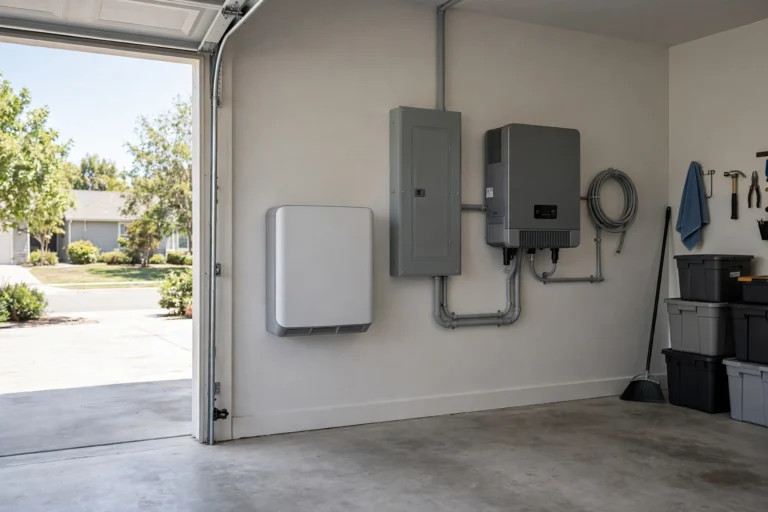
Then come the fixed costs that live outside the shingles: the inverter and electrical work, a main panel upgrade if yours cannot handle the system, permits, and possibly structural reinforcement if the roof needs strengthening. Reinforcement alone can add $1,000 to $10,000 on older homes. Get each of these as separate line items so you can see how much of your solar shingles cost is the roof and how much is the electrical.
One more driver that rarely gets mentioned: installation time. A shingle job takes five to seven days versus one to three for panels. If your contractor charges per-day scaffolding or you are coordinating around weather, that slower pace has real costs. Ask about crew-day pricing so it does not inflate your solar shingles cost quietly.
Incentives in 2026: What Is Actually Left
Here is the correction that matters most this year: the 30 percent federal residential solar credit is gone for 2026 installations. Section 25D was terminated for expenditures made after December 31, 2025, by Public Law 119-21. If your solar shingle system was completed in 2025, you can still claim the 30 percent credit on that return. If it finishes in 2026, it gets nothing from the federal government, even if you signed the contract and paid in 2025. Many older articles and quoting tools still subtract the 30 percent, so check every quote. Any bid that assumes a federal credit in 2026 is understated by nearly a third.
What does survive: the 30 percent business credit under Section 48E reaches residential roofs only through leases and power purchase agreements, where the leasing company owns the system. State and utility incentives are still alive and vary widely, from rebates to net metering rules. Check the DSIRE database of state incentives for what applies in your state before you budget, because this is now the main source of savings.
Do not let a salesperson tell you the credit is coming back. Budget your solar shingles cost on the assumption that the federal well is dry, and treat any state incentive you find as a bonus rather than a promise.
Lifespan, Warranties, and Repairs
Plan on 20 to 30 years of life from a solar shingle system, with 25-year product and power warranties standard across the major brands. That warranty package is the industry’s way of telling you the hardware is proven. GAF guarantees 84.8 percent output after 25 years and covers wind to 130 mph, with about 10 years of workmanship coverage quoted by its installers.
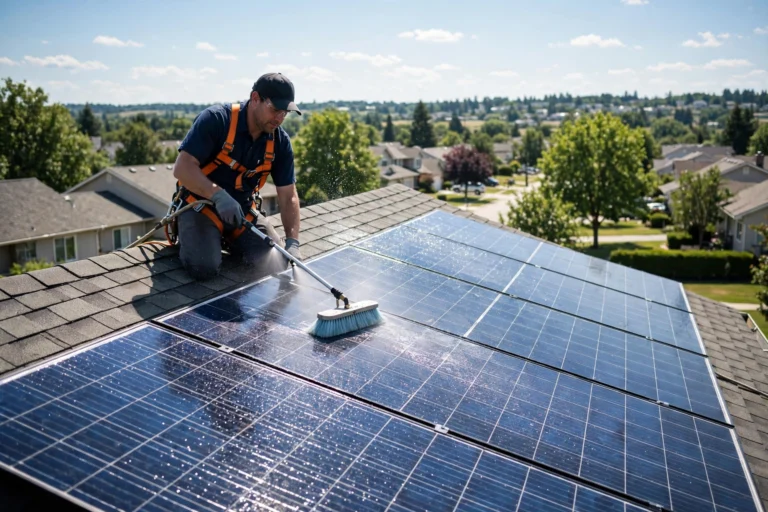
Day-to-day maintenance is light: an annual or twice-yearly cleaning and a yearly electrical inspection. Professional cleaning runs about $150 to $350 per visit, and an inspection runs $100 to $200. That maintenance is cheap enough that it barely registers against the solar shingles cost, but skipping it lets soiling quietly eat a few percent of production every year.
Repairs are where shingles diverge from panels. A damaged tile repair typically runs $400 to $1,000 per incident. The complication is that shingles are integrated into the roof surface, so replacing one failed shingle in the middle of the array can mean removing the shingles around it to get access. In a worst case, a detach-and-reset repair can run several thousand dollars, though that is the exception rather than the rule. Panels are modular and easy to swap by comparison. Serviceability is the one place the solar shingles cost premium clearly does not pay off versus panels. If you want official technical background on how the systems work, the Department of Energy solar resources are a useful reference.
Are Solar Shingles Worth It?
The answer depends entirely on your situation, so be honest about which one you are in.
Shingles make the most sense when your roof needs replacing anyway, when you are building new, or when your HOA restricts visible panels but allows integrated shingles. In the roof-replacement scenario, you are paying for a roof regardless, and the solar premium is really the 20 to 30 percent delta over a roof plus panels. For homeowners who rank curb appeal highly and have a simple, unshaded roof with enough south-facing area, that premium buys a system that is nearly invisible.
Shingles are harder to justify when your roof has plenty of life left, when the budget is the deciding factor, or when your roof is small, shaded, or complex. In those cases panels deliver more electricity per dollar, pay back years sooner, and are easier to service. The solar shingles cost premium only pays for looks if the roof itself is already in the budget. Know which homeowner you are before you fall for the photos.
Frequently Asked Questions
How much do solar shingles cost?
About $35,000 installed on average in 2026, with most projects landing between $21,000 and $50,000. That works out to $21 to $25 per square foot installed, or $5 to $7 per watt. Only 30 to 60 percent of the roof is typically active solar, so confirm the covered square footage in any quote. So how much do solar shingles cost for a large home? Full-coverage roofs can exceed $75,000.
Are solar shingles cheaper than solar panels?
No. Per watt, shingles cost roughly double what panels do, and they need about 30 percent more roof area for the same output. Solar shingles vs solar panels cost only approaches parity when a roof replacement is already needed, because then you are paying for a roof either way.
Is the Tesla Solar Roof still available?
No. Tesla discontinued it in August 2026 after roughly 3,000 installations. GAF Timberline Solar, CertainTeed Apollo II, SunTegra, and LUMA Solar are still selling. Any solar shingle cost figure you see labeled as Tesla is legacy pricing, not a current offer.
Can I get the federal tax credit for solar shingles in 2026?
Not for a purchased system finished after December 31, 2025. The 30 percent residential credit was repealed by Public Law 119-21. Systems completed in 2025 can still claim it. Leased systems can still access the business credit through the leasing company. Check state programs via DSIRE for what remains.
How long do solar shingles last?
About 20 to 30 years, with 25-year product and power warranties standard. GAF guarantees 84.8 percent output at year 25. Annual cleaning and inspection keep the system at full production.
Do solar shingles require a new roof?
GAF Timberline Solar requires a complete roof replacement or new construction and cannot be retrofitted over existing shingles. CertainTeed Apollo II can mount over existing asphalt in some cases. The solar roof shingles cost quotes from GAF always include the full roof, so compare them against a roof-plus-panels number, not a panels-only number.