
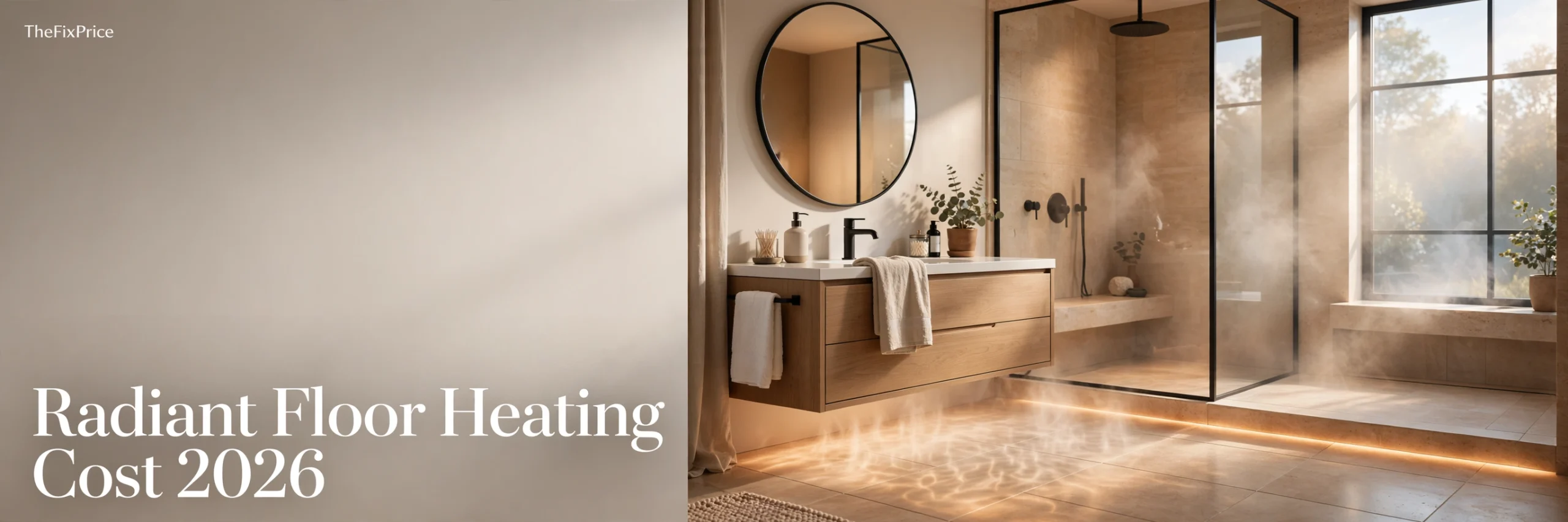
Radiant Floor Heating Cost 2026
Quick answer: Radiant floor heating costs $12 to $25 per square foot installed for electric systems and $15 to $35 per square foot for hydronic systems in 2026. A small bathroom with electric heat runs $800 to $1,500; a whole-house hydronic system runs $10,000 to $20,000. Operating costs are modest: roughly $50 to $150 per month for a heated bathroom zone in winter. All prices below are estimates. Get 3 local quotes before committing.
There is nothing quite like stepping onto a warm tile floor on a January morning. Radiant floor heating has quietly gone from luxury indulgence to a mainstream comfort upgrade, especially in bathrooms, kitchens, and additions. But the price spread is huge, and the electric vs hydronic decision changes everything about cost, both upfront and monthly. This guide breaks it all down with real 2026 numbers.
Electric vs Hydronic: Costs at a Glance
| System type | Installed cost per sq ft | Best for |
|---|---|---|
| Electric (mesh mats / cables) | $12 – $25 | Bathrooms, kitchens, single rooms, retrofits |
| Hydronic (hot water tubes) | $15 – $35 | Whole house, new construction, large areas |
| Hydronic, whole house | $10,000 – $20,000 total | New builds and major remodels |
The short version: electric is cheaper to install but pricier to run, which makes it perfect for small spaces. Hydronic costs more upfront but heats large areas efficiently, which is why it dominates whole-house projects.
Electric Radiant Cost by Room Size
| Room | Heated area | Typical installed cost |
|---|---|---|
| Powder room | 30 sq ft | $600 – $1,000 |
| Full bathroom | 50 – 70 sq ft | $800 – $1,500 |
| Kitchen | 100 – 150 sq ft | $1,500 – $3,000 |
| Bedroom | 150 – 200 sq ft | $2,000 – $4,000 |
| Sunroom / addition | 200 – 300 sq ft | $3,000 – $6,000 |
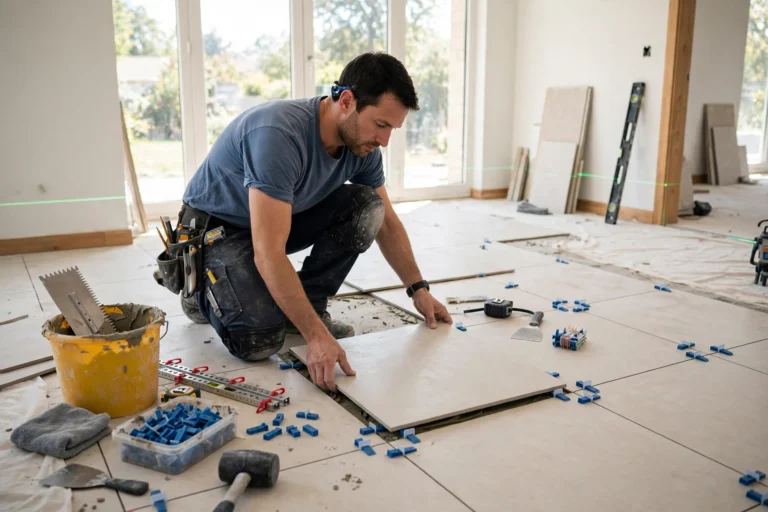
Electric materials alone (the mat or cable plus a thermostat) run $8 to $15 per square foot. The rest is labor: setting the mat, pouring self-leveler or thinset, and the electrician wiring a dedicated circuit and thermostat. Most bathroom jobs take a single day plus the electrician visit.
Hydronic Radiant Cost
Hydronic systems circulate heated water through tubing, usually powered by a boiler or water heater. Installed cost runs $15 to $25 per square foot in new construction, where tubing goes in before the slab or subfloor, and $20 to $35 per square foot in retrofits, where access is harder.
- Single zone (one large room or addition): $4,000 to $8,000
- Whole first floor: $8,000 to $14,000
- Whole house (2,000 sq ft): $10,000 to $20,000, plus the boiler if you do not have one ($3,500 to $8,000 installed)
If your home already has a boiler for radiators, adding floor zones is much cheaper, since the heat source already exists. Homes with forced-air furnaces need a new heat source, which is the big added cost. If your furnace is aging anyway, see our furnace replacement cost guide to compare your heating options before deciding.
What Drives Your Radiant Heating Price
1. New construction vs retrofit
This is the single biggest factor for hydronic. Installing tubing in a new slab or open subfloor is straightforward. Retrofitting under an existing finished floor means either tearing up the floor or installing from below between joists, both of which add 30 to 60 percent to labor.
2. Flooring type
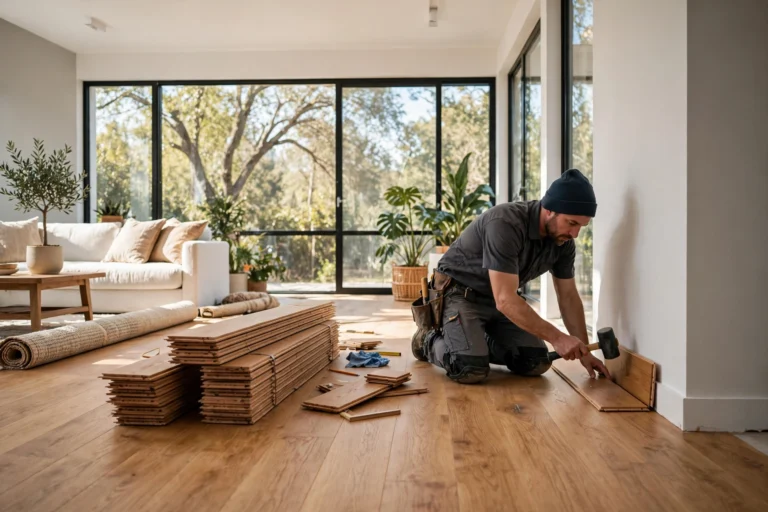
Tile and stone are the ideal partners for radiant heat: they conduct warmth beautifully and feel amazing underfoot. Engineered wood works with temperature limits. Carpet insulates against the heat and defeats the purpose, and some solid hardwoods can gap or cup. If your heart is set on radiant, tile or luxury vinyl are the practical picks.
3. Electrical panel capacity (electric systems)
Each electric zone needs a dedicated circuit. If your panel is full or undersized, the electrician’s panel work adds $500 to $2,000. Homes planning multiple zones should budget for this from the start. Our EV charger installation cost guide covers panel upgrade pricing, since the same capacity question comes up there.
4. Thermostat and controls
A basic programmable thermostat adds $100 to $200 per zone. Smart WiFi thermostats with floor sensors run $200 to $400 per zone but pay back through scheduling: there is no reason to heat the bathroom floor at 3 AM.
5. Insulation below
Heat goes both directions. Without insulation beneath the tubing or mats, you are warming the crawl space or the slab below instead of the room. Good installers include insulation board or reflective barriers; cheap quotes sometimes skip it, and the system never performs.
Operating Costs: What It Costs to Run
| System | Typical monthly winter cost | Notes |
|---|---|---|
| Electric, bathroom zone | $50 – $150 | 2 to 4 hours of heating per day |
| Electric, kitchen zone | $100 – $250 | Larger area, longer run times |
| Hydronic, whole house | $150 – $400 | Comparable to or less than forced air |
Electricity is expensive heat, so electric radiant works best as supplemental warmth in small spaces on a timer, not as a home’s primary heat. Hydronic running off a gas boiler is genuinely efficient as whole-house heat: radiant delivers warmth at lower water temperatures than radiators, and there are no duct losses. Many homeowners find hydronic whole-house bills comparable to, or slightly below, a forced-air HVAC system of similar age.
Best Rooms for Radiant Floor Heating
- Bathrooms: the classic. Small area, tile floors, huge comfort payoff. The number one radiant project in America.
- Kitchens: tile kitchens feel cold underfoot nine months a year in northern states. Radiant fixes that completely.
- Sunrooms and additions: rooms that forced-air systems never quite reach are perfect candidates.
- Basements: hydronic in a basement slab is cheap during construction and transforms the coldest floor in the house.
- Entryways and mudrooms: small zones that melt tracked-in snow and dry boots.
Installing Under Existing Floors
Yes, it can be done, with caveats. Electric mats install under a new tile floor during any bathroom or kitchen remodel with almost no extra demolition. Hydronic retrofits either go in from below (stapling tubing between open joists in an unfinished basement or crawl space, $20 to $30 per square foot) or require pulling up the finished floor. Slab-on-grade homes are the hardest retrofit: the tubing has to go above the slab, which raises floor height and complicates doorways.
The cheapest time to add radiant heat is during a planned floor replacement. If you are already tearing up the bathroom tile, the incremental cost of an electric mat is under $1,000, and you will never get a cheaper opportunity.
How to Save on Radiant Floor Heating
- Zone only the rooms that matter. Heating the bathroom and kitchen floors covers 90 percent of the comfort for a fraction of whole-house cost.
- Time it with a remodel. Adding electric mats during a planned tile job saves most of the demolition and floor-prep labor.
- Use programmable thermostats. Heating the bathroom floor only for the morning and evening routine cuts operating costs roughly in half versus running it all day.
- Insulate below, always. Skipping subfloor insulation is the most expensive “saving” in radiant heating: the system runs longer and heats the space below.
- Get 3 quotes from radiant specialists. General contractors often subcontract this work with markup. A dedicated radiant or tile contractor usually bids sharper and installs better.
Frequently Asked Questions
How much does radiant floor heating cost per square foot in 2026?
$12 to $25 per square foot installed for electric systems, $15 to $35 for hydronic. Electric suits small rooms and retrofits; hydronic suits whole houses and new construction. These are estimates, so get 3 local quotes.
Is electric or hydronic radiant heating cheaper?
Electric is cheaper to install, hydronic is cheaper to run. For a single bathroom, electric wins easily. For whole-house heating, hydronic wins on operating cost and usually on total cost of ownership within 5 to 10 years.
How much does it cost to run heated floors?
An electric bathroom zone costs roughly $50 to $150 per month in winter with timer use. Whole-house hydronic costs $150 to $400 per month, comparable to forced-air heating. Running electric radiant 24/7 as primary heat gets expensive fast, which is why thermostats and schedules matter.
Can radiant floor heating be the only heat source?
Hydronic can, and often is, in well-insulated homes. Electric mats are generally supplemental: they warm the floor beautifully but are not sized or priced to carry a whole house through a cold climate winter.
What flooring works best over radiant heat?
Tile and stone are the best: they conduct heat well and feel great warm. Engineered wood and luxury vinyl work with manufacturer temperature limits. Wall-to-wall carpet is the worst choice since it insulates against the warmth you just paid for.
How long does radiant floor heating last?
Electric mats last 20 to 25 years or more with no moving parts to fail. Hydronic tubing (PEX) is rated for 50+ years; the boiler or water heater driving it needs replacement on its own schedule, typically every 15 to 20 years.
Does radiant floor heating add home value?
In bathrooms and kitchens, yes, as a premium comfort feature buyers notice and remember. Whole-house hydronic is a genuine selling point in cold climates. Like most upgrades, it returns more in comfort and saleability than in strict dollar-for-dollar appraisal value.
Can I install radiant heating myself?
Electric mat layout is DIY-friendly for experienced tilers, but the electrical work (dedicated circuit, thermostat, GFCI protection) legally requires a licensed electrician in most areas. Hydronic is not a DIY project: it involves boilers, manifolds, pressure testing, and building code compliance.
Last updated: October 2026. Cost figures reflect 2026 national averages from contractor pricing data. Always get 3 local quotes before committing.


One Comment