Vinyl Plank Flooring Cost 2026
If you are budgeting a floor replacement this year, the vinyl plank flooring cost is probably the first number you want. For most homes in 2026, that number lands between $3 and $7 per square foot installed for a mainstream luxury vinyl plank, materials and labor included. Budget lines and premium rigid core products stretch the range on both ends, and the work hiding under the floor can move your total more than the plank you pick.
Here is the honest catch. Two quotes for the same room can differ by thousands of dollars, and the difference is rarely the plank itself. Prep work, removal, trim, and subfloor condition drive the spread. This guide breaks the vinyl plank flooring cost down line by line so you can spot a padded quote, compare bids fairly, and see where your money actually goes.
Still torn between the two floating floors? Our laminate flooring installation cost guide prices the laminate route room by room.
So how much does vinyl plank flooring cost for a typical project? A single bedroom often runs $600 to $1,400 installed, a living room $900 to $2,100, and a whole home of about 1,000 square feet lands between $3,500 and $11,000. A premium rigid core job with heavy subfloor work can push a whole-home project toward $17,000. Where you land inside those ranges depends mostly on the tier you choose and the shape of the floor underneath.
Doing the basement too? Our epoxy basement floor cost guide covers the coated concrete route below grade.
How Much Does Vinyl Plank Flooring Cost?
The installed vinyl plank flooring cost most major guides agree on is $3 to $7 per square foot for a mid-range product. Wider published ranges run from about $2 to $12 per square foot once you count the cheapest click-lock lines at one end and premium glue-down or rigid core work in expensive metros at the other. Materials alone run $2 to $7 per square foot for standard plank.
| Project | Size | Typical installed cost |
|---|---|---|
| Bedroom | 200 sq ft | $600 to $1,400 |
| Living room | 300 sq ft | $900 to $2,100 |
| Bathroom | 150 sq ft | $600 to $1,400 |
| Whole home | 1,000 sq ft | $3,500 to $11,000 |
Small rooms cost more per foot than big ones because of extra cuts and moisture checks, so a bathroom rarely sits at the bottom of the range. Two homes with identical square footage can also see a very different vinyl plank flooring cost based on location alone. The same 1,000 square foot job runs about $7,500 in Atlanta and about $10,500 in San Francisco, with the Northeast and West Coast typically 15 to 30 percent above Southern pricing. Labor rates, not materials, drive most of that regional gap in the vinyl plank flooring cost.
Vinyl Plank Tiers and Brand Prices
The biggest lever on your vinyl plank flooring cost is the tier you buy, and the spec that separates the tiers is the wear layer, the clear protective coat on top of each plank. It is measured in mils, and it decides how long the floor looks good. A 12 mil wear layer is the residential baseline and holds up fine in bedrooms. A 20 mil layer is the sweet spot for kitchens, hallways, and homes with dogs and kids. Anything under 12 mil can show visible scratching within two to three years in a busy household.
| Tier | Material price per sq ft | Wear layer | Best for |
|---|---|---|---|
| Budget click-lock | $2 to $3 | 6 to 12 mil | Rentals and low traffic rooms |
| Mid-range LVP | $3 to $5.50 | 12 to 20 mil | Main living areas in most homes |
| Premium rigid SPC | $5.50 to $9 | 20 mil and up | Busy homes, pets, heavy wear |
Brand pricing follows the same ladder. LifeProof, the Home Depot house brand, runs about $2 to $3.50 per square foot. Mohawk SolidTech sits at $3.50 to $6.50 with a 20 mil wear layer and a pet-focused warranty. Shaw Floorte runs $4 to $7, and COREtec runs about $4.79 to $8 with an attached cork pad on nearly every product. The luxury vinyl plank flooring cost at the top of the market buys thicker planks, more realistic texture, and longer warranties, which is why two boxes that look identical on the shelf can carry a very different vinyl plank flooring cost over their lifetime.
Core type matters too. SPC, or stone polymer composite, is thinner, denser, and resists dents best, but feels firmer and cooler underfoot. WPC, or wood polymer composite, is thicker, warmer, and softer, but dents a little easier. Both cores are fully waterproof, so pick based on feel and traffic rather than water worries. In practice, the core choice moves the vinyl plank flooring cost by roughly a dollar per square foot either way.
What Else Goes on the Bill
The plank price is only part of the vinyl plank flooring cost. Labor for a straightforward click-lock install runs $1.50 to $3 per square foot, and it barely changes with plank grade because the install steps are the same. The lines below are where quotes separate, and where a suspiciously cheap bid usually cuts corners.
- Underlayment: $0.25 to $0.75 per square foot when the plank does not already have a pad attached.
- Moisture barrier: $0.50 to $2 per square foot over concrete slabs and in basements, and not optional if a moisture test fails.
- Subfloor leveling: $2 to $5 per square foot where needed. Rigid core plank demands a floor flat within 3/16 inch over 10 feet, and heavy leveling on a big job can add thousands.
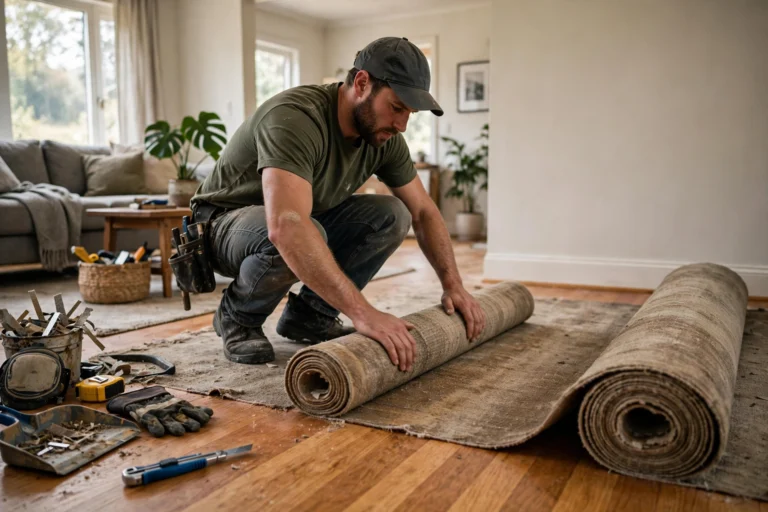
- Old floor removal: $0.50 to $2 per square foot depending on material, with tile and hardwood at the top of the range. Floating the new floor over a sound existing one can erase this line entirely.
- Baseboards and trim: new baseboards run $2 to $8 per linear foot installed, quarter round $1 to $4 per linear foot, and transition strips $2 to $5 per linear foot.
Ask every bidder to itemize these lines before you compare totals. A low vinyl plank flooring cost quote often just leaves the prep out and adds it back as a surprise once your old floor is already torn up.
Vinyl Plank vs Laminate
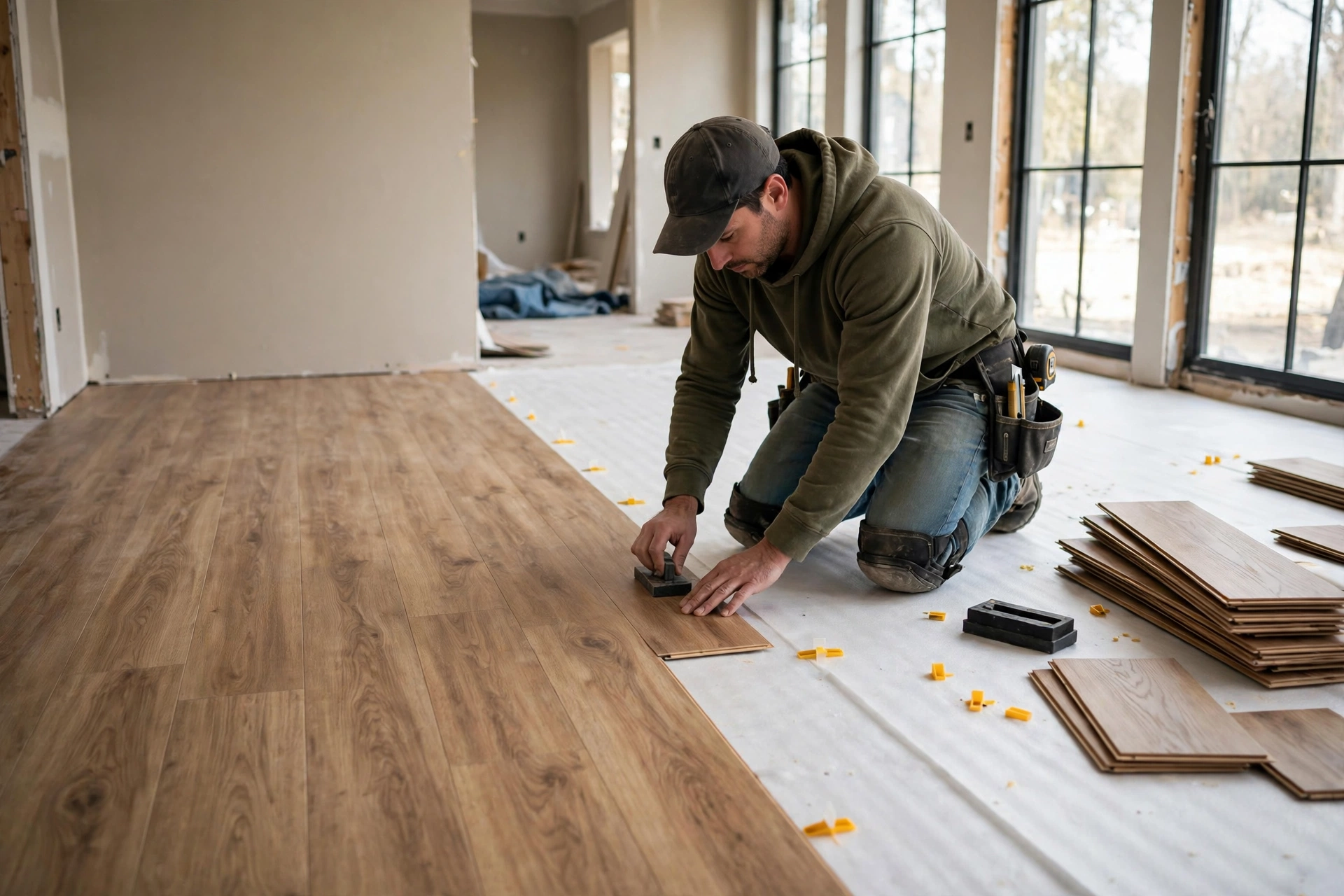
Shoppers weighing vinyl plank vs laminate usually start with price, and laminate does win the sticker comparison. Laminate materials run $1 to $5 per square foot, and a full laminate install runs $3 to $10 per square foot, slightly cheaper than vinyl at the entry level. The gap closes fast once you compare similar quality, though, and the two floors behave very differently after install day.
Water is the deciding factor for most rooms. A vinyl plank has a PVC composite core that is waterproof as a material, while laminate is built on a high-density fiberboard core that is water-resistant at best. Standing water wicks into laminate seams, swells the core, and ruins the board, and most laminate warranties exclude water damage entirely. That is why the vinyl plank flooring cost buys you peace of mind in kitchens, bathrooms, laundry rooms, and entryways that laminate cannot match at any price.
On lifespan, quality vinyl plank runs 10 to 25 years depending on wear layer, while laminate runs 15 to 30 years at the very top end in dry rooms, though 10 to 20 years is more typical in real homes. Laminate feels firmer and more wood-like underfoot and its melamine surface resists scratches well, but it can sound hollow or clicky without good underlayment. Vinyl feels softer and quieter, and warmer still in WPC form. For resale, neither floor matches hardwood, and agents treat both as budget-friendly updates, though buyers increasingly read waterproof vinyl as the safer pick for wet rooms.
One more check with laminate: because its core is a composite wood product, look for lines that meet the EPA formaldehyde standards for composite wood products if indoor air quality is high on your list. Our honest verdict: pick laminate for dry bedrooms and living rooms where you want the hardest surface for the money, and pick vinyl plank for anywhere water shows up, anywhere pets live, and anywhere you do not want to think about spills.
How Waterproof Is Vinyl Plank, Really?
Here is the part the marketing leaves out. Waterproof describes the plank, not the floor system. An SPC or WPC plank will not swell or rot, but the seams between planks are not watertight. A slow plumbing leak or standing water can seep through the joints and the perimeter gap and reach the subfloor, where trapped moisture grows mold and mildew because it cannot evaporate back through the vinyl.
Warranties follow the same logic. They cover spills and topical water, not floods or leaks, so a burst pipe is on you even on a floor sold as waterproof. Steam mops are the other trap: steam above 200 degrees can soften the layers, force moisture into seams, and cause lifted edges and cupping, and most manufacturers exclude steam mop damage even on waterproof lines. Clean with a damp microfiber mop and a pH-neutral cleaner instead, and wipe spills promptly. None of this changes the vinyl plank flooring cost on day one, but it decides what the floor costs you in year five.
DIY vs Pro Installation
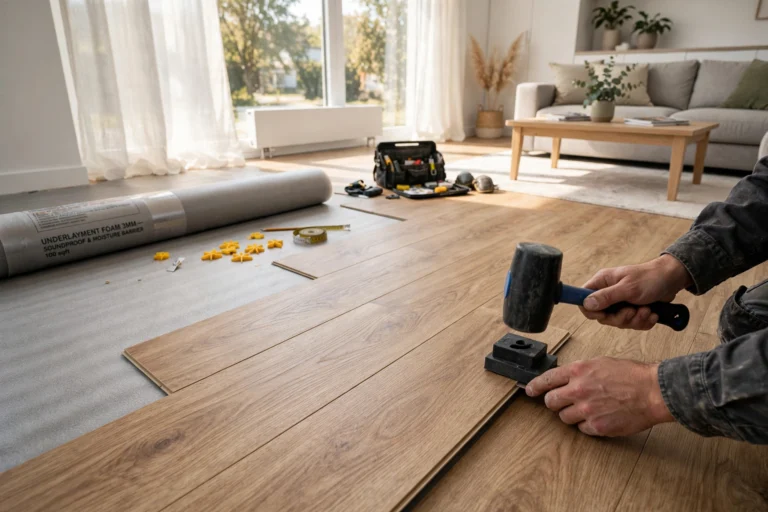
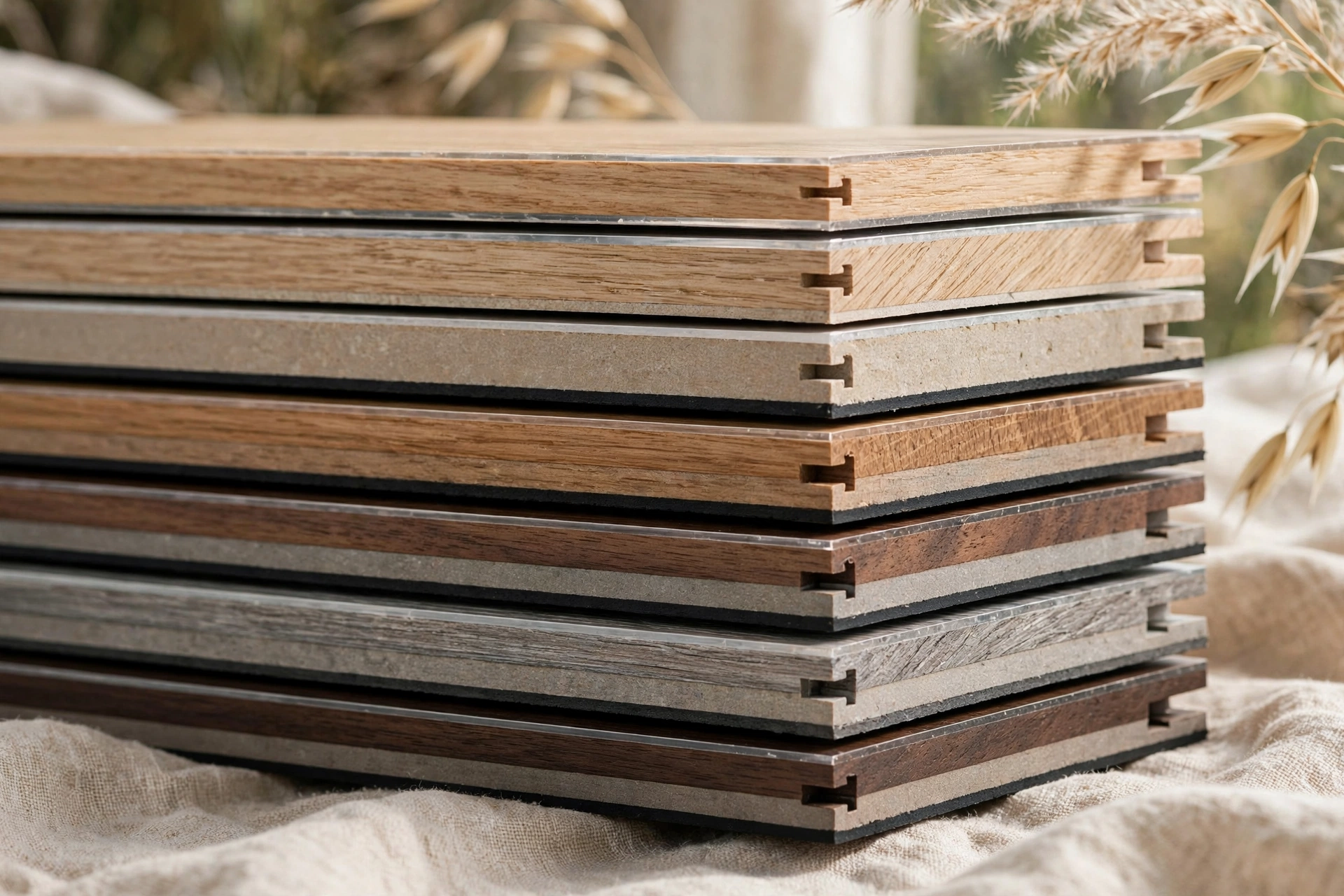
Click-lock floating plank is the most DIY friendly floor you can buy. The planks click together with no glue and no nails, and most cuts are score and snap or a quick pass with a saw. The vinyl plank flooring installation cost you avoid is the $1.50 to $3 per square foot labor line, worth $1,500 to $3,000 on a 1,000 square foot project. A basic tool kit with a utility knife, tape measure, square, rubber mallet, tapping block, pull bar, and spacers runs about $30 to $50 if you own nothing.
Expect a realistic pace of 200 to 300 square feet per day as a first timer, against 500 to 800 for a pro crew. The mistakes that bite are skipping the 1/4 inch expansion gap, which causes buckling, and laying over an unlevel subfloor, which telegraphs through the planks and stresses the locking joints until they separate. Buy about 15 percent extra material as a beginner instead of the standard 10 percent.
Hire a pro when the subfloor needs serious leveling, when the job is glue-down rather than floating, or when stairs and patterned layouts are involved. A pro also owns the result if a seam opens up, and that warranty has real value on a big whole-home job. On a flat, square, single room, though, DIY is where the vinyl plank flooring cost drops the most for the least risk.
How to Keep the Cost Down
Start with the plank itself. A mid-range product with a 20 mil wear layer is the durability sweet spot, and you rarely need to pay premium prices for a normal household. Choosing a plank with the pad already attached skips the separate underlayment line, saving $250 to $750 on a typical project. Order 5 to 10 percent extra material for cuts so a short box never forces a second delivery run or a mismatched dye lot, and count that overage in your vinyl plank flooring cost from the start.
Then work the quote, not just the product. Get 3 local quotes with the same itemized lines, ask what prep each one includes, and be wary of any vinyl plank flooring installation cost that looks too clean, because the missing lines usually reappear mid-job. Floating over a sound existing floor is another legitimate saver that removes the removal charge entirely.
Finally, think about the air in the room, not just the floor. Pick low-VOC products where you can and ventilate well during and after the install while new materials settle in. The EPA indoor air quality guidance is a good plain-language reference for why that fresh air matters, especially in bedrooms and nurseries. Small choices like these keep the vinyl plank flooring cost honest without cutting the corners that actually protect the floor.
Frequently Asked Questions
How much does vinyl plank flooring cost per square foot installed?
For mainstream LVP, the vinyl plank flooring cost runs $3 to $7 per square foot installed, with full published ranges from about $2 to $12 depending on tier and region. Materials alone run $2 to $7 per square foot for standard plank, and labor adds $1.50 to $3 per square foot on a typical click-lock job.
How much does it cost to install vinyl plank in a 1,000 square foot home?
About $3,500 to $11,000 installed for typical products. Premium rigid core with heavy subfloor prep can push the vinyl plank flooring cost toward $17,000, while a DIY install with budget planks can land near $3,000 because you keep the labor money in your pocket.
Is vinyl plank flooring actually waterproof?
The plank is, the floor system is not. SPC and WPC cores are 100 percent waterproof, but seams and perimeter gaps are not sealed, so leaks and standing water can reach the subfloor. Warranties cover spills, not floods, and steam mops void most warranties outright.
How long does vinyl plank flooring last?
About 10 to 20 years for standard product and up to 25 years for premium plank with a 20 mil or thicker wear layer. Wear layer thickness is the biggest predictor, which is why the cheapest vinyl plank flooring cost per box can turn into the most expensive floor you own once you replace it early.
Can I install vinyl plank flooring myself?
Yes. Click-lock floating plank is the most DIY friendly floor available, basic tools cost about $30 to $50, and doing it yourself removes the labor charge from the vinyl plank flooring cost entirely. Just keep the subfloor flat within 3/16 inch over 10 feet and leave a 1/4 inch expansion gap at the walls.
Does vinyl plank flooring add value to a home?
It reads as a clean, low-risk update rather than a value driver. New hardwood recovers about 118 percent of its cost at resale, while vinyl and laminate are treated as cosmetic refreshes. A quality vinyl plank floor will not hurt a sale and helps in kitchens and baths, but do not expect it to pay for itself the way hardwood can.