Tile Floor Installation Cost 2026: Ceramic vs Porcelain
Tile floor installation costs $8 to $25 per square foot in 2026, with most homeowners planning around $15 to $20 per square foot for a professionally installed floor. Total project costs typically run $400 to $6,000, averaging about $1,900, depending on the room size and tile material. Labor alone runs $6 to $15 per square foot, while the tile itself is the other major cost driver, with ceramic at the affordable end and natural stone at the top.
How Much Does Tile Floor Installation Cost in 2026?
The national average cost to install a tile floor in 2026 is about $1,900, with most projects falling between $400 for a small powder room and $6,000 for a large kitchen. Per square foot, expect $8 to $25 installed. A 200 square foot kitchen at the midrange planning rate of $15 to $20 per square foot runs $3,000 to $4,000 all in.
| Tile material | Installed cost per sq ft |
|---|---|
| Ceramic | $7 to $18 |
| Porcelain | $9 to $25 |
| Natural stone | $15 to $40 |
| Marble | $18 to $40 |
Tile Floor Cost by Material: Ceramic vs Porcelain vs Stone
- Ceramic ($7 to $18 installed): The budget friendly classic. Ceramic is easy to cut and install, which keeps labor costs down. It is softer and more porous than porcelain, so it suits kitchens and bathrooms better than mudrooms or entryways.
- Porcelain ($9 to $25 installed): Denser, harder, and less porous than ceramic. It resists stains, moisture, and heavy foot traffic, making it the most popular tile choice in 2026. Wood look porcelain planks give the warmth of hardwood with none of the water worries.
- Natural stone ($15 to $40 installed): Slate, travertine, and limestone bring unique character no manufactured tile can match. Stone needs sealing and can chip, and installation takes longer because of uneven thickness.
- Marble ($18 to $40 installed): The luxury option. Stunning veining, but it stains, etches, and scratches more easily than porcelain. Best for lower traffic areas or homeowners who love the look enough to maintain it.
Tile Installation Cost Breakdown
Labor is typically half or more of the total. Here is how the line items stack up:
- Tile: $2 to $10 per square foot for ceramic, $3 to $12 for porcelain, more for stone.
- Labor: $6 to $15 per square foot for setting, grouting, and finishing.
- Subfloor prep: $1 to $5 per square foot to level or repair the subfloor.
- Cement backer board: $1 to $3 per square foot, required over wood subfloors.
- Old floor removal: $1 to $3 per square foot for vinyl or carpet, $2 to $7 for existing tile.
- Waterproofing membrane: $2 to $5 per square foot in wet areas like bathrooms.
- Heated floor system: $7 to $17 per square foot for electric radiant heat under the tile.
What Affects the Cost: Key Factors
- Tile size and pattern: Large format tiles need perfectly flat floors and more skill to set. Intricate patterns like herringbone or mosaics add significant labor time.
- Room shape: Lots of corners, angles, and doorways mean more cuts and more waste, often 10 to 15 percent extra material.
- Subfloor condition: Rot, unevenness, or bounce in the subfloor must be fixed before tile goes down. This is the most common surprise cost.
- Old flooring: Removing old tile is dusty, heavy work at $2 to $7 per square foot. Vinyl and carpet come up much faster.
- Grout choice: Epoxy grout costs more upfront but resists stains far better than standard cement grout.
- Location: Labor rates vary by market, with major metros running 20 to 40 percent above the national average.
Tile Floor Installation Timeline and Process
A typical tile floor takes two to five days for one room:
- Day 1, demolition and prep: Old flooring comes out, the subfloor is repaired and leveled, and backer board goes down.
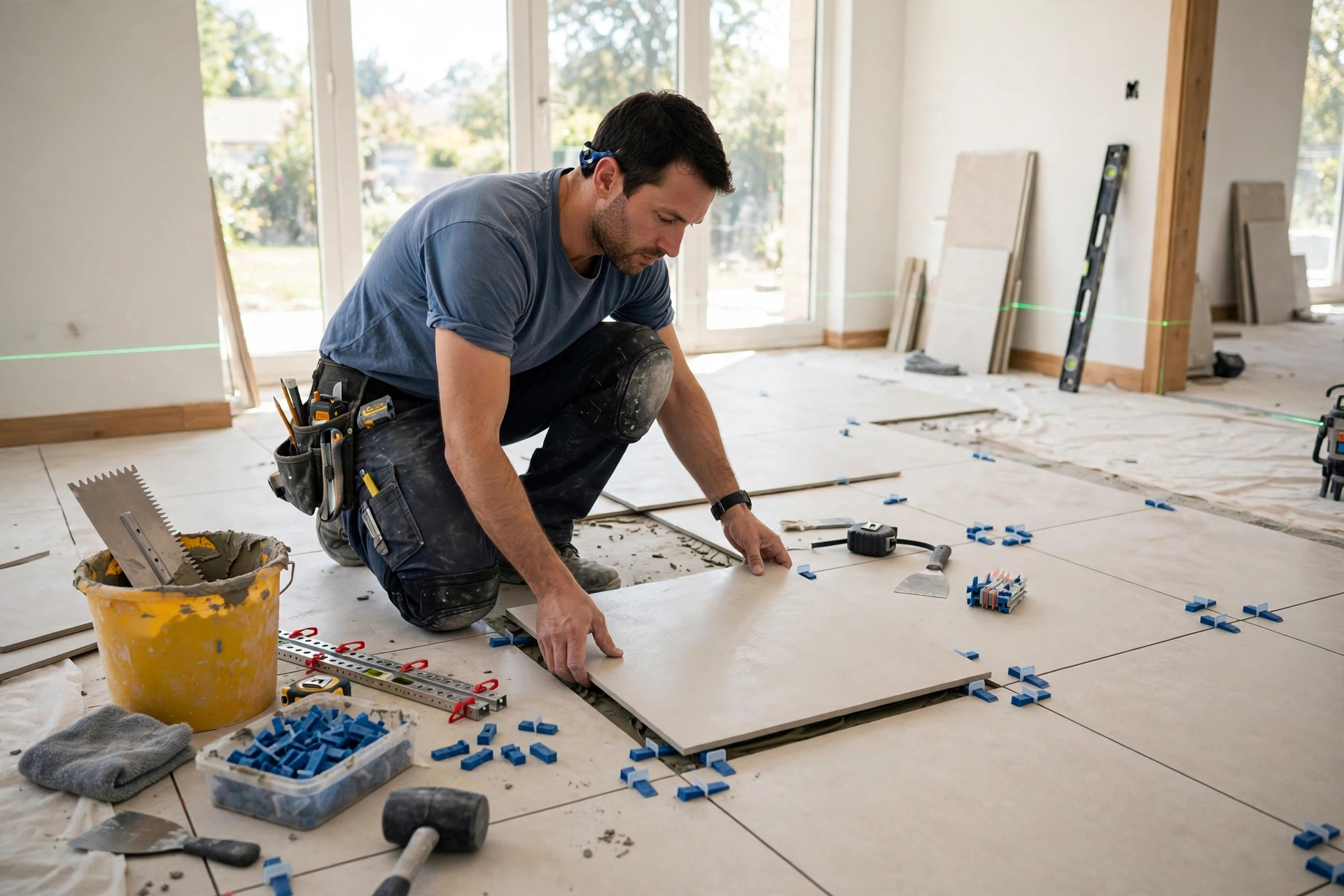
- Days 2 to 3, setting tile: The installer lays out the pattern, spreads thinset, and sets each tile with spacers. Large or complex rooms take longer.
- Day 4, grouting: After the thinset cures overnight, grout is applied and the tile is cleaned.
- Day 5, sealing and trim: Grout and stone get sealed, baseboards go back on, and transitions are installed.
Grout needs 24 to 72 hours to fully cure before heavy traffic, so plan to stay off the new floor for a few days.
DIY vs Hiring a Tile Installer
A handy homeowner can tile a small, square bathroom and save $6 to $15 per square foot in labor. Small format ceramic on a flat floor is the most forgiving DIY project. Rent a wet saw for about $50 to $75 per day and take your time with layout.
Hire a pro for large rooms, natural stone, large format tile, heated floors, or any subfloor that needs repair. Poor prep is the number one cause of cracked tile and hollow spots, and a professional installer spots problems before the tile goes down. The cost of tearing out a failed DIY floor far exceeds the original labor savings.
How to Save Money on Tile Floor Installation
- Choose ceramic over porcelain: For kitchens and bathrooms, ceramic saves $2 to $7 per square foot with plenty of durability.
- Keep the layout simple: Straight lay patterns install fastest. Save herringbone for a small accent area.
- Do the demo yourself: Removing old vinyl or carpet saves $1 to $3 per square foot.
- Buy 10 to 15 percent overage: Ordering enough tile upfront avoids expensive reorders and dye lot mismatches.
- Get three quotes: Tile labor pricing varies widely. Compare detailed written estimates, not just a per foot number.
- Schedule in the off season: Late fall and winter often bring better availability and occasional discounts.
Frequently Asked Questions
Is porcelain or ceramic better for floors?
Porcelain is denser, harder, and more water resistant, so it performs better in entryways, mudrooms, and high traffic areas. Ceramic costs less and works great in kitchens and bathrooms. Both last decades when installed properly.
How much does it cost to tile a small bathroom?
A small bathroom floor of 40 to 80 square feet typically costs $650 to $1,700 installed. Waterproofing the subfloor adds a bit but protects against leaks.
How much does it cost to tile a kitchen floor?
A 150 to 250 square foot kitchen typically runs $1,500 to $4,500 installed, depending on tile choice and subfloor condition.
Do I need backer board under tile?
Yes, over any wood subfloor. Cement backer board at $1 to $3 per square foot gives tile a rigid, dimensionally stable base that prevents cracks.
How long does a tile floor last?
Properly installed tile lasts 20 to 50 years or more. Grout may need resealing every few years, but the tile itself is one of the longest lasting floor choices.
Working on the whole floor? See carpet removal pricing if you are tearing out old flooring first, or check hardwood floor refinishing costs to compare keeping your wood floors.