Ductwork Replacement Cost 2026
If you have started pricing new ducts, you have probably noticed the numbers online are all over the place. The honest answer is that ductwork replacement cost depends heavily on how much of the system you are actually replacing. A full-home replacement with new runs throughout the house typically runs $1,500 to $7,500, and most whole-house jobs land somewhere near the middle of that range.
So why do some websites quote averages near $1,250? Angi’s 2026 guide reports a range of $452 to $2,181 with an average of about $1,250, based on 3,970 verified projects. That dataset is real, but it is dominated by partial jobs: one crushed run in the attic, a short section in the crawl space. When you compare a full-system quote against a partial-job average, your ductwork replacement cost will look inflated even when it is completely fair.
If your furnace or air conditioner is also near the end of its life, price the whole project together before you decide. Our HVAC replacement cost guide breaks down full system pricing, and new ducts are often cheaper when they are installed alongside new equipment.
This guide separates the two scopes so you can judge your own quotes properly. We will cover full and partial pricing, per-foot rates by material, how location changes the labor bill, and when repair or sealing makes more sense than replacement.
And if your ducts are dirty but structurally sound, replacement is overkill. Our guide to air duct cleaning cost covers what a professional cleaning runs and the situations where cleaning, not new ductwork, is the right call.
How Much Does It Cost to Replace Ductwork?
Home size is the quickest way to estimate a full replacement. Bigger homes simply have more linear feet of duct, more registers, and more fittings. HomeGuide, drawing on 399 member-reported projects, puts the overall average for a full ductwork replacement at $3,500, with most jobs falling between $1,400 and $5,600.
| Home size | Average ductwork replacement cost |
|---|---|
| 1,000 sq ft | $1,400 to $2,250 |
| 1,500 sq ft | $2,100 to $3,400 |
| 2,000 sq ft | $2,800 to $4,500 |
| 2,500 sq ft | $3,150 to $5,600 |
A useful estimating shortcut is to plan on roughly 1 linear foot of ductwork for every 8 to 10 square feet of conditioned space in a single-story home, then add 20 to 30 percent for a two-story layout. The average home carries around 100 linear feet of ductwork in total. Multiply your estimated footage by the per-foot rates later in this guide and you will get a rough ductwork replacement cost before you ever call a contractor.
Also ask what a quote actually includes. A proper full replacement covers the trunk line, branch runs, plenum connections, register boots, and sealing at every joint. Some low bids quietly exclude the trunk or reuse old boots and dampers, which makes their ductwork replacement cost look better on paper while delivering half a system. An itemized bid protects you here.
Regional labor rates move the total too. In high-cost metro areas, full attic system replacements can run well above the national bands, in some cases $6,500 to $18,000 for large or complex homes. Treat those as upper-end examples rather than the norm. Prices here are national market estimates, so get at least 3 local quotes before budgeting seriously.
Partial vs Full Replacement
Most duct projects are not whole-house jobs. When damage is limited to one or two runs, partial replacement brings the ductwork replacement cost down dramatically. HomeGuide lists $270 to $500 per duct run for crawl space, attic, or basement runs, so swapping two bad runs might cost $544 to $1,020 instead of several thousand.
When a section is damaged but the surrounding duct is sound, a localized repair is cheaper still: roughly $200 to $1,000 depending on length and access. A single crushed flex run, a rusted elbow, or a disconnected joint usually falls in this category. Repairing instead of replacing is the right call when the rest of the system is correctly sized, reasonably tight, and nowhere near the end of its material lifespan.
Full replacement makes sense when problems are spread across the system: multiple crushed or sagging runs, rust in several places, mold inside the ducts, or a layout that was undersized from the day it was installed. Fixing those one run at a time costs more over a few years than replacing everything once. This partial versus full distinction explains nearly every confusing ductwork replacement cost figure you will find online.
If you are on the fence, ask the contractor to price both scopes in writing. The ductwork replacement cost difference between fixing two runs and redoing the whole system is often $3,000 or more, and seeing both numbers side by side makes the ductwork repair vs replacement call much easier.
Ductwork Replacement Cost Per Linear Foot
Contractors who price by the foot give you the cleanest comparison between bids. HomeGuide puts installed ductwork replacement cost per linear foot at $25 to $55, covering materials and labor. Angi’s lower $10 to $25 per foot range reflects its partial-job data, where short runs in open spaces pull the average down.
The material you choose sets both the per-foot price and how long the work lasts. Here is the material-only cost per linear foot:
| Material | Material cost per linear foot | Typical lifespan |
|---|---|---|
| Flexible duct | $1 to $4 | 10 to 15 years |
| Fiberglass duct board | $4 to $7 | 15 to 25 years |
| Sheet metal | $7 to $15 | 25 to 50 years |
Flex duct is the budget option and works fine for short branch runs, but it kinks, sags, and tears more easily, and cheap flex is a common reason a ductwork replacement cost quote looks suspiciously low. Duct board costs more, insulates itself, and runs quieter, though it does not tolerate wet locations well.
Sheet metal is the premium choice: the highest material price, but a smooth interior for the best airflow, easy cleaning, and a lifespan two to four times longer than flex. Many real systems mix materials, with a metal or duct board trunk line and insulated flex branches to each register. When you compare bids, confirm each contractor is quoting the same material in the same places, or the ductwork replacement cost comparison means nothing.
Location Changes Everything
Where your ducts live has as much effect on labor as how many feet you replace. Open, exposed ducts in an unfinished basement are the cheapest to work on. HomeGuide’s whole-system averages by location tell the story clearly: basement systems run $1,800 to $3,100, attic systems $2,200 to $5,600, and crawl space systems $3,000 to $7,300.
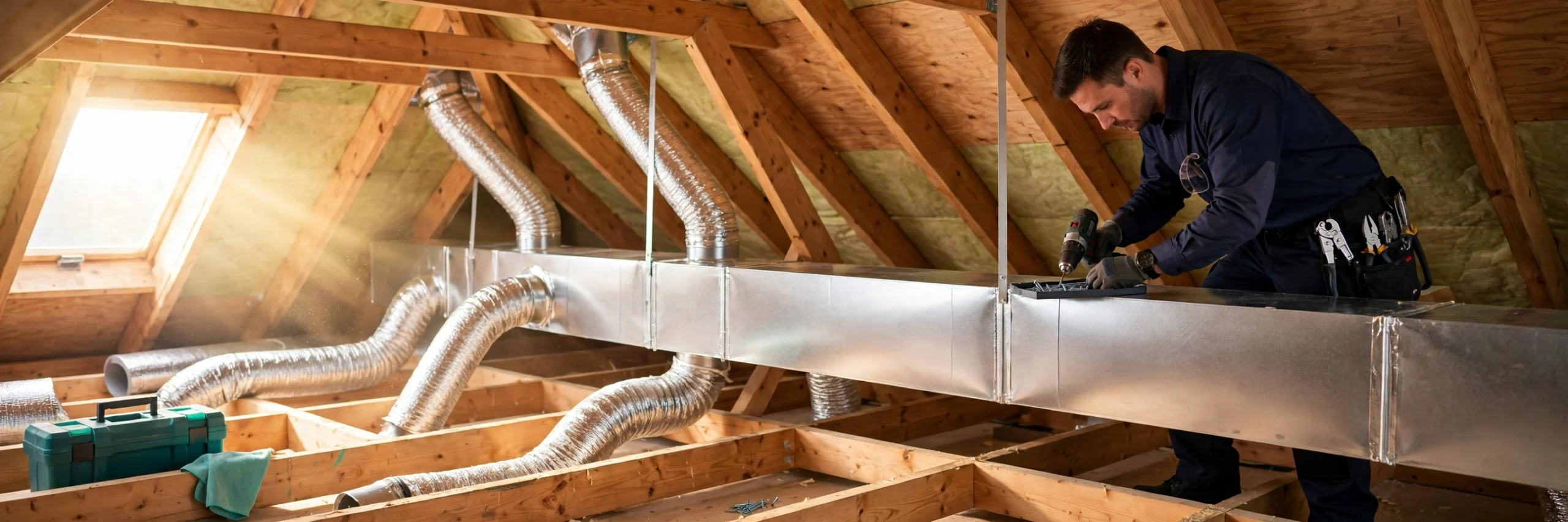
Crawl spaces cost the most because technicians work on their backs in tight, dirty conditions, and everything moves slowly. Attics add heat, awkward access, and insulation to move and replace. Expect attic and crawl space work to carry roughly a 20 to 40 percent labor premium over open basement access, and that premium flows straight into your ductwork replacement cost.
In-wall and ceiling ducts are the trickiest of all. Replacing them means opening drywall, then patching and repainting afterward, which can add around $800 in access repairs on a mid-size job. If a contractor’s quote for in-wall work looks close to a basement quote, ask what the drywall repair plan is before you sign.
New Ductwork Installation Cost
Homes that never had central air, such as older houses with radiators or wall heaters, are a different pricing category. The new ductwork installation cost for a retrofit runs $2,400 to $6,600 on average, at $40 to $65 per linear foot. That is more per foot than replacement, even though there is no old duct to remove.
The reason is design work. A from-scratch system needs a load calculation, a layout plan, a plenum, fittings, dampers, and register and return cut-ins, with no existing pathways to follow. Replacement reuses the original layout, which saves engineering time. That design time is baked into every retrofit bid, which is why these quotes surprise homeowners who compared them against a standard ductwork replacement cost. If you are adding central air at the same time, budget $6,000 to $12,000 for the equipment and all-new ductwork together.
New construction is the cheapest setting of all, because ducts go in while the walls are still open. There, new ductwork typically adds $2,000 to $5,000 on top of the HVAC system. Whether the job is new or a replacement, most straightforward projects take 1 to 2 days once the crew starts.
Extras and Adders
The base ductwork replacement cost rarely includes everything. Insulation wrap is the most common adder: ducts running through unconditioned attics or crawl spaces should be wrapped, since uninsulated ducts can lose 10 to 15 percent of the energy moving through them. Full wrap insulation adds roughly $800 to $2,000 to a project, or about $0.50 to $1.50 per linear foot as a line item on attic runs.
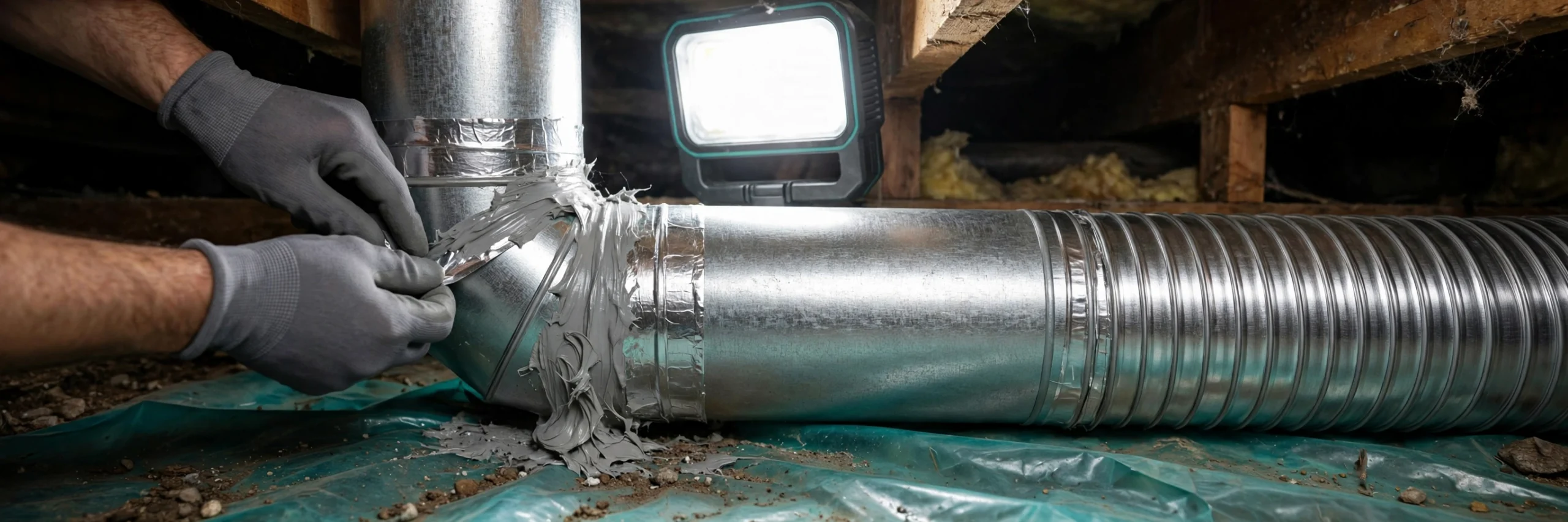
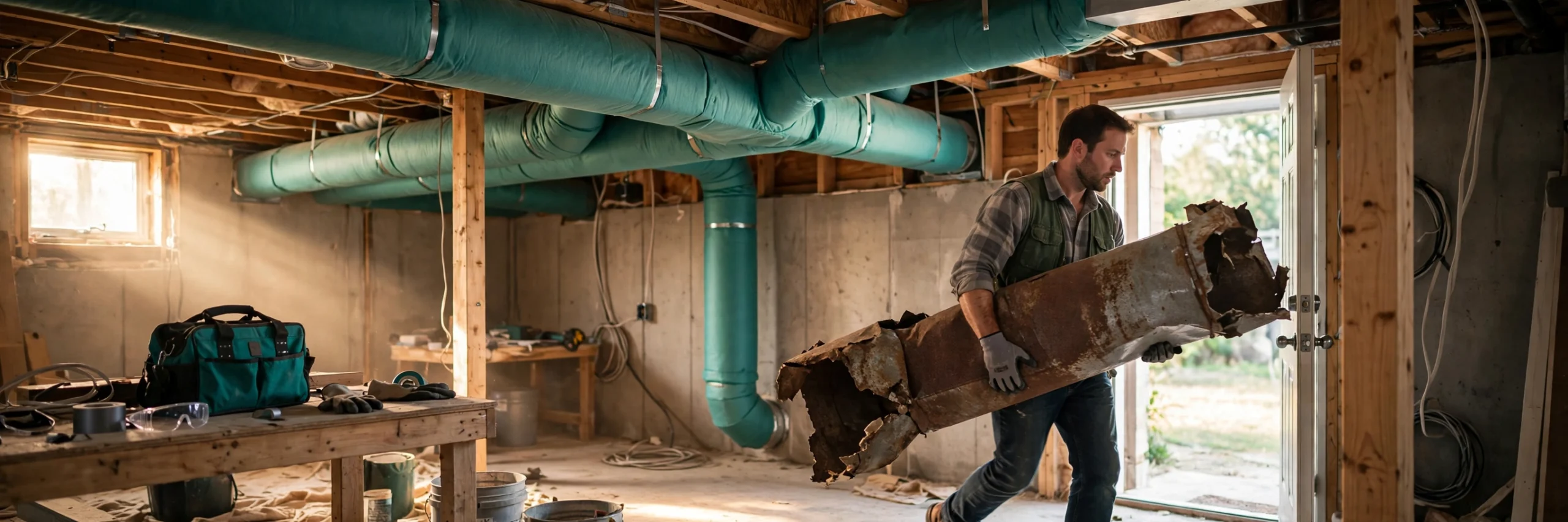
Sealing is the second common line. Hand-applied mastic sealing on accessible ductwork runs $300 to $1,000. Aeroseal, which seals leaks from inside the ducts with an aerosol process, runs $1,500 to $3,500 per system and can cut leakage by around 90 percent, but it cannot fix crushed or disconnected ducts. Permits for a ductwork-only job usually run $50 to $250, and removal and disposal of the old ducts adds $200 to $800. Registers and boots are often swapped during the job at $10 to $40 each, a small adder to the ductwork replacement cost that lump-sum bids tend to bury.
One warning for older homes: ducts installed before or during the 1970s, and into the early 1980s, are often wrapped in asbestos insulation. Testing costs $250 to $850, and if it comes back positive, licensed abatement runs $10 to $25 per square foot before any replacement work begins. Never let a general HVAC crew tear out suspect material. That single discovery can double a ductwork replacement cost, so ask about it during the quote visit if your home is old enough.
Replace, Repair, or Just Clean?
The ductwork repair vs replacement decision comes down to condition, not age alone. Replace when you see crushed or collapsed flex runs, rust eating through sheet metal, mold growing inside ducts that cleaning cannot remove, pest damage across multiple runs, or rooms that have never heated or cooled evenly because the layout was undersized from the start. Flex systems past 10 to 15 years and any system past about 25 years are also strong replacement candidates.
Repair or seal when the damage is local: one bad section, a handful of leaking joints, and a system that is otherwise sound. That path costs hundreds instead of thousands. Clean only when the ducts are structurally fine and the problem is dust and debris buildup; cleaning does nothing for leaks, rust, or crushed runs. A whole-home cleaning runs roughly $150 to $1,000 depending on the market, a fraction of the ductwork replacement cost, but it only pays off when the duct material underneath is still in good shape.
The efficiency math often tips the decision. The U.S. Department of Energy’s Energy Saver guidance estimates that a typical duct system loses 20 to 30 percent of its conditioned air to leaks, holes, and poor connections. Homeowners who replace leaky ducts report saving 10 to 40 percent on energy bills, plus more even temperatures and less dust. The ENERGY STAR program’s duct sealing guidance makes the same case: sealing or replacing leaky ducts is one of the highest-return upgrades in an older home.
One last money note: do not budget around a federal tax credit. The old 25C energy efficiency credit ended for work placed in service after December 31, 2025, so no federal credit applies to a 2026 duct project. Some state and utility rebate programs still help, and your contractor should know the local ones. Whatever you decide, ask each bidder to itemize the ductwork replacement cost by scope, material, and location, so the 3 quotes you collect are actually comparable.
Frequently Asked Questions
How much does it cost to replace ductwork in a whole house?
Most full replacements land between $1,500 and $7,500, with HomeGuide’s average at $3,500. Angi’s lower average of about $1,250 reflects mostly partial jobs. Home size, material, and whether the ducts sit in a basement, attic, or crawl space decide where your ductwork replacement cost falls.
What is the ductwork replacement cost per linear foot?
Installed replacement runs $25 to $55 per linear foot including materials and labor. Material alone costs $1 to $4 per foot for flex, $4 to $7 for duct board, and $7 to $15 for sheet metal.
Is it cheaper to replace just one section of ductwork?
Yes, by a lot. A single run costs $270 to $500 to replace, and a localized repair runs $200 to $1,000. Partial work makes sense when the rest of the system is sound, tight, and correctly sized.
How long does ductwork last?
About 10 to 20 years on average. Flex duct lasts 10 to 15 years, fiberglass duct board 15 to 25 years, and sheet metal 25 years or more, often 30 to 50. Material choice is the single biggest factor in how soon you face another ductwork replacement cost.
Does replacing ductwork lower energy bills?
It can. Typical ducts lose 20 to 30 percent of conditioned air to leaks, according to the Department of Energy. Replacing or sealing leaky ducts saves many homeowners 10 to 40 percent on heating and cooling bills, with more even room temperatures as a bonus.
Should I replace ductwork when I replace my HVAC system?
Often, yes, if the ducts are over 15 years old, rusty, moldy, or undersized. New equipment cannot hit its efficiency rating pushing air through failing ducts. If the ducts test tight and are properly sized, sealing alone at $400 to $2,700 may be enough instead of paying the full ductwork replacement cost.