Bamboo Flooring Cost 2026
If you are pricing a new floor and bamboo is on your short list, the first number to pin down is the bamboo flooring cost for a professionally installed job. In 2026, most US homeowners pay $7 to $17 per square foot installed, with material alone running $3 to $9 per square foot. A 500 square foot room therefore lands at roughly $3,500 to $8,500 installed, before extras such as old floor removal or subfloor repair.
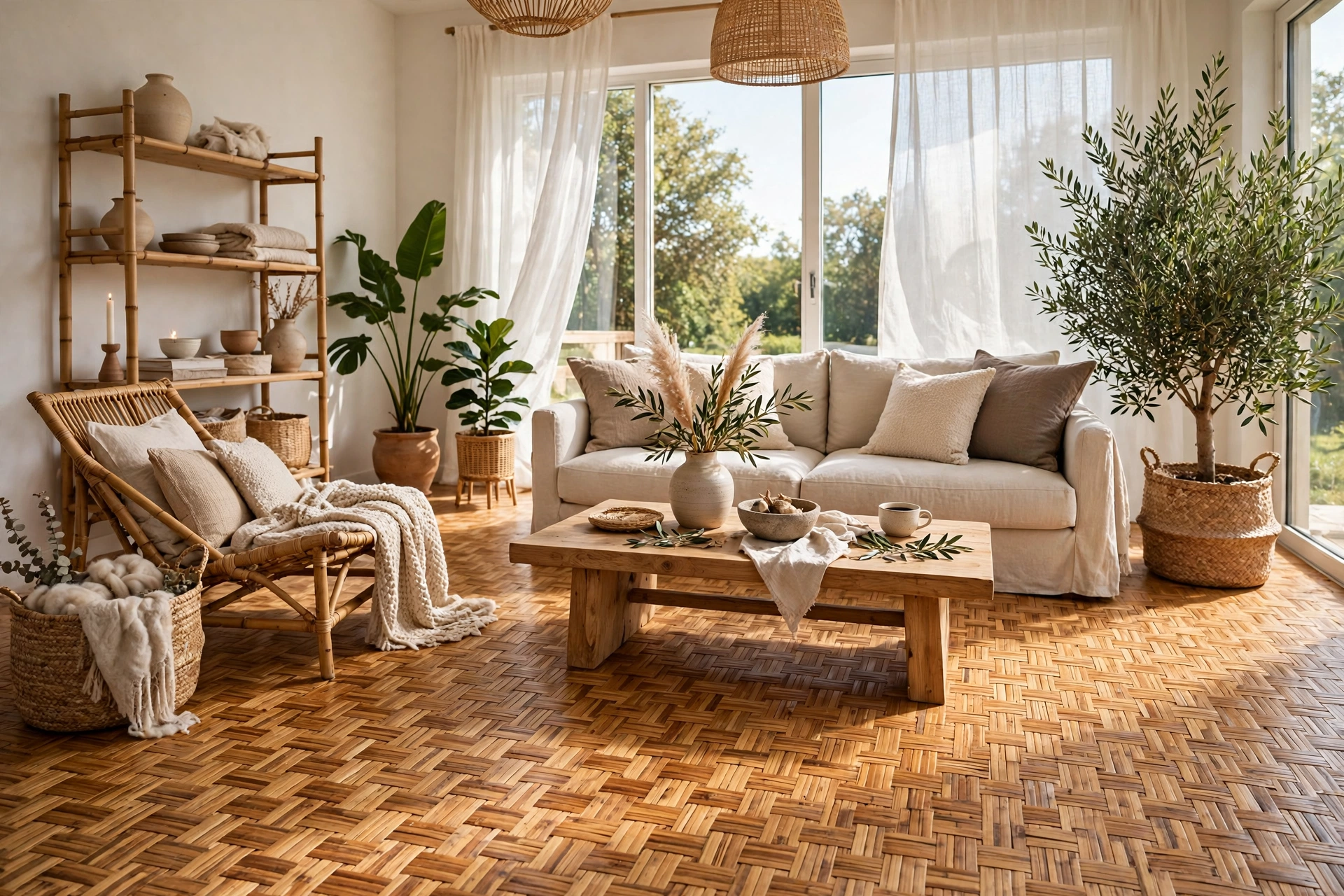
There is one buying rule that matters more than any other price detail. For a family home, a busy kitchen, an entryway, or a house with dogs, strand woven bamboo is the only bamboo type to buy. It is roughly 2 to 3 times harder than oak. Classic horizontal and vertical bamboo, by contrast, dent about like red oak does, so they suit quiet bedrooms and formal rooms, not the rooms where daily life happens.
This guide breaks down the bamboo flooring cost by type, by installation method, and by room size. It compares bamboo with hardwood, explains the eco claim honestly, and flags the extras that first quotes often leave out. Every price here is a 2026 contractor market estimate, not a fixed quote. Get 3 local quotes, and make sure each lists the same bamboo type, method, and extras.
How Much Does Bamboo Flooring Cost?
So, how much does bamboo flooring cost in 2026? The short answer is $7 to $17 per square foot installed for most projects. Angi data from 2026 puts the range slightly wider, at $7 to $20 per square foot installed, with a typical project running $1,300 to $6,300 and an average project cost of about $3,400. The gap between sources is normal, since guides bundle different items and labor rates vary by city.
When you look at bamboo flooring cost per square foot installed, remember that the headline number bundles three things: the planks, the labor to fit them, and the basic supplies such as underlayment or adhesive. It usually does not bundle old floor removal, subfloor leveling, trim, or a moisture barrier. Those extras are covered later in this guide, and they are where a low quote can quietly grow.
Order 10 percent extra material for a simple room, and up to 15 percent for complex layouts with angles, closets, and hallways.
Bamboo Flooring Cost by Type
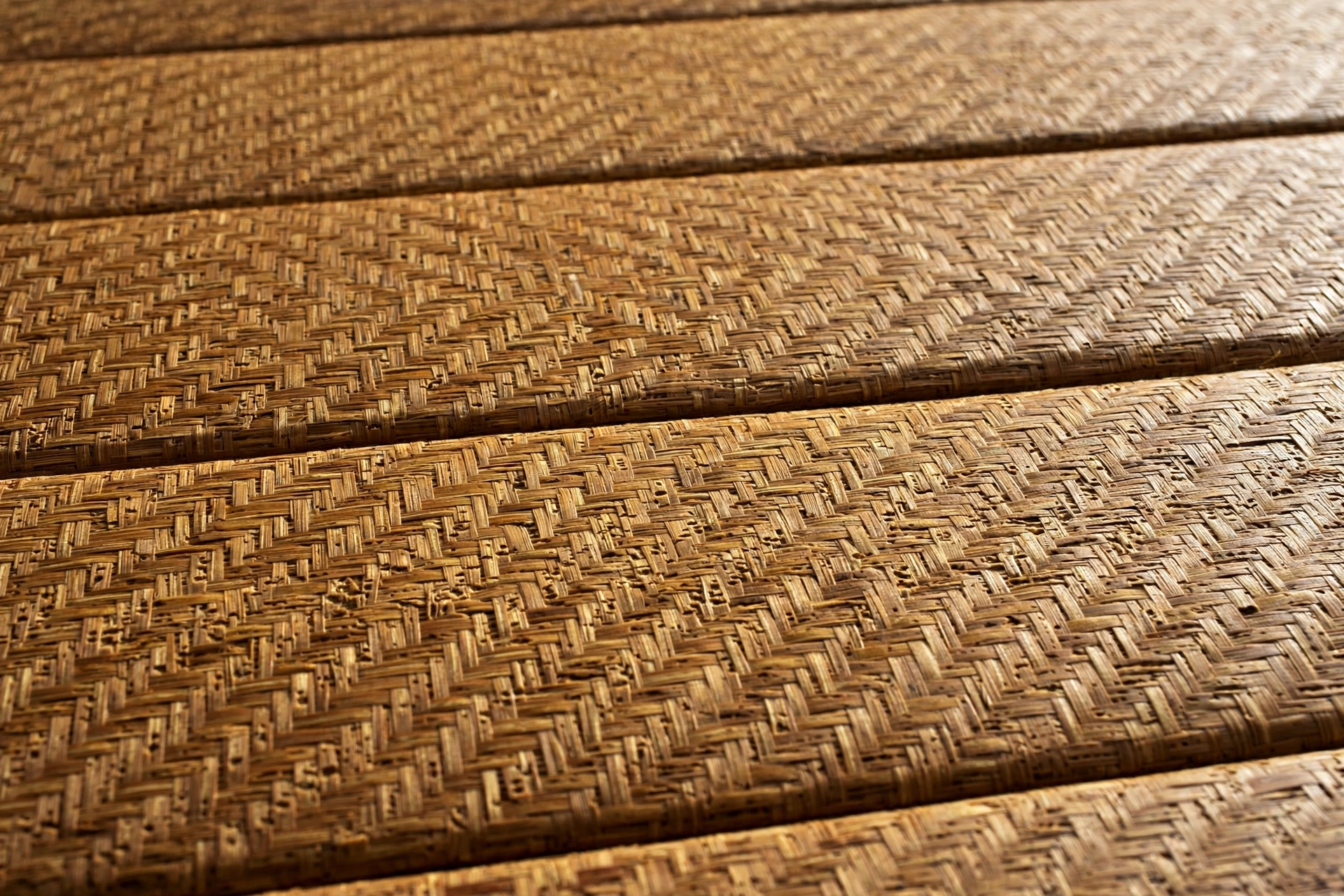
The type of bamboo you choose moves the bamboo flooring cost more than the brand name on the box. The four main kinds differ in how they are made, how hard they are, and where they hold up best.
| Type | Material per sq ft | Installed per sq ft | Best for |
|---|---|---|---|
| Horizontal bamboo | $3 to $6 | $7 to $14 | Bedrooms and living rooms, classic striped bamboo look |
| Vertical bamboo | $4 to $10 | $8 to $15 | Cleaner, more linear look, moderate traffic |
| Strand woven bamboo | $5 to $10 | $8 to $14, premium quotes to $20 | Kitchens, entryways, homes with kids or pets |
| Engineered bamboo | $2 to $5 | $8 to $19 | Concrete slabs, condos, floating installs, tighter height limits |
Strand woven bamboo flooring cost sits in the middle of the installed range for standard products, but premium strand woven quotes can reach $20 per square foot installed. That premium is often worth paying in a high traffic room, because the floor is the part of the house that takes the most daily punishment. In a spare bedroom, on the other hand, classic bamboo does the same job for less money.
Strand Woven vs Horizontal and Vertical: The Trust Core
Horizontal bamboo lays flat strips side by side and bonds them, showing the classic bamboo node pattern. Vertical bamboo turns the same strips on edge, giving a narrower, more linear grain. Strand woven bamboo shreds the fibers, mixes them with resin, and compresses them under extreme heat and pressure into a very dense plank.
Hardness tells the story. On the Janka scale, horizontal bamboo measures about 1,180, comparable to domestic walnut and a little below red oak. Vertical bamboo measures about 1,380, close to red oak at about 1,290. Strand woven bamboo measures 3,000 to 5,000 plus, roughly 2 to 3 times harder than oak and harder than most hardwoods, including hickory.
That hardness gap is why the buying rule is so blunt. Strand woven hides wear best, which is why bamboo flooring cost comparisons should start with hardness, and it resists dents from dropped items and pet claws in an entryway. Horizontal bamboo shows the knuckle and node pattern many buyers love, but it dents about like red oak. Vertical bamboo reads more like a clean modern wood strip, but it shares the same dent risk.
Refinishing is another difference worth knowing before you buy. Solid bamboo can usually be refinished once or twice. Strand woven bamboo is harder to refinish because its resin dulls abrasives, so treat it as once, with care, at most. Engineered bamboo with a thin veneer often cannot be refinished at all.
Bamboo Flooring Installation Cost
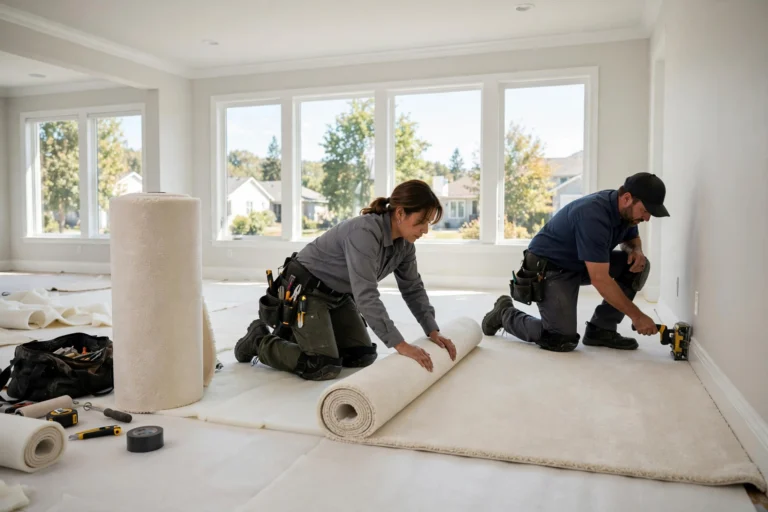
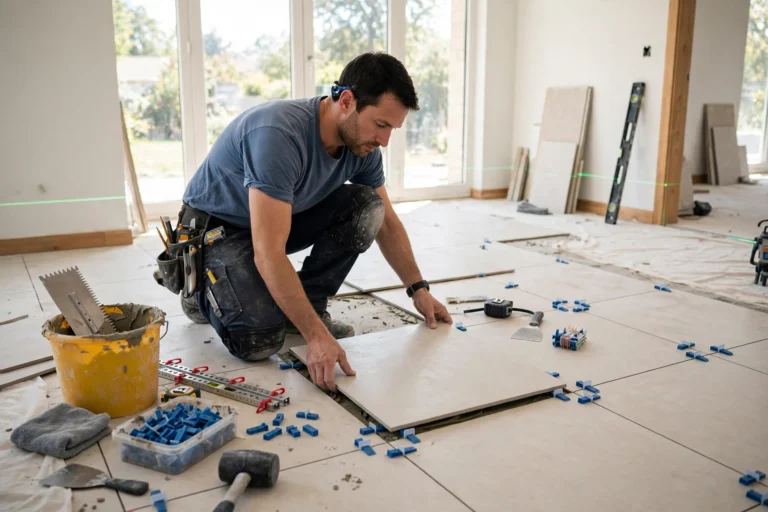
Bamboo flooring installation cost depends heavily on the fitting method. The method also decides which subfloor you need and whether the job is realistic as a DIY project.
| Method | Labor per sq ft | Best subfloor | Notes |
|---|---|---|---|
| Floating (click lock) | $2 to $4 | Most subfloors, including concrete | Cheapest and fastest, easiest for DIY, simplest to remove later. Mainly engineered bamboo. |
| Nail down (or staple down) | $3 to $5 | Plywood or OSB wood subfloor | Traditional, very stable, minimal movement. Preferred for solid bamboo planks. |
| Glue down | $4 to $6 | Concrete slabs | Most expensive method because adhesive and labor time add up. Best stability on concrete. |
Some guides quote method totals of $5 to $7 for floating and $8 to $10 for glue or nail down work. Those bundle labor with underlayment or adhesive, unlike the labor only figures above. Adhesive alone can add $1 to $2 per square foot on a glue down job, so always ask whether a quoted method price is labor only or all in.
Floating click lock engineered bamboo is the realistic DIY route. Glue down and nail down work, and all strand woven work, is professional work for most homeowners.
Acclimation is essential whatever method you choose. Let planks sit in the room for at least 72 hours before fitting, so they adjust to local temperature and humidity and do not gap later.
Bamboo Flooring Cost by Room Size
Room size turns the per square foot bamboo flooring cost into a budget you can actually plan around. The table below uses the $7 to $20 per square foot installed band from Angi 2026 data.
| Room | Size | Installed estimate |
|---|---|---|
| 10 by 10 bedroom | 100 sq ft | $700 to $2,000 |
| 12 by 12 bedroom | 144 sq ft | $1,010 to $2,880 |
| 14 by 16 living room | 224 sq ft | $1,570 to $4,480 |
| 20 by 20 open room | 400 sq ft | $2,800 to $8,000 |
| Whole floor | 1,000 sq ft | $7,000 to $17,000 |
Extra Costs the Quote Often Leaves Out
The bamboo flooring cost in a first quote is rarely the final bill. These are the extras to ask about, line by line, before you sign.
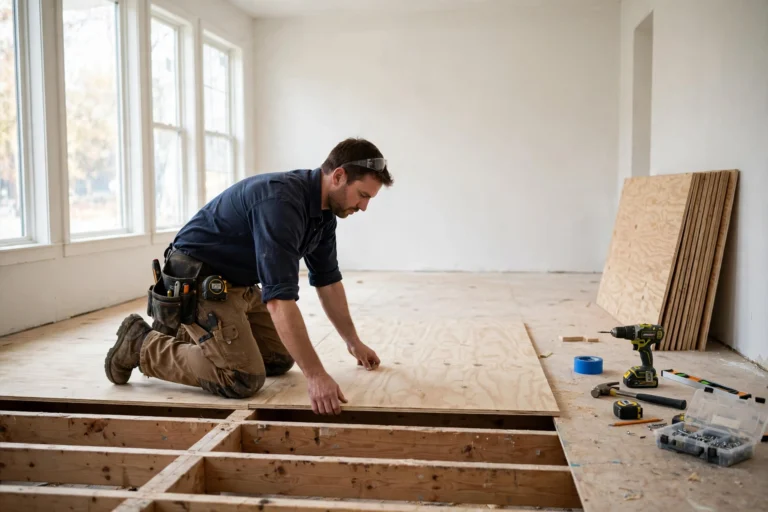
Old floor removal runs $0.70 to $1.60 per square foot for carpet, $1 to $2 for vinyl, and $2 to $7 for tile or glued down hardwood. Always ask whether removal and disposal are included.
Subfloor repair or leveling costs $1 to $4 per square foot for leveling, and $2.20 to $4.75 per square foot for repair or replacement in some quotes. Budget a 10 to 15 percent contingency for damage that only shows once the old floor is up.
Underlayment costs $0.50 to $3.50 per square foot installed for floating and nail down floors, with acoustic cork or rubber at the top of that range. Glue down floors do not need it.
Moisture barrier and prep on concrete or in basements costs $2 to $10 per square foot. Moisture testing alone runs about $100 to $300 per job site. On concrete, never skip the moisture barrier to save money.
Trim and moldings cost $2 to $10 per linear foot. A typical project adds $200 to $600 in trim, and reusing sound baseboards is a safe saving.
Refinishing later costs from about $5 per square foot, but only for solid bamboo that still has wear layer left. Labor runs 20 to 40 percent higher in major metro areas than in smaller markets.
Bamboo vs Hardwood Flooring Cost
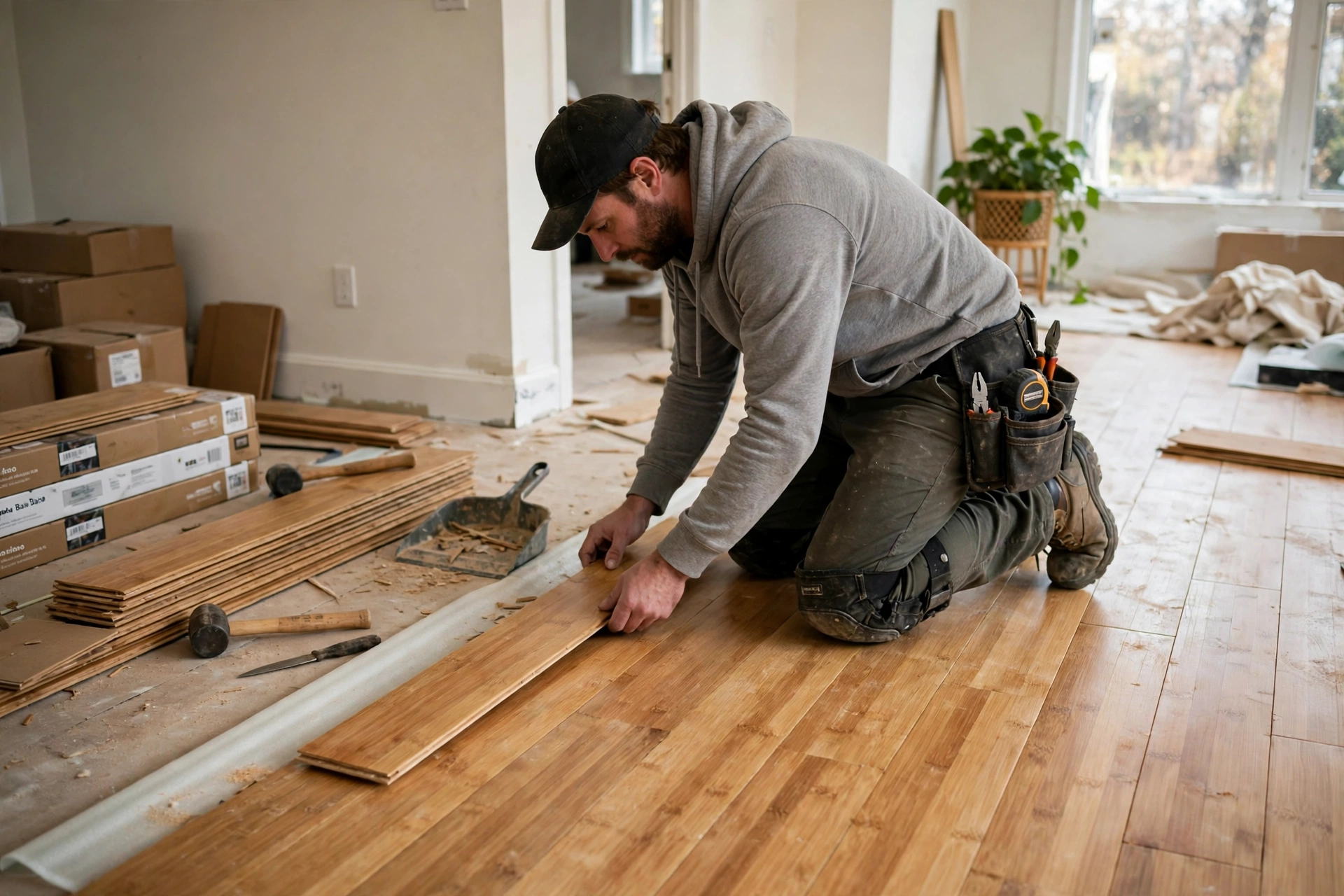
The bamboo vs hardwood flooring cost comparison is the question most shoppers ask next, and the honest answer is that bamboo is usually cheaper, but not always, and not by a fixed amount.
| Factor | Bamboo | Hardwood |
|---|---|---|
| Installed per sq ft | $7 to $17 overall | Solid hardwood $12 to $25; engineered hardwood $8 to $18 |
| Hardness | Strand woven 3,000 plus; classic bamboo about red oak | Red oak 1,290; maple 1,450; species dependent |
| Refinishable | Solid bamboo once or twice; strand woven once with care; engineered often never | Solid hardwood 4 to 5 times, sometimes more; engineered once or twice |
| Lifespan | About 20 to 25 years typical; strand woven 25 to 50 years with care | Solid hardwood 50 to 100 years with refinishing; engineered 20 to 40 years |
| Moisture behavior | Sensitive to humidity swings; can swell, cup, or buckle | Also moves with humidity; solid hardwood moves most |
On price alone, bamboo flooring cost is generally 10 to 30 percent cheaper than comparable oak or maple installed. But a premium strand woven quote can land near engineered hardwood pricing, so bamboo is a look you choose, not an automatic saving. Our guide to hardwood floor installation cost shows the hardwood numbers side by side.
Two other comparisons help complete the picture. Vinyl plank flooring cost is often lower than bamboo and fully waterproof, which matters in a home with frequent spills. Laminate flooring installation cost is also competitive, though laminate cannot be refinished at all. Bamboo flooring cost sits between those options on price, and bamboo sits between them on feel underfoot too, which is part of its appeal.
Is Bamboo Flooring Really Eco Friendly?
The eco story behind bamboo flooring cost claims is real at the plant and complicated after it, and a good guide should say both parts plainly rather than greenwashing the product.
The real part is simple. Bamboo is a grass that reaches harvest in 3 to 5 years and regrows from the root, against 20 to 60 years for a hardwood tree. That renewability is genuine, and it is part of why bamboo flooring cost stays competitive, and it is the reason bamboo earned its eco reputation in the first place.
The complicated part is the journey from plant to plank. Nearly all flooring bamboo is grown and processed in China, shipped across the Pacific, and held together with resin. A certified domestic maple or white oak floor can have a shorter supply chain and no resin at all.
The adhesive is where quality lives, and it also affects long term bamboo flooring cost. Good products use low formaldehyde or no added formaldehyde resins and publish a certification. Ask for the emissions certificate in writing before paying, and check it against the EPA formaldehyde standards for composite wood products, which cover the federal TSCA Title VI standard and the California CARB Phase 2 standard it grew out of. Poor products can off gas for a year and delaminate at the edges, so this is not a paperwork detail to skip.
Also buy from a brand that has existed for ten years or more, with a written structural and wear warranty of 25 years or more. FloorScore certification is a useful extra check alongside the EPA standard.
Where Bamboo Works, and Where It Does Not
For bamboo flooring cost planning, note that bamboo works well in kitchens, dining rooms, entryways, and finished basements with controlled humidity and spills wiped up quickly. Strand woven is the right pick for those rooms. It is not a waterproof product, and it does not belong in full bathrooms or outdoors unless it is a separate outdoor rated product.
For indoor air quality guidance, humidity control and ventilation matter as much for the floor as for the people living on it. Keep humidity in the 35 to 55 percent range, wipe spills fast, sweep or vacuum regularly, damp mop only, and use felt pads under furniture.
Safe ways to save money include choosing floating engineered bamboo in low traffic rooms, keeping the layout simple, and bundling rooms into one visit. Cost cutting to avoid includes unbranded no certification bamboo, skipping acclimation, and skipping a moisture barrier on concrete.
Frequently Asked Questions
How much does bamboo flooring cost per square foot installed in 2026?
The typical bamboo flooring cost is $7 to $17 per square foot installed, with the top of the Angi range reaching $7 to $20 per square foot. Material alone runs $3 to $9 per square foot.
Is strand woven bamboo worth the extra cost?
Yes in high traffic rooms, because of its hardness. No in a spare bedroom, where classic bamboo does the same job for less money.
Is bamboo flooring cheaper than hardwood?
Usually bamboo flooring cost is 10 to 30 percent lower than comparable oak or maple installed, but premium strand woven can match engineered hardwood pricing.
Can bamboo flooring be refinished?
Solid bamboo can be refinished once or twice. Strand woven bamboo can be refinished once, with care, at most. Thin veneer engineered bamboo usually cannot be refinished at all.
Is bamboo flooring really eco friendly?
Renewable at the plant, complicated by shipping and resin. Buy published formaldehyde certification and check it before you pay.
Can bamboo flooring go in a kitchen or bathroom?
Kitchen yes, with controlled humidity and fast spill cleanup. Full bathroom no, because bamboo is not waterproof.
The Bottom Line on Bamboo Flooring Cost
The bamboo flooring cost for most 2026 projects falls between $7 and $17 per square foot installed, and the type you choose matters more than the brand. Strand woven is the only bamboo to buy for a family home, a kitchen, or an entryway. Classic horizontal and vertical bamboo suit quiet rooms where denting is less of a risk.
Price the whole job, not just the planks. Add old floor removal, subfloor work, underlayment or adhesive, trim, and moisture prep where needed. Get 3 local quotes, ask each contractor to list the bamboo type, the installation method, and every extra in writing, and choose the clearest quote, not just the cheapest.