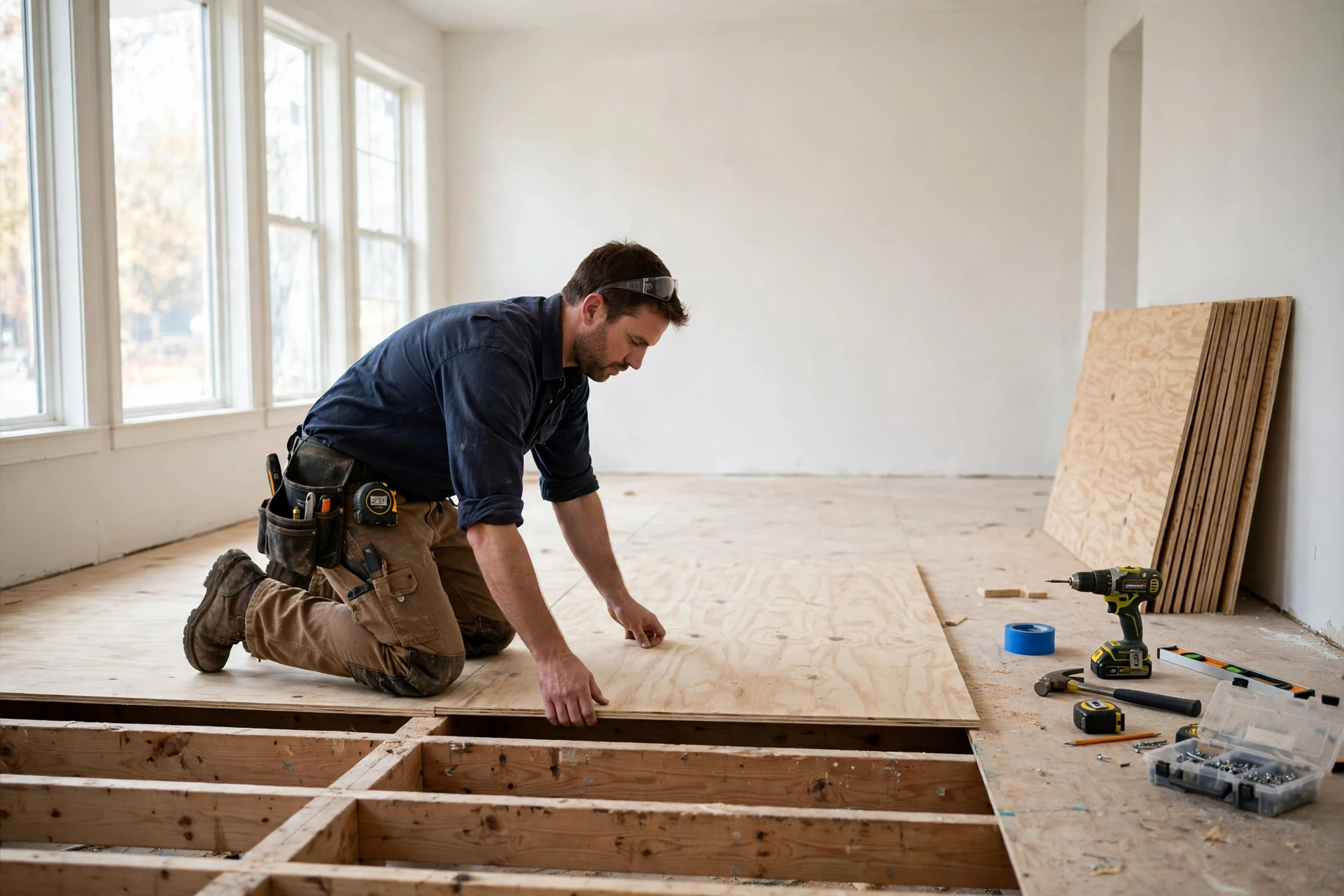
Subfloor Replacement Cost 2026
If your floor squeaks, sags, or feels soft underfoot, the problem may sit below the surface you walk on. The subfloor replacement cost for most US homeowners in 2026 runs $900 to $3,000 for an average 300 sq ft room, with a national average of $1,560 per 300 sq ft room, and $3 to $10 per sq ft installed.
That range covers the subfloor and the labor to fit it. It does not cover the new flooring on top, or surprises underneath, such as a rotten joist or mold. This guide prices those extras separately.
When you budget the subfloor replacement cost, start with the room you are actually fixing, not the whole house. Measure the damaged area, pick a material, and get 3 local quotes that list the same scope in writing. Every price here is a 2026 US contractor market estimate.
How Much Does It Cost to Replace a Subfloor in 2026?
The subfloor replacement cost in 2026 starts with two numbers. The national average is $1,560 per 300 sq ft room, and the installed rate is $3 to $10 per sq ft. The average room in the Angi guide updated Oct 1, 2026 is 300 sq ft.
The full spread in the Angi data runs from $420 to $10,000. That $10,000 figure is a full basement job, not a single room, so do not treat it as a normal room price.
Labor usually runs $25 to $30 per hour, and most installs take 1 to 2 days. A straightforward room can finish in a day, while a larger space or a job that uncovers joist damage takes longer. The subfloor replacement cost also rises when mold is found underneath, because remediation runs about $2,000 on average and has to happen first.
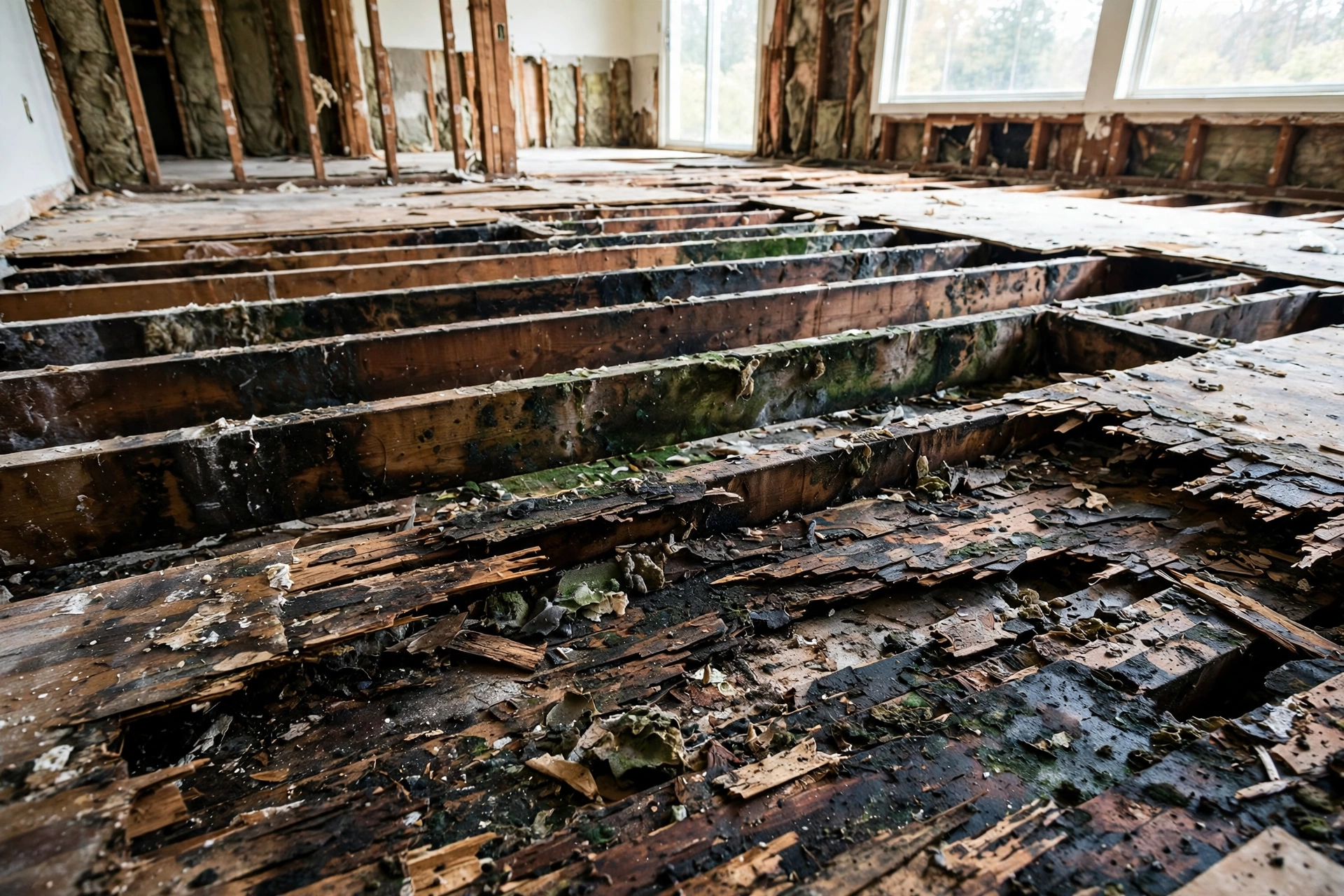
Cost by Subfloor Material
Material choice moves the subfloor replacement cost more than most homeowners expect. Thicker panels, moisture resistant systems, and radiant heating panels all cost more, and some materials suit only certain rooms.
| Material | Material per sq ft | 300 sq ft material estimate | Best for |
|---|---|---|---|
| Plywood | $2.50 to $3.50 | $750 to $1,050 | Most rooms |
| Oriented strand board (OSB) | $2.50 to $4.50 | $750 to $1,350 | Dry areas, budget pick |
| Amdry | $3 to $10 | $900 to $3,000 | Basements |
| DRIcore | $2.50 to $9 | $750 to $2,700 | Basements, wet rooms |
| Barricade | $2 to $10 | About $600 in the Angi example | Basements |
| Warmboard | About $7 | About $2,100 | Radiant heating |
| Concrete | About $6 | About $1,800 | Slabs, damp areas |
Plywood is the default pick for most rooms, and the subfloor replacement cost for a plywood job is the easiest to compare between quotes. Use 5/8 inch panels as the reference thickness. For a 300 sq ft room, the plywood itself runs $750 to $1,050 before labor.
OSB costs about the same per panel as plywood and sometimes less, but it is weaker, swells with moisture, and is not suitable under ceramic tile or stone, so the subfloor replacement cost saving is rarely worth the risk in a kitchen or bathroom.
Basement systems cost more because they solve a moisture problem too. Amdry is a moisture resistant insulated basement system at $3 to $10 per sq ft, or $900 to $3,000 for a 300 sq ft space, and its special connectors add $20 per pack of 15. DRIcore is moisture proof at $2.50 to $9 per sq ft. Barricade is an insulated basement panel at $2 to $10 per sq ft, about $600 for a 300 sq ft room in the Angi example. Warmboard, at about $7 per sq ft, adds radiant heating. Concrete runs about $6 per sq ft.
Also ask about the glue and resin in the panel. Composite wood products such as OSB and plywood fall under federal standards, so check the EPA formaldehyde standards for composite wood products.
Cost by Room Location
Where the subfloor sits matters as much as what it is made of, and the subfloor replacement cost follows the room. Small rooms cost less, while wet rooms and basements cost more.
| Room | Estimate | Why it costs that much |
|---|---|---|
| Bedroom | $450 to $1,500 | Simple, dry, easy access |
| Living room | $900 to $3,000 | Larger area |
| Kitchen | $600 to $2,000 | Cuts around cabinets |
| Bathroom | $120 to $400 | Small, precise cuts |
| Basement | $3,000 to $10,000 | Whole floor, moisture work |
Bathrooms cost less because they are smaller, but fixtures need precise cuts and wet areas carry a higher chance of water damage. The basement band is the whole high end of the range, so do not quote it as a single room price.
Cost by Room Size
Room size turns the subfloor replacement cost per square foot into a budget you can plan around. The table below is planning math from the $3 to $10 per sq ft band, not an Angi table, and it uses the room area actually being replaced, not the total floor area of the home. A partial replacement costs less than a full room replacement.
| Room size | What it looks like | Installed estimate |
|---|---|---|
| 100 sq ft | Small bathroom or patch | $300 to $1,000 |
| 150 sq ft | Small bedroom | $450 to $1,500 |
| 200 sq ft | Average bedroom | $600 to $2,000 |
| 300 sq ft | Average room, Angi headline | $900 to $3,000, average $1,560 |
| 500 sq ft | Large living area | $1,500 to $5,000 |
| 1,000 sq ft | Full floor, basement section | $3,000 to $10,000 |
Measure the room before you call anyone. A 12 by 12 bedroom is 144 sq ft, near the 150 sq ft row, while a 15 by 20 living room is 300 sq ft and matches the headline average. If only half the room is damaged, ask for a price to replace only that section. The band is installed cost, so it already includes labor.
Repair or Replace: How to Decide
The repair or replace choice is the core decision in this guide, and the subfloor replacement cost is only worth paying in full when the damage justifies it. Repair when the problem is loose boards, a squeak, superficial water damage, or a small damaged area.
Replace when there is widespread water damage or extensive mold, multiple broken or rotten boards, sagging floors, or extensive structural damage. Sagging can indicate joist problems, which a surface repair will not fix.
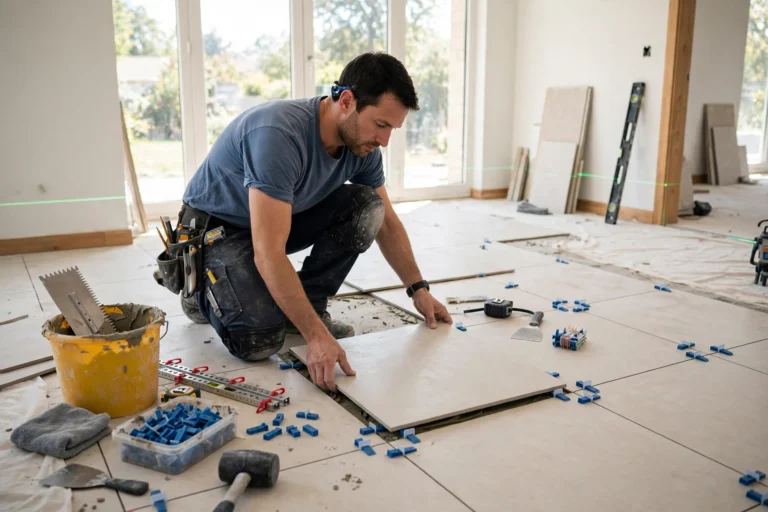
The honest warning is that the full extent of underlying damage usually cannot be seen until the top flooring and subfloor are removed. Angi expert Bob Tschudi makes this point directly. Hold a contingency for what is found underneath, and do not treat the headline quote as final.
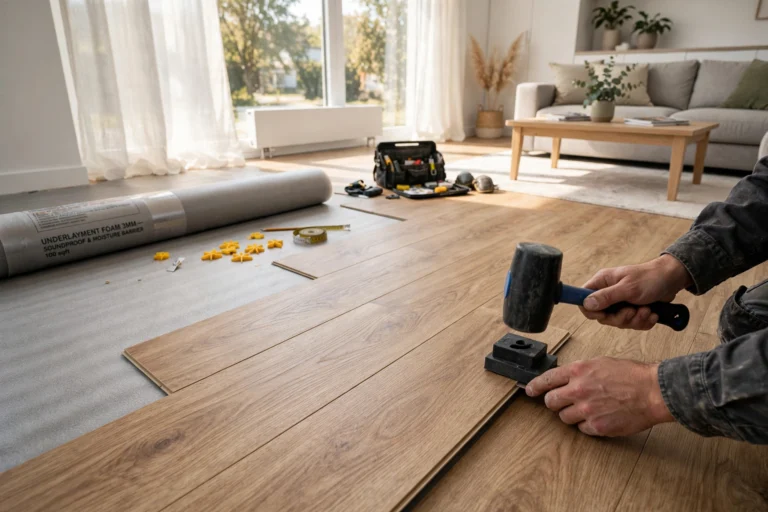
Much subfloor work is discovered during a flooring swap, when the old floor comes up and the subfloor underneath looks worse than expected. Budget the new flooring on top of the subfloor, not instead of it, and read the flooring guides before you sign, including our guide to hardwood floor installation cost, our guide to laminate flooring installation cost, and our guide to bamboo flooring cost for an alternative finish floor.
Worked Example: 300 Sq Ft Living Room With Plywood
This worked example shows how the subfloor replacement cost adds up on a realistic job: a 300 sq ft living room, a plywood subfloor, and one bad joist found underneath. It lands inside the Angi $900 to $3,000 band and near the $1,560 average.
| Item | Estimate |
|---|---|
| Plywood materials, 300 sq ft at $2.50 to $3.50 | $750 to $1,050 |
| Labor, $25 to $30 per hour, 1 to 2 days | $200 to $480 as the labor slice inside the installed quote |
| One floor joist replacement | $100 to $300 |
| Disposal of old subfloor | About $160 |
| Worked total before new flooring | $1,210 to $1,990 |
Labor at $25 to $30 per hour for a 1 to 2 day install, about 8 to 16 hours, works out to $200 to $480 as the labor slice inside the installed quote. The installed total is what the $900 to $3,000 band measures, so labor is part of that total.
The worked total is $1,210 to $1,990 before any new flooring, and that subfloor replacement cost is the figure to compare with your own quotes. Add new flooring on top: laminate at $3 to $8 per sq ft adds $900 to $2,400, and hardwood at $6 to $12 per sq ft adds $1,800 to $3,600. If mold is found under the old subfloor, add about $2,000 for remediation first, which takes the same room to about $3,200 to $4,000 before flooring.
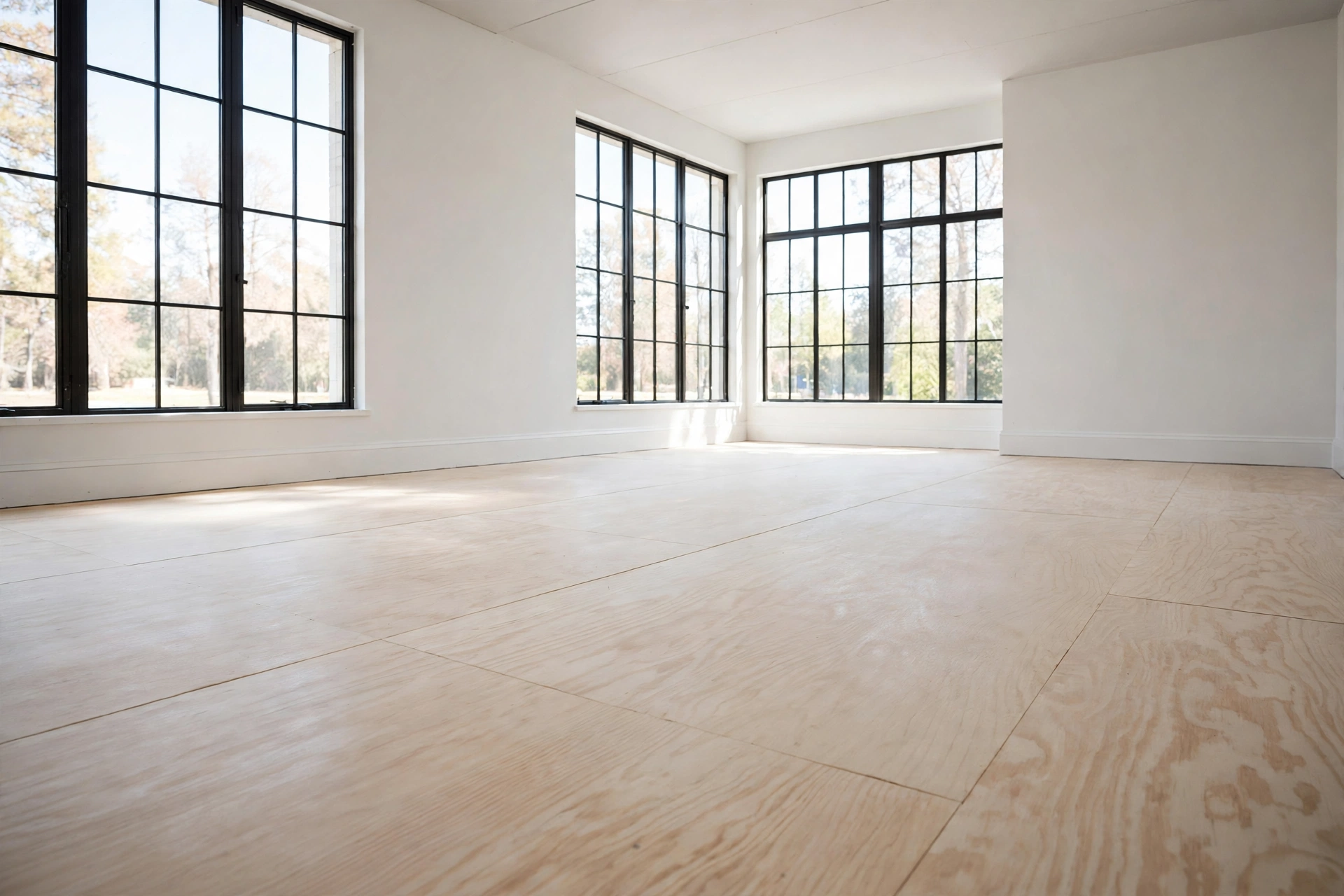
Hidden Costs and Add Ons
Hidden costs surprise homeowners because most only appear once the old floor is off. Floor joist repair or replacement runs $100 to $300 per joist, and that work can lift the subfloor replacement cost well above the first quote. Joist damage often goes undetected until the old subfloor is off, so build a contingency for at least one joist.
Mold remediation runs about $2,000 on average when mold is found under a damaged subfloor, and it is the largest single surprise in the subfloor replacement cost. Treat it before the new subfloor goes in, because untreated mold is a health hazard. For guidance on when cleanup needs a professional, see the EPA mold guidance on mold cleanup and when remediation is needed.
Underlayment runs $0.50 to $5.50 per sq ft when it is needed. It is not always required, and it adds comfort, sound absorption, and protection for the new subfloor. Junk removal runs $100 to $800 for construction debris, and subfloor removal averages about $160. Hauling it yourself costs under $20 in disposal fees. Removal is usually bundled into the quote, so confirm whether it is included before signing.
Permits run $50 to $200 and are typically only needed for larger projects. Small single room replacements often do not need one, so confirm with the local municipality and clarify whether the contractor handles the application. New flooring on top is the largest add on, budgeted separately: hardwood $6 to $12 per sq ft, laminate $3 to $8, carpet $3 to $11, tile $5 to $45, and linoleum $3 to $12.
DIY or Hire a Pro?
DIY can cut the subfloor replacement cost by saving $25 to $30 per hour in labor. A homeowner can safely handle prep: clearing furniture, removing the old subfloor if comfortable, and disposing of debris.
Hire a pro for the install itself unless you have real subfloor experience. Incorrect installation leads to warping, mold growth, and costly repeat repairs, and pros know local codes, handle plumbing, electrical, or insulation found underneath, and keep the floor level. Material choice is the cheap place to save.
How to Save Money Without Cutting Corners
Replace only the damaged section when the rest of the subfloor is sound, because that is the fastest way to bring the subfloor replacement cost down. A partial replacement saves material and labor.
Pick a sturdy cheaper material for dry rooms. Plywood does the job in most bedrooms and living rooms, and OSB does it for less in a dry area where moisture is not a risk. Save the premium moisture resistant systems for basements, bathrooms, and kitchens. Get 3 local quotes, and make sure each one lists the same material, thickness, area, disposal, and extras.
Do not chase a federal tax credit for this job. There is no federal energy credit for subfloor work, and you should not expect one for a 2026 install.
Frequently Asked Questions
How much does it cost to replace a subfloor?
How much does it cost to replace subfloor? Most homeowners pay $900 to $3,000 for an average 300 sq ft room, with a national average of $1,560 per 300 sq ft room. The subfloor replacement cost is $3 to $10 per sq ft installed, so a small patch costs far less than a full floor.
What is the cost per square foot?
The installed rate is $3 to $10 per sq ft, driven by material type and labor, and that spread is what sets the subfloor replacement cost for most rooms. Material alone ranges from about $2 to $10 per sq ft, with plywood at $2.50 to $3.50 as the most common choice.
How much is subfloor repair?
Subfloor repair cost is lower than a full replacement when only part of the floor is damaged. A small patch can run a few hundred dollars, while the subfloor replacement cost for a full room runs $900 to $3,000. Repair makes sense for loose boards, a squeak, or superficial water damage.
How long does a subfloor replacement take?
Most installs take 1 to 2 days at $25 to $30 per hour in labor, and the subfloor replacement cost rises with every extra day. A small room can finish in a day, while a larger space or a job that uncovers joist or mold damage takes longer.
Do I need a permit to replace a subfloor?
Usually not for a small single room replacement. Larger projects typically need a permit at $50 to $200. Confirm with the local municipality and clarify whether the contractor handles the application.
What happens if there is mold under my subfloor?
Stop and treat it before the new subfloor goes in. Mold remediation runs about $2,000 on average, and untreated mold is a health hazard that keeps damaging structure. Do not cover mold with new plywood.
Does the price include new flooring on top?
No. The subfloor replacement cost covers the panel and the labor to fit it, and new flooring is budgeted separately: laminate $3 to $8 per sq ft, hardwood $6 to $12, carpet $3 to $11, tile $5 to $45, and linoleum $3 to $12.
The Bottom Line
The subfloor replacement cost for most 2026 jobs runs $900 to $3,000 for a 300 sq ft room, with a national average of $1,560 per 300 sq ft room, and $3 to $10 per sq ft installed. Plywood is the sensible default in dry rooms, moisture resistant systems earn their price in basements and wet rooms, and the real budget risk is what sits underneath.
Price the whole job before you start: the subfloor, the possible joist or mold work, disposal, and the new flooring on top, because the full subfloor replacement cost is the only number that matters when you compare quotes. Get 3 local quotes with the same scope in writing, hold a contingency for hidden damage, and choose the clearest quote, not the cheapest one.