Hydro Jetting Cost 2026
If you are wondering what a hydro jetting cost looks like in 2026, the short answer is $350 to $600 for a standard residential visit, with the national average landing near $475 according to pricing data compiled by Angi and updated in July 2026. That visit typically covers the equipment setup, the high pressure cleaning itself, and a flow check at the end to confirm the line is clear. Simple single drain jobs can run as little as $150 to $300, while heavy duty root clearing can climb well past $1,000.
If the camera shows a collapsed or badly cracked line, jetting will not save it. Our sewer line replacement cost guide covers what the bigger job runs.
The right way to think about hydro jetting cost is per job, not per foot, because most plumbers price residential work with flat rates instead of length based pricing. A kitchen sink line, a main sewer line, and a tree root invasion are three different jobs with three different price tags, and the condition of your pipes matters as much as their length. Read on for the full breakdown by job type, what is included in a quote, when jetting is the wrong call, and how it stacks up against a simple drain snake.
Not sure whether your problem is in the line or at a fixture? Our plumbing repair cost guide breaks down what common repairs run so you can compare quotes.
One more note before the numbers: the hydro jetting drain cleaning cost estimates below reflect what licensed plumbers charge in 2026, with labor, equipment, and overhead baked in. Your final price will move with your region, the severity of the blockage, and how easy the line is to reach. Collect at least three local quotes before you book, and ask every company whether a camera inspection is included in the price.
How Much Does Hydro Jetting Cost?
The hydro jetting cost you pay is really three bills in one: a flat fee for the visit, any extras for camera work or difficult access, and a potential surcharge if the blockage turns out to be tree roots. Most homes land in the $350 to $600 band for a standard main line cleaning. Here is how the job types break down in 2026.
| Job type | Typical cost |
|---|---|
| Single drain (kitchen or bathroom) | $150 to $300 |
| Main sewer line, standard jetting | $300 to $600 |
| Full professional visit (setup, jetting, flow check) | $350 to $600 |
| Sewer camera inspection (if billed separately) | $100 to $600 |
| Surcharge when there is no exterior cleanout | $150 to $350 extra |
| Heavy duty 4,000 PSI root jetting | $950 to $1,800 |
| Cast iron pipe descaling (50 plus year old homes) | $1,500 to $3,500 |
| Emergency or after hours surcharge | $100 to $600 extra |
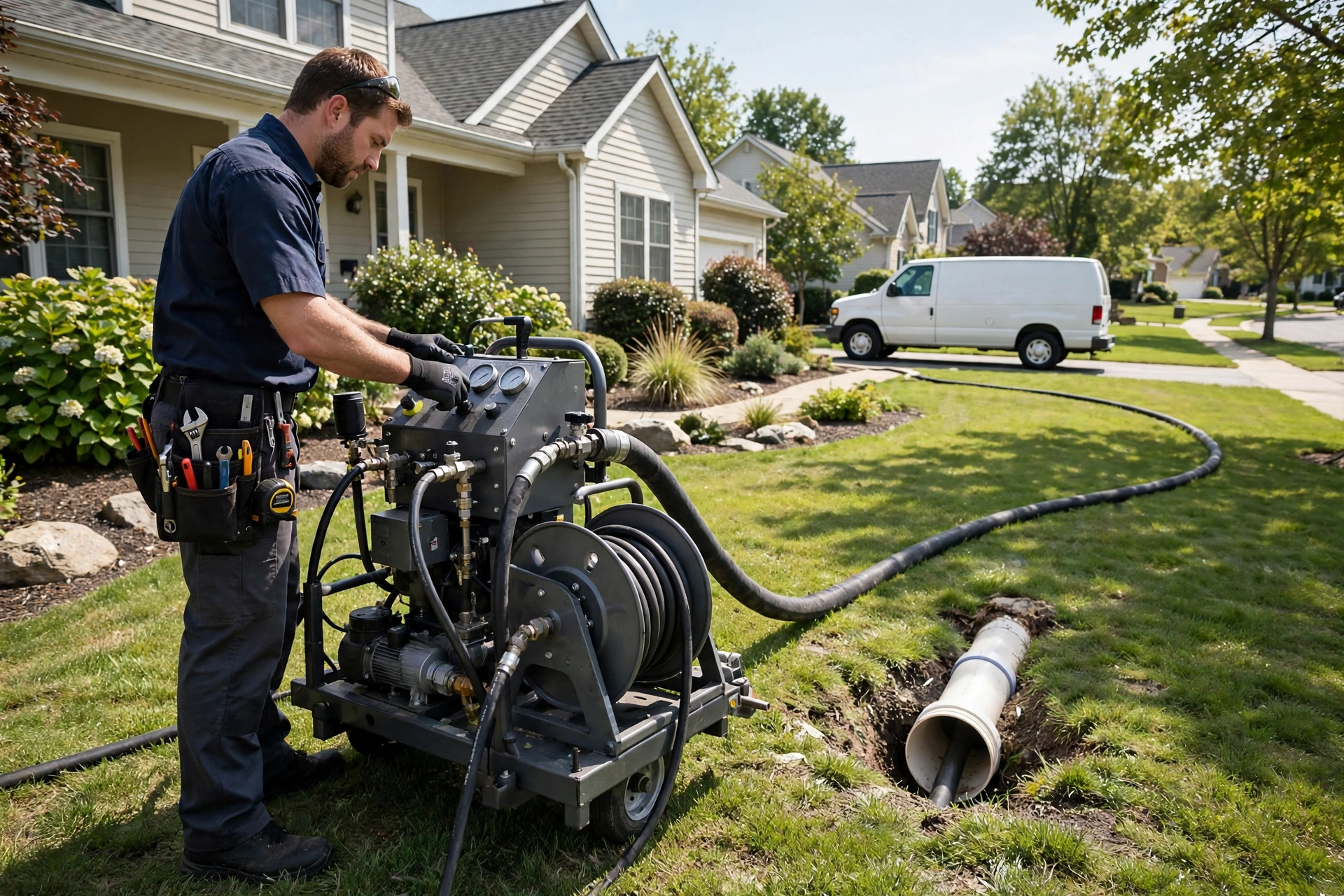
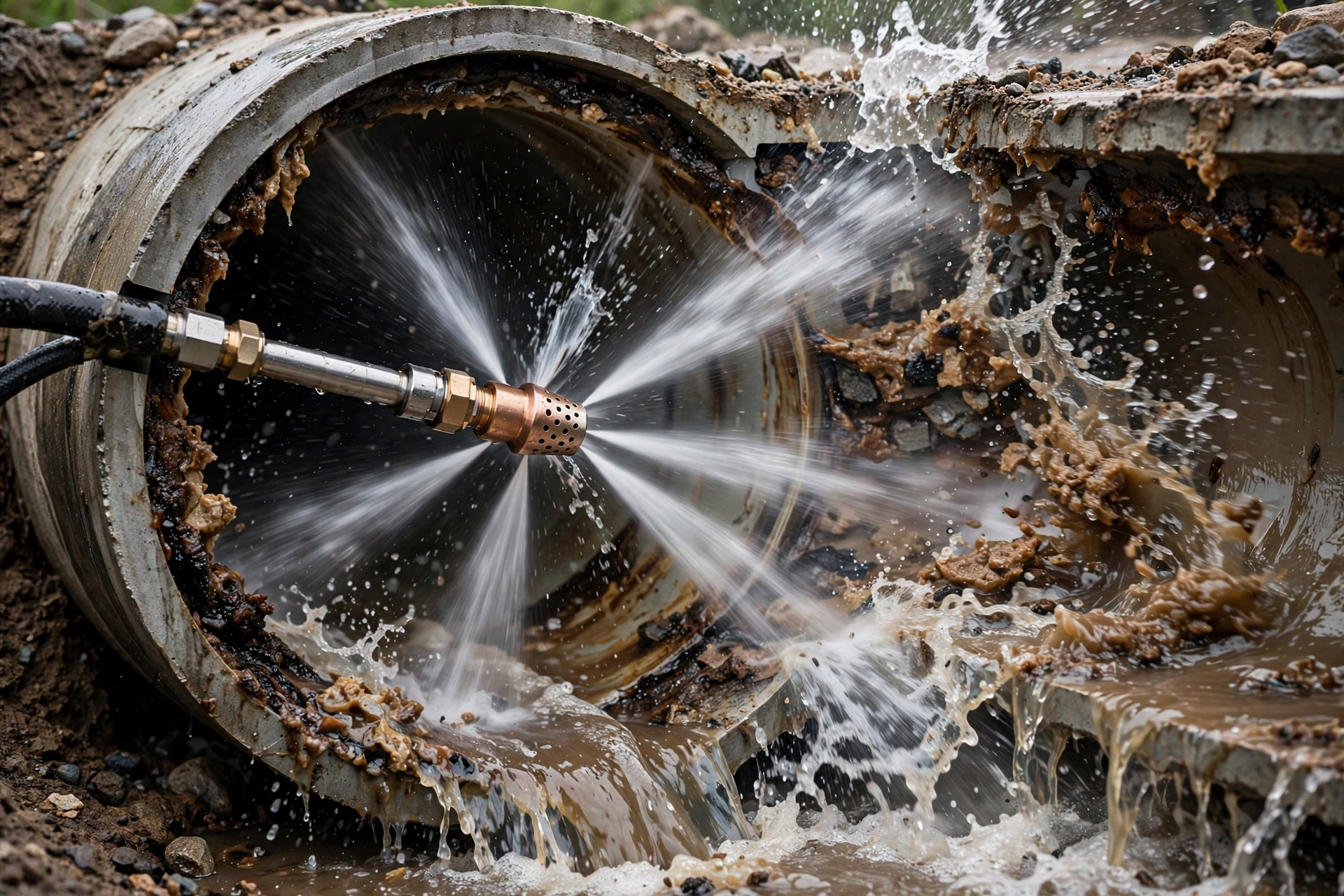
At the top end of that table you are paying for time, pressure, and specialized nozzles, not just water. A standard residential job runs the jetter at about 1,500 to 2,500 PSI, while stubborn grease or root masses can push a pro machine toward 4,000 PSI with rotating or chain flail nozzles. Hydro jetting cost for a main line in a high cost market can reach the top of the range, with San Francisco main line jobs reported between $660 and $1,150.
The broader published range stretches from $100 to $2,000, which sounds huge until you see what it covers. At the bottom you have a quick single drain clearing that takes under an hour, and at the top you have a full day of heavy duty work on a badly blocked main line. Most single family homes never see either extreme, which is why the $350 to $600 band is the number worth remembering.
Hydro Jetting vs Snaking: Cost and Results
A drain snake, also called an auger, costs $100 to $275 for a typical visit, and it is the right tool for a one off minor clog like hair, paper, or fresh grease. The snake punches a hole through the blockage so water flows again, but it leaves most of the buildup coating the inside of the pipe. If your kitchen drain slows down again three months later, you know exactly what you bought.
Hydro jetting cost runs two to five times the price of a snaking visit, and it earns that premium by scouring the full interior of the pipe instead of just piercing the clog. The high pressure water strips away grease, sludge, scale, and mild root masses, leaving the line closer to its original diameter. For recurring clogs, grease heavy kitchens, and main sewer lines, jetting is the tool that actually resets the clock.
The math favors jetting when the problem keeps coming back. A snake job might last a few months to about a year, while a proper jetting holds for one to three plus years, according to 2026 Tampa market research. Spread that hydro jetting cost over three clog free years and it can come out cheaper than two or three repeat snaking visits, not to mention the weekends you stop spending with a plunger. For one isolated clog in otherwise healthy pipes, though, the cheaper snake visit is still the sensible first try.
What Is Included in the Price
A clean quote should spell out exactly what you are getting, so ask what the hydro jetting cost on your invoice actually buys. The baseline visit covers bringing the jetter truck, running the hose and nozzle through the line, and confirming flow at the end. Some companies also include a sewer camera inspection before and after the cleaning, and that bundled approach is worth asking about by name.
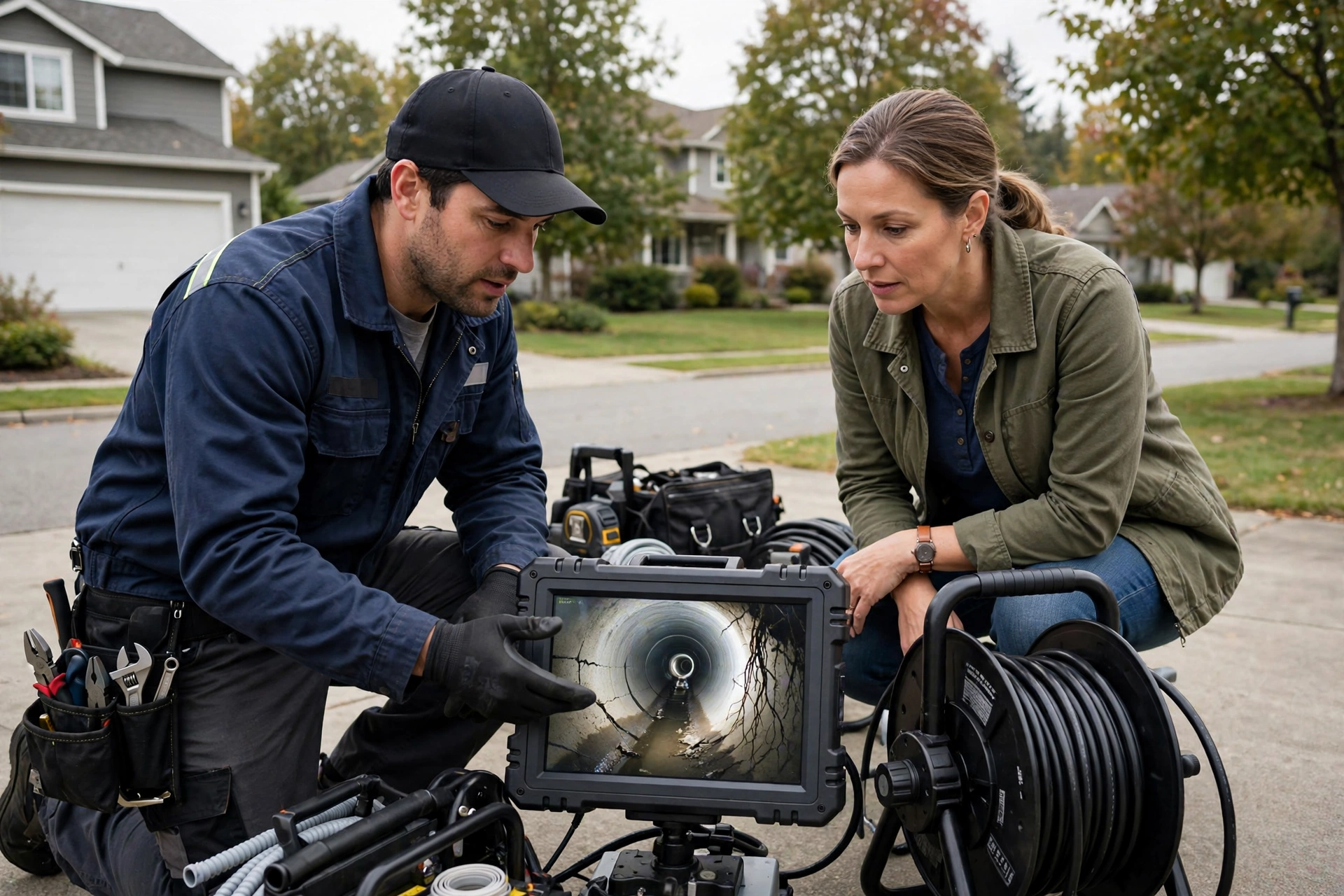
A camera inspection on its own costs $100 to $600 nationally, with Denver plumbers quoting $250 to $500. When it is bundled with jetting, Denver shops list jetting plus camera scope packages at $1,100 to $2,200. The before look matters more than the after look, because it tells the tech whether your pipes can safely take high pressure, which brings us to the safety section below.
The access question can add a line item you did not expect. If your home has an exterior cleanout, the tech hooks up right there and gets to work. If it does not, the hydro jetting cost quote grows by $150 to $350, because the crew has to pull a toilet or work through a basement floor drain to reach the line. Before you book, walk around your house and find the cleanout yourself, so you can tell the dispatcher and avoid a surprise surcharge.
What Affects the Price
Three factors move hydro jetting cost the most: what is blocking the line, how long and wide the run is, and how hard it is to reach. Grease and sludge are straightforward jobs. Scale takes more passes. Tree roots push the job into heavy duty territory with specialized nozzles at higher pressure, which is why root work starts around $950 and climbs from there.
Line length and diameter set the working time, and working time sets labor. A short run from a bathroom to the main is a quick job, while a long lateral running under a driveway or a mature tree line keeps the truck on site for two hours or more. Larger diameter pipes need more water and more time per foot, which shows up on commercial invoices first and residential ones second.
Regional labor rates swing hydro jetting cost more than most people expect. The national band is $350 to $600 for a standard visit, but dense coastal markets run hotter, and Denver plumbers price their standard main line work between $300 and $650 with an average near $503. After hours pricing is a factor everywhere: expect $100 to $150 over the base price for nights, weekends, and holidays, and up to $250 to $600 extra in some markets for an immediate late night response.
When Hydro Jetting Is Not Safe for Your Pipes
High pressure water is a great cleaner and a terrible inspector, which is why the camera look comes first. Jetting is not safe on pipes that are cracked, collapsed, or structurally compromised, and that includes clay tile with shifted joints and cast iron that is corroded through. A reputable company will run the sewer camera and show you the condition of your line before the jetter ever starts, because no hydro jetting cost savings are worth a collapsed pipe under your yard.
This caution applies double to older homes. Fifty plus year old cast iron can be descaled with hydro jetting, but only when the pipe wall is still sound, and that specialized work runs $1,500 to $3,500 precisely because the tech has to judge pressure carefully all the way down the line. If the camera shows crumbling pipe, the honest answer is a repair or lining conversation instead of a cleaning one.
A reputable company treats the hydro jetting cost quote as step two, with the camera inspection as step one. Be wary of any outfit that quotes a flat price over the phone and wants to start jetting sight unseen, especially if your home has clay or Orangeburg pipe. And if your home runs on a septic system, ask how the crew keeps dislodged debris out of your tank and drain field, and compare their answer against the EPA guidance on septic systems so you know what normal care looks like.
Roots in the Line: Jetting and What Comes Next
Tree roots are the one blockage that changes the price tier all by itself. The hydro jetting cost for root work starts where normal jetting ends, because the crew brings rotating or chain flail nozzles and runs the machine up toward 4,000 PSI to cut through the root mass. In Denver markets that heavy duty service runs $950 to $1,800, while a basic mechanical root cutting with a bladed snake runs $350 to $600 a visit.
Here is the part nobody likes to hear: roots come back. Jetting cuts the roots out of the pipe, but it does not seal the cracks and joints the roots entered through, so the same tree will be back in the same spot in one to three years. Chemical root treatments at $100 to $300 per application can slow regrowth after a clearing, but they cannot fix a full blockage or close an entry crack.
So do the long term math when roots are the problem. One trenchless pipe lining job runs $4,000 to $8,000, and the cost of hydro jetting sewer line cleanings at $350 to $600 every year or two adds up fast against that figure. If your camera inspection shows roots entering through the same joints every visit, ask for a lining or replacement estimate alongside the jetting quote, and budget for a recurring hydro jetting cost every couple of years only if you decide to keep the old line running.
DIY Jetter Kits vs Hiring a Pro
You can buy a 100 foot sewer jetter nozzle and hose kit that fits a consumer pressure washer for about $30 to $70, and stacking that DIY hydro jetting cost against a $475 pro visit looks tempting on paper. Renting a pressure washer adds $30 to $150 a day if you do not own one, and buying a washer plus a proper jetter attachment runs about $1,450 all in. The gear is real, and it will push water down a drain.
The problem is power and judgment. Consumer washers run lower pressure and lower flow than a pro jetter, so the cleaning is partial at best, and the wrong nozzle at the wrong pressure can scar or burst an old clay or cast iron line. The true DIY hydro jetting cost includes that risk, and here is the kicker: any damage you cause is on you, while damage from a licensed pro is on them. Professionals also bring the camera inspection that tells you whether the pipe can take pressure in the first place, which is the piece no kit includes.
There is a middle lane worth knowing about. A jetter kit is fine for flushing a short, accessible, sound pipe as preventive maintenance, like a kitchen run you clean every year. For a main sewer line, a recurring clog, or any pipe you cannot see the condition of, hire the pro and make sure the work follows local plumbing codes and standards from IAPMO, which is the organization behind the codes most US jurisdictions adopt.
Frequently Asked Questions
How much does hydro jetting cost in 2026?
The national average hydro jetting cost is about $475 for a standard residential visit, with most jobs landing between $350 and $600. Single drains run $150 to $300, and heavy duty root work with specialized nozzles runs $950 to $1,800.
Is hydro jetting better than snaking?
For recurring clogs, yes. Jetting scours the full inside of the pipe, handles grease and roots, and lasts one to three plus years, while snaking punches a hole through the clog and often needs repeating within months. Snaking is still the right call for a one off minor clog, a fragile old pipe, or a quick cheap fix.
Does hydro jetting damage pipes?
On sound pipes it is safe. The danger is with pipes that are already cracked, collapsed, or severely corroded, where high pressure can make the damage worse. This is why reputable companies camera inspect first and show you the footage before quoting the cleaning.
How long does hydro jetting last?
Typically one to three plus years. Homes with large trees over the sewer lateral or grease heavy kitchens may need it every one and a half to two years, while other homes only jet when symptoms return.
What is included in a hydro jetting quote?
Equipment setup, the jetting itself, and a flow check should be standard. Ask whether the quoted hydro jetting cost includes a before and after camera inspection, which costs $100 to $600 on its own, so you do not pay twice if roots return.
Can I do hydro jetting myself?
You can buy a jetter nozzle kit for about $30 to $70 plus a pressure washer, but consumer gear is weaker, can damage old pipes, and lacks the camera inspection. Most homeowners should hire a pro for main lines, where the pro’s hydro jetting cost also covers their liability for any damage.
When you are ready to book, get three written quotes and compare the sewer line hydro jetting cost line by line: what is included, whether the camera inspection is in there, and what happens if the jetting reveals a broken pipe. The lowest hydro jetting cost is not always the cheapest job, because the company that inspects first is the one that keeps a routine cleaning from turning into an emergency.