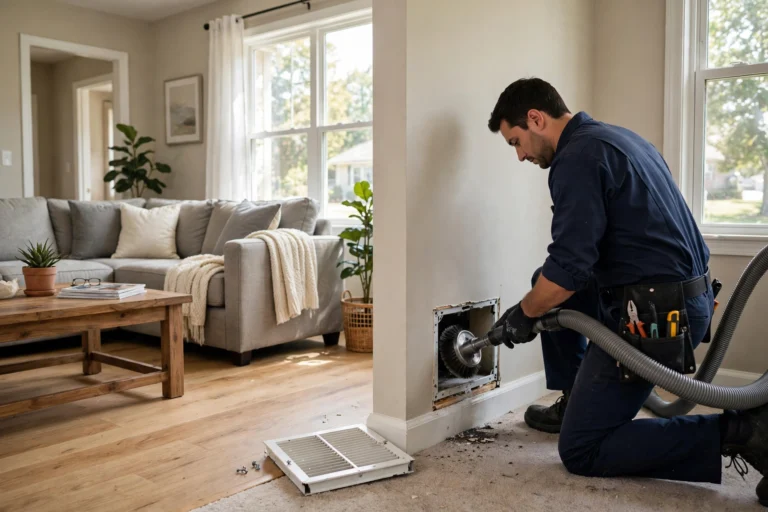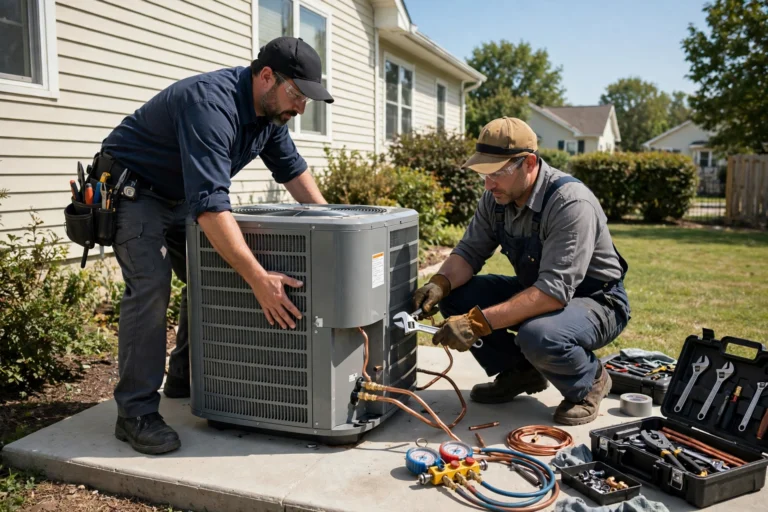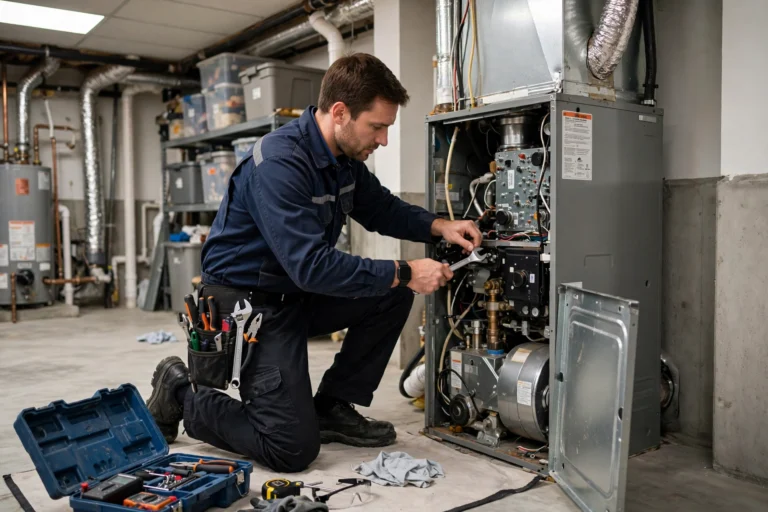
HVAC Repair Cost 2026
When the air coming out of your vents feels wrong, the first question is always the same. How much does HVAC repair cost? In 2026, the average hvac repair cost is about $350 nationally, and most repairs land between $150 and $650. That is a solid budgeting number, but hvac repair cost varies a lot depending on what failed, what refrigerant your system uses, and whether you call on a Tuesday morning or a Saturday night.
The full range for residential hvac repair cost runs from $100 to $3,000. A blown capacitor, the single most common service call, runs $100 to $250 all in, while a failed compressor can top $2,000. Most homeowners never face the expensive end. This guide covers every major repair with real contractor pricing, the fees on the invoice, and the two rules that tell you when a repair is no longer worth it.
HVAC Repair Cost at a Glance
| Item | Typical Cost (2026) |
|---|---|
| National average repair | About $350 |
| Most common repair range | $150 to $650 |
| Full residential range | $100 to $3,000 |
| Service call and diagnostic fee | $75 to $200, often credited toward the repair |
| Technician hourly labor | $75 to $150 per hour |
| Emergency and after-hours labor | $140 to $250 per hour |
| Single tune-up visit | $70 to $200 |
| Annual maintenance plan | $150 to $500 per year |
These hvac repair cost figures are national estimates from 2026 contractor data, and local labor rates move them in both directions. California averages around $575 per repair while Florida and Texas sit near $330, mostly because of the difference in labor costs. Every price in this guide is an estimate, and you should get 3 local quotes before approving any work.
HVAC Repair Cost by Repair Type
This is where hvac repair cost gets specific. These numbers are the real answer to how much does hvac repair cost for each common failure, shown as typical installed prices with parts plus labor.
| Repair | Typical Installed Cost | Notes |
|---|---|---|
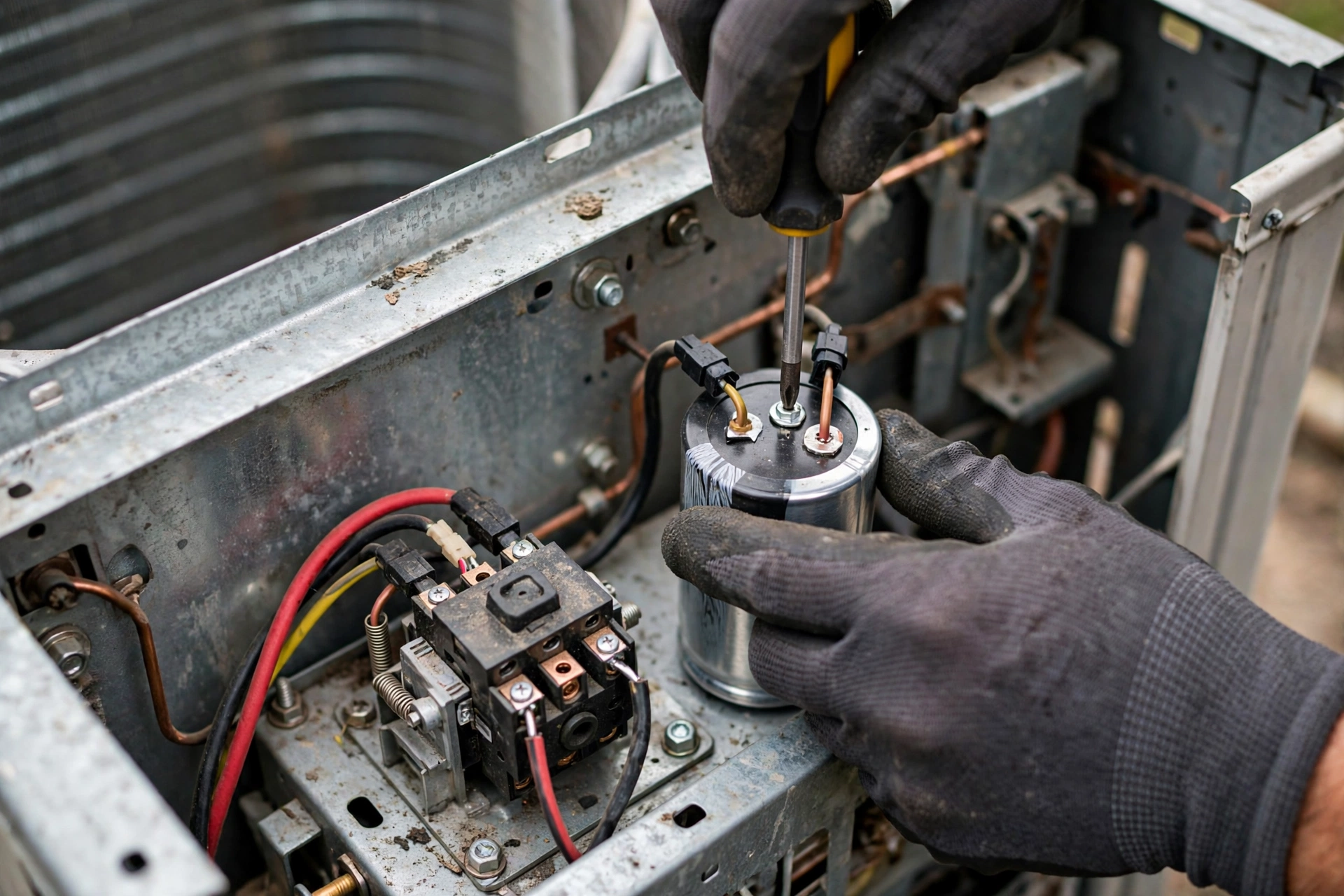
| Capacitor | $100 to $250 | Most common service call; cheap part, quick fix |
| Contactor | $150 to $380 | Often fails together with the capacitor |
| Thermostat (basic to smart) | $120 to $350 | Smart models run higher with wiring |
| Furnace ignitor | $150 to $300 | A top cause of “no heat” calls |
| Flame sensor or thermocouple | $75 to $250 | Cleaning is often tried first |
| Control board | $100 to $600 | Furnace boards trend $300 to $700 |
| Condenser fan motor | $200 to $700 | Common on older outdoor units |
| Blower motor | $300 to $900 | Variable-speed ECM motors run $600 to $1,500+ |
| Refrigerant leak (locate and repair) | $250 to $1,500 | Finding the leak is the hard part |
| Refrigerant recharge (full) | $100 to $500+ | Depends on refrigerant type and pounds needed |
| Evaporator coil | $600 to $2,400 | Labor heavy; access matters |
| Compressor | $800 to $3,000 | Most expensive single repair; often triggers replacement talk |
| Heat exchanger (furnace) | $1,000 to $3,000 | Most techs recommend full replacement at this price |
| Condensate drain line flush | $75 to $250 | Often part of a tune-up visit |
If you remember one thing about hvac repair cost, make it this. The cheapest common fix, the capacitor at $100 to $250, is also the one contractors see most. The most expensive common fix, the compressor at $800 to $3,000, is the one that usually starts a replacement conversation instead. Everything else falls in between.
AC Repair vs Furnace Repair vs Heat Pump Repair
Comparing hvac repair cost by system type shows clear patterns. Air conditioners and furnaces each have their own failure points, and heat pumps run a little hotter on price because they work year round.
| System | Average Repair | Typical Range |
|---|---|---|
| Central AC | About $350 | $150 to $650 |
| Furnace | $250 to $450 | $150 to $2,500 |
| Heat pump | About $400 | $150 to $650 |
| Ductless mini-split | About $300 | $150 to $1,500 |
Heat pump repairs run roughly $125 more per job than standard AC repairs. The reversing valve is the main reason, and the fact that a heat pump never really gets an off season adds wear. If your system is a heat pump, our heat pump repair cost guide breaks down its specific failure points. Furnace repairs skew wider because minor fixes like ignitors stay cheap while major ones like heat exchangers get into replacement territory.
Service Call and Diagnostic Fees
Most hvac repair cost totals start with a service call fee. The standard band is $75 to $200, with the national average around $125. Some companies quote $100 to $250, which is on the high side but not unusual in expensive markets.
The fee is usually credited toward the repair if you approve the work, but not always. Ask before the tech rolls. A diagnostic visit covers travel, a full inspection, electrical testing, and a written estimate. Decline the repair and you pay only the fee, which is fair and standard.
Once diagnosed, labor runs $75 to $150 per hour, or a flat fee per repair that can favor you on longer jobs. Either way, ask for labor as a separate line item so you can compare quotes fairly.
HVAC Service Cost and Maintenance Plans
Day to day hvac service cost is really two things, the tune-up visit and the annual plan. A single tune-up runs $70 to $200. An annual maintenance plan with two seasonal visits runs $150 to $500 per year, with most basic plans clustering around $150 to $300.
Plans usually include a 5 to 15 percent discount on repairs, priority scheduling during heat waves and cold snaps, and reduced or waived emergency fees. A proper tune-up covers refrigerant checks, coil cleaning, drain line flushing, electrical tightening, capacitor and contactor testing, filter replacement, thermostat calibration, and safety control checks.
The maintenance math works out for most homeowners. A well-maintained system can cut energy bills by about 15 percent, and a tune-up catches failing capacitors and dirty coils before they turn into $800 surprises. Keeping up with maintenance is the simplest way to keep hvac repair cost down year after year.
Emergency HVAC Repair Pricing
Emergency hvac repair cost follows its own price list. After-hours labor runs $140 to $250 per hour, which is roughly 1.5 to 2 times the normal rate. Many companies instead add a flat surcharge of $100 to $300 on top of the standard repair price. The typical add-ons look like this: evenings plus $50 to $100, weekends plus $75 to $150, and holidays plus $100 to $200.
Sometimes the premium is worth paying. No heat during a freeze can burst pipes and turn a $400 repair into a $4,000 water damage claim. No cooling with elderly family members or infants in the house during extreme heat is a safety issue, not a comfort one.
But many so-called emergencies can wait until morning. Lukewarm air, a strange noise with the system still cooling, or a tripped drain line are all next-day problems. A maintenance plan with reduced after-hours fees dodges the premium entirely.
What Affects the Price
No single number captures hvac repair cost because several forces push it around at once. Here are the ones that matter most.
- Which part failed. This is the biggest driver by far. A $20 capacitor and a $1,500 compressor are both “a repair” but they are different universes of cost.
- Refrigerant type. R-410A costs $40 to $80 per pound installed, while older R-22 runs $90 to $150 because supply is drying up. New R-454B systems sit near $80 per pound. A system holds 2 to 5 pounds, so the wrong refrigerant adds hundreds to a recharge.
- System age and maintenance history. Older units need harder to find parts, and neglected units often have cascading failures where one bad part took others down with it.
- OEM vs universal parts. Original manufacturer parts cost more; universal parts work fine for many repairs, but some boards and motors really want the OEM version.
- Season and demand. Peak heat and peak cold bring premium pricing and longer wait times. Shoulder seasons in spring and fall are the cheapest time to schedule non-urgent work.
- Regional labor rates. The same capacitor job costs noticeably more in coastal California than in the Midwest or South.
- Access difficulty. A unit sitting in a tight attic or crawlspace adds labor time versus one on an open pad beside the house.
Repair or Replace: Two Rules That Actually Work
When hvac repair cost climbs into four figures, the real question changes. Should you even fix it? Contractors lean on two rules of thumb, and they are both easy to use.
The $5,000 rule. Multiply the age of your unit by the repair cost. If the result is over $5,000, replace the system. A 12-year-old unit facing a $500 repair scores 6,000, which says replace. A 5-year-old unit facing the same $500 repair scores 2,500, which says fix it.
The 50 percent rule. If the repair costs more than half of what a new unit would cost, replace. A $2,500 repair on a system that would cost $4,000 to replace fails this test badly.
Age thresholds back these rules up. An AC under 10 years old is usually worth repairing; over 15 years, replacement usually wins.
Furnaces at 15 years or older strongly favor replacement. A cracked heat exchanger is the non-negotiable case: it is a carbon monoxide hazard that cannot legally be repaired, so the furnace gets replaced, period. Our furnace replacement cost guide has the numbers if you land there.
Three more red flags for rising hvac repair cost: three or more repairs in the last 12 months, a system still on R-22, or a SEER rating under 10.
Replacing a 15-year-old AC with a modern model can cut cooling costs by 20 to 40 percent. If you are weighing a new setup, see our AC unit cost guide for installed prices by size and brand.
Does a Home Warranty Cover HVAC Repairs?
A home warranty can blunt hvac repair cost, but the coverage has real limits. Premiums run $600 to $840 per year, and each claim carries a service call fee of $75 to $150, averaging about $108. HVAC is the most claimed home system, accounting for roughly 24 percent of breakdowns, so warranty companies price that risk in.
Caps typically run $1,500 to $5,000 per contract term, with some companies capping HVAC at $3,000 per item. That covers most repairs but not a full replacement. Covered parts are usually the mechanical and electrical ones that fail from normal wear, like blower motors and control boards.
Exclusions are where homeowners get surprised: poor maintenance, pre-existing issues, required code upgrades, and damage from improper installation. Some contracts also depreciate payouts on older systems. Read the sample contract before you buy, not after the system dies.
How to Hire an HVAC Tech and Get Fair Quotes
Getting hvac repair cost quotes right is a short checklist, not a research project. Verify the contractor is licensed and insured in your state. Ask whether the diagnostic fee is credited toward the repair. Ask for parts and labor as separate line items so you can compare quotes fairly. Ask what warranty comes with the parts and the labor, one year on labor is the common standard.
Then get 3 local quotes for anything over a few hundred dollars; prices in the same city routinely differ by 20 to 30 percent. Be wary of phone quotes without a diagnostic visit and of techs who push replacement before diagnosing.
A good tech shows you the failed part and quotes repair and replacement side by side. If the numbers feel off, the HVAC cost guides on this site give you the full replacement picture.
Frequently Asked Questions
What is the average hvac repair cost?
The average hvac repair cost is about $350 nationally in 2026, with most repairs falling between $150 and $650. The full range for residential repairs runs from $100 to $3,000 depending on which part failed.
How much does an HVAC service call cost?
An HVAC service call and diagnostic fee runs $75 to $200, with $125 being the national average. The fee is often credited toward the repair if you approve the work, but not every company does this, so ask before booking.
What is the cheapest and most expensive common repair?
The cheapest common repair is the capacitor at $100 to $250 installed, and it is also the most frequent service call. The most expensive common repair is the compressor at $800 to $3,000, which often pushes homeowners toward replacement instead.
Why does heat pump repair cost more than AC repair?
Heat pump repairs average about $125 more per job than standard AC repairs. The reversing valve adds a failure point that ACs do not have, and heat pumps run year round, which adds wear to every major component.
When should I replace my HVAC system instead of repairing it?
Use the $5,000 rule: multiply the unit’s age by the hvac repair cost, and replace if the result tops $5,000. The 50 percent rule also works: replace if the hvac repair cost is more than half of a new system. A cracked heat exchanger always means replacement because it is a carbon monoxide hazard.
How much does an HVAC tune-up cost?
A single tune-up visit costs $70 to $200. Annual maintenance plans with two seasonal visits run $150 to $500 per year and usually include repair discounts, priority scheduling, and reduced emergency fees.
The Bottom Line
Knowing the average hvac repair cost before you call puts you in control. Budget around $350 for a typical fix, expect $75 to $200 for the diagnosis, and remember the most common repair is also one of the cheapest. For big-ticket failures, run the $5,000 rule first and get 3 local quotes.
For TheFixPrice, I’m Mike Reynolds. I research contractor pricing across the US so homeowners can budget with real numbers before they call a pro.