Toilet Installation Cost 2026
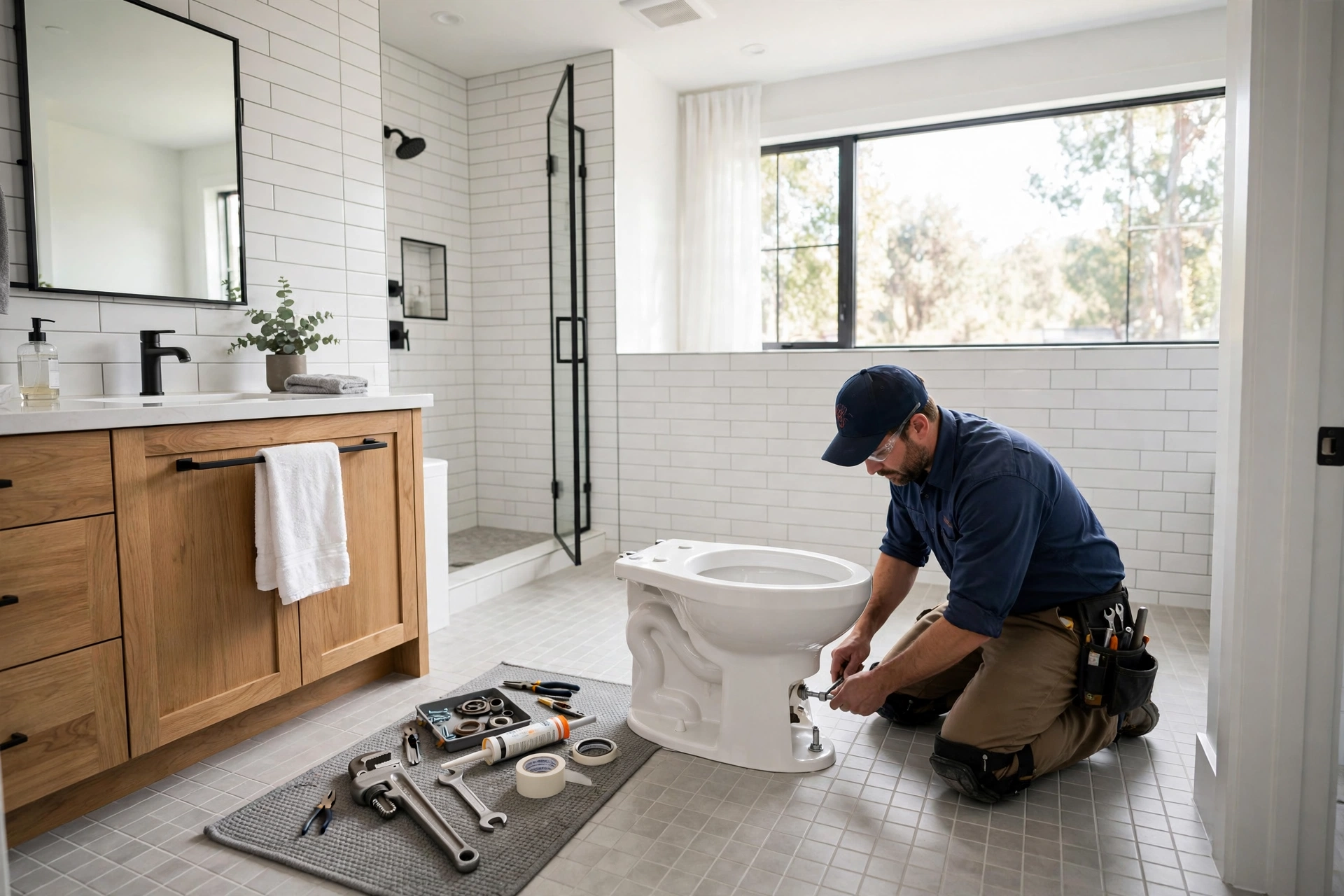
If your toilet is cracked, rocking, or running your water bill up every month, here is the number that matters: the average toilet installation cost for a straightforward replacement is about $375 in 2026, with most homeowners paying between $225 and $535 for the full job, fixture included (Angi 2026). As plumbing jobs go, a toilet swap is one of the cheapest calls you can make.
Not every job looks like that, though. The cost to install a toilet climbs quickly when you are putting a toilet where none existed, picking a smart toilet, or finding a rotted flange under the old one. This guide breaks down real 2026 contractor pricing for every scenario, so you know what is fair before anyone picks up a wrench.
Toilet Installation Cost at a Glance
If you only need the headline numbers on toilet installation cost, here they are. Most of what follows explains where your job lands in these ranges.
| Job | Typical cost in 2026 |
|---|---|
| Like-for-like replacement, all in | About $375 on average |
| Typical replacement range | $225 to $535 |
| Labor only, straightforward swap | $100 to $300 |
| Brand-new installation with new plumbing | $1,000 to $3,500+ |
| Budget toilet fixture | From about $100 |
| Mainstream two-piece fixture | $375 to $450 |
| One-piece fixture | $400 to $1,200 |
| Smart toilet fixture | $1,200 to $3,500 |
Fixr puts the national average a little higher at $450, with a broader range of $250 to $800 for materials and labor (Fixr 2026). Either way, a standard toilet replacement cost stays well under $1,000 unless the plumbing underneath needs work.
Replacement vs a Brand-New Installation
The single biggest variable in toilet installation cost is whether the plumbing already exists. Swapping a toilet in the same spot is a one-visit job. Adding a toilet where none existed means new drain lines, a new vent, and sometimes a permit, which is a different project.
| Scenario | What is involved | Typical cost |
|---|---|---|
| Like-for-like replacement | Old toilet out, new toilet on the existing flange and water line | $225 to $535 |
| Replacement with minor repairs | New seal, flange repair, or shut-off valve during the swap | $400 to $900 |
| New toilet near an existing drain | Short new run to nearby drain lines, common in basements | $800 to $1,500 |
| Brand-new toilet, new plumbing | Full new drain, vent, and water line rough-in | $1,000 to $3,500+ |
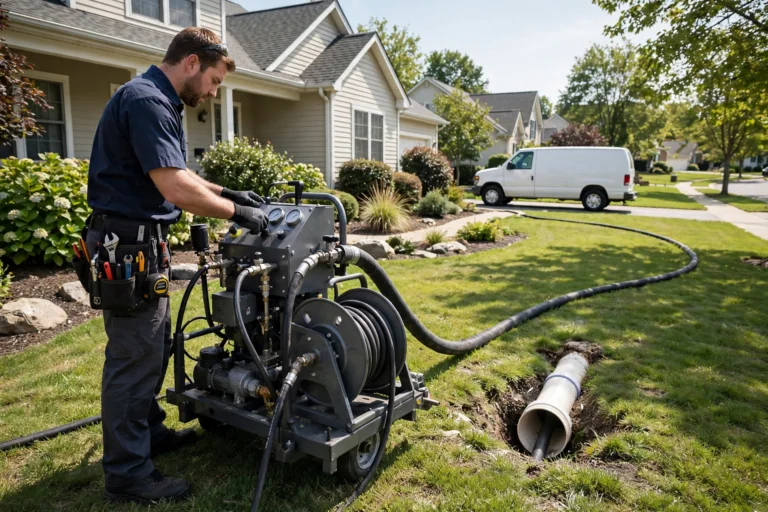
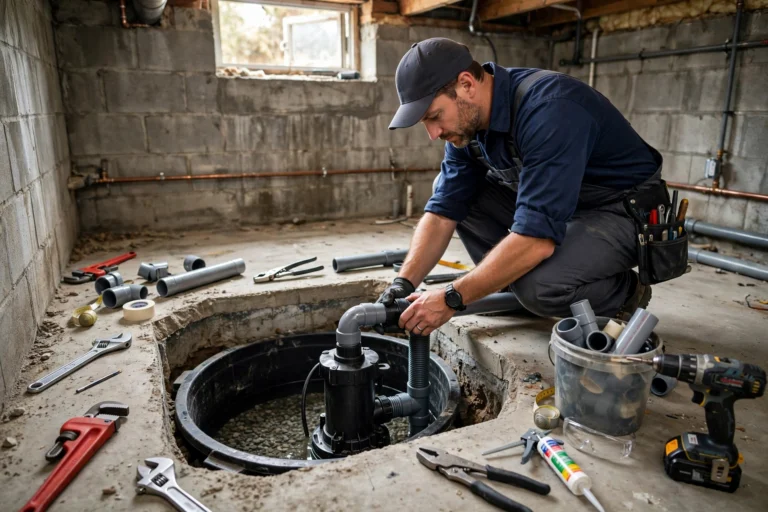
| Basement toilet with ejector pump | Pump system to move waste up to the main sewer line | $2,000 to $5,000 |
A swap in the same spot almost never needs a permit. New plumbing runs usually do, and the inspection alone can add a day or two to the timeline. If the toilet is part of a bigger bathroom refresh, price it alongside our bathtub replacement cost guide, or our tub to shower conversion guide if the tub is going too. Bundling bathroom work into one visit can cut the per-job labor.
One more thing that moves a quoted toilet installation cost: your city. Block Renovation notes that major metros run 30 to 50 percent above the national average, and Angi’s city data backs that up, with a basic swap running $480 to $720 in Brooklyn but $220 to $375 in Houston (2026).
What a Plumber Charges for Labor
Labor is the steadiest part of toilet installation cost, and it is the most predictable slice of your toilet replacement cost too. For a straightforward swap, expect $100 to $300 in labor alone (coohom 2026). ConsumerAffairs breaks it down further: about $100 to $150 when the flange and subfloor are sound, plus another $100 to $400 when they are not. Block Renovation puts professional labor at $200 to $500, noting most plumbers price the job as a flat rate rather than by the hour.
Hourly rates run $45 to $150, and a simple swap takes 1 to 2 hours: drain the tank, unbolt the old toilet, set the new seal, and test for leaks. Complex jobs with flange or floor repairs can stretch to 2 to 4 hours or more.
Watch for the minimum charge. Many plumbers have a trip fee or a minimum service call, which is why a $120 labor job can be quoted at $200. The fix is bundling: if you also need a garbage disposal installation or a leaky faucet fixed, having the plumber do it all in one visit spreads that minimum across the work. Home Depot’s installation service offers a fixed-rate option at $100 to $300 for the labor, though the toilet itself is extra.
Toilet Prices by Type
The fixture you choose is the other half of toilet installation cost. A basic two-piece from a big-box store and a smart toilet with a heated seat are not the same purchase, and the price spread is enormous.
| Toilet type | Typical installed cost |
|---|---|
| Standard two-piece | $200 to $950 |
| One-piece | $400 to $1,200 |
| Wall-hung | $500 to $2,000 |
| Bidet toilet (built-in bidet) | $650 to $2,100 |
| Smart toilet | $1,200 to $3,500 |
| Macerating (upflush) | $700 to $2,000 |
Budget two-piece fixtures start at about $100 at retail, and mainstream models from American Standard and Kohler run $373 to $442 for the fixture alone. ConsumerAffairs sees most standard installed jobs land between $300 and $500 all in. One-piece toilets cost more because the tank and bowl are a single casting.
Wall-hung toilets hide the tank inside the wall, so they need a sturdy carrier frame and cost $200 to $400 extra when you are converting from a floor-mount model. Bidet toilets with a built-in wash function run $650 to $2,100 installed when replacing an existing toilet (HomeGuide 2026). Smart toilets with heated seats and auto flush are the luxury tier at $1,200 to $3,500. Macerating or upflush toilets, which grind waste and pump it to the drain, suit basements and additions where gravity drainage is a problem, at $700 to $2,000 installed.
Extra Costs and Surprises That Add to the Bill
These are the line items that push toilet installation cost past the first quote. None of them are scams; they are just the things a plumber cannot see until the old toilet comes up.
| Extra | Typical added cost |
|---|---|
| Old toilet removal and disposal | $30 to $100 |
| Wax ring, closet bolts, supply line, caulk | $20 to $75 |
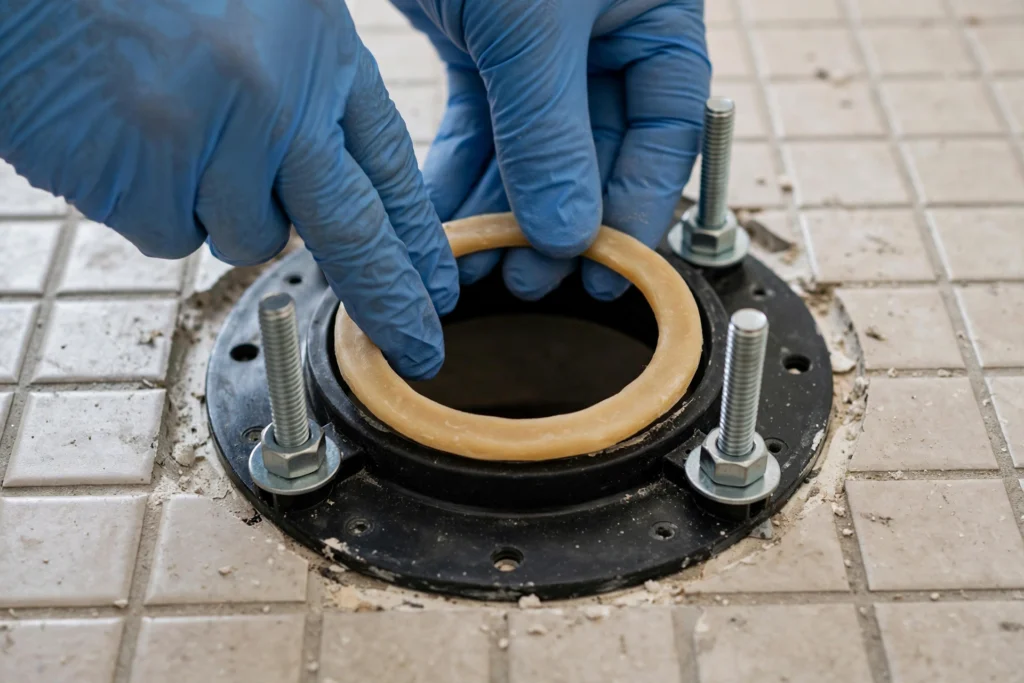
| Flange repair or replacement | $100 to $400+ |
| Subfloor or flooring repair from old leaks | $8 to $24 per square foot |
| New grounded outlet for a smart toilet or electric bidet seat | An electrician’s visit |
The flange is the usual suspect. A corroded or cracked flange, a rotted subfloor under a long-leaking toilet, or a seized shut-off valve that crumbles when touched can add $100 to $400 or more to the job, and severe floor damage can run far higher. If the drain line itself is damaged, that stops being a toilet job and becomes a sewer line replacement conversation, which is priced very differently.
Disposal is the smallest line item and the easiest to handle: many plumbers include haul-away, and municipal bulk pickup is often free, so ask before paying a separate fee.
Adding a Bidet Seat Instead of a Full Bidet Toilet
A bidet seat changes the math on toilet installation cost because you keep your existing toilet and just upgrade the seat. Non-electric bidet attachments cost $20 to $100 for the unit, or $100 to $300 with professional installation (HomeGuide 2026). Electric bidet seats with warm water and heated seats run $150 to $700 for the unit and $250 to $1,000 installed.
Attachments are a common DIY job: remove the seat, add a T-valve to the water line, and mount the attachment. Angi even sells a fixed-price bidet seat installation for $74.49 through Bed Bath & Beyond. Electric models are the catch: they need a grounded outlet near the toilet, and adding one is an electrician’s job, not a plumber’s.
DIY vs Hiring a Plumber
Going DIY is the fastest way to cut the cost to install a toilet. Materials for a swap run about $35: a wax ring, closet bolts, and a supply line. If you can shut off the water and work a wrench, a like-for-like swap is one of the most beginner-friendly plumbing jobs there is.
Hire a plumber when the flange or subfloor is damaged, when new plumbing lines are needed, when you are switching toilet types (say, to a wall-hung model), or when a smart toilet needs an outlet added. Here is what goes wrong on DIY jobs: overtightened closet bolts can crack the porcelain, a poorly seated wax ring causes a slow leak and sewer gas, and a toilet that rocks was never shimmed and leveled properly. Any of those turns a $35 Saturday into a $400 service call, which wipes out the toilet installation cost you saved by going DIY.
Water Savings: Why a WaterSense Toilet Pays You Back
A WaterSense labeled toilet uses 1.28 gallons per flush or less, versus the federal standard of 1.6. Toilets from before the 1980s use up to 6 gallons per flush, and early 1990s models use up to 3.5.
The EPA estimates that replacing old toilets with WaterSense models saves the average family nearly 13,000 gallons of water and more than $140 to $170 per year (EPA; Consumer Reports 2026). That means part of your toilet installation cost comes back to you every year on the water bill. Some cities and water utilities also offer rebates or vouchers that lower the price of a WaterSense toilet, so check your local utility before you buy.
How to Get an Accurate Quote
To pin down your exact toilet installation cost, get itemized quotes that separate the fixture, the labor, the supplies, and the old toilet removal. Ask whether the quote includes a flange inspection and what happens if the flange is damaged, because that is the most common source of mid-job price changes. Also ask whether the plumber charges flat rate or hourly, and whether there is a trip fee. If you are wondering how much does it cost to replace a toilet in your city specifically, those itemized quotes are the only honest answer.
Photos help a lot. Send each plumber a photo of the existing toilet, the floor around its base, and the shut-off valve. A stained or soft floor in the photo tells the plumber to budget for subfloor work, which gets you a realistic toilet installation cost instead of a lowball that grows on installation day.
Every price in this guide is an estimate based on 2026 contractor pricing across the US. Your total will vary by city and by what the plumber finds under the old toilet, so get at least 3 local quotes before you book.
FAQ
How much does it cost to replace a toilet?
The national average toilet installation cost for a standard replacement is about $375, with most jobs landing between $225 and $535 (Angi 2026). A standard replacement with the unit, labor, supplies, and disposal typically runs $400 to $900 (Block Renovation 2026).
How much does a plumber charge to replace a toilet?
Labor alone runs $100 to $300 for a straightforward swap. ConsumerAffairs puts it at $100 to $150 when the flange and subfloor are sound, plus $100 to $400 when repairs are needed. Home Depot’s installation service charges $100 to $300 for labor, with the toilet sold separately.
How long does toilet installation take?
A simple like-for-like swap takes 1 to 2 hours. Jobs that need flange repair, subfloor work, or a new water line can take 2 to 4 hours or longer.
Can I install a toilet myself?
Yes. A like-for-like swap is a common DIY project costing about $35 in materials. Call a plumber if the flange or subfloor is damaged, if you need new plumbing lines, or if you are switching to a wall-hung or smart toilet.
How much does a new toilet cost by itself?
Budget two-piece models start at about $100 at retail. Mainstream fixtures from American Standard and Kohler run $373 to $442, and that fixture price is the biggest lever on your total toilet installation cost. Smart toilets climb into the thousands.
Will a new toilet lower my water bill?
Yes, if your old toilet is a water hog. A WaterSense 1.28 GPF toilet saves the average family nearly 13,000 gallons and more than $140 to $170 per year compared with older inefficient models, according to the EPA.
The Bottom Line
For most homeowners, toilet replacement cost is a $225 to $535 job, and the $375 average is a fair number to budget around. Pick your fixture wisely, since it is the biggest lever. And remember that the surprises live under the old toilet, not in the box: a quick look at the flange and the floor before you buy can save you from the most common budget busters and keep your final toilet installation cost close to the quote.
For TheFixPrice, I’m Mike Reynolds. I research contractor pricing across the US so homeowners can budget with real numbers before they call a pro.