Hardwood Floor Installation Cost 2026
Hardwood floor installation cost runs $6 to $25 per square foot installed in 2026, with most homeowners paying $10 to $16 per square foot. The average project lands around $4,723, though your final number depends on the species you pick, your subfloor condition, and whether you go with solid planks or engineered boards. These figures reflect 2026 US contractor pricing, so get 3 local quotes from licensed installers before you commit.
Hardwood remains the gold standard for home flooring. It holds its value at resale, lasts for generations, and brings a warmth that no other material quite matches. But it is also one of the most expensive flooring projects you can take on, and the gap between a budget install and a premium one can be tens of thousands of dollars.
Hardwood Floor Installation Cost: Price Overview
The hardwood floor installation cost per square foot covers two big slices: the material and the labor. Materials alone run $3 to $15 per square foot depending on the species, grade, and plank width. Labor alone runs $3 to $8 per square foot nationally, with nail-down installation on the lower end and glue-down or custom pattern work on the higher end. Roughly speaking, materials make up 50 to 70 percent of the total bill and labor makes up 30 to 50 percent.
Based on nearly 11,000 verified 2026 projects, the national average project cost is $4,723, with most jobs falling between $2,469 and $7,034. Budget installs run $6,000 to $10,000 for 1,000 square feet, while high-end projects with premium species and custom patterns can reach $20,000 to $30,000 or more.
Cost by Wood Type
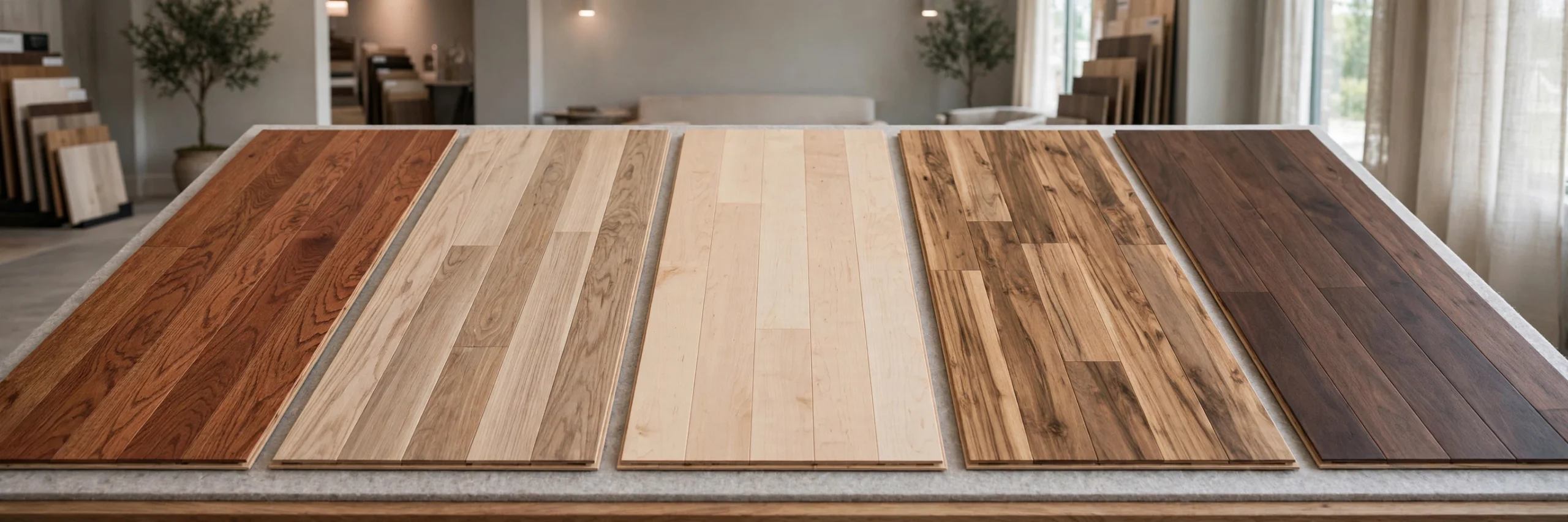
Species is the biggest material cost driver in the hardwood floor installation cost equation. Domestic woods like oak, maple, and hickory cost $4 to $8 per square foot in materials, while exotics like Brazilian walnut and teak run $8 to $15 or more per square foot just for the wood. Wider planks and thicker boards push each species further up the range.
| Wood Species | Material Only (per sq ft) | Installed (per sq ft) | Notes |
|---|---|---|---|
| Red Oak | $5 to $11 | $7 to $13 | The classic choice; durable and widely available |
| White Oak | $5 to $12 | $7 to $13 | Slightly harder than red oak; popular in 2026 |
| Maple | $4 to $15 | $8 to $14 | Light color; wide price range by grade |
| Hickory | $6 to $14 | $8 to $15 | Very hard; bold grain hides wear well |
| Walnut | $8 to $14 | $10 to $19 | Rich dark color; premium domestic pick |
| Exotics (Teak, Ipe) | $8 to $15+ | $11 to $22 | Extremely hard; top of the market |
Red and white oak dominate American installations because they balance price, durability, and looks. On a tight budget, lower grades of oak or maple give you real hardwood at the friendliest price. Exotics cost more upfront but pay off in homes with heavy traffic, pets, or kids.
Solid vs Engineered vs Luxury Vinyl: Which Should You Buy
Not all “wood floors” are the same product. Solid hardwood is a single piece of wood from top to bottom. Engineered hardwood is a thin layer of real hardwood bonded over a plywood core. Luxury vinyl plank looks like wood but contains no wood at all. Each has a very different hardwood floor installation cost profile and lifespan.
| Flooring Type | Installed (per sq ft) | Lifespan | Best For |
|---|---|---|---|
| Solid Hardwood | $6 to $28 | 80 to 100+ years | Forever homes; can be refinished 5 to 7 times |
| Prefinished Hardwood | $6 to $12 | 80 to 100+ years | Fast install with a tough factory finish |
| Engineered Hardwood | $10 to $22 | 20 to 40 years | Basements and over concrete; can be refinished 1 to 2 times |
| Luxury Vinyl Plank | $6 to $12 | 15 to 25 years | Water-prone areas; lowest installed cost |
Engineered hardwood is typically cheaper than solid on a full project and installs faster, but its thinner wear layer allows only one or two refinishes. For a 1,500 square foot home, engineered runs roughly $6,000 to $15,000 more than luxury vinyl plank. For moisture-prone areas, vinyl is the practical choice; for wood that outlives you, solid is worth the premium. For another budget-friendly comparison, see our guide on laminate flooring installation costs.
Total Cost by Project Size
The table below shows the all-in hardwood floor installation cost by project size at typical installed prices.
| Project Size | Typical Range | What It Covers |
|---|---|---|
| 500 sq ft (large living room) | $4,000 to $11,000 | One main room, basic prep, mid-grade wood |
| 1,000 sq ft (main floor) | $10,000 to $16,000 | Standard layout, normal prep, domestic species |
| 1,500 sq ft | $9,000 to $37,500 | Wide range: engineered on the low end, exotics on the high end |
| 2,000 sq ft (whole house) | $14,000 to $50,000 | Full house, stairs and transitions extra |
Keep in mind that minimum project charges matter: a single small bedroom can trigger a $2,500 minimum because mobilizing a crew costs the same as a medium job.
Extra Costs That Show Up on the Quote
The hardwood floor installation cost on the first quote is rarely the final number. These line items appear on most real invoices:
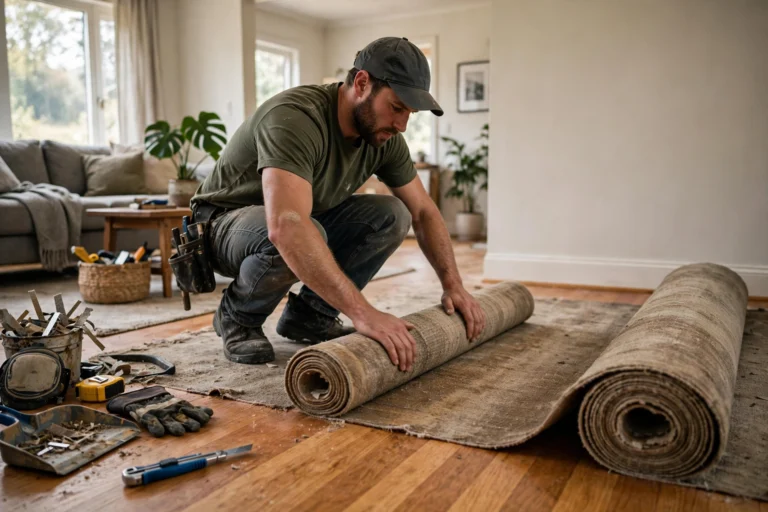
- Old floor removal and disposal: $1 to $3.50 per square foot for ripping up old carpet, tile, or vinyl and hauling it away.
- Subfloor prep and leveling: $1 to $2 per square foot normally; damaged subfloors in older homes can run $2 to $5 per square foot. Hidden subfloor damage is the most common budget surprise, typically adding $500 to $2,000.
- Moisture barrier and underlayment: $1 to $2 per square foot, essential over concrete slabs and in moisture-prone areas.
- Baseboards, trim, and transitions: $1 to $2 per square foot, or priced as individual line items to finish the job.
- Stairs: $100 to $300 per stair installed, with an average full staircase project around $2,400. Every tread is custom-fit, so stairs are labor-intensive.
- Pattern upcharges: herringbone or chevron layouts add roughly 30 percent to the total bill, mostly in extra labor and wasted material.
- Unfinished floor finishing: site sanding, staining, and sealing adds $2 to $7 per square foot if you buy unfinished wood.
When you compare bids, ask every contractor to itemize these separately. A quote that looks $2,000 cheaper but omits subfloor prep and old floor removal is not actually cheaper. Reputable wood floor installation services list every add-on in writing before you sign.
Unfinished vs Prefinished Hardwood
Prefinished hardwood arrives factory-sanded and sealed. It installs faster with less dust and odor, and the factory coating is tougher than most site-applied finishes. The tradeoff is a slightly higher material price and visible micro-bevels between boards.
Unfinished (site-finished) hardwood costs less in materials but adds $2 to $4 per square foot for staining and finishing labor. You live with dust and finish fumes longer, but you get a seamless custom look with the exact stain color you want. For most homeowners, prefinished is the practical pick: faster, cleaner, and a tougher surface. Choose unfinished when you are matching existing floors or want a stain color no factory line offers, since the finishing labor narrows the hardwood floor installation cost gap between the two options.
What Affects the Price
Several factors push your quote up or down beyond the base hardwood floor installation cost:
- Species and grade: the single biggest material driver. Exotics and clear grades cost far more than domestic select grades.
- Plank width and thickness: wide planks and 3/4-inch solid boards cost more than narrow strips or thin profiles.
- Layout pattern: a straight lay is cheapest; herringbone or chevron adds around 30 percent in labor and waste.
- Subfloor condition: rotted or uneven subfloors need repair before a single plank goes down.
- Region: metro labor rates run higher than rural rates; the same job can vary by $2 to $3 per square foot between markets.
- Room complexity: stairs, landings, odd angles, and lots of doorways all raise labor time.
- Furniture moving: some contractors include it, others charge a few hundred dollars; clarify this before signing.
Install Timeline and Acclimation
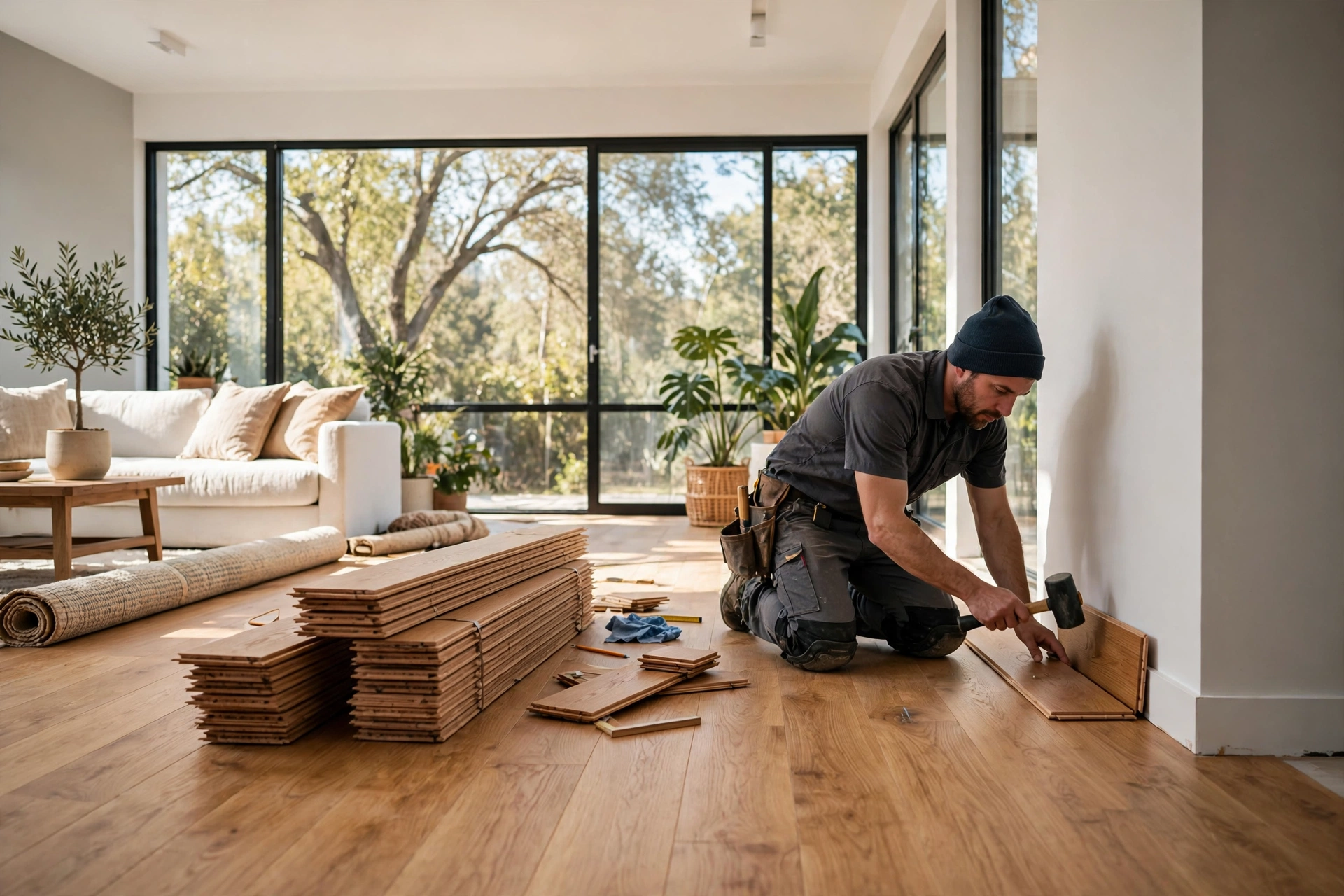
A pro crew lays roughly 300 to 500 square feet per day, so a typical hardwood floor installation takes 3 to 7 days for a medium home; a 1,000 square foot job runs 3 to 6 days, and a full house can stretch past a week. Site-finished floors add drying days on top of that.
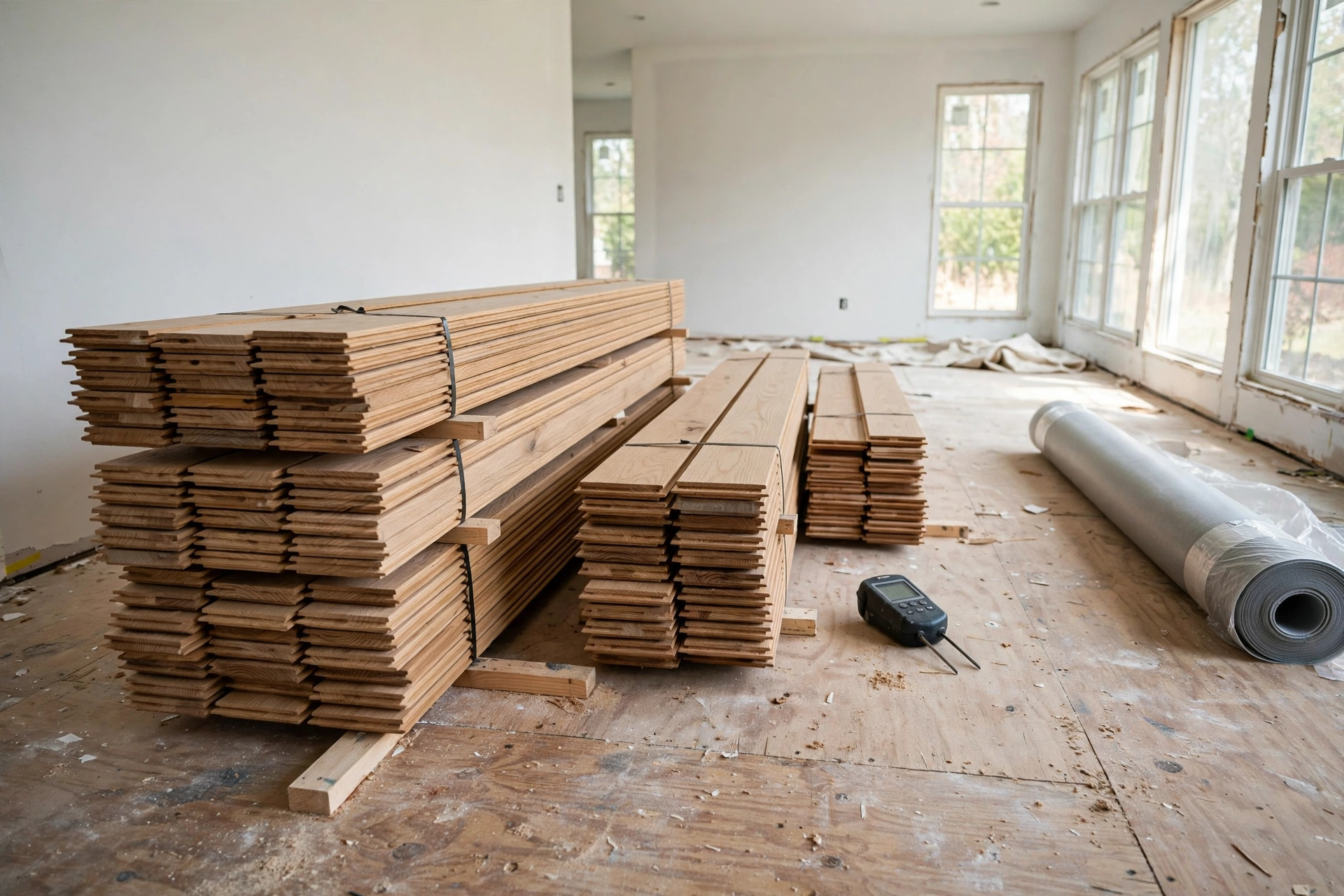
Before any of that starts, the wood must acclimate. Stacks of flooring sit in your home for 3 to 5 days so the boards adjust to your indoor humidity and temperature. Skipping acclimation is one of the leading causes of warping, gapping, and cupping later. Confirm acclimation is included in the quoted hardwood floor installation cost before work begins.
DIY vs Hiring a Pro
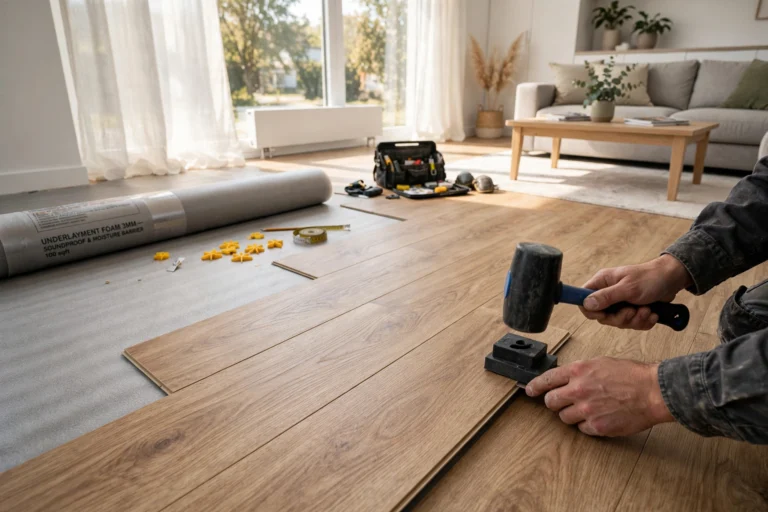
Doing the work yourself saves the $3 to $8 per square foot labor slice, which adds up on a large project. Engineered click-lock planks are the most DIY-friendly option; a handy homeowner can finish a small bedroom in a weekend.
Solid hardwood nail-down is a different story. It requires a flooring nailer, miter saw, moisture testing, and real experience. Bad nailing and mismeasured cuts are expensive to fix, and DIY work voids some manufacturer warranties.
If you hire out, get quotes from at least three wood floor installation services and check references plus photos of recent work. Ask how they handle acclimation, moisture testing, and subfloor prep; the answers separate careful craftsmen from fast crews. Comparing written bids is the simplest way to avoid overpaying on your hardwood floor installation cost.
New Install vs Refinishing Existing Floors
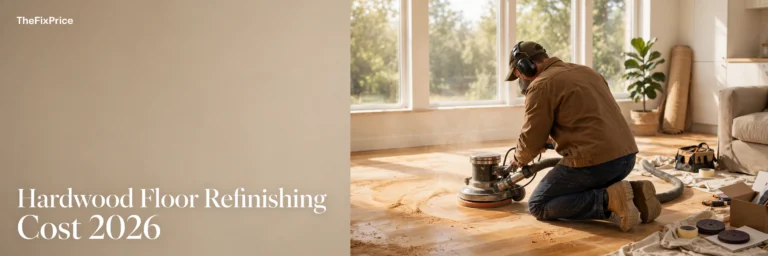
If worn hardwood hides under old carpet, refinishing is dramatically cheaper than replacement. Professional refinishing runs $3 to $8 per square foot, roughly 40 to 60 percent less than a full replacement. A 1,000 square foot refinish costs $3,500 to $6,500, while tearing it out and installing new runs $10,000 to $18,000. Request a refinishing estimate before you ask for a full hardwood floor installation cost quote.
Solid 3/4-inch hardwood can be refinished 5 to 7 times, so sound boards are worth saving. Engineered floors can only take one or two sandings, so worn engineered floors usually need replacement. See our guide on hardwood floor refinishing costs for the full breakdown.
Money-Saving Tips
- Pick a domestic species. Red or white oak delivers the classic hardwood look at the lowest hardwood floor installation cost.
- Choose standard widths and a straight lay. Wide planks and herringbone patterns add 20 to 30 percent; a straight lay of standard strips keeps labor at the floor.
- Remove the old flooring yourself. Demo and haul-away at $1 to $3.50 per square foot is a line item many homeowners can handle over a weekend.
- Refinish instead of replacing. If the boards are sound, sanding costs 40 to 60 percent less than new hardwood floor installation.
- Schedule in the off-season. Contractors are busiest in spring and summer; fall and winter often bring better pricing and faster scheduling.
- Bundle rooms. Installers charge minimums, so doing the whole main floor at once costs less per square foot than one room at a time.
- Compare at least three bids. The cost to install hardwood floors varies wildly between contractors, so itemized quotes from three hardwood floor installers protect you from overpaying.
FAQs
How much does hardwood floor installation cost per square foot?
Installed hardwood runs $6 to $25 per square foot, with most homeowners paying $10 to $16 per square foot. The 2026 national average project cost is $4,723 based on nearly 11,000 verified projects.
Is solid hardwood or engineered hardwood cheaper?
Engineered hardwood is typically cheaper on a full project, installing at $10 to $22 per square foot versus $6 to $28 for solid. It also installs faster, but solid lasts 80 to 100+ years and can be refinished many more times.
How long does hardwood floor installation take?
Plan on 3 to 7 days for a typical home, plus 3 to 5 days of acclimation before work begins. A 1,000 square foot job usually takes 3 to 6 days for the install itself.
Can I install hardwood floors myself?
Engineered click-lock planks are doable for handy DIYers and save $3 to $8 per square foot in labor. Solid nail-down hardwood is best left to professional hardwood floor installers because it needs specialized tools and experience.
Is it cheaper to refinish or replace hardwood floors?
Refinishing is much cheaper at $3 to $8 per square foot, typically 40 to 60 percent less than replacement. If your existing boards are structurally sound, refinishing gives you like-new floors for a fraction of the cost to install hardwood floors from scratch.
How long do hardwood floors last?
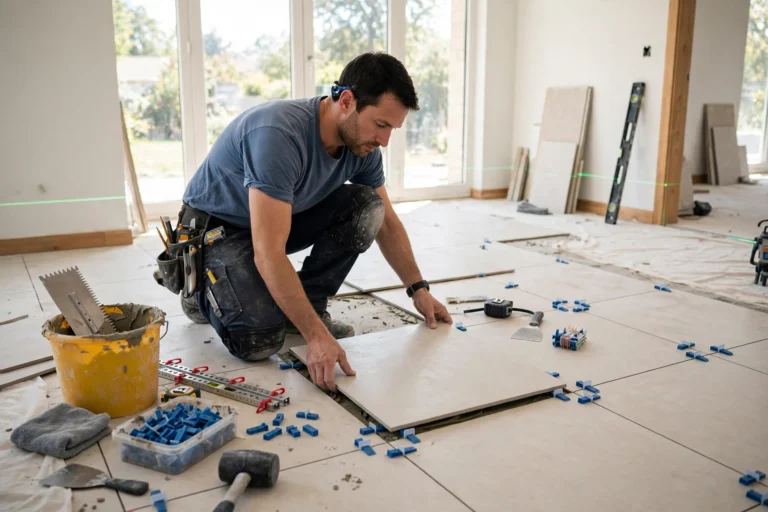
Solid hardwood lasts 80 to 100+ years and can be sanded 5 to 7 times. Engineered hardwood lasts 20 to 40 years depending on wear layer thickness, with only 1 to 2 possible refinishes. For wet areas, compare tile floor installation costs, since tile handles moisture far better than any wood product.
Hardwood is one of the few renovations that pays you back, returning 70 to 80 percent of the hardwood floor installation cost at resale. Get 3 local quotes and compare each hardwood floor installation cost estimate line by line, ask about acclimation and subfloor prep, and pick the species that fits both your home and your budget.