
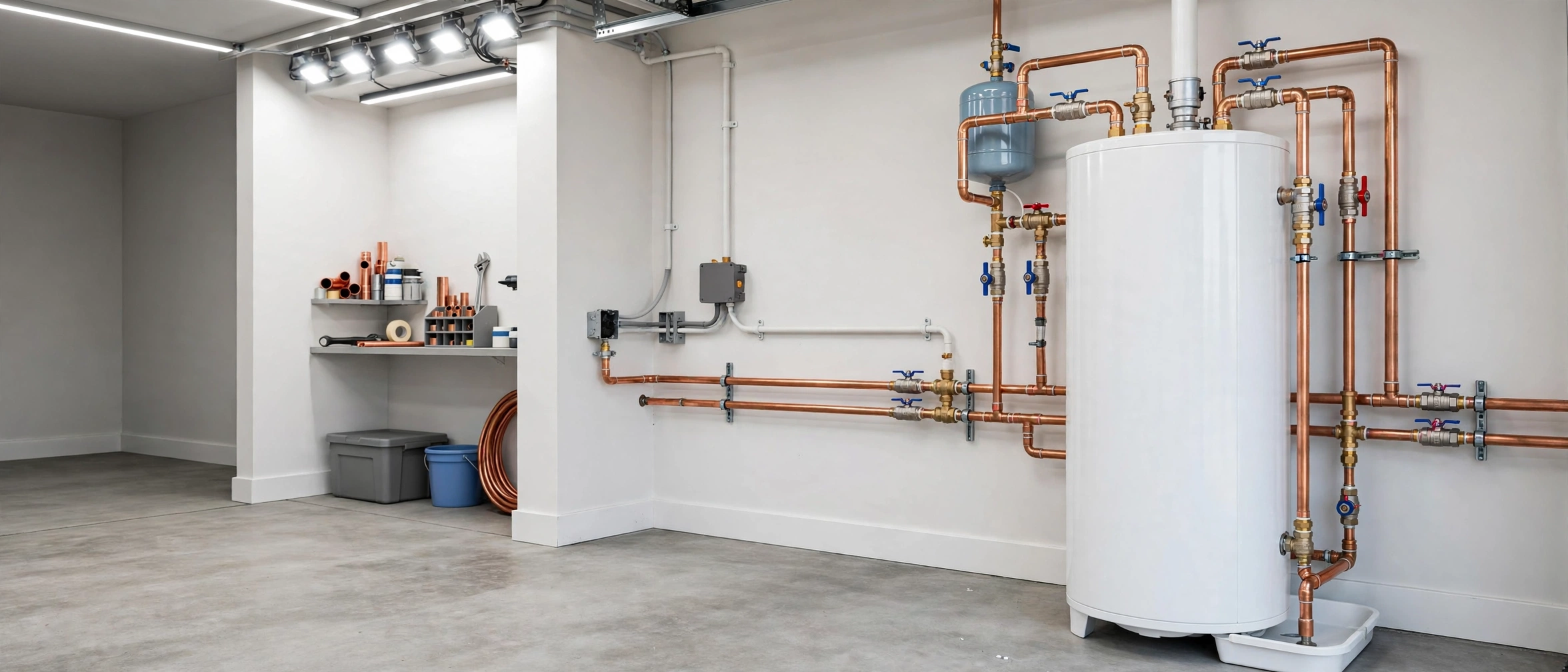
Water Heater Installation Cost 2026: Full Breakdown
Quick answer: Water heater installation costs $1,000 to $3,500 on average in 2026. A standard tank model runs $1,000 to $2,500 installed; a tankless unit runs $2,500 to $5,500. The unit itself is only half the story: fuel type, venting, and code upgrades decide the final bill.
Nobody thinks about their water heater until the shower goes cold. Then it becomes an emergency purchase, which is exactly when contractors charge the most. Read this before yours fails.
Average Water Heater Installation Cost in 2026
| Type | Unit cost | Installed cost | Lifespan |
|---|---|---|---|
| Standard tank (gas, 40-50 gal) | $600 to $1,200 | $1,000 to $2,200 | 8 to 12 years |
| Standard tank (electric, 40-50 gal) | $500 to $1,000 | $900 to $2,000 | 8 to 12 years |
| Tankless (gas) | $1,000 to $2,500 | $2,500 to $5,500 | 15 to 20 years |
| Tankless (electric) | $600 to $1,500 | $1,500 to $3,500 | 15 to 20 years |
| Heat pump / hybrid | $1,200 to $2,500 | $2,000 to $4,500 | 10 to 15 years |
What Drives the Price
1. Tank vs tankless
Tankless units cost more upfront but last nearly twice as long and cut energy use 25 to 35 percent for typical households. The catch: gas tankless often needs upgraded venting ($500 to $1,500) and sometimes a larger gas line ($500 to $1,000). Electric tankless may need a panel upgrade. Get an all-in quote, not just the unit price.
2. Like-for-like vs fuel switch
Replacing gas with gas (or electric with electric) is cheapest. Switching fuel types adds $500 to $2,000 in new lines, venting, or electrical work. It can still pay off long-term, but budget for it.
3. Code upgrades
Many jurisdictions now require an expansion tank ($100 to $300), a drain pan, updated venting, or earthquake straps. If your old unit predates current code, expect $200 to $800 in bring-to-code costs. This is not upselling; inspectors check.
4. Location and access
Attic, crawlspace, or tight closet installations cost more in labor. Moving the unit to a new location adds $500 to $1,500 in plumbing and venting work.
Tank vs Tankless: The Honest Math
A tankless unit saves roughly $100 to $200 per year on energy for a typical family. On a $2,000 price premium over tank, payback takes 10 to 15 years: about the unit’s lifespan. So tankless is not a money-maker; it is a comfort and space upgrade (endless hot water, wall-mounted, no flood risk from a burst tank). Buy it for those reasons, not imaginary savings.
How to Save
- Replace before it fails. Emergency installs cost 20 to 40 percent more. If your tank is 10+ years old, start getting quotes now.
- Keep the same fuel and location. Like-for-like swaps are the cheapest installs by far.
- Check utility rebates. Many utilities offer $200 to $750 for heat pump or high-efficiency tankless units. Check before you buy.
- Buy the unit yourself from a big-box store during a sale, then hire a plumber for labor only. Just confirm the warranty terms first.
Frequently Asked Questions
How much does it cost to replace a 50-gallon water heater?
$1,000 to $2,200 installed for gas, $900 to $2,000 for electric, in 2026. Code upgrades or difficult access can add a few hundred more.
Is tankless worth it?
For endless hot water, space savings, and double the lifespan: yes. For pure cost savings: the payback is roughly the unit’s lifetime, so it is break-even financially.
How long does installation take?
Two to four hours for a like-for-like tank swap. Tankless conversions take a full day or two with venting and gas line work.
What size water heater do I need?
40-50 gallons suits most 2-3 person households; 50-75 for larger families. For tankless, size by peak simultaneous demand (showers + appliances running at once), not by household size alone.
Do I need a permit?
Yes, in most cities: $50 to $200. Your installer usually pulls it. Gas work without a permit is a safety and insurance risk.
Last updated: October 2026. Figures reflect 2026 national contractor pricing data. Always get local quotes before committing.