Walk-In Tub Cost 2026
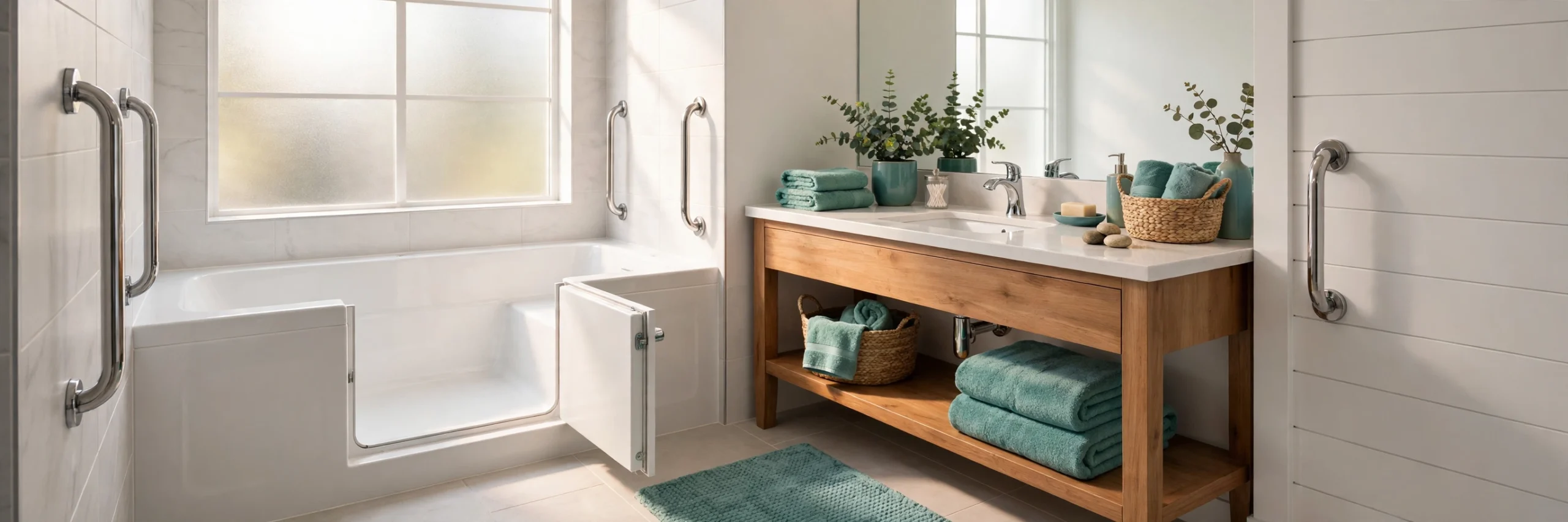
If someone in your home is struggling to step over a high tub wall, a walk-in tub can make bathing safer and less stressful. The first question is almost always about price. For a professionally installed unit, the walk-in tub cost runs from $3,000 to $17,000 or more in 2026, and the average walk-in tub cost is about $5,000, according to the National Council on Aging (NCOA). A typical mid-range project with jets and a brand-name installer more realistically lands between $8,000 and $12,000.
If climbing into a tub at all is the problem, the other direction may suit you better. Our guide to walk-in shower cost covers roll-in and low-threshold shower pricing, and this article compares the two options side by side further down.
Why does the price spread stretch so wide? Unlike most bathroom work, the tub itself is most of the bill, and prices swing hard by type, brand, and how the tub is sold. Some brands only quote after an in-home sales visit, which is where walk-in tub cost figures can quietly double. Knowing the real numbers before that visit is the best protection you have.
For a simpler baseline, a standard new tub is far cheaper than any walk-in model. Our bathtub replacement cost guide shows what a conventional swap runs installed, which makes the walk-in premium easier to judge.
This guide breaks the numbers down by tub type, shows what installation adds, and flags the hidden costs first quotes leave out. It also covers brand pricing, Medicare, and sales tactics, so you can see how each choice moves the walk-in tub cost you will actually pay.
How Much Does a Walk-In Tub Cost?
Comparing walk-in tub cost by type is the fastest way to narrow your budget. The table below shows typical 2026 pricing. Tub-only prices are for the unit itself. Installed prices include standard installation labor.
| Tub type | Tub only | Typical installed |
|---|---|---|
| Soaking (no jets) | $2,000 to $5,000 | $3,000 to $10,000 |
| Aerotherapy (air jets) | $3,000 to $10,000 | $10,000 to $15,000 |
| Hydrotherapy (water jets) | $3,000 to $10,000 | $6,000 to $13,000 |
| Combo air and water jets | $8,000 to $15,000 or more | $12,000 to $18,000 |
| Wheelchair-accessible (slide-in) | $5,000 to $10,000 | $6,000 to $15,000 |
| Two-seater | $3,500 to $10,000 | $8,000 to $18,000 |
Shell material moves the walk-in tub cost as well. Fiberglass tubs run about $2,000 to $5,000, while acrylic models run $5,000 to $12,000 before installation. At the top end, bariatric models built for larger bathers run $8,000 to $20,000, and luxury tubs with chromotherapy, aromatherapy, and heated surfaces can reach $15,000 to $30,000 installed. Small features add up too: chromotherapy lighting adds $200 to $350, a heated seat about $490, and grab bars $85 to $300 plus labor. Shoppers also ask about walk-in tub with shower cost figures, and a tub and shower combo typically adds $500 to $1,000 over the base tub price.
Tub Price vs Installed Price
Here is the part that surprises most people. In a typical bathroom remodel, labor eats most of the budget. With a walk-in tub, the fixture does. One component-level estimate from Homewyse priced a large 60 by 32 inch tub at $4,632 total, split into $3,427 for materials and just $1,205 for labor. That works out to roughly 74 percent materials and 26 percent labor, the reverse of most trades.
That split explains the gap between tub-only and installed prices. A retail tub from a home center might cost $1,900 to $5,000, and you then hire your own plumber to set it.
Angi puts professionally installed walk-in tub projects at $8,000 to $15,000, while a do-it-yourself route, counting materials, tools, and permits only, runs $3,000 to $7,000. When you compare a walk-in tub cost quote, always check whether it is tub-only or fully installed. Comparing one against the other is how budgets go wrong. The installed figure is the true walk-in tub cost, so compare installed totals against installed totals, never against a tub-only sticker price.
Walk-In Tub Installation Cost
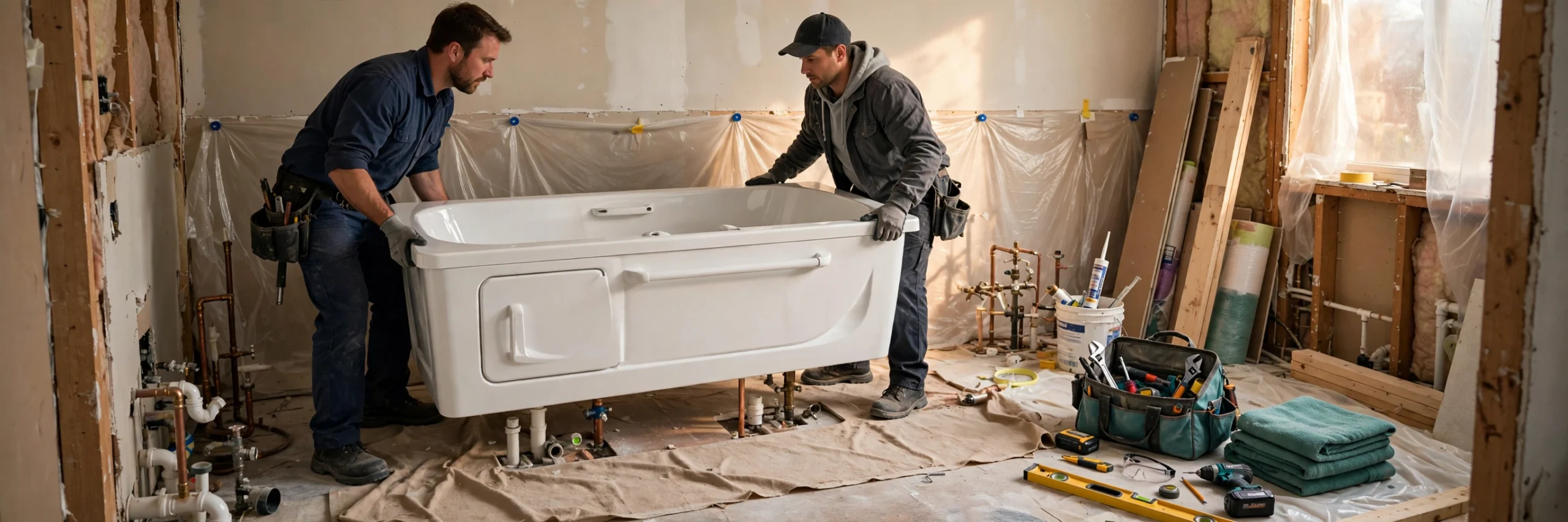
Standard installation labor runs $1,000 to $5,000 on top of the tub, according to NCOA, and many straightforward jobs land at $1,500 to $3,000. When plumbing or electrical upgrades are needed, the full walk-in tub installation cost can reach $2,500 to $8,000. That gap is a big reason the final walk-in tub cost varies so much from home to home, even for the exact same tub.
What drives the installation number up? Moving supply or drain lines adds $400 to $1,900. Jetted models often need $1,500 to $3,000 of plumbing and demolition labor. Jets, pumps, and heaters need a dedicated GFCI-protected circuit, and an electrician charges $500 to $1,500 for that work, or $800 to $2,500 for a broader electrical scope. Older electrical panels sometimes need an upgrade on top of that.
Old tub removal and disposal are usually bundled into installation labor rather than billed separately. Permits for the plumbing and electrical work typically run $100 to $500.
One more thing to check before signing: the tub has to fit through your bathroom door. Tubs are typically about 60 inches long, 32 inches wide, and 38 inches tall, and narrow doors in older homes sometimes need widening. Get that written into the quote as its own line item, so the walk-in tub cost does not creep after the crew arrives. Most standard installs finish in one to two days.
The Hidden Cost: Your Water Heater
Ask any experienced installer what gets left off the first quote, and the water heater comes up again and again. It is the hidden line item in many a walk-in tub cost breakdown. A walk-in tub holds 50 to 80 gallons of water. A standard tub holds 30 to 50 gallons, and many homes run a 40 to 50 gallon water heater. The problem is clear: the heater can run cold halfway through the fill, leaving the bather in lukewarm water.
NCOA guidance is that a deep walk-in tub needs a water heater of at least 50 gallons. Upsizing typically adds $500 to $3,000, and it is the single most common surprise added to a walk-in tub cost after the contract is signed. Ask about your heater’s capacity up front, in writing, before you commit to a walk-in tub cost estimate.
Brand Pricing: What the Big Names Charge
The three biggest direct-sales brands, Safe Step, Kohler, and American Standard, do not publish all-in price lists. You get one number, after an in-home assessment. Independent trackers place the premium-brand walk-in tub cost at $10,000 to $25,000 fully installed, so treat a quote in that band as normal for the category, not a bargain or a rip-off.
Safe Step tubs run $3,000 to $9,000 in brand roundups, with installed projects commonly cited at $8,000 to $12,000 or more, and some trackers reporting $10,000 to $26,000. Its offset is a lifetime warranty covering both the tub and the installation. Kohler tubs run about $4,000 to $8,000, though reported prices range wider, and fully installed projects have been reported up to about $33,000. Kohler’s 3-inch step-in is the lowest in the industry, which matters if lifting your feet is the main difficulty.
American Standard publishes list prices of $7,405 to $11,940 for its tubs, and its projects average $10,000 to $25,000 all in, backed by the largest installer network of the group. Jacuzzi tubs run about $7,000 to $13,000.
Ella’s Bubbles takes a different route: typical tubs run $4,000 to $6,000, sold tub-only, and you arrange your own installer. It specializes in two-seater and wheelchair-accessible outward-door models that the big brands barely offer. The budget path is a retail tub, Universal Tubs or Endurance from a home center at $1,900 to $7,000, plus a local plumber, which usually totals $5,000 to $10,000 installed. For many families, that retail route is the most predictable walk-in tub cost of all.
Watch Out for the In-Home Sales Pitch
Most premium walk-in tubs are sold through free in-home consultations, which are really sales presentations, and the price is set by the dealer, not a catalog. The same size tub can vary by thousands of dollars depending on who sells and installs it. TV-advertised brands routinely quote $15,000 or more for jobs that independent guides price at $5,500 to $12,000, well above the typical walk-in tub cost for the same work.
Two tactics deserve a warning. The first is the sign-today discount, often 20 percent off, that supposedly expires when the salesperson leaves. A legitimate company honors its quote for a reasonable period.
The second is the staged price drop, sometimes called the show home close, where the rep lowers the price in steps, say from $19,000 to $18,000, in exchange for photos, a yard sign, and showing the tub to neighbors. That lower figure was usually the intended price all along. If financing is offered, read the terms closely too, because 0 percent promotions can apply penalty rates retroactively if a payment is missed, and personal loans in this market run 6 percent to 36 percent APR.
You have a legal safety net. Under the FTC Cooling-Off Rule, most sales of $25 or more made in your home can be canceled within three business days, and the seller must give you a cancellation form. Use that window. Get three written, itemized quotes that list the tub model, installation, plumbing, electrical, permits, and old tub removal as separate lines, ask for the exact model’s fill and drain times in writing, and never sign during the first visit.
Walk-In Tub vs Walk-In Shower Cost
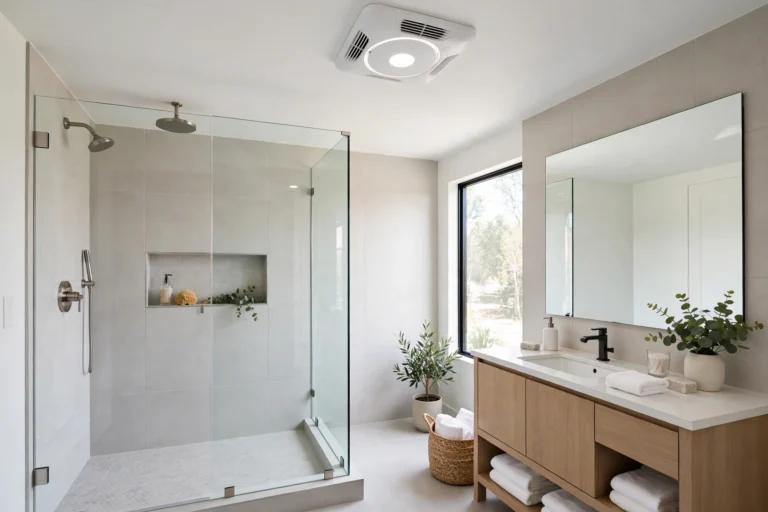
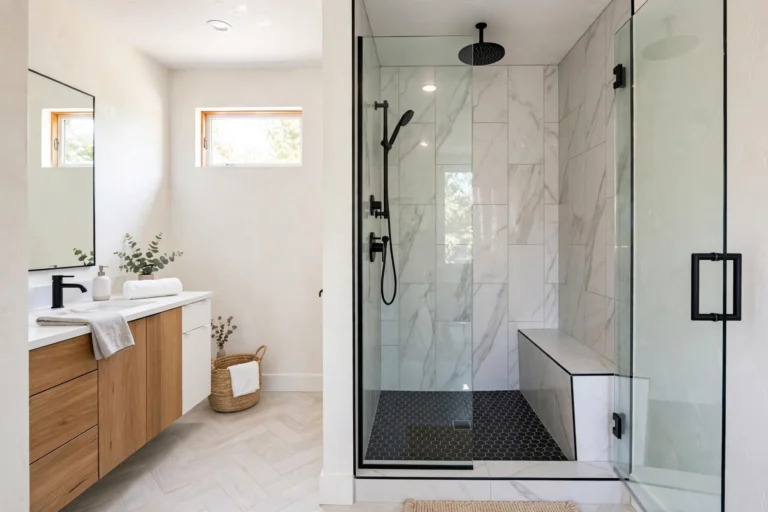
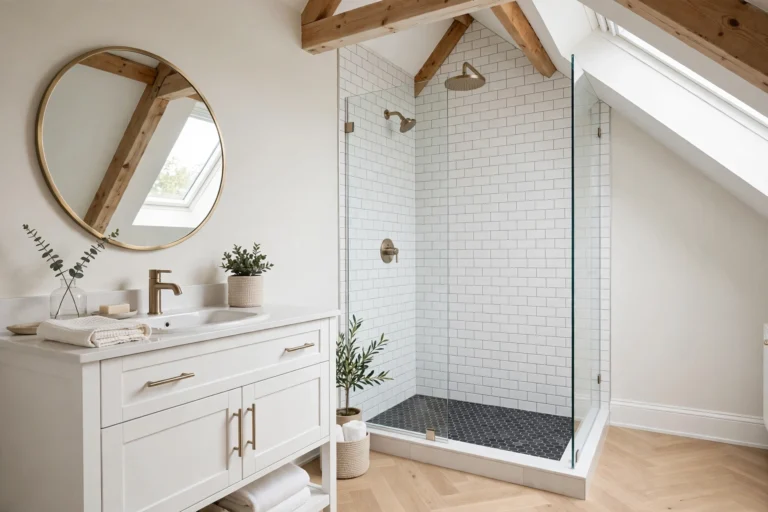
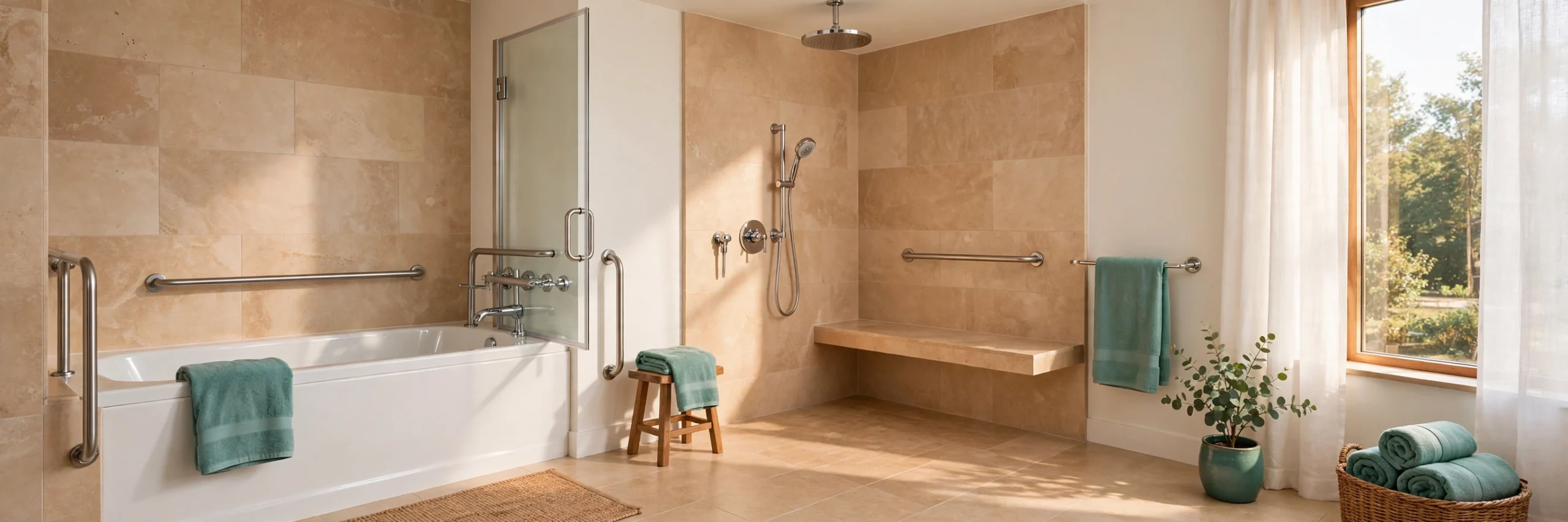
Many families cross-shop these two projects, and the totals overlap. A walk-in shower conversion typically runs $5,000 to $15,000 installed, with standard tiled conversions and frameless glass at $9,500 to $14,000, budget conversions at $5,000 to $8,000, and luxury builds at $18,000 to $25,000 or more. On headline price, the walk-in tub vs walk-in shower cost comparison is close to a tie.
Where the money goes is opposite, though. The shower’s cost sits in labor, tile, and glass: roughly $2,000 to $4,000 of materials against $3,000 to $8,000 of installation, and frameless glass alone can run $1,500 to $4,500. The tub’s cost sits in the fixture itself. Whichever you choose, plan the safety details properly, using ADA accessibility resources for grab bar placement and accessible bathing clearances.
Ownership costs differ too. A walk-in tub uses 50 to 80 gallons per bath, and the EPA WaterSense program is a useful reference for what that water use means for your utility bills. One comparison estimates the tub adds about $30 to $60 a month in utilities against $5 to $15 for a shower, with ten-year maintenance of $1,500 to $2,500 for a tub versus $500 to $1,500 for a shower. Either way, compare the full walk-in tub cost against the full shower cost over the years you plan to stay, not just the headline fixture prices.
If both are out of reach, a tub cut-out conversion, which notches a step-in opening into your existing tub, costs a fraction of either project.
Does Medicare Pay for Walk-In Tubs?
The honest answer is no, in almost every case. Original Medicare does not classify a walk-in tub as durable medical equipment, and a doctor’s recommendation does not change that. Medicare treats it as a home modification, so the full walk-in tub cost comes out of your own pocket.
There are partial helpers worth asking about. Some Medicare Advantage plans include a home safety allowance of $200 to $2,000 a year, which softens the bill but does not cover it. Medicaid Home and Community Based Services waivers in some states pay for home modifications for qualifying low-income homeowners.
Veterans can use a VA HISA grant, up to $6,800 for a service-connected condition or $2,000 for other enrolled veterans, though jetted models may be excluded. A doctor-prescribed tub may also count as a deductible medical expense under IRS Publication 502 if you itemize, above 7.5 percent of your income. Rural homeowners 62 and older can ask about USDA Section 504 repair loans and grants. None of these will erase the walk-in tub cost, but together they can take a real bite out of it.
Go in clear-eyed about daily use, too. Because the door seals shut, you sit in the tub while it fills, which takes 4 to 10 minutes, and while it drains, which takes 2 to 15 minutes. Brand fast-drain claims of about 80 seconds to 2 minutes are company claims, not independently verified.
The door seal is the most common failure point, and cheap seals can degrade within two to three years. Warranty terms vary sharply, and repairs on an older tub run $150 to $800. Check the seal warranty in writing, because it protects the part of the walk-in tub cost most likely to come back as a repair bill.
Finally, think about resale. A walk-in tub appeals to a narrow buyer pool, and removing your home’s only standard tub can put off families, since about 30 percent of first-time buyers consider a tub and shower combo in the primary bath essential. Keep at least one conventional tub if you can, and buy the walk-in tub for your own safety over the next decade, not as an investment.
Frequently Asked Questions
How much does a walk-in tub cost installed?
Most homeowners pay $3,000 to $17,000 or more installed, per NCOA, with an average around $5,000 and mid-range projects commonly at $8,000 to $12,000. Premium brands often quote $10,000 to $25,000 installed.
How much does installation add on top of the tub?
Standard installation labor adds $1,000 to $5,000, per NCOA. Jobs needing plumbing or electrical upgrades run $2,500 to $8,000, and a water heater upsize can add another $500 to $3,000.
Will my water heater keep up with a walk-in tub?
Often not comfortably. These tubs hold 50 to 80 gallons, and a standard 40 to 50 gallon heater can run out of hot water mid-fill. NCOA recommends a heater of at least 50 gallons for a deep tub.
How long do you sit in the tub while it fills and drains?
Fill times run 4 to 10 minutes and drain times 2 to 15 minutes, because the door stays sealed until the tub is empty. Fast-drain claims are manufacturer claims, not independently verified.
Is a walk-in tub or a walk-in shower cheaper?
Totals are similar. Showers run $5,000 to $15,000 installed with the money in labor and tile, while the walk-in tub cost is concentrated in the fixture. Showers are neutral for resale; a tub can hurt if it removes the home’s only standard tub.
Can I cancel after signing at an in-home presentation?
Yes. The FTC Cooling-Off Rule gives you three business days to cancel most in-home sales of $25 or more, and the seller must provide a cancellation form. Act in writing within that window.