Cost to Add a Bathroom 2026
If your house has three bedrooms and one bathroom, you already know the morning traffic jam. The cost to add a bathroom in 2026 runs anywhere from $5,000 to $75,000, with a national average of about $35,000. Two projects with the same floor plan can carry very different price tags, because the cost to add a bathroom is decided mostly by route and plumbing distance, not by the fixtures you pick.
Here is the honest part of that average. In a 2026 nationwide survey by This Old House, homeowners who actually added a bathroom most often reported totals between $10,000 and $30,000. The $35,000 average gets pulled upward by large primary suite builds. So when you ask how much does it cost to add a bathroom for a typical house, the real world answer is often lower than the headline number.
Renovating the bathroom you already have instead? Our bathroom remodel cost guide breaks down a full renovation price by price.
This guide breaks the cost to add a bathroom down by route, by room type, and by line item, so you can walk into contractor meetings with realistic numbers. Get 3 local quotes before you commit to anything. Prices vary widely between contractors, and the gap often comes down to how each one plans the plumbing runs.
Picking the shower for the new bath? Our shower replacement cost guide compares prefab and tile prices.
How Much Does It Cost to Add a Bathroom?
The type of bathroom you add sets the floor and the ceiling for the whole budget. A simple half bath with a toilet and a sink is a different project from a primary bath with a tiled shower and a double vanity. The table below shows what the cost to add a bathroom looks like for the most common scenarios in 2026.
| Bathroom type | Typical cost |
|---|---|
| Half bathroom in existing space | $4,000 to $12,000 |
| Three-quarter bathroom | $6,000 to $22,000 |
| Full bathroom | $10,000 to $50,000 |
| Primary bathroom, converted space | $22,000 to $55,000 |
| Primary bathroom, new construction | $45,000 to $100,000 |
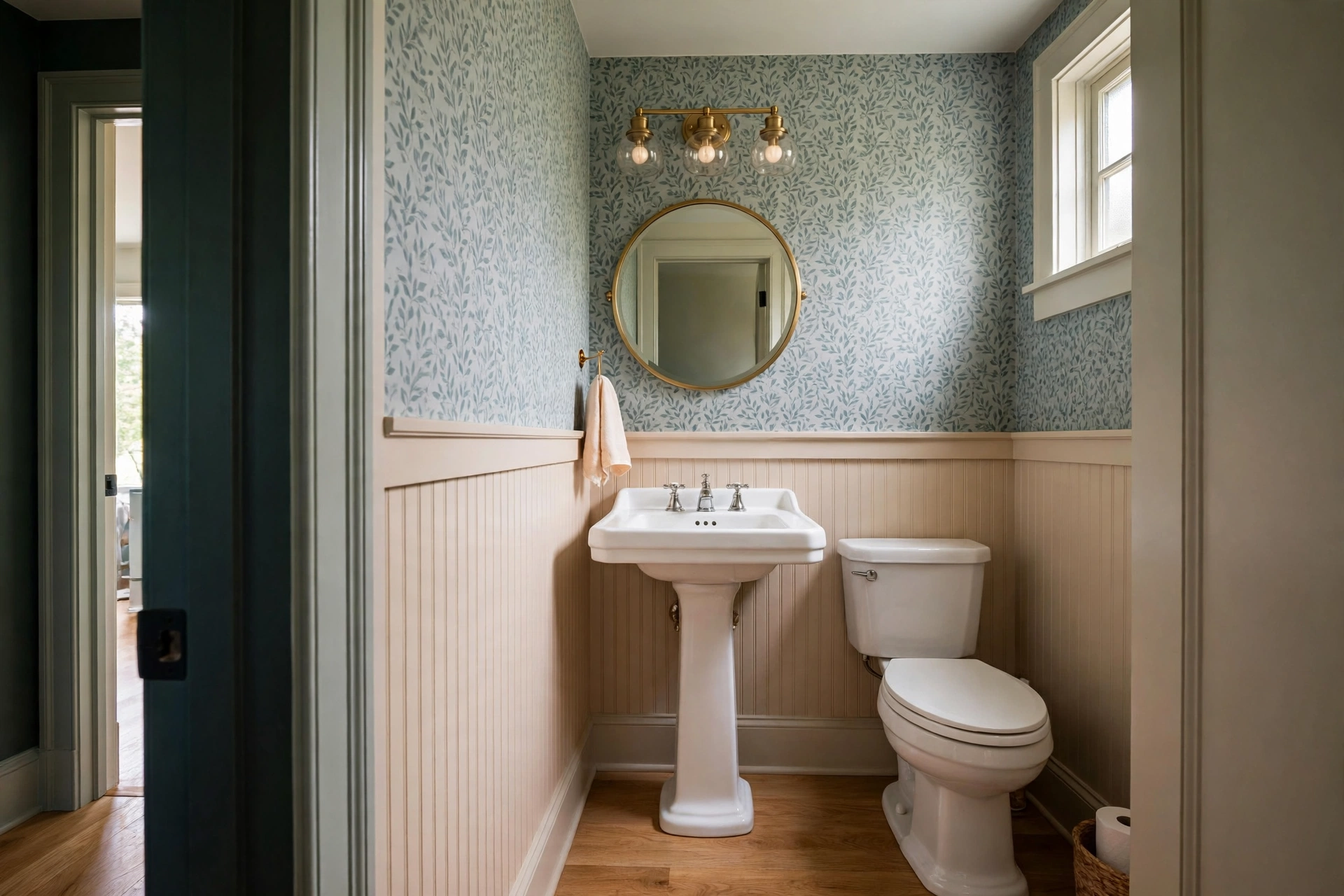
Small spaces keep the numbers friendly. A half bath tucked into a closet or under the stairs runs $3,000 to $10,000 when plumbing sits close by. A small full bath converted from an existing room, at 25 to 40 square feet, usually lands between $5,000 and $13,000. The cost to add a half bathroom stays low because there is no tub or shower to buy, waterproof, or tile around.
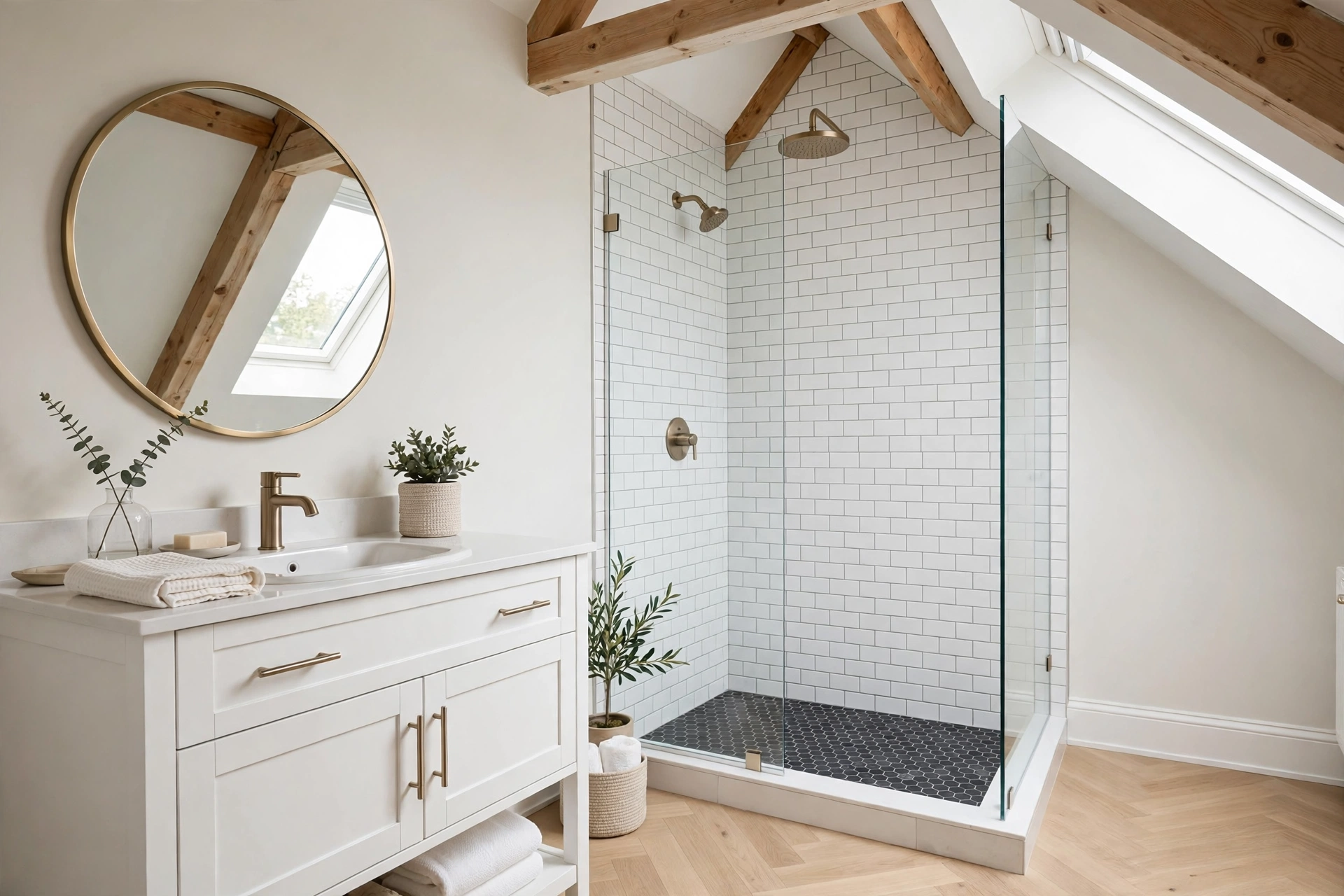
Location inside the house matters almost as much as size. A laundry room conversion runs $7,500 to $16,000 because water lines are already in the walls. An attic bath can reach $10,000 to $38,000 with structural checks and long plumbing runs. A garage conversion usually lands between $8,000 and $30,000 depending on insulation and drainage. In every one of these, the cost to add a bathroom follows the plumbing.
Two Routes: Conversion vs New Construction
Every addition takes one of two routes, and the route roughly doubles the price per square foot. A conversion works inside space you already own. An addition builds new square footage with a bump-out or a full extension. Comparing the bathroom addition cost per square foot side by side is the first calculation worth doing, because it frames every other decision in the project and sets the scale of the overall cost to add a bathroom.
Conversions run about $200 to $250 per square foot. The shell already exists, so there is no foundation to pour, no exterior walls to frame, and no roof to tie in. You pay for interior framing, plumbing, electrical work, and finishes. A medium full bath of 40 to 50 square feet converted from a spare room usually totals $8,000 to $15,000.
New construction additions run about $400 to $550 per square foot, and luxury builds reach $600 to $800 per square foot. That money buys the whole structure: foundation, exterior framing, siding, roofing, insulation, and a heating and cooling extension. In pricey metros the numbers run higher still, with some cities at $500 to $775 per square foot for an addition.
Neither route is automatically smarter. A conversion steals space from another room, which some houses can spare and some cannot. An addition preserves your existing rooms but costs twice as much per foot. Either way, the cost to add a bathroom climbs fast once the project includes new structure, so settle the route before you fall in love with a layout.
The Plumbing Factor: Distance Decides the Budget
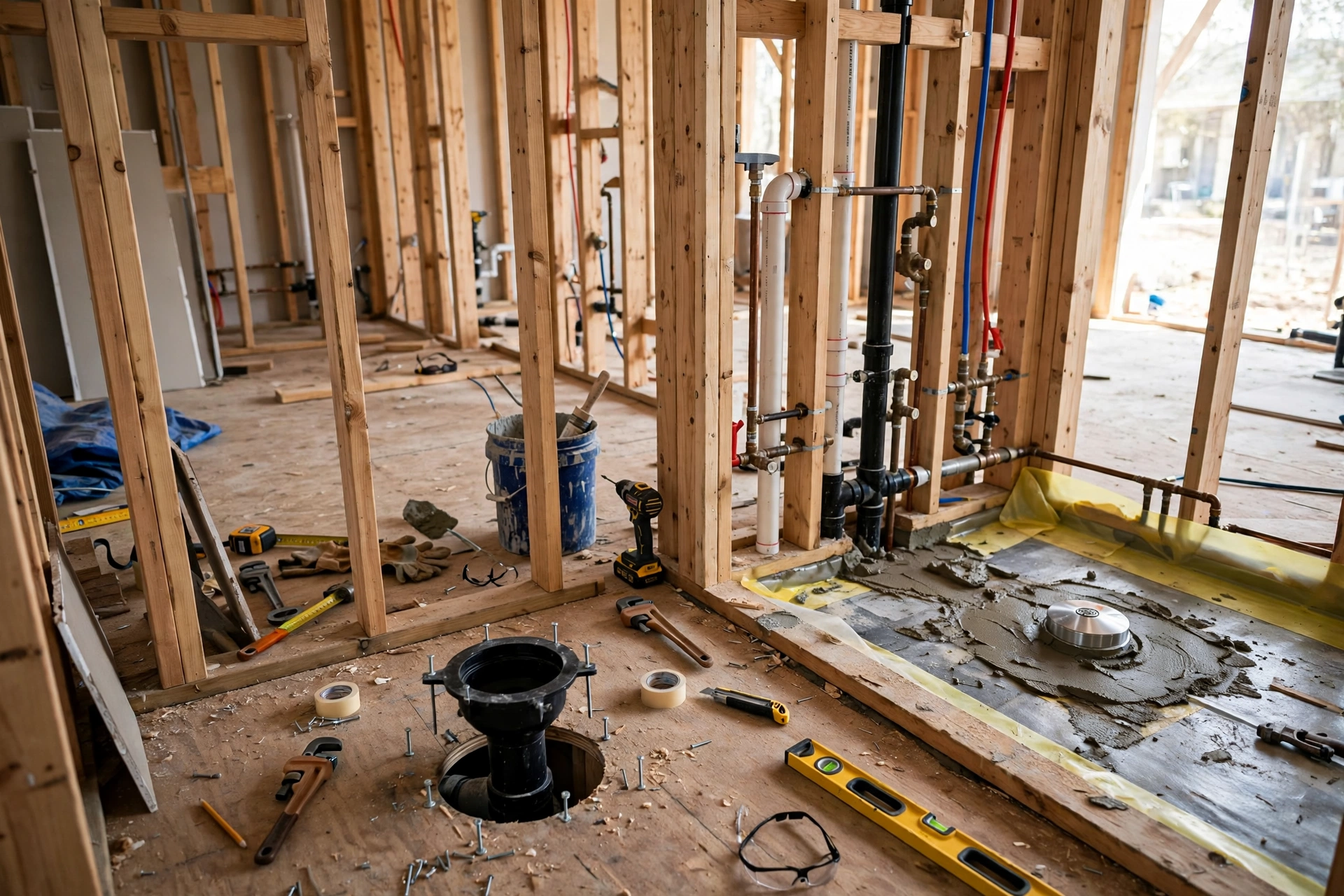
Ask any plumber what drives this budget and you will hear the same answer: distance. Plumbing typically accounts for 30 to 50 percent of the total cost to add a bathroom, and most of that share depends on how far the new fixtures sit from your main drain stack.
Within about 10 feet of an existing stack, there is barely any premium. At 10 to 25 feet away, expect to add $2,000 to $4,000 to extend drain lines. More than 25 feet away, or crossing to another floor, adds $4,000 to $9,000, and the job may need a new vent stack as well. A full plumbing rough-in alone can range from $3,500 to $20,500 depending almost entirely on that distance.
New supply lines tell the same story. Tapping a nearby line is cheap, while running new lines from the main adds $800 to $2,500. A simple conversion near existing lines can keep the whole plumbing bill near $1,000 to $5,000.
The cheapest bathroom you can build sits back to back with existing plumbing. Put the new bath on the other side of a wall from a kitchen, laundry room, or current bathroom, and the new fixtures share the same supply and drain lines in what plumbers call a wet wall. Place it on the far side of the house and you pay for long drain runs, extra demolition, and sometimes a new sewer connection. Smart placement is the single easiest way to hold the cost to add a bathroom down.
Where the Money Goes
To see where the cost to add a bathroom actually goes, look at the line items. Here is how a typical mid-range project breaks down.
| Component | Typical cost |
|---|---|
| Plumbing rough-in and finish work | $3,500 to $16,000 |
| Framing, drywall, and insulation | $1,000 to $7,500 |
| Tile work and waterproofing | $4,500 to $11,000 |
| Flooring with waterproof underlayment | $2,500 to $5,500 |
| Fixtures (toilet, vanity, sink, faucets) | $2,500 to $8,500 |
| Shower or tub unit | $2,500 to $8,500 |
| Electrical work | $500 to $5,000 |
| Exhaust fan and ventilation | $400 to $1,400 |
| Permits and inspections | $500 to $2,400 |
The framing range is wide for the same reason the plumbing range is. A conversion needs little more than a partition wall and moisture resistant drywall, at $1,000 to $3,000. An addition needs full structural framing and insulation, at $3,500 to $7,500, plus $1,500 to $3,800 to extend heating and cooling into the new space. Contractor overhead and profit of 15 to 25 percent adds $5,500 to $10,500 more on a large addition.
Finish level is the second big lever. A toilet can cost $300 or $1,000, and a vanity can cost $800 or $6,500. Tile choices, stone counters, and premium fixtures can double the finish share of the budget without adding a single square foot. When the cost to add a bathroom needs trimming, finishes are where the money comes back. Cutting corners on waterproofing or drain work is not.
Adding a Bathroom in the Basement
The cost to add a bathroom in a basement typically totals $10,000 to $25,000, and it comes with one problem the upstairs routes never face. If your main sewer line exits the house above the basement floor, gravity cannot drain the new fixtures. The waste has to be pumped up to the line.
The conventional fix is a sewage ejector pit. A basin is set into a cut in the concrete slab, the fixtures drain into it by gravity, and a pump lifts the waste to the main line. An ejector setup adds $2,000 to $5,500 to the project. Cutting the slab to run conventional drains can add $3,000 to $6,000 on its own.
The alternative is a macerating, or upflush, system. The toilet grinds waste and pumps it through a small pipe to the drain line, and the sink and shower can drain into the same unit. Upflush systems run about $1,000 to $2,000 per fixture and skip the concrete cutting entirely. The trade-offs are pump noise and a macerator lifespan of about 10 to 15 years, and some local codes restrict these systems, so check before you buy.
If your sewer line runs below the slab, standard gravity drains work and none of this applies. A half bath placed directly below an upstairs bathroom is the cheapest basement play of all. Wherever the new bath goes, choose fixtures that carry the EPA WaterSense label to keep water use and utility bills down without giving up performance. And fix any basement moisture problems before you finish, because building over a damp slab only adds repair bills to the cost to add a bathroom later.
Permits, Code, and Timeline
Permits add $500 to $2,400 to the cost to add a bathroom, and they are not optional. A new bathroom needs a building permit plus separate plumbing and electrical permits, and a mechanical permit for a new addition. Plan review takes 1 to 4 weeks before work can legally start, and structural additions take longer in review. Zoning setbacks and lot coverage limits can also shrink or block a planned bump-out.
Two code rules shape every layout. For ventilation, each bathroom needs an operable window or a mechanical exhaust fan rated at 50 CFM intermittent, or 20 CFM continuous, ducted directly outdoors and never into an attic. For electrical work, every receptacle must be GFCI protected, and the bathroom needs a dedicated 20-amp receptacle circuit. Inspectors verify both at rough-in, before the walls close, and again at the final inspection.
The ventilation rule is not red tape for its own sake. Trapped moisture is what rots framing and feeds mold behind tile, and the EPA guidance on moisture and mold control makes clear that venting humid air outside is the first line of defense. A fan that dumps into the attic just moves the problem upstairs, where it stays hidden longer.
One more code note: a bathroom by itself needs no egress window, since egress rules apply to sleeping rooms. But if your new bath is bundled into a bedroom or primary suite addition, that bedroom does need a code-compliant emergency escape window. On timing, expect 2 to 4 weeks of active construction for an interior conversion and 6 to 10 weeks for a new addition, on top of the permit wait. Plan for that disruption as part of the true cost to add a bathroom, not just the dollars on the quote.
Does Adding a Bathroom Increase Home Value?
Yes, with a limit. According to the 2025 Cost vs. Value Report, a midrange bathroom addition cost $60,645 on average and added $32,347 in resale value, so about 53% of the cost came back at sale. An upscale addition returned only about 36%. In dollar terms, homes with an added bathroom commonly sell for $20,000 to $50,000 more, and yet most projects still do not recover the full cost to add a bathroom at resale.
The pattern is consistent: the cheaper the addition, the better the return. Half bath conversions return best in percentage terms because the cost to add a bathroom that way is only $4,000 to $12,000, while the functional gain, a second toilet in a house that had one, is exactly what buyers pay for. A primary suite addition improves daily life the most but returns the smallest share of its price.
So treat the addition as a lifestyle purchase with a partial rebate, not an investment that pays for itself. If your home has fewer bathrooms than bedrooms, adding one widens the buyer pool and can help the house sell faster. That matters, but it rarely covers the full cost to add a bathroom on its own. Buy the bathroom because your household needs it, and let the resale value be a bonus.
Frequently Asked Questions
How much does it cost to add a bathroom in 2026?
Most projects run $5,000 to $75,000, with the average cost to add a bathroom at about $35,000. A half bath conversion near existing plumbing can start around $4,000, while a new construction primary bath can top $100,000. Most homeowners surveyed in 2026 reported spending between $10,000 and $30,000.
Is it cheaper to convert a room or build an addition?
Converting, by a wide margin. A conversion runs $200 to $250 per square foot because the shell already exists, with no foundation, exterior walls, or roofing to buy. The bathroom addition cost per square foot for new construction is $400 to $550, roughly double, which is why budget friendly projects usually start with a closet, laundry room, or under-stair conversion.
Where is the cheapest place to add a bathroom?
Next to plumbing you already have. A closet or under-stair half bath runs $3,000 to $10,000, and staying close to the drain stack can save $4,000 to $9,000 compared with a far side location. Backing the new bath onto a kitchen or laundry wall lets the fixtures share supply and drain lines, which keeps the cost to add a bathroom near the bottom of the range.
Can you add a bathroom in a basement without breaking the concrete?
Yes. An upflush macerating toilet pumps waste through a small pipe to the drain line, at about $1,000 to $2,000 per fixture, with no slab cutting. The other route is a sewage ejector pit at $2,000 to $5,500. Some local codes restrict macerating systems, so confirm yours allows one before you order.
Do I need a permit to add a bathroom?
Yes, in nearly every jurisdiction. Expect building, plumbing, and electrical permits totaling about $500 to $2,400, plus 1 to 4 weeks of plan review before work starts. Skipping permits risks the new bath not counting as legal square footage at resale, and legalizing it later costs more than doing it right the first time.
How long does it take to add a bathroom?
An interior conversion takes about 2 to 4 weeks of construction. A new addition takes 6 to 10 weeks, and complex primary suite builds can run longer. Add the permit review period before either clock starts, and rough-in plumbing itself is usually only 2 to 5 days of that total.