Circuit Breaker Replacement Cost 2026
If you are looking up circuit breaker replacement cost, you probably just got a quote that felt steep for a part the size of a matchbox. Here is the short answer: most single breaker swaps cost $100 to $300 installed, and the job usually takes an electrician under an hour.
The reason the bill feels high is that the breaker itself is the cheap part. A standard single pole breaker costs $5 to $15 at the supply house, but your invoice also covers the electrician’s trip to your house, a service call fee of $75 to $200, and the real risk of working inside a live panel. That labor and overhead is why even the simplest job totals $150 to $250 all in. Understanding a typical circuit breaker replacement cost before you call also helps you spot a padded quote.
Panel capacity also comes up on generator projects. Our whole house generator cost guide shows how panel and transfer switch work shapes the total.
In this guide we break down what drives circuit breaker replacement cost in 2026. You will find part prices by breaker type, electrician labor rates, main breaker pricing, the warning signs that the panel itself is the problem, and when a panel replacement makes more sense than another swap.
If several circuits are giving you trouble at once, the wiring itself may be the issue. Our rewiring a house cost guide covers the bigger fix.
How Much Does It Cost to Replace a Circuit Breaker?
Here is what a typical circuit breaker replacement cost looks like across the most common scenarios. Every figure below is an installed price, meaning parts plus labor, based on 2026 US market data.
| Job scenario | Typical installed total |
|---|---|
| Standard single pole breaker swap (15 to 100 amp) | $100 to $180 |
| Double pole breaker swap (50 to 200 amp) | $180 to $260 |
| GFCI breaker swap | $150 to $300 |
| Main breaker replacement | $200 to $600+ |
| Adding a brand new circuit with breaker | $150 to $300 |
| Emergency or after hours call | Add $100 to $250 to the total |
How much to replace a circuit breaker depends mostly on which breaker is in the box. A plain 15 amp breaker for a bedroom is a quick swap, while a 50 amp double pole feeding a hot tub or an EV charger uses a more expensive part and takes longer. Most homeowners only deal with circuit breaker replacement cost once or twice a decade, so it pays to understand what is on the invoice before you approve it. Getting a few quotes is the easiest way to confirm your circuit breaker replacement cost lines up with local rates.
Breaker Prices by Type
The part prices below explain why circuit breaker replacement cost varies so much between a bedroom circuit and a bathroom circuit. Smart breakers and dual function breakers sit at the top of the parts shelf.
| Breaker type | Part price (no labor) |
|---|---|
| Standard single pole, 15A/20A | $5 to $15 |
| Double pole, 30A to 100A | $10 to $40 |
| Tandem (two circuits in one slot) | $15 to $50 |
| AFCI (arc fault) | $25 to $70 |
| GFCI (ground fault) | $40 to $100 |
| Dual function AFCI/GFCI | $45 to $90 |
| Smart breaker | $50 to $300+ |
The spread in circuit breaker installation cost is driven far less by the part and far more by how long the electrician is on site. Swapping a single pole breaker takes 30 to 60 minutes, and many shops price it as a flat rate rather than by the hour. Breakers also have to match the panel brand and series, so Square D breakers go in Square D panels, Siemens in Siemens, and so on. An electrician will usually stock the common brands, which keeps the job to a single visit. Keep in mind these are part prices only; the full circuit breaker replacement cost adds labor and the service call on top.
If your panel is older, the part itself can become the problem. Breakers for discontinued panels are harder to find and cost more, and some obsolete panels cannot take modern AFCI or GFCI breakers at all. That is the point where circuit breaker replacement cost stops being the real question and the panel conversation starts.
Labor Costs: Why the Part Is the Cheap Bit
Electrician hourly rates in 2026 run $50 to $130 per hour in most markets, with journeymen at the lower end and master electricians at the top. In expensive cities like San Francisco, New York, or Boston, rates reach $150 to $200 per hour. On top of the hourly rate comes the service call or trip fee, typically $75 to $200, which covers travel and diagnostics.
Because most companies have a minimum charge that covers travel plus the first hour, even a 20 minute breaker swap lands at $150 to $250 once everything is added up. That minimum is the single biggest reason total circuit breaker replacement cost looks out of proportion to a $10 part. The trip fee is also why the circuit breaker replacement cost barely changes whether the part costs $10 or $90. You are paying for a licensed professional to open a box full of live electricity and stand behind the work.
Emergency and after hours rates push the numbers higher. Evening and weekend work typically runs $100 to $260 per hour, so a tripped breaker that cannot wait until morning can add $100 to $250 to the total. If the circuit is not dangerous, waiting for a regular appointment is the cheapest move you can make, because you avoid the emergency markup on your circuit breaker replacement cost entirely.
Main Breaker Replacement Cost
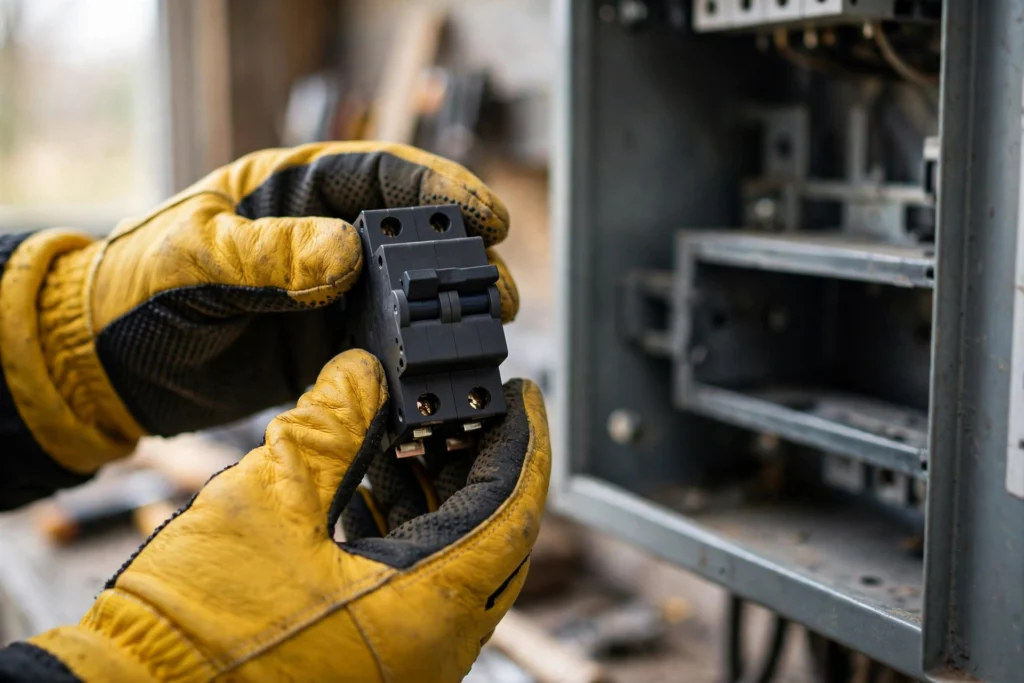
A main breaker swap carries the highest circuit breaker replacement cost of any single breaker job, running $200 to $600 or more installed. The main breaker controls power to every circuit in the panel and any connected subpanels, and most residential mains are 100 to 200 amps.
What makes it pricier is the utility involvement. The power company usually has to disconnect the incoming service before the work starts, and some utilities require an inspection before they reconnect. That coordination adds time and sometimes an extra fee. That coordination is a big reason the circuit breaker replacement cost for a main runs higher than a branch circuit swap. Unlike a branch breaker swap, a main breaker cannot be replaced with the house energized, so plan for the power to be out for the duration of the appointment.
If you are comparing the cost to replace a circuit breaker for a branch circuit versus the main, expect the main to run roughly double. It is also worth asking the electrician to inspect the bus bars while the panel is de energized. If the bus bars are scorched or pitted, you may be looking at a panel issue rather than a breaker issue.
Signs a Breaker Needs Replacing
Breakers do wear out, usually after 25 to 30 years of heat cycles. If you keep resetting the same breaker, the circuit breaker replacement cost is the least of your worries, because a failing breaker may not trip when it should. Watch for these signs:
- Frequent tripping with no obvious overload on the circuit
- Heat or a burning smell at the breaker or panel
- Buzzing sounds coming from the breaker or the panel
- Scorch marks or discoloration on the breaker or panel face
- Will not reset or stay on, even with everything on the circuit unplugged
- Visible damage or corrosion on the breaker body
- Age 25 to 30+ years, which is the typical service life
One tripping breaker after you plugged in a space heater is usually just an overloaded circuit. A breaker that trips repeatedly for no clear reason, feels hot, or smells like hot plastic is a different story. Get that one looked at promptly, since it is doing a worse job of protecting your wiring every time it misbehaves. Catching it early keeps a routine circuit breaker replacement cost from turning into a panel replacement bill.
GFCI Breaker vs GFCI Outlet
A common upgrade question is whether to protect a circuit with a GFCI breaker or a GFCI outlet. The circuit breaker replacement cost for a GFCI breaker swap lands at the top of the standard range, around $150 to $300 installed, because the part alone runs $40 to $100. A single GFCI outlet replacement runs about $150 to $250 installed, with the outlet part costing only $15 to $30.
The gfci breaker replacement cost is higher per unit, but one breaker protects every outlet on the whole circuit, including outdoor runs that are hard to reach. A GFCI outlet protects only what is downstream of it. Building codes require GFCI protection in bathrooms, kitchen counters, garages, outdoor receptacles, unfinished basements, crawl spaces, laundry areas, and near pools and spas. The protection can sit at the breaker or at the first receptacle on the circuit.
There is one more wrinkle. Modern code often requires AFCI protection in bedrooms, living rooms, and hallways, plus GFCI in wet locations. Where both apply, such as kitchen counter and laundry circuits, a dual function AFCI/GFCI breaker at $45 to $90 part price is usually the cleanest solution. Outdoor GFCI receptacles last only about 5 to 7 years before the weather gets to them, while breakers tend to last much longer. Factor that longer part life into the circuit breaker replacement cost math when you choose between protecting a circuit at the breaker or at the outlet.
When the Panel Itself Is the Problem
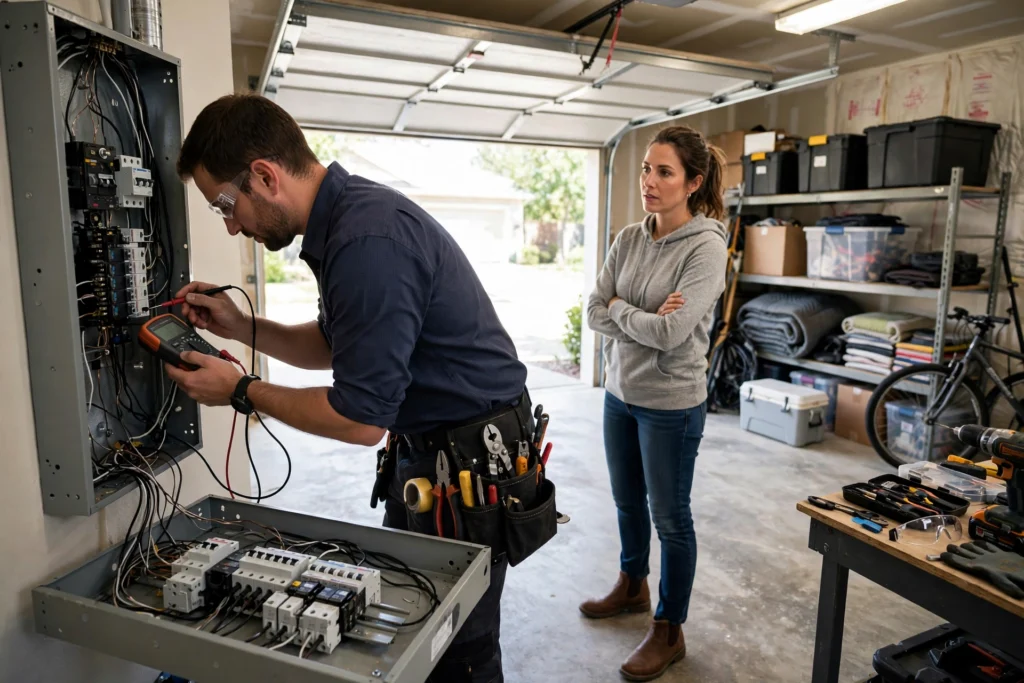
Sometimes the right answer is not a new breaker at all. If breakers keep failing across multiple circuits, the bus bars are corroded or scorched, the panel buzzes, or the whole thing is 25 to 30+ years old, the panel is likely done. For these homes, the circuit breaker replacement cost conversation turns into a panel replacement quote of $850 to $4,000.
The serious case involves Federal Pacific Electric (Stab Lok) and Zinsco panels, installed widely from the 1950s through the 1980s. These have a documented history of breakers failing to trip during overloads, and Zinsco breakers are known to melt and fuse to the bus bar. Many insurers now refuse to cover homes with these panels or charge higher premiums, and home inspectors flag them in almost every sale. Read the OSHA electrical safety standards if you want the background on why regulators take old panels seriously.
Replacing a Federal Pacific or Zinsco panel runs $1,500 to $4,000 in most markets, and most electricians recommend full replacement rather than repair once one of these panels is identified. Obsolete panels often cannot accept modern AFCI or GFCI breakers, so even a simple breaker upgrade becomes a panel project. If an electrician tells you your panel cannot take the breaker you need, get a second quote, but do not ignore the warning.
DIY vs Hiring an Electrician
Doing it yourself drops the circuit breaker replacement cost to the price of the part, $4 to $100 depending on the type, plus a voltage tester and pliers if you do not own them. Permits are required for panel work in most jurisdictions, typically $50 to $200 in inspection fees, and homeowners working on their own occupied home still need the inspection in most places.
But here is the part that matters: the main lugs in your panel stay energized even with the main breaker turned off. One wrong touch can be fatal, and a mistake can void your homeowner insurance. For a confident person with experience, a simple like for like swap is physically doable, but panel level work, shared neutrals, aluminum wiring, and any box that has been exposed to water are not DIY jobs. Check the electrical safety resources from ESFI before you decide your skill level matches the risk.
The honest math is that circuit breaker replacement cost is mostly a labor bill anyway. Paying $150 to $300 for a licensed electrician to do a 30 minute swap safely, with a permit and a warranty on the work, is reasonable insurance against a very bad day. Get three local quotes, confirm the electrician is licensed and insured, and ask whether the price includes the permit.
Frequently Asked Questions
How much does it cost to replace a circuit breaker?
A straightforward single breaker job has a circuit breaker replacement cost of $100 to $260 installed on average, with some markets running $150 to $300. The part itself is only $5 to $40 for a standard breaker. Most of the bill is the electrician’s service call fee of $75 to $200 plus labor for a 30 to 60 minute job.
Why is the bill so high when the breaker only costs $10?
You are paying for travel, expertise, and the risk of working inside a live panel. Most companies have a minimum charge covering the trip plus the first hour, which is why the simplest job totals $150 to $250. The breaker part is genuinely the smallest line on the invoice.
What does gfci breaker replacement cost?
A gfci breaker replacement cost runs about $150 to $300 installed. The part costs $40 to $100, so it lands at the top of the standard range. A GFCI outlet is the cheaper alternative at $150 to $250 installed, though one breaker protects the entire circuit while one outlet only protects what is downstream of it.
Can I replace a circuit breaker myself?
Physically possible for a confident DIYer, but not recommended as a first electrical project. The main lugs stay live even with the main breaker off, and a mistake can be fatal or void your insurance. Panel work also needs a permit and inspection in most areas. If you have any doubt, hire an electrician.
How much does it cost to replace a main breaker?
A main breaker replacement runs $200 to $600 or more installed. The utility usually has to disconnect incoming power first, and some utilities require an inspection before reconnecting, which adds time and sometimes fees. It cannot be done with the house energized.
When should I replace the whole panel instead of a breaker?
When multiple breakers keep failing, the bus bars are corroded or scorched, the panel is 25 to 30+ years old, or you have a Federal Pacific (Stab Lok) or Zinsco panel. Those two brands are documented fire hazards that most electricians say should be replaced, not repaired. Panel replacement runs $850 to $4,000, and $1,500 to $4,000 for FPE or Zinsco panels specifically.
Plan on a circuit breaker replacement cost of $100 to $300 for a standard single breaker job, $200 to $600 or more for a main breaker, and get three local quotes before you approve anything. The part is cheap, the labor is real, and a safe panel is worth every dollar of the invoice.