Exterior House Painting Cost 2026: Full Price Breakdown
Exterior house painting costs $1,819 to $4,551 in 2026, with most homeowners paying an average of $3,177 for a professional paint job. Contractors typically charge $1.50 to $4.00 per square foot of paintable surface, and labor makes up 70 to 85 percent of the total. A 2,000 square foot home runs $2,500 to $5,500 for a single story or $4,500 to $7,500 for two stories, with prep work accounting for 40 to 60 percent of the labor.
How Much Does Exterior House Painting Cost in 2026?
The national average cost to paint a house exterior in 2026 is $3,177, with a typical range of $1,819 to $4,551. Most professional quotes are built on the paintable surface area rather than the home’s floor plan, since siding, trim, soffits, and eaves all take paint. Expect $1.50 to $4.00 per square foot of surface, with higher rates for multi-story homes, extensive prep, or premium paint.
| House size and stories | Average cost |
|---|---|
| 1,500 sq ft, 1 story | $1,800 to $4,000 |
| 2,000 sq ft, 1 story | $2,500 to $5,500 |
| 2,000 sq ft, 2 story | $4,500 to $7,500 |
| 2,500 sq ft, 1 story | $3,000 to $6,500 |
| 2,500 sq ft, 2 story | $5,500 to $9,000 |
| 3,000 sq ft, 2 story | $6,500 to $11,000 |
Exterior Painting Cost by Siding Type
- Vinyl siding: Among the cheapest to paint. Smooth vinyl needs minimal prep and takes paint well with the right primer.
- Wood siding: Mid to high range. Old wood often needs scraping, sanding, caulking, and priming, which adds labor hours.
- Fiber cement (Hardie board): Midrange. Holds paint exceptionally well and needs less frequent repainting.
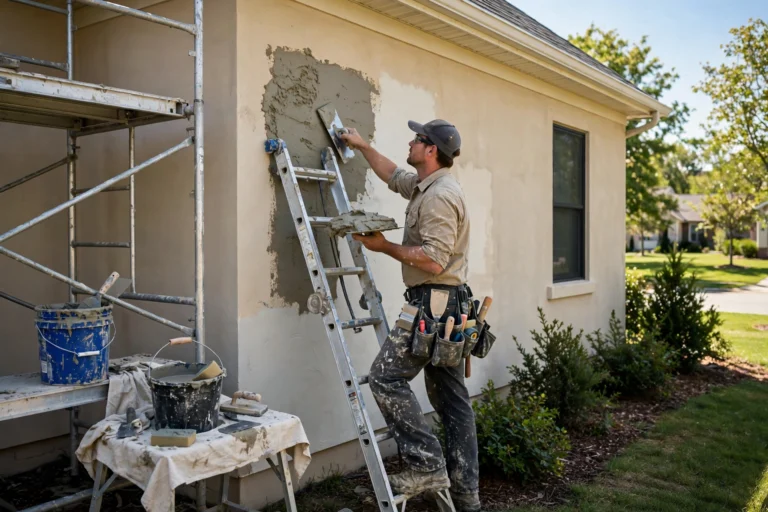
- Stucco: Higher end. Textured surfaces soak up more paint, and cracks need patching before painting.
- Brick: Higher end. Requires masonry primer and more paint per square foot due to the porous surface.
- Aluminum siding: Midrange. Needs thorough cleaning and a bonding primer for paint to adhere.
Exterior Painting Cost Breakdown
- Labor: 70 to 85 percent of the total. Prep alone is 40 to 60 percent of labor hours.
- Paint: $30 to $70 per gallon. A 2,500 square foot home needs roughly 15 to 25 gallons.
- Primer: A few hundred dollars for a full prime coat on bare or repaired surfaces.
- Prep and repairs: Power washing, scraping, sanding, caulking, and minor wood repair are often billed as part of labor.
- Lead-safe prep: Homes built before 1978 may need EPA RRP certified lead-safe work at $1,000 to $3,500 extra.
- Lifts or scaffolding: Tall or hard to reach areas can add equipment rental costs.
What Affects the Cost: Key Factors
- Paintable surface area: More siding, trim, and architectural detail means more paint and more labor.
- Number of stories: Two story homes cost 40 to 60 percent more than single story homes of the same footprint because of ladders, lifts, and slower work.
- Surface condition: Peeling, chalking, or damaged siding doubles prep time and pushes the quote up.
- Color change: Going from dark to light, or any dramatic change, usually needs an extra coat.
- Paint quality: Premium 100 percent acrylic paint costs more per gallon but lasts years longer.
- Trim and detail: Lots of trim, shutters, and decorative millwork add cutting-in time.
- Region: Labor rates in high cost metros run well above the national average.
Exterior Painting Timeline and Process
A typical single family home takes three to seven days:
- Day 1, prep: Power washing, scraping loose paint, sanding, and masking windows and landscaping.
- Days 2 to 3, repairs and priming: Caulking gaps, patching holes, repairing damaged wood, and spot or full priming.
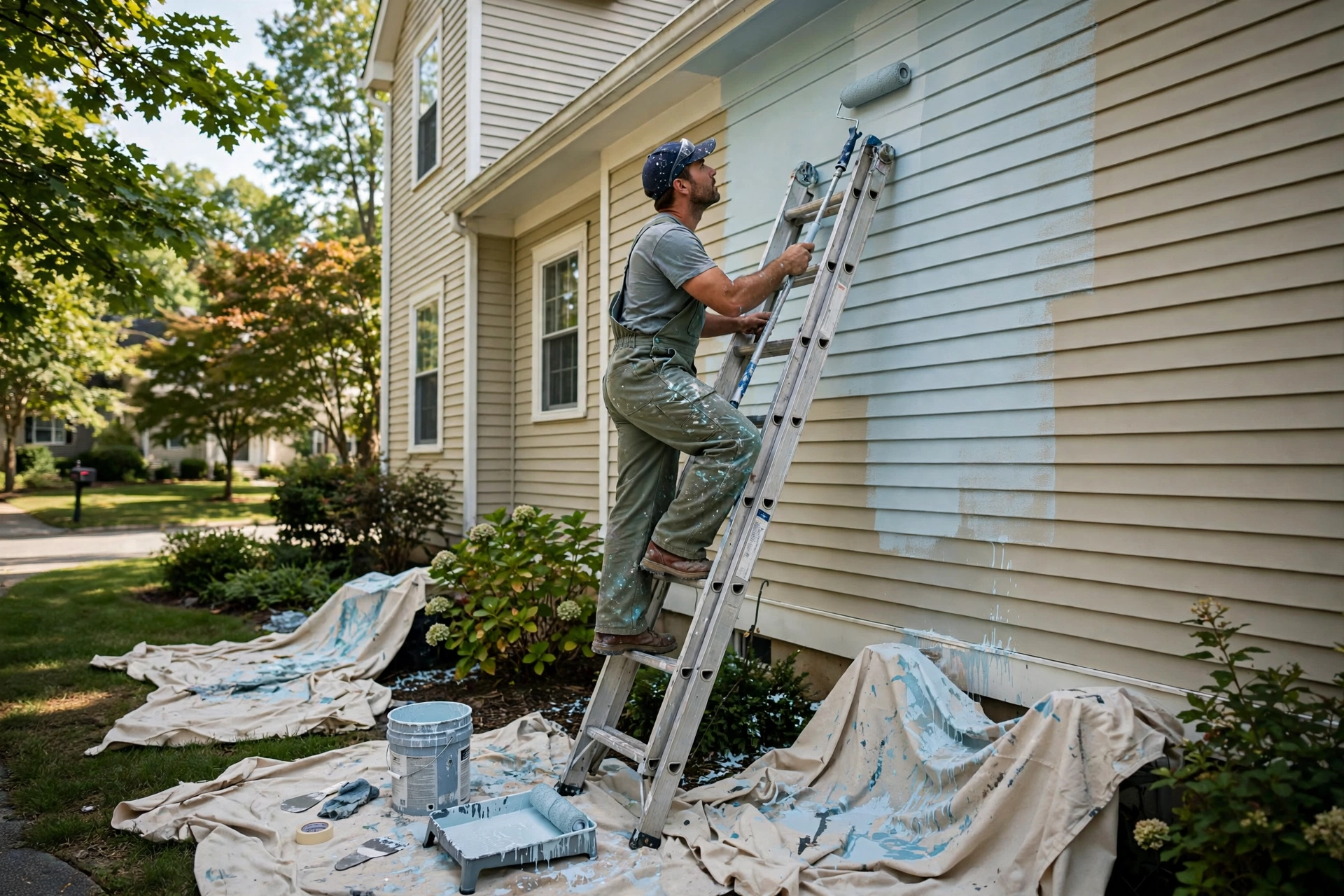
- Days 3 to 5, painting: Two finish coats on siding, then trim, doors, and shutters.
- Final day, cleanup and walkthrough: Touch ups, unmasking, and a final inspection with the homeowner.
DIY vs Hiring a Painting Contractor
Painting a single story ranch yourself can save $2,000 to $5,000 in labor. If you are comfortable on a ladder, own or can rent a sprayer, and have a full week, DIY is a realistic money saver on simpler homes.
Hire a pro for two story homes, steep lots, extensive prep, lead paint, or intricate trim. Professionals work faster, carry insurance, and know how to prep surfaces so the paint lasts. A quality professional job can add 5 to 7 percent to your home’s value, and the curb appeal payoff is immediate.
How to Save Money on Exterior Painting
- Get three detailed quotes: Compare line items for prep, coats, and paint brand, not just the bottom line.
- Do the prep yourself: Power washing and moving patio furniture can shave hours off the labor bill.
- Keep the same color family: Avoiding a dramatic color change can eliminate a full extra coat.
- Bundle repairs: Have the painter handle minor wood rot while the ladders are up instead of hiring separately.
- Schedule in the shoulder season: Late spring and early fall offer good painting weather and better contractor availability.
- Buy quality paint: Premium paint lasts 8 to 10 years versus 5 or less for cheap paint, lowering the cost per year.
Frequently Asked Questions
How often should I repaint my house exterior?
Most homes need repainting every 5 to 10 years. Wood siding is on the shorter end, while fiber cement and stucco can go longer with quality paint.
How much paint do I need for a 2,500 sq ft house?
Plan on roughly 15 to 25 gallons of paint for a 2,500 square foot home, depending on siding texture and whether you are changing colors. Buy a little extra for touch ups.
What is the best time of year to paint a house exterior?
Late spring through early fall is ideal, with temperatures between 50 and 85 degrees and low humidity. Avoid painting in direct midday sun or when rain is expected within 24 hours.
Does exterior painting increase home value?
Yes. A fresh professional paint job can add 5 to 7 percent to a home’s value and is one of the highest return curb appeal projects.
Can I paint over old paint without priming?
If the old paint is sound and you are using a similar color, you can often skip full priming. Bare wood, repairs, stains, and dramatic color changes all need primer.
Painting inside too? See interior house painting costs for 2026, or check popcorn ceiling removal pricing if your ceilings need attention first.
Painting the inside too? Our cost to paint a room guide prices single rooms by size, with labor shares, ceiling and trim add-ons, and finish costs.
Doing the deck while the ladders are out? Our cost to stain a deck guide covers per square foot staining prices, stain types, and DIY totals.