Sewer Line Replacement Cost 2026
A full sewer line replacement costs $4,000 to $12,000 in 2026 for most homes, or $50 to $250 per linear foot. Trenchless methods run $6,000 to $15,000 with minimal digging, while traditional open-trench work runs $3,000 to $12,000 plus yard restoration. Figures below reflect 2026 national averages from contractor pricing data; your local quote may vary, so get 3 local quotes before committing.
Few home repairs inspire as much dread as the sewer line, and few are as misunderstood. It is expensive, it is underground, and most homeowners only learn about it when sewage backs up into the basement. Here is what sewer line replacement actually costs in 2026, how trenchless compares to traditional digging, and the one step you must take before authorizing anything.
How much does sewer line replacement cost in 2026?
Most homeowners pay $4,000 to $12,000 for a full replacement. A typical 40 to 60 foot residential line lands around $5,000 to $10,000. Complex jobs with deep lines, long runs, or work under streets reach $15,000 to $25,000 or more.
| Method | Per linear foot (2026 estimate) | Typical total |
|---|---|---|
| Traditional open trench | $50 to $175 | $3,000 to $12,000+ |
| Trenchless (overall) | $60 to $250 | $6,000 to $15,000 |
| CIPP pipe lining | $80 to $250 | $6,000 to $12,000 |
| Pipe bursting | $60 to $200 | $8,000 to $15,000 |
The average residential sewer run is 50 to 75 feet. Note that Angi’s published range looks lower ($1,388 to $5,323) because it blends small partial jobs with full replacements: for a genuine full-line replacement, plan on the ranges above.
Trenchless vs traditional: the real comparison
Traditional open trench ($50 to $175 per foot)
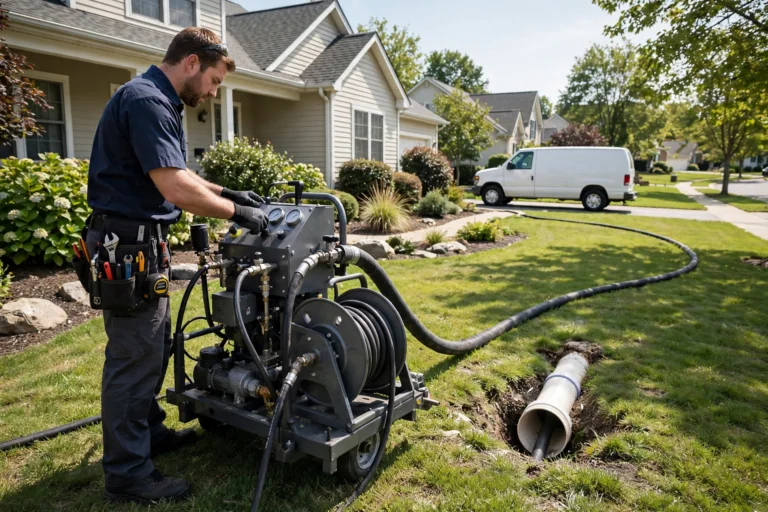
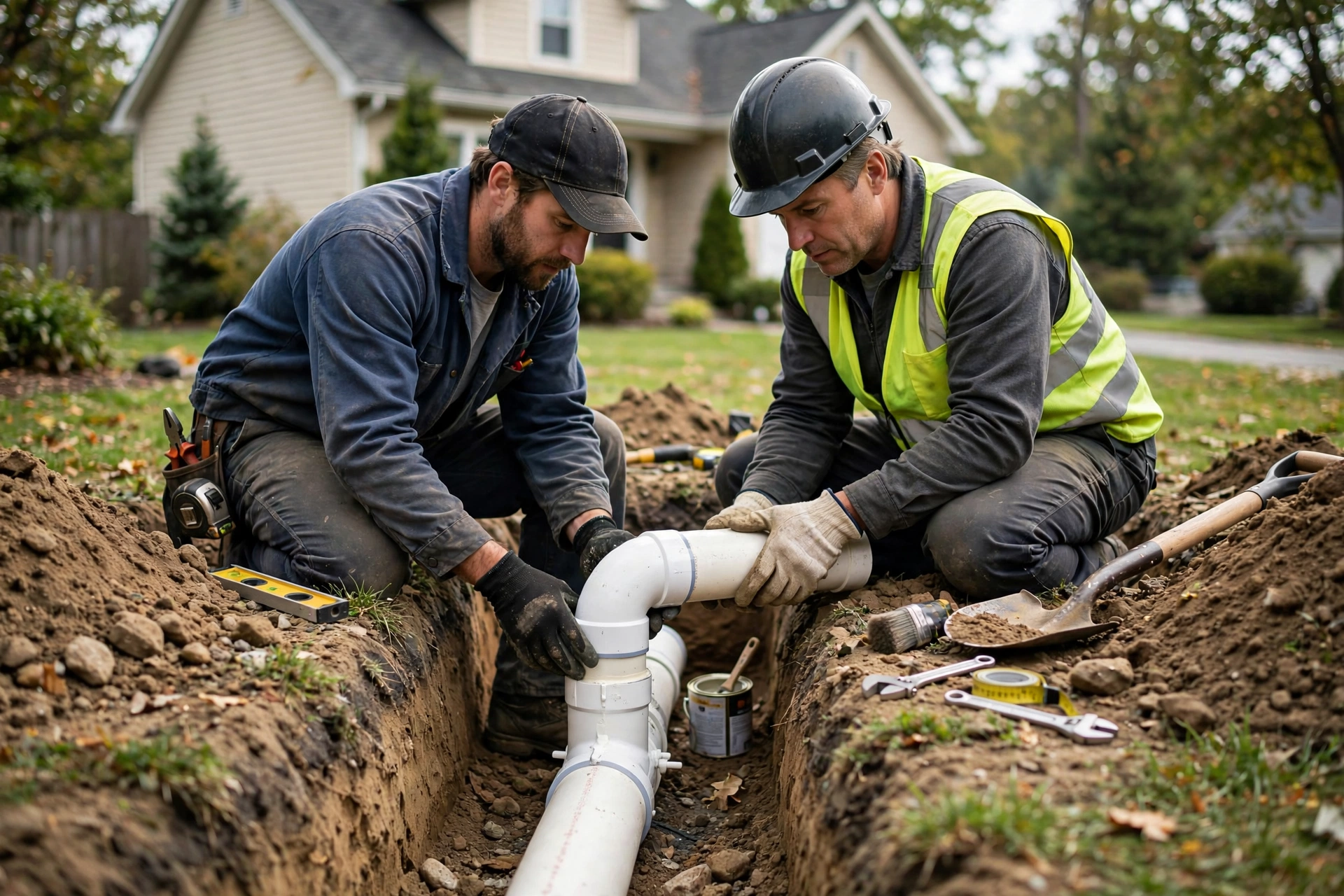
The crew digs a trench along the pipe route, removes the old line, lays new pipe, and backfills. Pipe work for a typical 50 foot run costs $2,500 to $8,750, plus $500 to $3,000 or more for surface restoration: lawn, landscaping, driveway. All-in traditional totals run $3,000 to $12,000 or more. It is the cheapest method per foot, but the digging is the destructive part.
CIPP pipe lining ($80 to $250 per foot)
Cured-in-place pipe lining leaves the old pipe in the ground and hardens a resin liner inside it, essentially creating a new pipe within the old one. Totals run $6,000 to $12,000 for typical residential runs, averaging about $9,000. The liner lasts 50 to 100 years. The limitation: the old pipe must be structurally sound enough to host the liner. It cannot fix bellies, collapses, or severe slope problems.
Pipe bursting ($60 to $200 per foot)
A bursting head destroys the old pipe while pulling new HDPE pipe through behind it. Totals run $8,000 to $15,000 for typical runs. The new pipe lasts 100-plus years. Pipe bursting handles collapsed pipe that lining cannot, but it needs a straight route with room to displace soil.
The key tradeoff: trenchless costs more per foot but needs almost no digging. When the line runs under a driveway, patio, or mature landscaping, trenchless usually wins on total cost once you add $2,000 to $6,000 in driveway and landscape restoration to the traditional quote. Price both options side by side, including restoration, before deciding.
Cost by pipe material and line length
Most replacements today use PVC: $150 to $200 per linear foot installed, with a 50 to 100-plus year life and excellent corrosion resistance. ABS runs $160 to $210, cast iron $180 to $250 (heavy and rust-prone, being phased out). If your home still has its original clay, cast iron, or Orangeburg pipe from before 1980, assume the line is at or past end of life: clay lasts 50 to 60 years, cast iron 50 to 75, Orangeburg only 30 to 50.
| Line length (trenchless totals) | Typical cost (2026 estimate) |
|---|---|
| 25 to 35 ft | $1,500 to $8,500 |
| 35 to 45 ft | $2,000 to $10,900 |
| 45 to 55 ft | $2,700 to $13,300 |
| 55 to 75 ft | $3,200 to $18,200 |
| 75 to 100 ft | $4,400 to $24,300 |
What moves your price up or down
- Depth: Deeper lines need bigger excavation and shoring. Under-slab or very deep sections can hit $300 to $350 per linear foot for that stretch.
- Restoration: Landscaping $4.50 to $12 per square foot; concrete driveway repair $1 to $25 per square foot; asphalt $1 to $15. A line under a driveway adds $2,000 to $6,000 in restoration alone.
- Tree roots: Root cutting before repair runs $100 to $600. Lines near mature trees fail sooner and cost more to clear.
- Permits: Nearly every municipality requires one: $100 to $500 typically, more in high-cost metros. Licensed pros usually handle the paperwork.
- City vs septic: Ask the city who owns what. Many municipalities cover the portion from the curb or sidewalk to the main, which can cut your footage nearly in half. Septic-side work adds a septic inspection ($150 to $450).
- Cause of damage: Simple cracks are cheapest. Collapsed or bellied pipe forces open-trench work at the top of every range.
Get a camera inspection first, always
Before authorizing anything, pay for a video camera inspection: $100 to $500 nationally. Many contractors credit the inspection fee toward the repair if you hire them. This is the only way to know whether you need a spot repair or a full replacement, and about a third of second opinions end up as cheaper trenchless fixes instead of dig jobs. Never approve a five-figure replacement based on symptoms alone.
Spot repair vs full replacement
If the camera shows isolated damage on an otherwise sound line, a spot repair costs $600 to $3,500. Hydro jetting to clear roots and debris runs $300 to $800 and can buy years of life when the pipe is still structurally sound. Simple snaking costs $150 to $500.
Contractors use a rough rule: if repair quotes exceed about 50 percent of replacement cost, or the pipe is clay, Orangeburg, or cast iron past its life expectancy, replace the whole line. Patching a 60-year-old clay pipe is renting time at full price.
DIY vs pro: this is pro-only work
Do not DIY a sewer line replacement. It requires excavation equipment, permits and inspections that many states legally restrict to licensed plumbers, utility locates, precise slope work (a few degrees off means permanent drainage failure), and handling raw sewage, which is a biohazard. A botched DIY install means paying a pro to redo it plus potential fines. The one safe DIY piece is the landscape restoration afterward: topsoil, grass seed, and sod, which saves a few hundred dollars. For indoor plumbing you can plan around, see our water softener cost guide.
Signs your sewer line is failing
- Multiple slow drains at once: toilets, tubs, and sinks together, not just one fixture
- Frequent clogs or sewage backups, especially in the lowest drain
- Gurgling sounds from toilets or drains when water runs elsewhere
- Persistent sewage or sulfur odors inside or in the yard
- Soggy patches or unusually lush green strips of grass over the pipe route
- Sinkholes, settled soil, or cracked pavement along the line path
How to save money on sewer line replacement
- Get 3 written quotes and compare line items, not just totals. Excavation vs trenchless pricing structures differ wildly.
- Pay for the camera inspection first. $100 to $500 that prevents a wrong five-figure decision.
- Price trenchless including restoration. Trenchless often wins when a driveway, patio, or mature trees sit over the line.
- Act on early signs. Root clearing at $150 to $300 beats a $10,000 replacement. Scope the line every 1 to 2 years on homes over 40 years old.
- Check your insurance for a service line endorsement. Standard policies exclude the underground pipe itself, but the rider is usually cheap: add it before you need it.
- Ask the city who owns what. The municipal portion from curb to main is often theirs, cutting your footage nearly in half.
- Do the yard restoration yourself. Topsoil, seed, and sod after the crew leaves saves hundreds.
Frequently asked questions
How much does sewer line replacement cost per foot in 2026?
$50 to $250 per linear foot all in. Open trench runs $50 to $175 per foot plus restoration; CIPP lining $80 to $250; pipe bursting $60 to $200.
How long does a sewer line last?
PVC lasts 75 to 100-plus years, cast iron 50 to 75, clay 50 to 60, Orangeburg roughly 30 to 50. Any clay or cast iron line from before 1980 is on borrowed time.
Do I need a permit to replace a sewer line?
Yes, in nearly every case. Budget $100 to $500 typically. Your contractor normally pulls it.
How long does the job take?
Trenchless: 1 to 2 days. Traditional dig and replace: 2 to 4 days, longer for deep lines or heavy restoration.
Will homeowners insurance cover sewer line replacement?
Usually no. Standard policies exclude the underground pipe itself. A service line endorsement or utility service line warranty may cover it.
Trenchless or traditional: which should I choose?
Choose trenchless when the pipe can host a liner or be burst and you want to avoid tearing up the yard or driveway. Choose traditional when the pipe is collapsed, badly bellied, or has severe slope problems. Get both priced side by side when both are viable.