Hardwood Floor Refinishing Cost 2026
Quick answer: In 2026, hardwood floor refinishing costs $3 to $8 per square foot professionally. A full sand, stain, and refinish of a typical 1,000 square foot area runs about $3,000 to $8,000. A lighter screen and recoat job costs $1.50 to $3 per square foot. These are national average estimates, so always get 3 local quotes before you commit.
If your hardwood floors look dull, scratched, or just tired, you probably do not need new flooring. A professional refinish makes old floors look brand new for a fraction of replacement cost. This guide breaks down 2026 pricing, what drives the price, how the process works, and when refinishing is the wrong call.
Hardwood Floor Refinishing Cost Per Square Foot
Most contractors price by the square foot. Not every floor needs a full sand and stain; a simple screen and recoat is often plenty and costs far less.
| Service | Cost Per Sq Ft (2026 Estimate) | Typical Total (1,000 Sq Ft) |
|---|---|---|
| Screen and recoat (buff + new topcoat) | $1.50 to $3 | $1,500 to $3,000 |
| Sand, stain, and refinish (full refinish) | $3 to $8 | $3,000 to $8,000 |
| Dustless refinishing (add-on) | Adds $1 to $2 | $1,000 to $2,000 extra |
| Stairs | $75 to $150 per step | $975 to $1,950 for 13 steps |
A screen and recoat suits floors with light wear and a mostly intact finish: the contractor buffs the old finish and applies 1 to 2 fresh coats of polyurethane. A full sand, stain, and refinish is for deep scratches, water stains, or a failing finish: the crew sands to raw wood, repairs damage, applies stain, and seals with 2 to 3 coats. Dustless refinishing adds $1 to $2 per square foot for sanders connected to vacuum systems that capture nearly all dust.
What the Process Actually Involves
Refinishing is a multi-day job with distinct stages. Knowing them helps you spot a contractor who cuts corners.
1. Sanding
The crew starts with a heavy drum sander to strip the old finish and level the surface, then works through progressively finer grits. Edges get done with an edger since the big drum cannot reach walls. This is the loudest, dustiest phase and where the skill lives. A bad sanding job shows through every coat on top of it.
2. Staining
On bare, smooth wood, stain is applied if you want a color change or an enriched tone. Golden oak becomes rich walnut or modern gray at this stage. Skip stain for a natural finish, which also saves a day of drying time.
3. Sealing with 2 to 3 Coats of Polyurethane
After the stain dries, the crew applies 2 to 3 coats of polyurethane, buffing lightly between coats. This is the armor of your floor, standing between the wood and shoes, dog claws, and spills. Three coats is the standard. A contractor proposing a single coat to save money is a red flag, not a deal.
Repair Add-Ons That Raise the Bill
Refinishing quotes sometimes look low until the extras appear. Make sure each add-on is itemized in the quote.
| Repair | Cost (2026 Estimate) |
|---|---|
| Board replacement (per board) | $50 to $100 |
| Subfloor repair | $200 to $600 |
| Pet stain treatment (per area) | $150 to $400 |
| Gap filling | $0.50 to $1.50 per sq ft |
| Furniture moving (full room) | $200 to $500 |
Board replacement covers cracked, gouged, or warped boards at $50 to $100 each, far cheaper than replacing the whole floor. Subfloor repair comes up when boards flex or sink underfoot, meaning the problem is underneath the hardwood; typical fixes run $200 to $600. A good contractor flags this before starting, not after your new finish is on.
Pet stains are their own challenge. Dark urine stains penetrate deep, and sanding alone sometimes cannot remove them. Ask whether your stains can actually be sanded out before the job starts, because dark stains that survive will show clearly on a fresh, light stain.
Refinishing Stairs: $75 to $150 Per Step
Stairs cost more because each step has several surfaces to sand by hand. A standard 13-step staircase runs $975 to $1,950, usually with staining included. Bundling stairs with your floors typically earns a slightly better per-step price.
Finish Types: What Goes on Your Floors
The finish is the part of the job you live with every day. Two main polyurethane families and three sheen options cover almost every job.
Oil-Based vs Water-Based Polyurethane
Oil-based polyurethane is the old standard. It adds a warm amber tone that deepens over time, it is very durable, and it costs a bit less. The tradeoffs are strong fumes, longer cure time, and continued yellowing that can clash with light or gray stains.
Water-based polyurethane dries crystal clear, so your stain color stays true. It has low odor, dries in a couple of hours per coat, and resists yellowing. It costs more, but the hardest water-based finishes now match oil for durability. For most homes in 2026, water-based is the more popular choice.
Matte vs Satin vs Gloss
Gloss shows every speck of dust and scratch. Satin is the popular middle ground with a soft glow. Matte looks natural and is the most forgiving. With kids, dogs, or heavy traffic, satin or matte beats gloss.
How Long It Takes and Cure Time
A full sand, stain, and refinish of an average home takes 3 to 5 days. A screen and recoat can often finish in a single day. Walk on the floors in socks after 24 hours, but keep furniture, rugs, and pets off for 24 to 72 hours. Full cure takes about 30 days, so treat the floors gently that first month: felt pads under furniture, no dragging anything heavy, and wipe up spills quickly.
Refinish vs Replace: The Big Decision
Installing new solid hardwood costs $12 to $25 per square foot in 2026, including materials and labor, versus $3 to $8 to refinish. For 1,000 square feet, that is roughly $3,000 to $8,000 against $12,000 to $25,000. Refinishing saves you thousands.
Refinish when: the wood is solid, the boards are thick enough for another sanding, and the damage is limited to scratches, worn finish, and discoloration. Most solid hardwood can be sanded 4 to 6 times in its life.
Replace when: the boards are too thin to sand again, large areas are warped or cupped from water damage, the floor squeaks everywhere, or the subfloor is structurally damaged. Sanding will not save it at that point.
If you are replacing because your floors are truly done, that is the perfect moment to consider upgrades you can only install with the floors torn up. Electric radiant floor heating goes under the new flooring and adds comfort refinishing can never provide. Our guide to radiant floor heating cost breaks down that option so you can decide while the floor is already open.
Engineered Wood: The Important Caveat
Engineered wood is not solid wood. It has a thin layer of real hardwood, the wear layer, glued over plywood. Cheaper engineered floors have a 1 to 2 millimeter wear layer, too thin to sand. One pass with a drum sander burns straight through to the plywood, ruining the floor. Mid-range and premium floors with a 3 to 6 millimeter wear layer can usually be refinished once or twice.
Have the contractor measure the wear layer and confirm in writing that a refinish is safe. If it is too thin, a screen and recoat at $1.50 to $3 per square foot is often the only option, and it works fine since it removes no wood.
DIY vs Pro: Should You Refinish It Yourself?
DIY refinishing looks manageable on video and humbles a lot of homeowners in person.
DIY Cost
A drum sander rents for $60 to $100 per day, plus $40 to $60 per day for an edger. With sandpaper, stain, polyurethane, and applicators, a 1,000 square foot DIY job runs $500 to $1,000, versus $3,000 to $8,000 for a pro.
DIY Risk
The drum sander is the hard part. It is heavy and aggressive, and leaving it in one spot for even a second too long gouges a permanent dip. Uneven sanding shows through the finish no matter how carefully you stain, and first-timers applying polyurethane commonly get brush marks, bubbles, and dust nibs.
DIY makes sense for a small bedroom if you have tool experience. For main living areas or any floor you want to look flawless, hire a pro.
How to Save Money on Refinishing
A few smart moves can trim the bill without cutting quality.
- Get 3 local quotes, minimum. Prices vary wildly between contractors in the same city. Three quotes reveals the real going rate and exposes anyone padding the price.
- Consider a screen and recoat. A screen and recoat at $1.50 to $3 per square foot costs less than half of a full sand.
- Skip the stain and go natural. Dropping the staining step saves a day of labor. Natural finishes look timeless and never fight your decor.
- Move your own furniture. Contractors charge $200 to $500 to clear rooms. Doing it yourself costs nothing.
- Refinish before you move in. If you just bought a home with tired floors, refinishing before furniture arrives is cheaper, faster, and far less disruptive.
- Bundle stairs and floors. Doing them together usually earns a better per-step price than scheduling stairs separately.
Frequently Asked Questions
How often should hardwood floors be refinished?
Most floors need a full refinish every 7 to 10 years. Heavy traffic, large dogs, or kids push it closer to 7 years. A screen and recoat every 3 to 5 years extends the time between full sandings.
Can you stay in the house during refinishing?
Yes, with planning. Water-based finishes have mild fumes, so you can stay home while keeping clear of the work area. Oil-based fumes are strong for 24 to 48 hours, and kids, pets, and anyone with respiratory issues should stay elsewhere. Dustless sanding makes staying home much more comfortable either way.
Is dustless refinishing worth it?
For most people, yes. Traditional sanding creates enormous fine dust that settles throughout the house. Dustless systems capture the vast majority at the source. At $1 to $2 extra per square foot, it is a reasonable upgrade for allergy, kid, and pet households.
Does refinishing remove deep scratches?
A full sand and refinish removes most scratches in the finish or the top of the wood. Deep gouges through the board may need board replacement instead. A good contractor will assess the worst areas during the estimate and tell you honestly what will sand out.
Can engineered wood be refinished?
Only if the wear layer is thick enough, usually 3 millimeters or more. Thin 1 to 2 millimeter wear layers cannot be sanded without burning through to the plywood core. If yours are too thin, a screen and recoat refreshes the finish without removing wood.
How much does it cost to refinish 1,000 square feet of hardwood?
A full refinish of 1,000 square feet costs $3,000 to $8,000 at 2026 national average prices. A screen and recoat runs $1,500 to $3,000. Dustless sanding adds $1,000 to $2,000, and board replacement adds $50 to $100 per board. Always get 3 local quotes, since regional labor rates move these numbers.
Can I change the color of my hardwood floors during refinishing?
Absolutely, and it is one of the best reasons to do a full refinish. Once sanded to bare wood, you can apply almost any stain: darker walnut, modern gray, or a lighter natural look. Very dark stains show dust and scratches more, and water-based polyurethane keeps light and gray stains from yellowing.
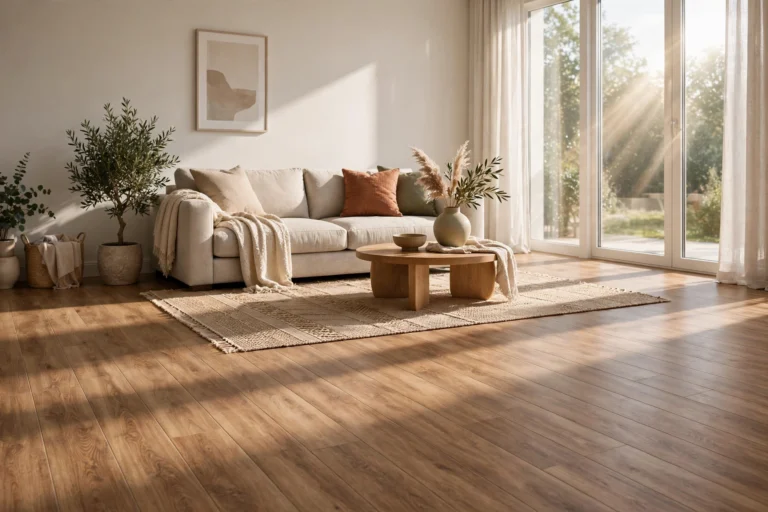
Freshly refinished floors change the entire feel of a home, and at $3 to $8 per square foot, few projects deliver this much visual impact per dollar. Get your 3 local quotes and confirm what is included in writing.
Last updated: October 2026. Cost figures reflect 2026 national averages from contractor pricing data. Always get 3 local quotes before committing.