
Cost to Stain a Deck 2026
If your deck boards have gone gray and water no longer beads on the surface, it is time for a fresh coat. The cost to stain a deck professionally in 2026 runs $550 to $1,250 for a typical deck, with a national average of about $850. Most of that money is labor, not stain, which is why quotes for the same deck can swing by several hundred dollars from one contractor to the next.
So what drives the number up or down? Deck size is the obvious factor, but condition matters just as much. A clean, previously stained deck that only needs a wash and one coat sits at the low end of the cost to stain a deck range. A peeling, grayed deck that needs stripping and sanding can cost twice as much. Stain type, railings, and stairs all move the price too.
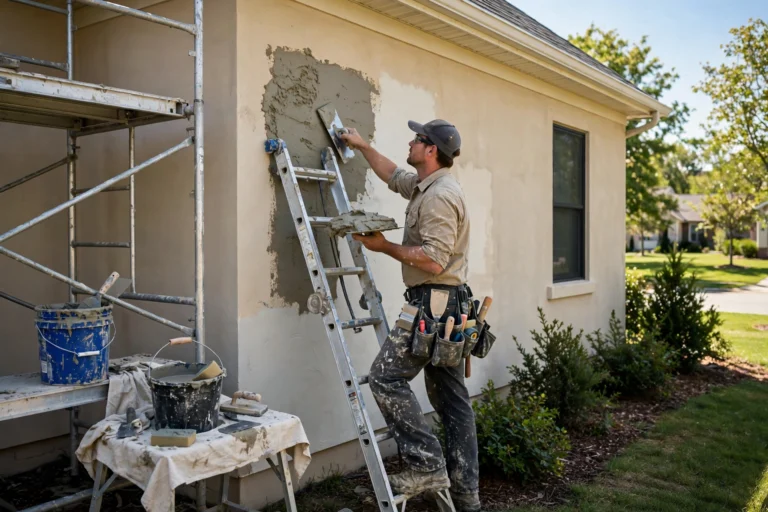
Refreshing the siding while the deck dries? Our exterior house painting cost guide covers full exterior prices.
Before you hire anyone, get 3 local quotes and ask each contractor to itemize prep, stain, and railing work separately. An itemized quote makes it easy to see whether a low bid skips the prep that makes a finish last. The cost to stain a deck figures in this guide are planning estimates based on national pricing data, and your local number will vary with labor rates in your area.
Doing the inside rooms this season too? Our cost to paint a room guide breaks down per room prices and labor shares.
This guide breaks down the price by deck size and square foot, explains how stain type changes the bill, and shows what the job costs if you do it yourself.
How Much Does It Cost to Stain a Deck?
Contractors price most jobs by the size of the deck floor, so a few standard sizes tell you most of what you need to know. The table below assumes a deck in decent shape that needs washing, light sanding, and 1 to 2 coats, which is the scope behind most cost to stain a deck estimates.
| Deck size | Floor area | Typical pro cost |
|---|---|---|
| 10×10 | 100 sq ft | $200 to $400 |
| 12×12 | 144 sq ft | $275 to $575 |
| 12×16 | 192 sq ft | $375 to $775 |
| 15×20 | 300 sq ft | $600 to $1,200 |
| 16×24 | 384 sq ft | $775 to $1,550 |
| 20×20 | 400 sq ft | $800 to $1,600 |
| Large or multi-level | 500+ sq ft | Up to about $2,500 |
At the extremes, a small and simple deck can come in near $100, while a large, complicated one can reach about $1,465 before you even get to oversized decks above 500 square feet. Regional labor is the wild card in the cost to stain a deck. One Boston area contractor prices a 12×12 deck at $800 to $1,350, well above the national math, simply because metro labor costs more. Treat the table as your starting point, then confirm with local quotes.
Deck Staining Cost Per Square Foot
The standard professional rate is $2 to $4 per square foot, and some guides put the wider band at $1.50 to $4.00. When you compare the deck staining cost per square foot between bids, remember what you are really buying. One contractor breakdown puts materials at about 15 percent of the price and labor at about 85 percent, so the cost to stain a deck is mostly the cost of skilled hours on your property.
A standard rate usually covers pressure washing (about $0.40 per square foot as a standalone prep service), spot sanding of rough patches and popped grain, minor fixes like resetting popped screws, and the stain itself in 1 to 2 coats. It usually does not cover board replacement, structural repairs, stripping a failed coating, or moving heavy furniture and grills off the deck. Ask what is included in writing, because excluded prep is exactly where a cheap cost to stain a deck quote grows later.
Stain Types and What They Cost
Stain is sold by opacity, and opacity drives both price and lifespan. Plan on coverage of 200 to 300 square feet per gallon per coat on smooth wood, and less on rough or weathered boards that drink more product. The type you choose affects the cost to stain a deck both today, at the register, and again at recoat time. Here is how the main types compare.
| Stain type | Typical price per gallon | Look |
|---|---|---|
| Clear or toner | $20 to $40 | Grain fully visible, least UV protection |
| Semi-transparent | $40 to $60 | Color with visible grain, the most popular choice |
| Semi-solid | $45 to $65 | Grain mostly hidden, good for weathered wood |
| Solid | $50 to $76 | Paint-like coverage, most UV protection |
How much product will you burn through? At 200 square feet per gallon, a 200 square foot floor takes about 2.1 gallons, a 300 square foot floor takes about 3.1 gallons, and a 400 square foot floor takes about 4.2 gallons, with railings and stairs adding a little more. Buying 5 gallon pails cuts the per gallon price noticeably. Premium penetrating oils can run $60 to $73 a gallon, which raises the material share of the cost to stain a deck, but they tend to fade evenly instead of peeling, which makes the next recoat cheaper.
The Adders That Break Quotes
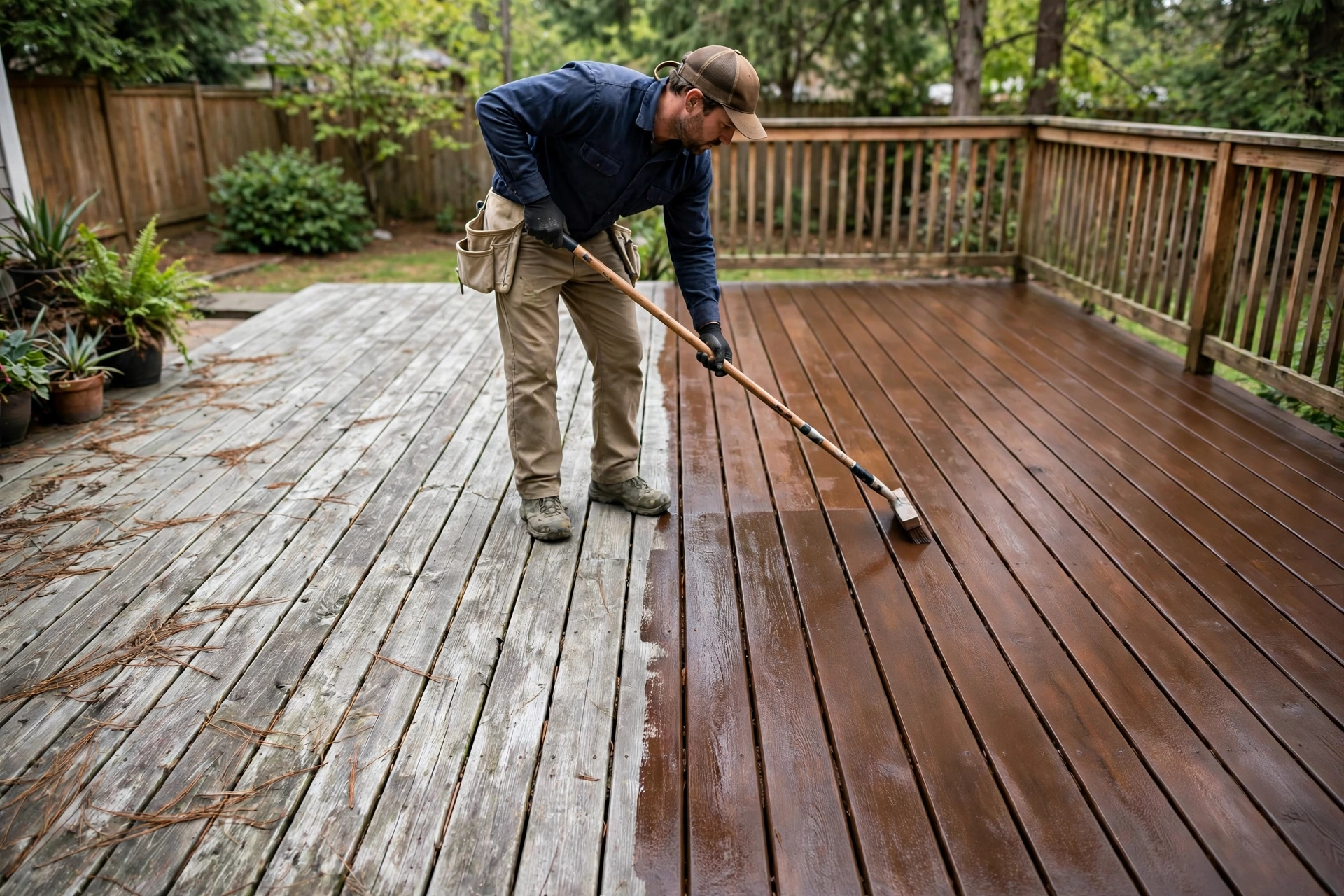
Railings are the adder that surprises homeowners most. Contractors measure the deck floor in square feet but price railings and spindles by the linear foot, at about $4 to $12 or more per linear foot. As a rule of thumb, adding full railings and a standard stair run raises a floor-only price by roughly 30 to 60 percent, so a railing-heavy deck carries a much higher cost to stain a deck than its floor area suggests.
Stripping is the other big one. If the old finish is peeling, or you want to move from a dark solid stain to a lighter semi-transparent one, the old coating has to come off first. Stripper runs $20 to $60 per gallon, and professional stripping labor runs $30 to $50 per hour. Together they push the whole job to $3 to $7 or more per square foot, adding 10 to 40 percent to the base price.
Stairs, built-in benches, pergola posts, and multi-level layouts all add hand work that a roller cannot reach. Complex and multi-level jobs commonly reach $2.50 to $7 or more per square foot, with full refinishing projects quoted at $1,200 to $4,000 or more. Lattice skirting has no standard published rate anywhere, because the cross-hatch pattern is slow brush work. If your deck has it, get that line itemized in writing before you sign, because two decks with the same floor area can carry a very different cost to stain a deck once the extras pile up.
New Wood vs Weathered Wood
Brand-new pressure-treated lumber is saturated with treatment solution, and stain applied too soon will not soak in properly. Let a new deck season first, commonly 1 to 6 months depending on your climate, and check readiness with a moisture meter. You want a reading of 15 percent or less, and a basic meter costs as little as $15. New boards can also carry mill glaze, a slick planed surface that blocks absorption, so a cleaner and brightener or a light sanding comes before the first coat. Rushing this step is the fastest way to waste the entire cost to stain a deck on a finish that fails in one season.
Weathered wood follows a different script. Start by inspecting for rot and replacing any soft boards, then wash or scrub with a deck cleaner, apply a brightener to restore the wood tone, and let everything dry for 24 to 72 hours. Sand rough areas with 80-grit paper, then stain. A sound old penetrating stain needs only this clean and brighten routine before recoating, with no stripping. Skipping steps here shows up later as a peeling finish and a repeat cost to stain a deck a season sooner than planned. Grayed, mildew-stained, or peeling decks are the single biggest quote variable after size, and they always land at the top of the price range.

Cost to Stain a Deck DIY
Doing it yourself, the cost to stain a deck DIY lands around $100 to $350 for a typical deck when you rent a pressure washer at $40 to $70 per day instead of buying one. Your basket is stain, brushes or a pad applicator, cleaner and brightener, and sandpaper. That works out to roughly $1 to $3 per square foot in materials, and it saves 40 to 70 percent versus a pro because you are not paying the 85 percent labor share.
Budget real time, not just money. A DIY job stretches across 2 to 3 days once you count the wash day, 1 to 3 drying days, and the staining day, with about 8 to 12 active hours on a 300 square foot deck. A pro crew usually finishes the same deck in 1 to 3 days total. When you shop for products, look for lower-VOC stains and cleaners certified through the EPA Safer Choice program, which screens products for safer ingredients.
The common DIY failures are almost all about prep and restraint. Stain puddled on the surface instead of wiped in turns sticky and peels. Staining over dirt or mildew seals the grime in, and the finish lets go early. Staining damp wood traps moisture under the coat. Skipping the brightener leaves the new color muddy. If your deck needs stripping, heavy sanding, or board replacement, the cost to stain a deck professionally starts to look reasonable next to the rental fees and weekends involved.
How Often to Stain a Deck (and Stain vs Paint vs Seal)
How often to stain a deck depends on the finish you choose. Clear finishes last about 1 year on horizontal surfaces, semi-transparent stain lasts 2 to 3 years, semi-solid lasts 3 to 4 years, and solid stain lasts 3 to 5 years. The general rule is a recoat every 2 to 3 years for most decks. Railings and other vertical surfaces last noticeably longer, so the floor sets the schedule. Keeping up with the cycle also keeps the long-term cost to stain a deck down, because a maintained penetrating finish only needs cleaning before its next coat.
Not sure if yours is due? Use the water-drop test. Sprinkle a few drops of water on the boards in several spots. If the water beads up and sits there, the finish is still repelling water. If it soaks in within a few minutes and darkens the wood, the protection is spent and it is time to clean and recoat. High-traffic lanes by the door and on the stairs fail first, so check those spots closely. Catching it early keeps the next cost to stain a deck at the simple wash and recoat level.
Stain, paint, and sealer are not interchangeable. A clear sealer is the cheapest protection per gallon at $40 to $60, but it is a yearly commitment and gives no UV protection, so the wood still grays underneath. Stain is the default choice for deck floors because it protects the wood without building a peel-prone film, and most stains need no primer.
Paint offers the widest color range and the longest life on paper, at $500 to $2,000 for a pro job, but on a walking surface it commonly peels, chips, and blisters, and repainting means scraping and stripping first. A paint maintenance cycle also runs $500 to $800 against $200 to $400 for stain. Before any recoat, scrub mildew off the deck surface, and follow the EPA guidance on moisture and mold for safe cleanup practices.
Frequently Asked Questions
How much does it cost to stain a deck in 2026?
Most homeowners pay $550 to $1,250 to have a deck stained professionally, with an average of about $850, or $2 to $4 per square foot. Small, simple decks can come in lower, and large or prep-heavy decks run higher. The cost to stain a deck on your own is far lower, roughly $100 to $350 in materials and rentals.
How much stain do I need for a 400 sq ft deck?
About 4.2 gallons for the floor alone at standard coverage of 200 square feet per gallon, and about 4.4 gallons once railings and a set of stairs are included. Film-forming stains that need 2 coats take more, while penetrating oils often cover better on the second coat.
How long does deck stain last?
On the floor, clear finishes last about 1 year, semi-transparent stain lasts 2 to 3 years, semi-solid lasts 3 to 4 years, and solid stain lasts 3 to 5 years. Sun exposure and foot traffic shorten those numbers, and railings last longer than the floor boards.
Can I stain a brand-new pressure-treated deck right away?
No. Let it season first, commonly 1 to 6 months depending on your climate. Stain only when a moisture meter reads 15 percent or less, or when water sprinkled on the boards soaks in instead of beading on the surface.
Is it cheaper to stain my deck myself?
Yes, on cash cost. The materials for a typical cost to stain a deck DIY job run about $100 to $350 including a rented pressure washer, against $550 to $1,250 for a pro. The trade is your time: plan on 2 to 3 days including drying, and careful prep, because most DIY failures are prep failures.
Do I have to strip the old stain before restaining?
Only if the old finish is peeling or flaking, or you are switching from a darker or solid finish to a lighter one. A sound penetrating stain just needs cleaning and brightening before a fresh coat, which keeps the cost to stain a deck at the low end of the range.